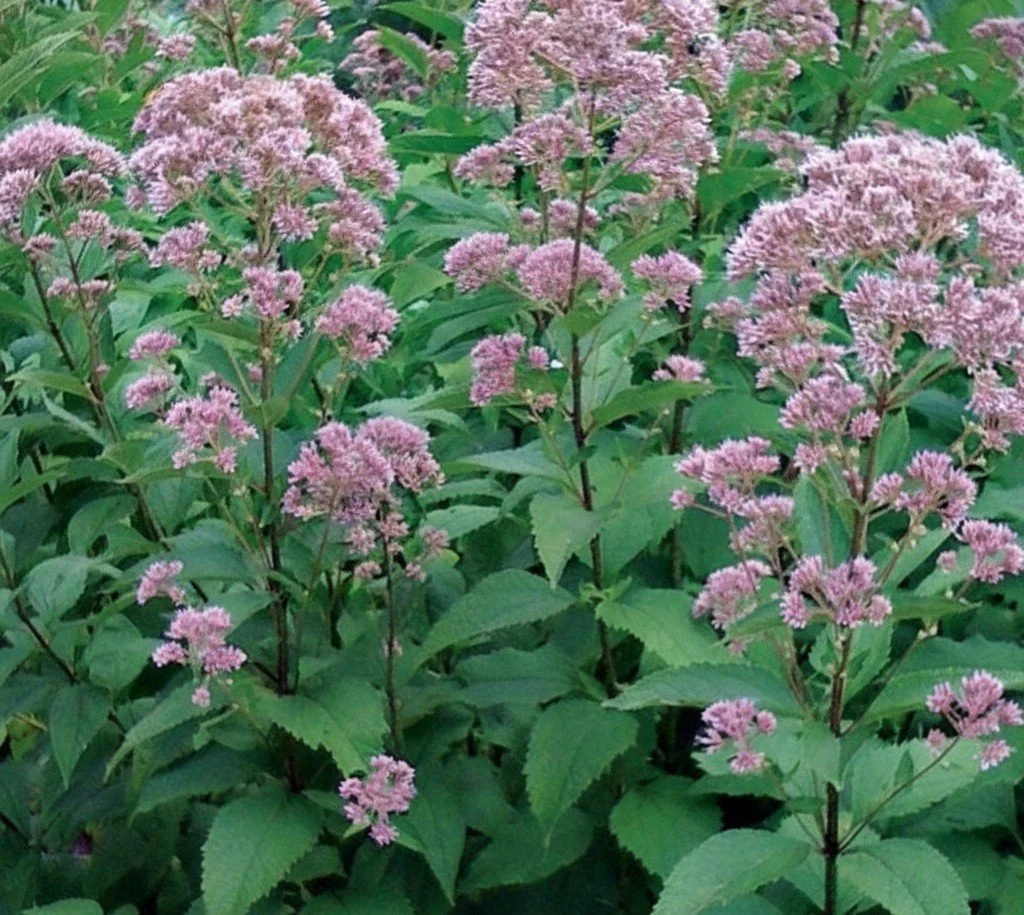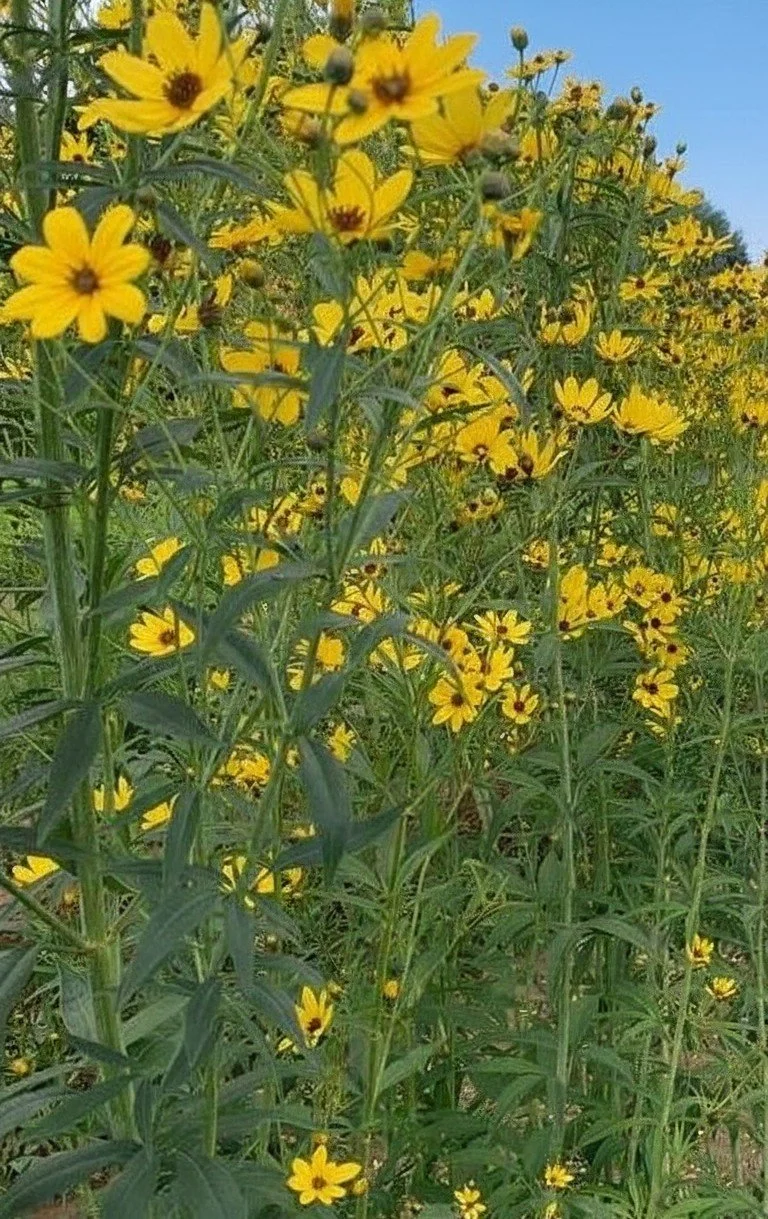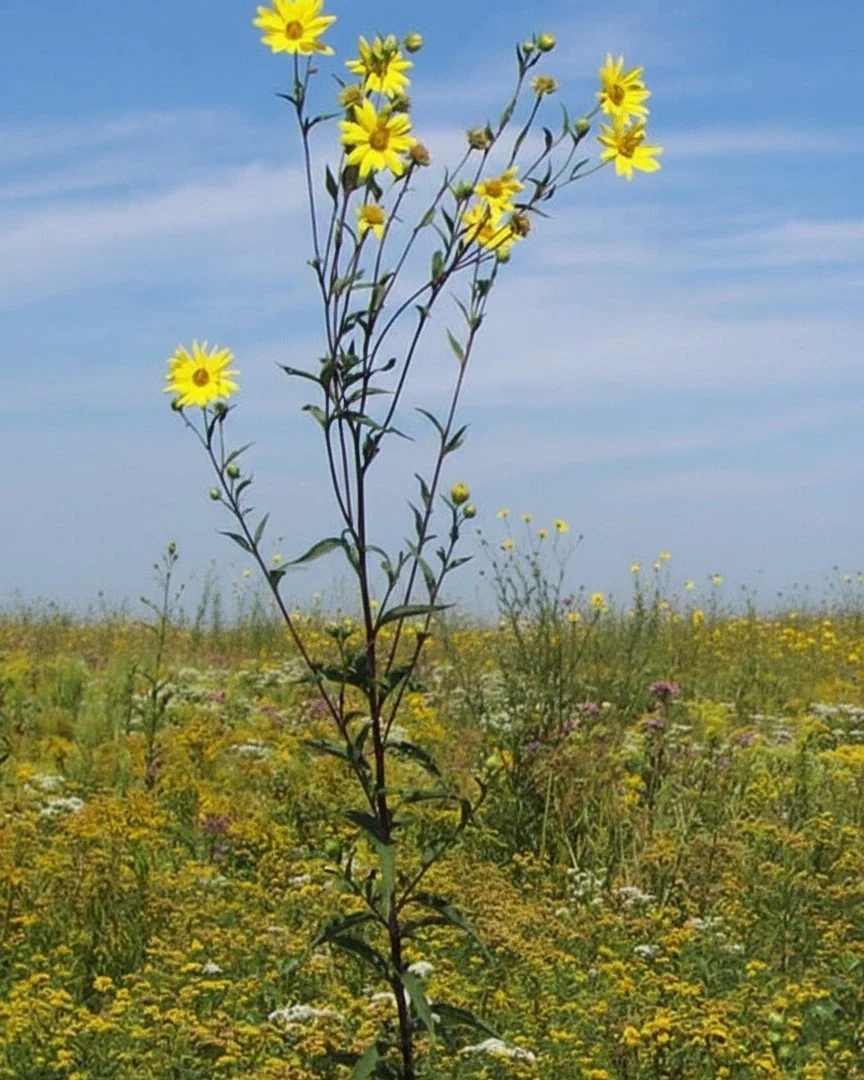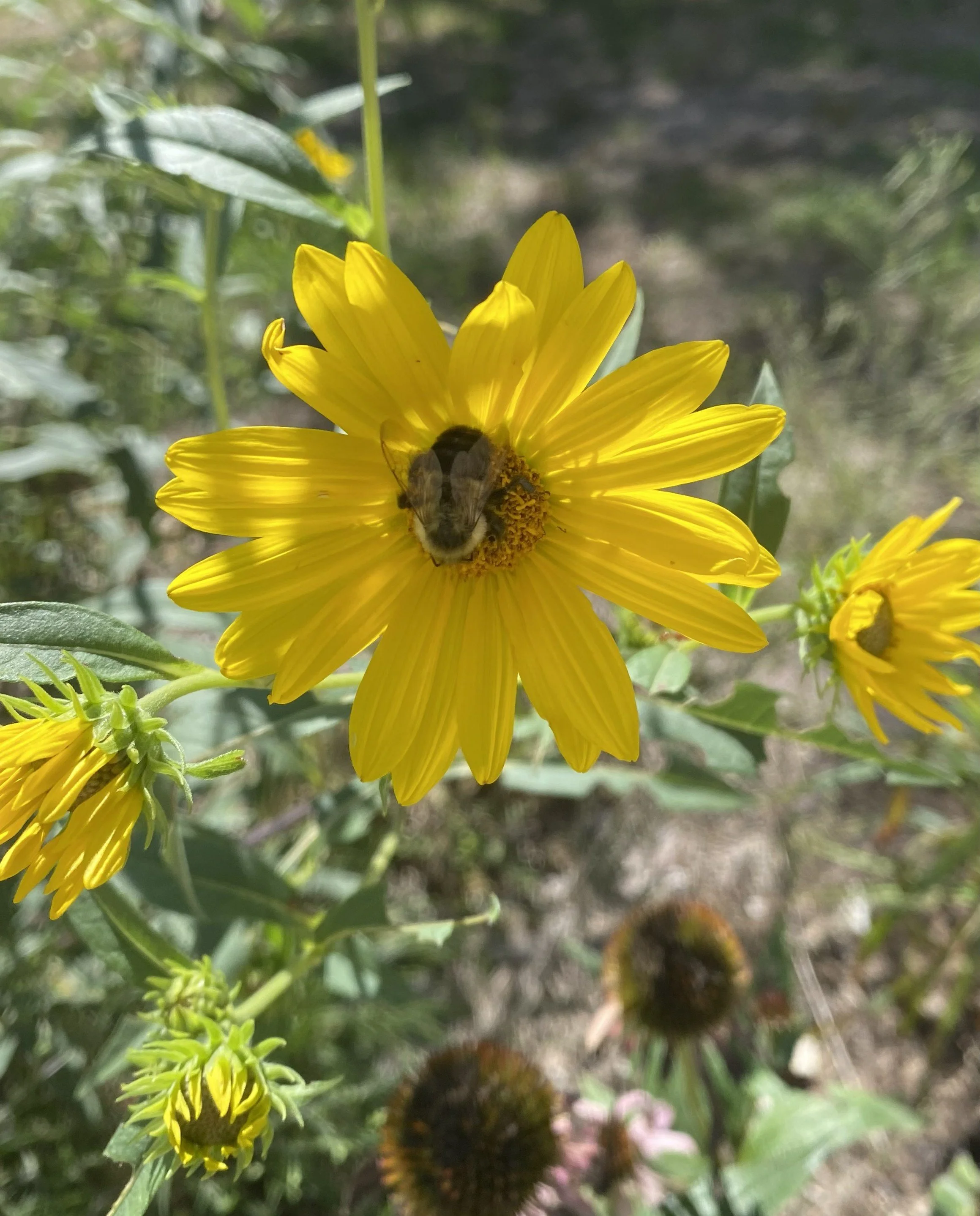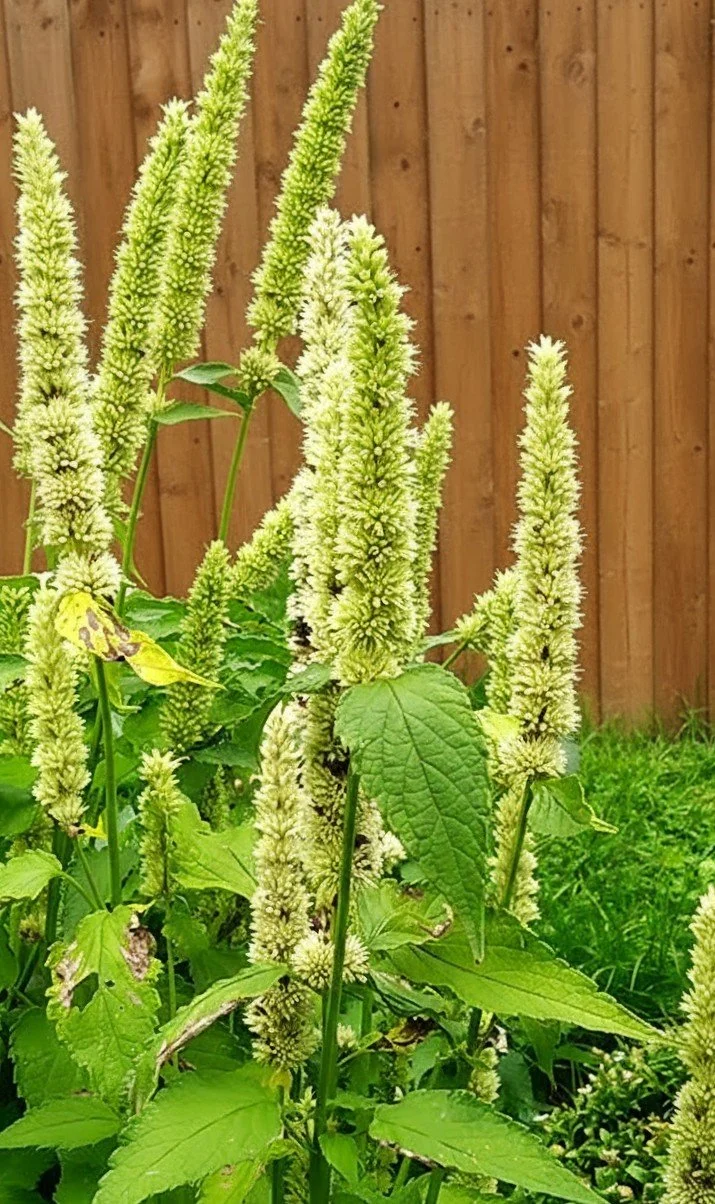
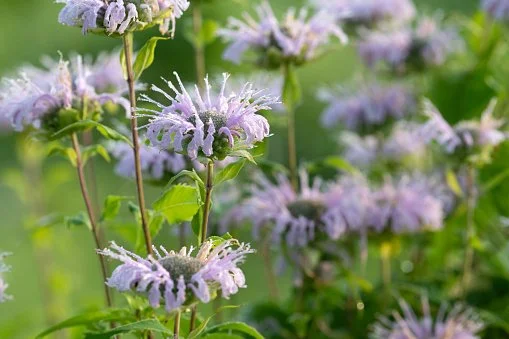
Bergamot (commonly known as Bee Balm or Monarda) is known for its distinct, "shredded" crown-like blooms and aromatic foliage. This hardy perennial is a member of the mint family and does well in all but the wettest of soils. It’s fragrant flowers are a popular nectar source for butterflies, bees and hummingbirds.
Sun Exposure Full Sun to Partial Shade
Water Needs Moderate; prefers consistent moisture but is drought-tolerant once established.
Soil Type Tolerates Muck, Clay, Loam and Sand, and poor soils.
Mature Height 4 - 5 feet
Deer Resistance High
Bloom Time July – September
Bloom Color Lavendar
Plant Spacing 2 - 3 feet
The leaves release a minty or oregano-like scent when crushed.
Its unique flower shape has tube-like blossom structures.
Naturally resistant to many pests, making it an easy-care choice of plants.
Bergamot is one of the few plants that consistently draws hummingbirds, butterflies, and native bees simultaneously.
Serves as a host plant for several species of the Hermit Sphinx and the Raspberry Pyrausta moths.
Fun Fact: For generations, Bergamot was valued by Indigenous communities and early settlers as a healing plant, commonly brewed as a tea or used in simple remedies.
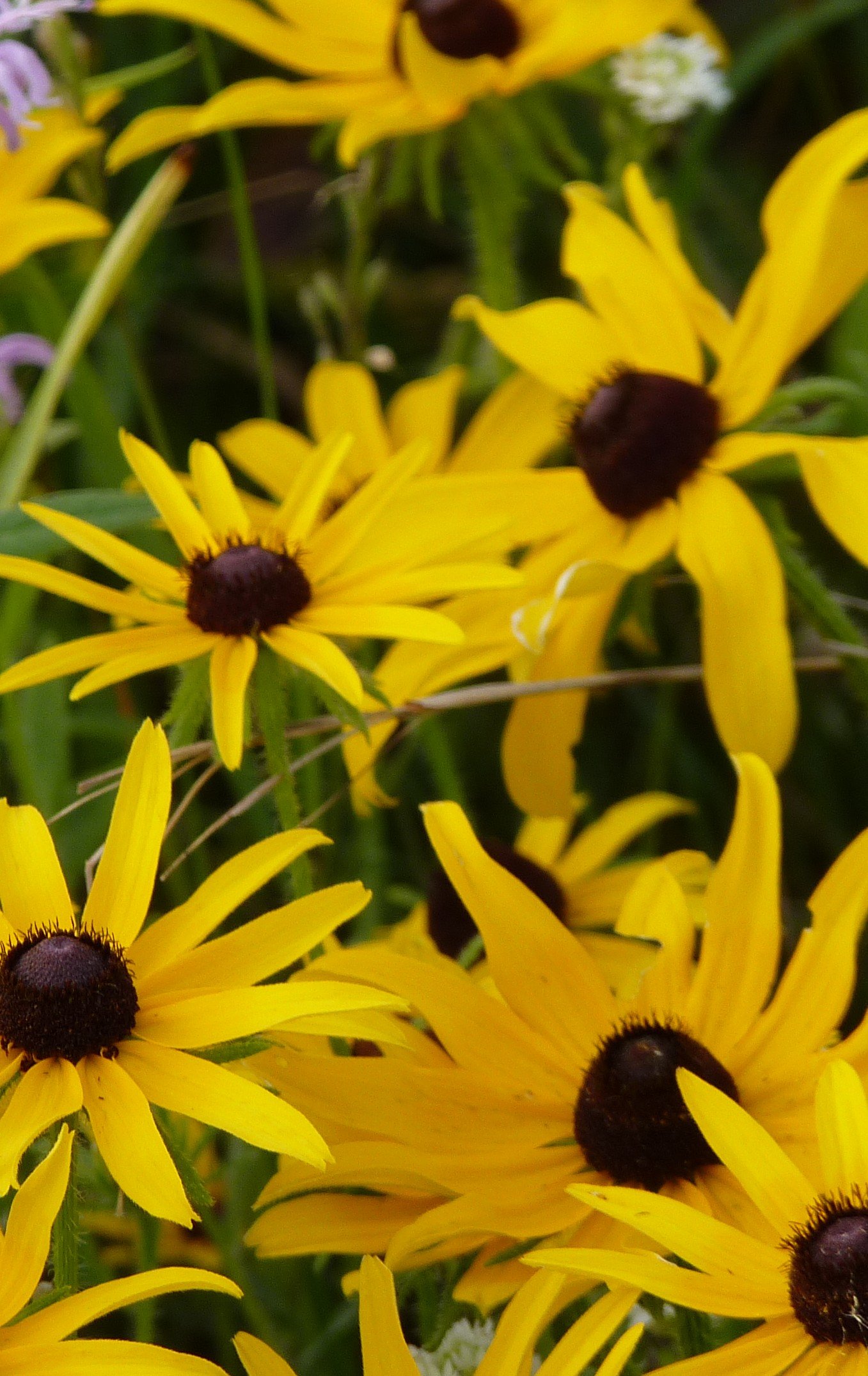
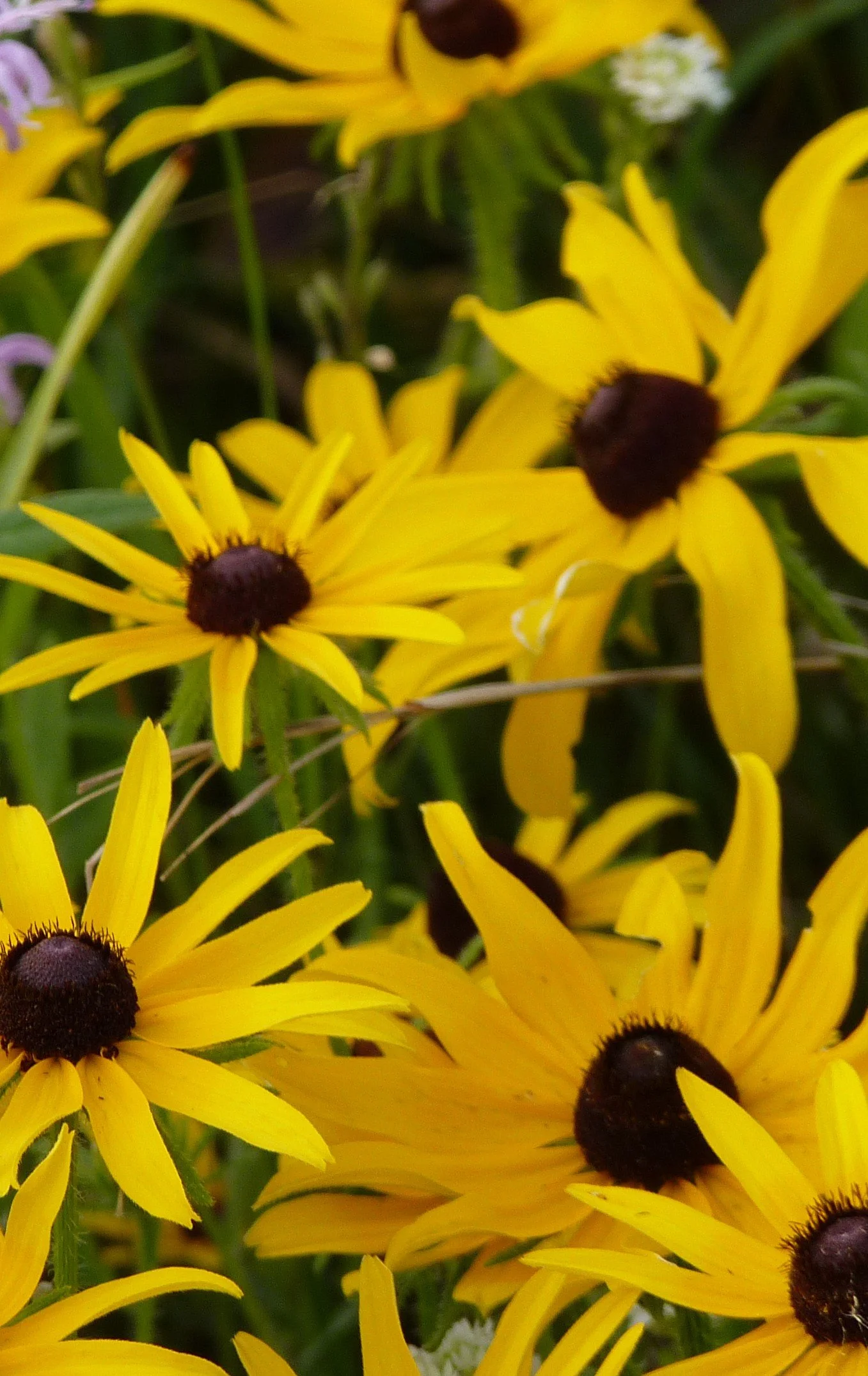
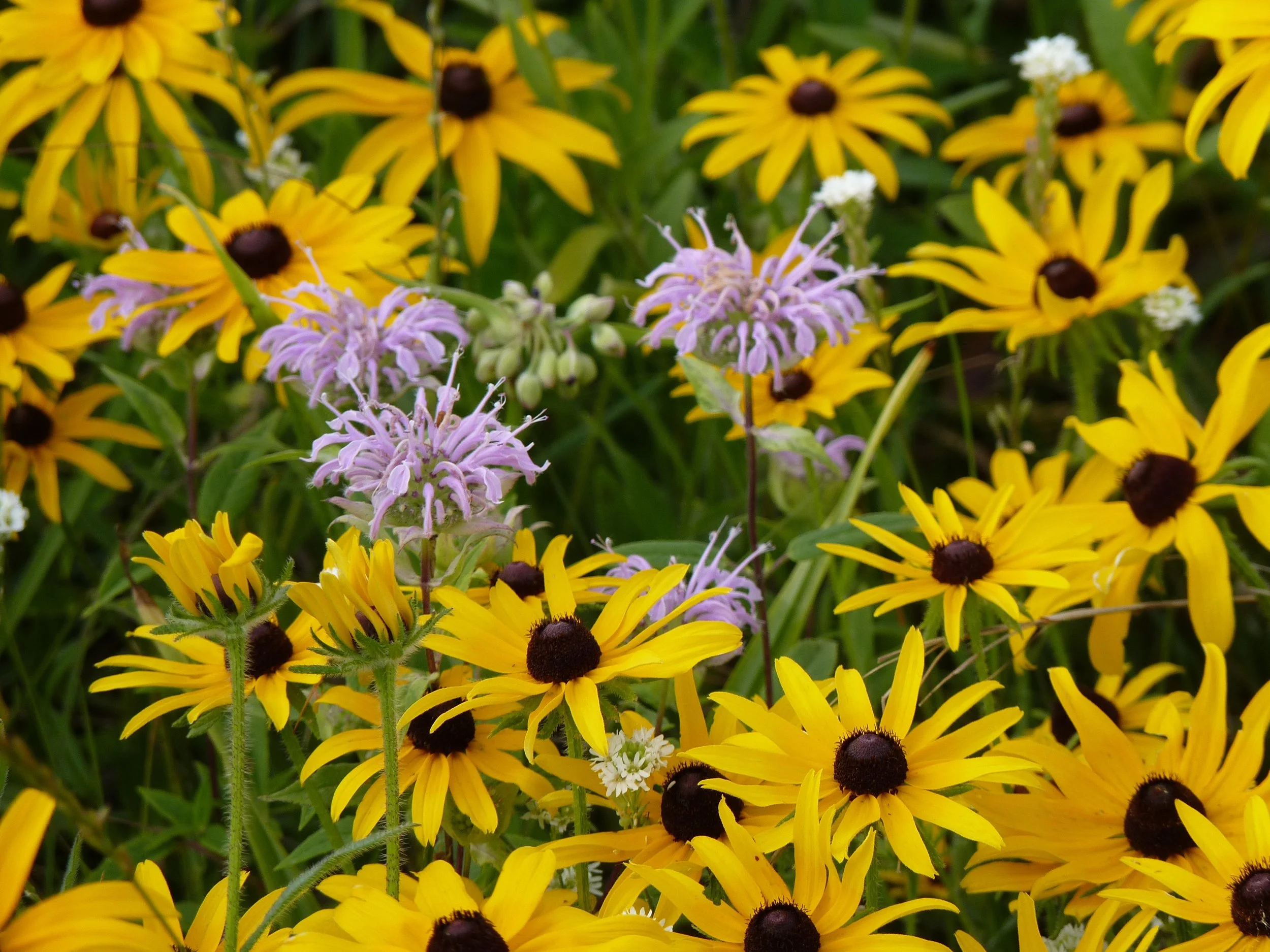
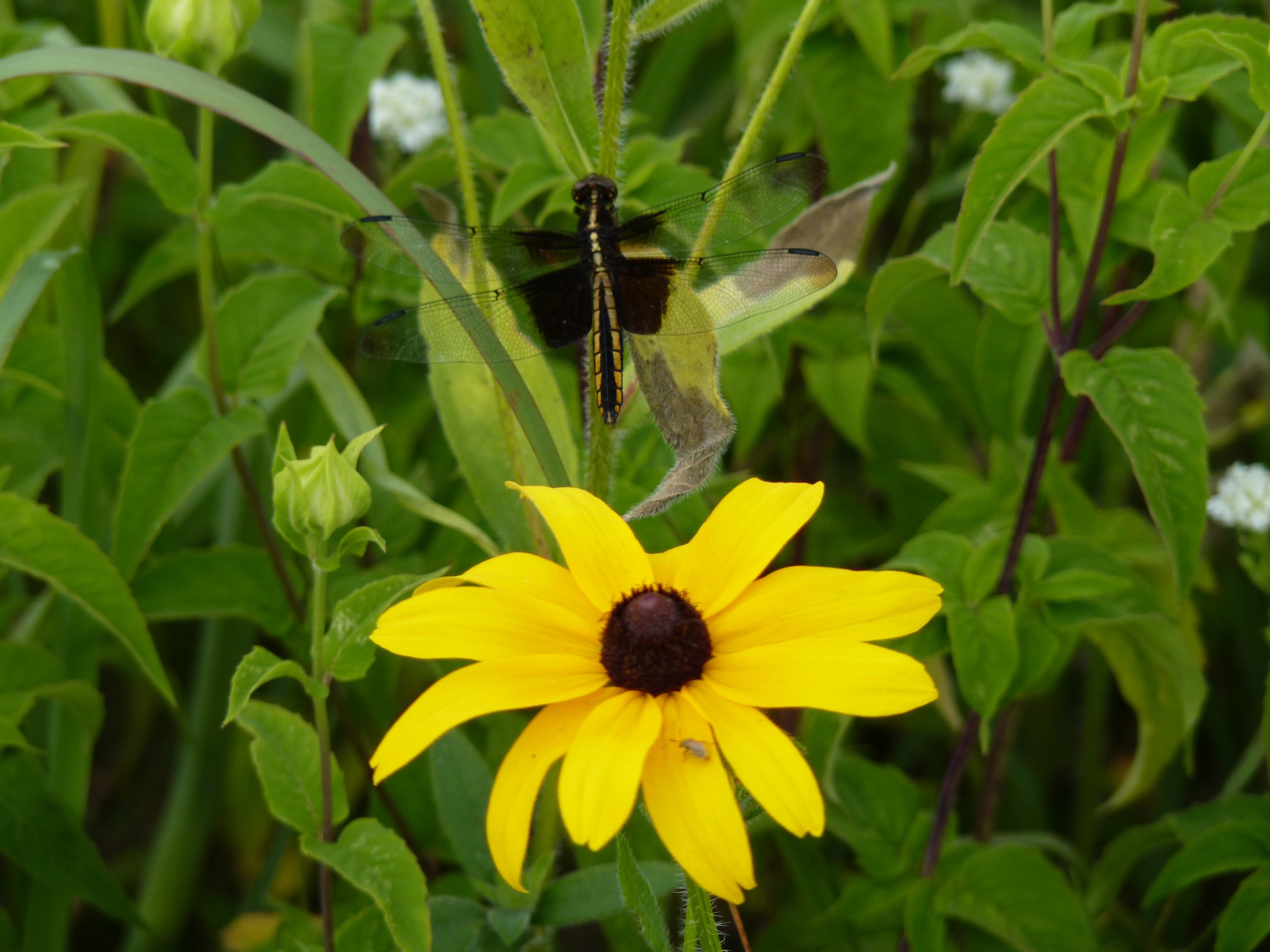
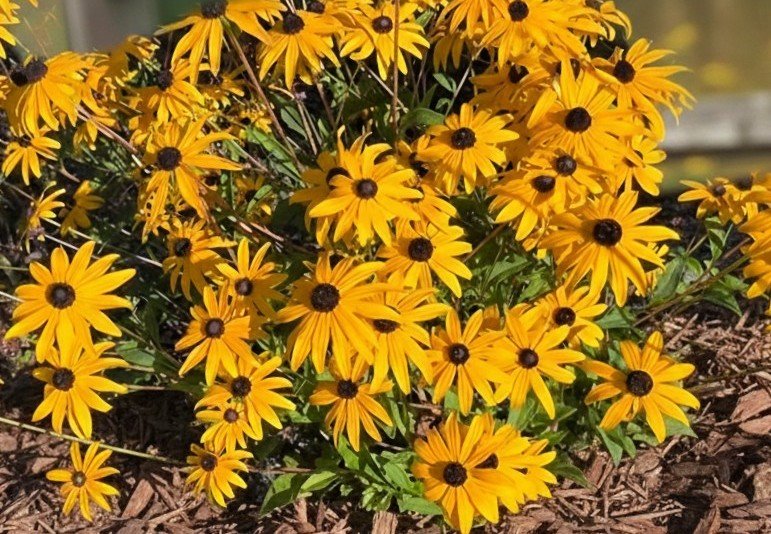
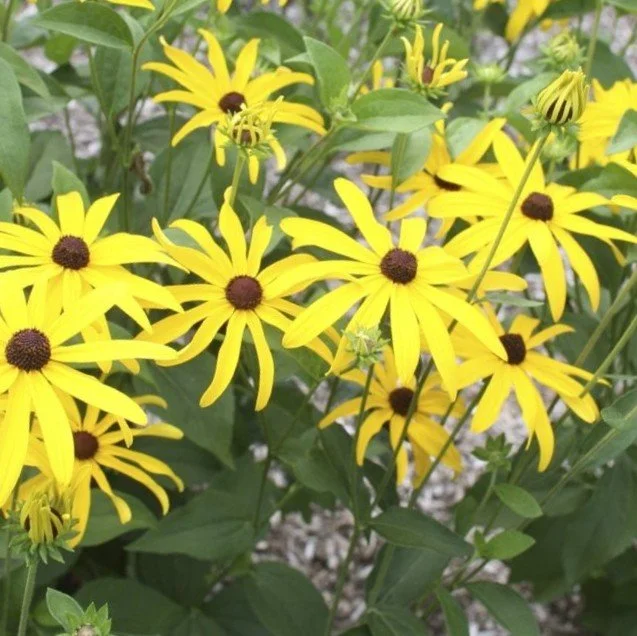
A staple of the American landscape, these iconic wildflowers feature bright daisy-like petals surrounding a deep chocolate-brown central cone. Black-Eyed Susans are extraordinarily hardy, heat-tolerant, and capable of thriving in conditions where more delicate flowers might falter. They are the perfect choice for gardeners who want high-impact color with minimal effort.
Sun Exposure Full Sun (Preferred) to Partial Shade
Water Needs Low to Moderate; very drought-tolerant once established
Soil Type Needed Adaptable; can thrive in Muck, Clay, Loam or Sandy soils.
Mature Height 2 – 3 feet
Deer Resistance Moderate
Bloom Time June – October
Bloom Color Yellow
Plant Spacing 10 – 12 inches
One of the longest bloom periods of any summer perennial, often lasting from early summer right through the first frost.
The plant is biennial that blooms and completes in life cycle in it’s seconds year. They are self-seeders, so they will appear in your garden for years to come but can succumb to longer-lived perennials in later years after planting.
Highly resistant to heat, humidity, and drought, making them ideal for "problem spots" in the yard.
Pollinator Favorite: The wide, flat blooms act as perfect landing pads for a variety of butterflies, including Monarchs, the Wavy-Lined Emerald and the Silvery Checkerspot.
Bee Support: A primary nectar source for honeybees and several species of native solitary bees.
Birds: If you delay your garden cleanup until spring, the sturdy seed heads provide essential winter forage for goldfinches and other small songbirds.
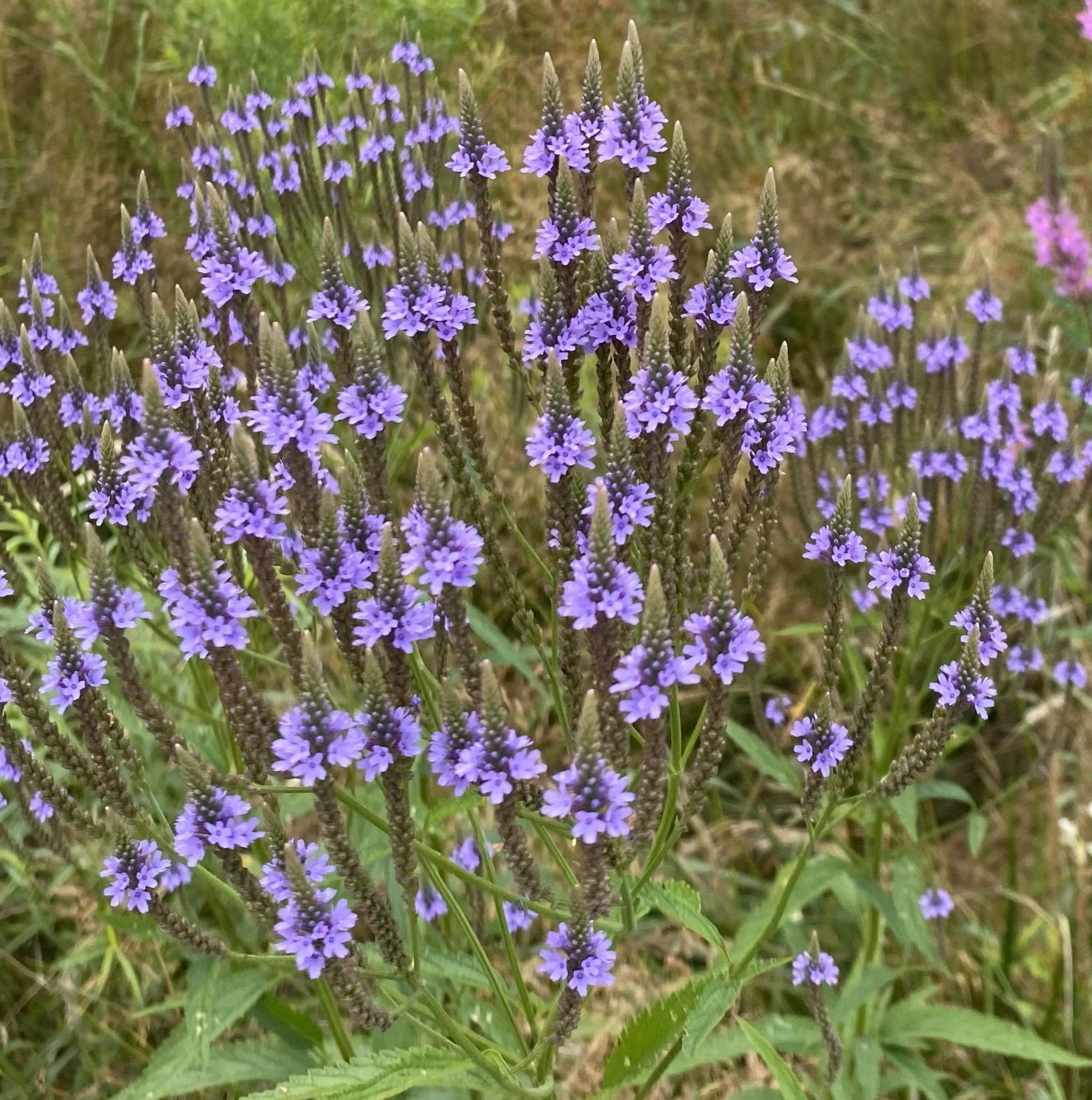
This native perennial is easily recognized by its unique branching flower spikes that resemble a multi-armed candelabra. Tiny, vibrant violet-blue flowers bloom in succession from the bottom up in the July heat. Unlike many garden perennials that shy away from "wet feet," Verbena hastata thrives in moist-to-wet soils, making it an invaluable choice for rain gardens, pond edges, or that low-lying corner of the yard where other plants struggle.
Sun Exposure Full Sun to Partial Shade
Water Needs Moderate to High; standing water is not tolerated, but it prefers consistently moist soil.
Soil Type Moist to wet; Can tolerate Muck, Clay, Loam or Sand.
Mature Height 4 - 6 feet
Deer Resistance Moderate to High
Bloom Time July – September
Bloom Color Blue
Plant Spacing 18 – 24 inches
Vertical Interest: Its tall, slender habit adds height without adding bulk, allowing it to weave beautifully between other plants.
Naturalizes Easily: A biennial plant that is a wonderful self-seeder. It also will slowly spread through rhizomes allowing it to fill in gaps over time, but it will not compete well with more aggressive vegetation.
Color: The violet-blue flower spikes can bloom for up to 2 months.
Butterfly Magnet: A vital nectar source for a wide array of butterflies, including Swallowtails, Fritillaries, and Skippers.
Native Bee Support: Blue vervain attracts a variety of different native bees.
Songbird Food: In the fall, the slender spikes produce tiny seeds that are a favorite for finches, and sparrows.
Pro Tip: Because Blue Vervain grows quite tall and narrow, plant it in clusters of three or more. This creates a stunning "haze" of purple-blue color that is much more impactful than a single specimen, and it provides extra support for the stems in windy areas.
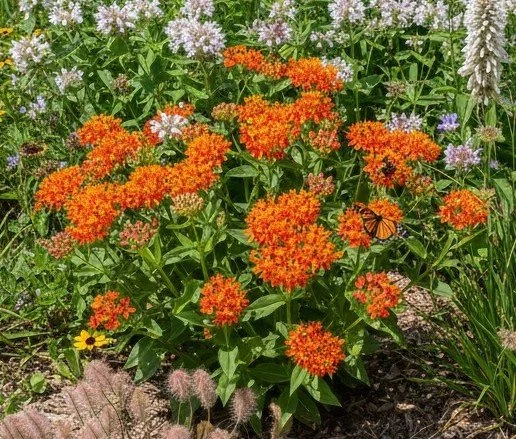
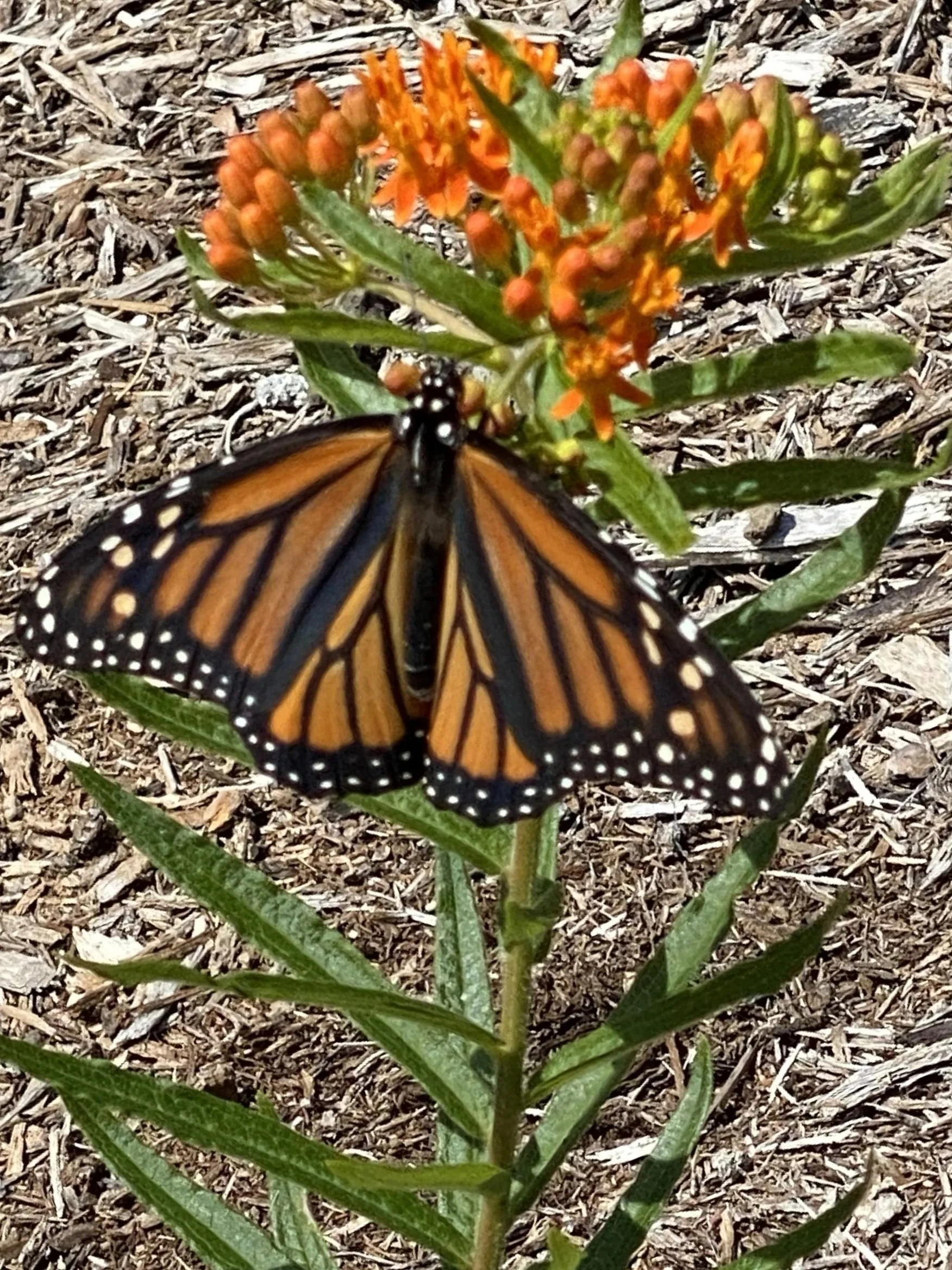
This award-winning native perennial is famous for its flat-topped clusters of brilliant, neon-orange flowers that practically glow in the garden. Unlike other milkweeds, Butterfly Weed is compact and well-behaved, making it a perfect fit for both formal flower beds and wilder meadow designs.
One of its best features for the home gardener is its extreme durability. Because it develops a deep, sturdy taproot, it is incredibly drought-tolerant once established and thrives in the kind of poor, sandy soil where other plants might struggle. It is a true "plant it and forget it" beauty that rewards you with weeks of intense color from mid-to-late summer.
Sun Exposure Full Sun
Water Needs Low to Medium; very drought-tolerant
Soil Type Well-drained Sand or Loam soil
Mature Height 1.5 - 2 feet
Deer Resistance High
Bloom Time June – August
Bloom Color Orange
Plant Spacing 1 to 3 feet
Vivid Blooms: The intense orange hue is rare in the native plant world and provides a high-contrast focal point.
Low Maintenance: Highly resistant to pests and diseases; it actually prefers "neglect" over heavy fertilizing or overwatering.
Late Emerger: Don't worry if you don't see it in early spring! It is one of the last perennials to wake up, usually waiting until the soil is truly warm.
Monarch Host Plant: As a member of the milkweed family, it is an essential host plant where Monarch butterflies lay their eggs and their caterpillars feed.
Pollinator Magnet: Its nectar is highly accessible, attracting a massive variety of butterflies, native bees, and even hummingbirds.
Pro Tip: Because of its long taproot, Butterfly Weed does not like to be moved once it is planted. Choose its "forever home" carefully! To get the best blooms, plant it in your sunniest, driest spot and avoid heavy mulching right against the crown, as it loves to stay dry and warm.
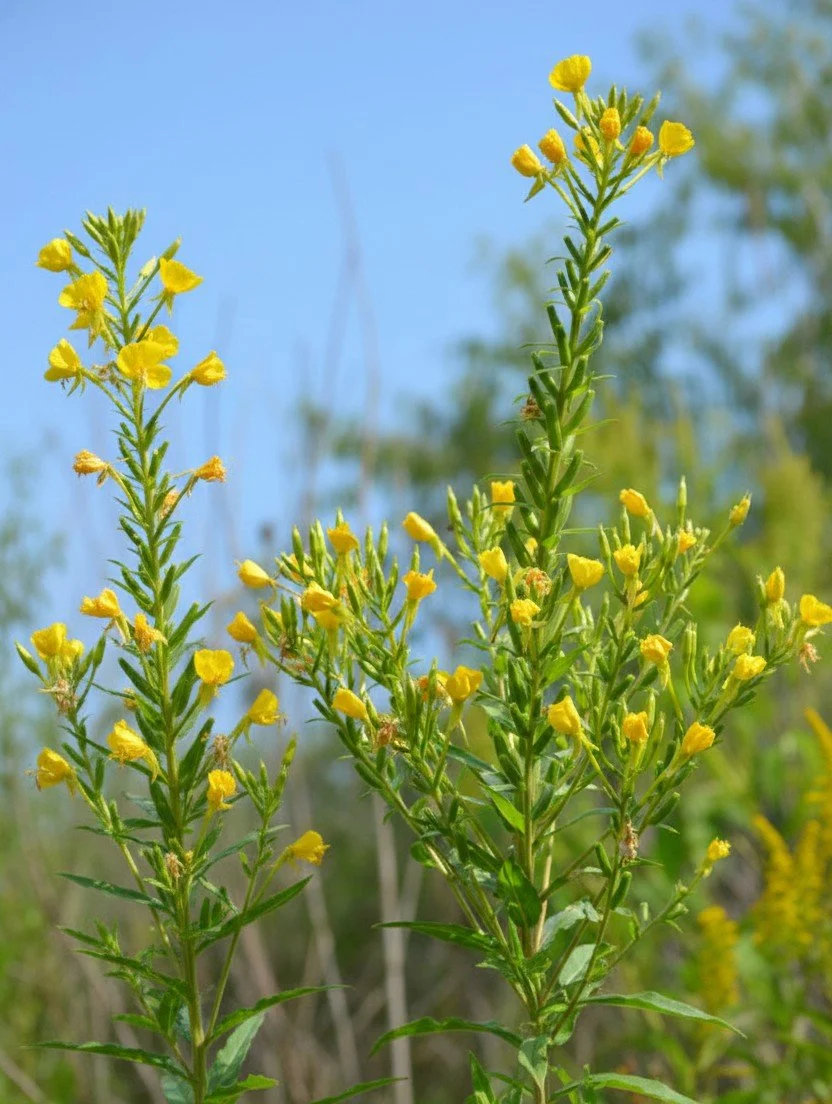
Just like the goldenrod, this plant is a "bridge" species—but while the goldenrod bridges the seasons, the Evening Primrose bridges day and night! While most flowers wake up with the sun, this native waits for the twilight. It features bowl-shaped yellow blossoms that unfurl in late afternoon and evening.
Sun Exposure Full Sun to Partial Shade
Water Needs Low to Medium; very drought-tolerant
Soil Type Adaptable; prefers Sandy, Rocky, or Lean soil
Mature Height 4 – 6 feet
Deer Resistance Low - Moderate
Bloom Time July – October
Bloom Color Yellow
Plant Spacing 1 – 2 feet
Long Bloom Time: It is one of the last natives blooming into late fall.
Hardy & Resilient: It thrives in "neglected" areas where other plants struggle. It is highly resistant to pests and can handle poor, dry soils with ease.
Polinators: Although labeled as a weed by some, it is a very important native plant with a long bloom time. It benefits many different kinds of bees, nectaring moths, butterfiles, and caterpillars.
The "Night Shift": The flowers attract sphinx moths (hawk moths), which are nocturnal.
Hummingbirds: Though they open late, the flowers stay open long enough for hummingbirds to visit them for a breakfast snack in the early morning.
Garden Note: Common Evening Primrose is a prolific self-seeder. Because it is a biennial, it relies on dropping seeds to ensure a new generation blooms every year. If you want to limit its spread, simply snip off the seed pods after the flowering season is finished!
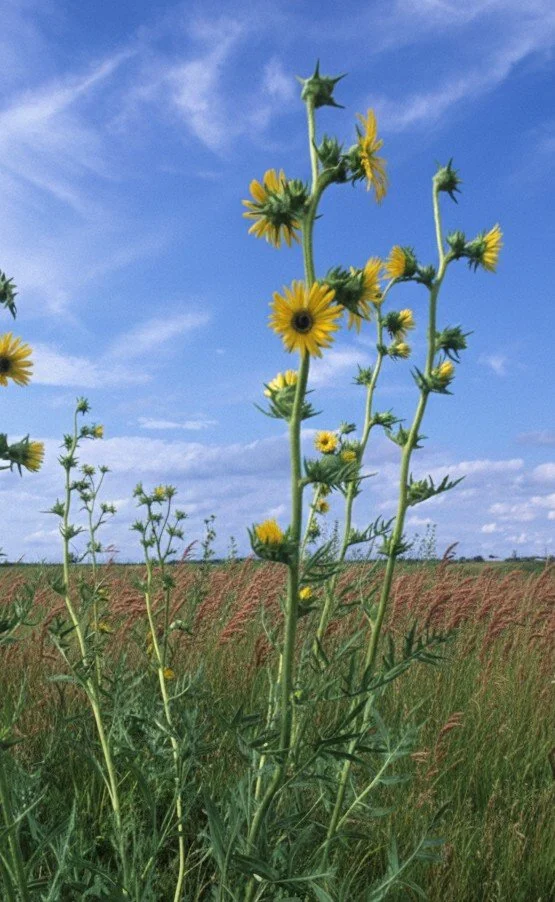
This towering native perennial is famous for its deeply lobed, sandpaper-like leaves that traditionally orient themselves North and South to avoid the intense midday sun—giving the plant its iconic name.Rising on sturdy, sap-filled stalks, its cheerful, sunflower-like yellow blooms provide a vertical element that can be seen from across the yard.
It is a slow-growing "anchor" species that invests its early years into developing a massive taproot that can reach up to 15 feet deep. This incredible root system makes it virtually bulletproof against drought and extreme heat, allowing it to remain lush and vibrant even when the rest of the garden is parched.
Sun Exposure Full Sun to Partial Shade
Water Needs Low to Medium; exceptionally drought-tolerant
Soil Type Loam, Sand
Mature Height 5 – 8 feet
Deer Resistance High
Bloom Time June – September
Bloom Color Yellow
Plant Spacing 3 – 5 feet
Height: Given rich soil, compass plants can reach upwards of 8 feet in height.
Living Compass: The large basal leaves align with the Earth’s magnetic poles to maximize water use in the leaves and increase CO2 gain.
Centuries-Long Life: This is a "legacy plant." Once established, a single Compass Plant can live for up to 100 years, becoming a permanent fixture of your home's ecosystem.
Pollinators: The resin-rich flowers are a favorite of bees, and butterflies.
Birds: Seeds are a high-energy food source for goldfinches and other songbirds throughout the fall and a favorite perching spot.
Pro Tip: Patience is a virtue with the Compass Plant! Because it spends its first few seasons focused on growing that legendary 15-foot taproot, it may only produce a small cluster of leaves at first. Don't be fooled—it is building the foundation for a lifetime of beauty. Due to this taproot, it is very difficult to move once planted, so choose its "forever home" in a sunny spot with plenty of vertical room to grow.
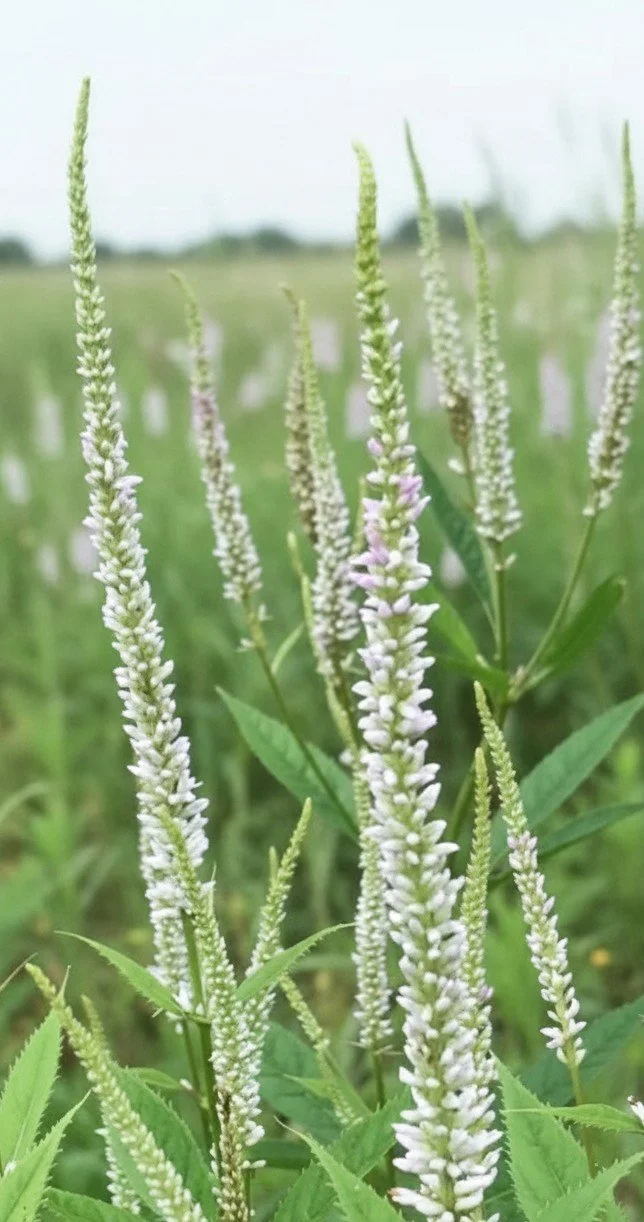
This stately native perennial is beloved for its unique, candelabra-like flower spikes that bloom in a soft white to pale lavender. Unlike the shaggy look of some prairie plants, Culver’s Root has deep green leaves arranged in tidy, horizontal "whirls" around the stem, providing beautiful texture even before the flowers appear. This plant is the perfect "bridge" for your garden, thriving in that sweet spot between moist and well-drained soils.
Sun Exposure Full Sun to Partial Shade
Water Needs Medium; likes moist, well drained soil
Soil Type Needed Muck, Loam, Clay, or Moist Sand
Mature Height 4 – 6 feet
Deer Resistance High
Bloom Time June – August
Bloom Color White
Plant Spacing 2 – 3 feet
Candelabra Blooms: Each main flower spike is surrounded by smaller secondary spikes, extending the bloom time and creating a multi-tiered "candelabra" effect.
Formal Structure: The unique "whorled" leaf pattern (growing in circles around the stem) gives the plant a clean, geometric look that fits beautifully in modern or formal landscapes.
Non-Aggressive: It is a well-behaved clump-former, meaning it stays exactly where you plant it and won't try to take over the rest of your garden.
Bees & Butterflies: It is a vital nectar source for butterflies and a variety of bees.
Pro Tip: Culver’s Root is a true "sun-seeker." While it can handle partial shade, its stems are sturdiest and its flower spikes are most upright when it receives at least 6 hours of direct sunlight. If you are planting it in a more shaded spot, consider placing it near a fence or sturdier neighbors like Joe Pye Weed for a little extra support. To encourage the best display, keep the soil mulch-covered to retain the moisture this "cool-season" beauty loves!
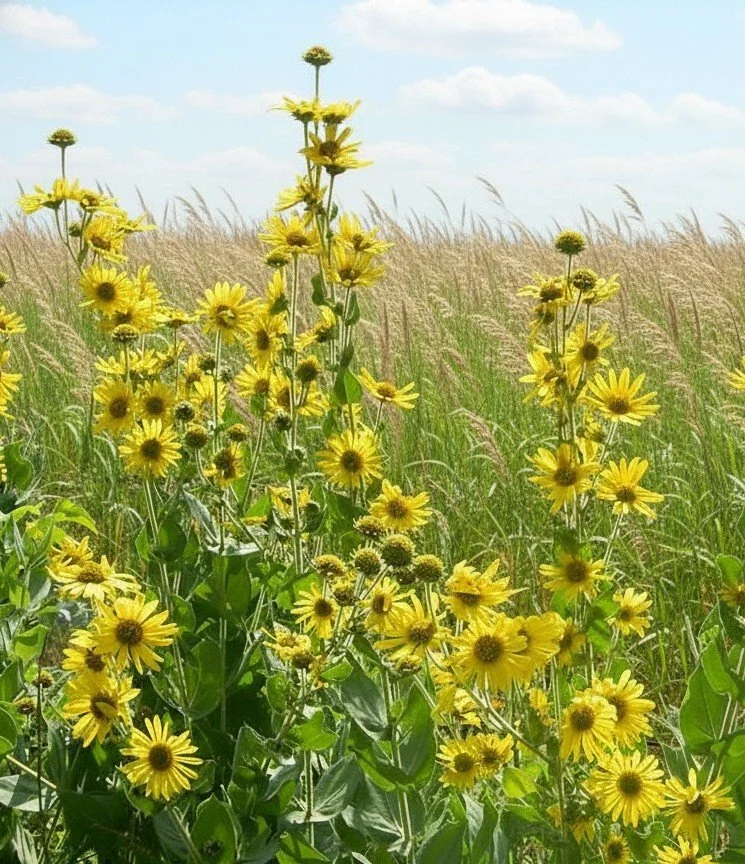
This native is named for the soft, silvery-gray "down" or fuzz that covers its stems and foliage, giving the entire plant a frosty-blue tint. When the mid-summer heat arrives, it erupts in a cheerful display of multi-flowered stalks topped with bright, 2-inch golden-yellow blooms.
What sets the Downy Sunflower apart is its incredible versatility. It is one of the few sunflowers that stays at a manageable height. It is a rugged survivor that handles the hottest, driest corners of your yard with ease, maintaining its silver-green luster even in the peak of a summer drought.
Sun Exposure Full Sun to Partial Sun
Water Needs Low to Medium; very drought-tolerant
Soil Type Poor, drier, Clay, Sand, Rocky, or Well-Drained Loam
Mature Height 4 - 5 feet
Deer Resistance Moderate - High
Bloom Time August – September
Bloom Color Yellow
Plant Spacing 2 – 3 feet
Aggressive Spreader: please consider when picking your planting location. Removal of the seed head before it is ripe is preferable if you do not want to weed seedlings.
Compact Habit: Unlike the towering 8-foot giants, Downy Sunflower stays relatively short and sturdy, rarely requiring staking or support.
Prolific Bloomer: Rather than one single flower head, each plant produces numerous branches, resulting in a dense "bouquet" of yellow flowers on every stalk.
Nectar: Its late-summer blooms are a vital resource for long-tongued bees, butterflies, and skippers during the hottest months of the year.
Bird Seed Source: In the fall, the flower heads dry into nutritious "bird feeders." Chickadees and Goldfinches will cling to the stems to feast on the oil-rich seeds.
Host Plant: It serves as a nursery for the Silvery Checkerspot butterfly and several species of moths.
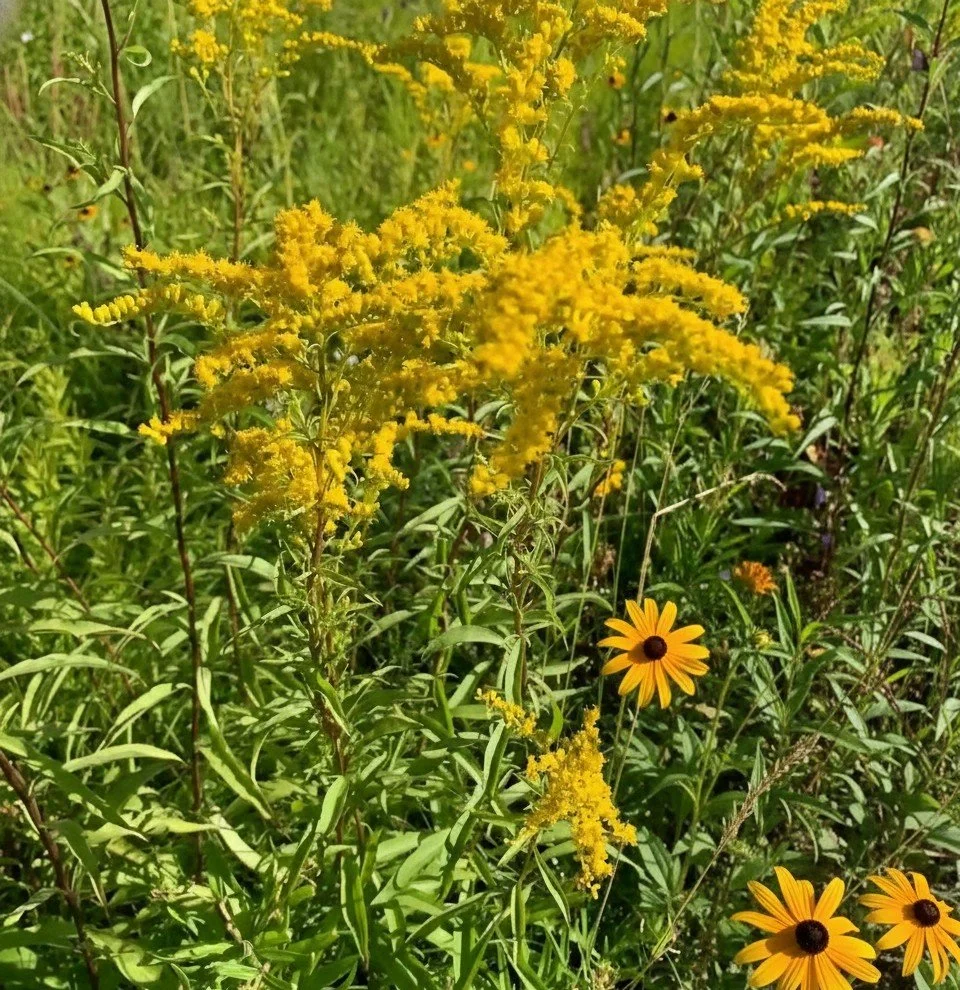
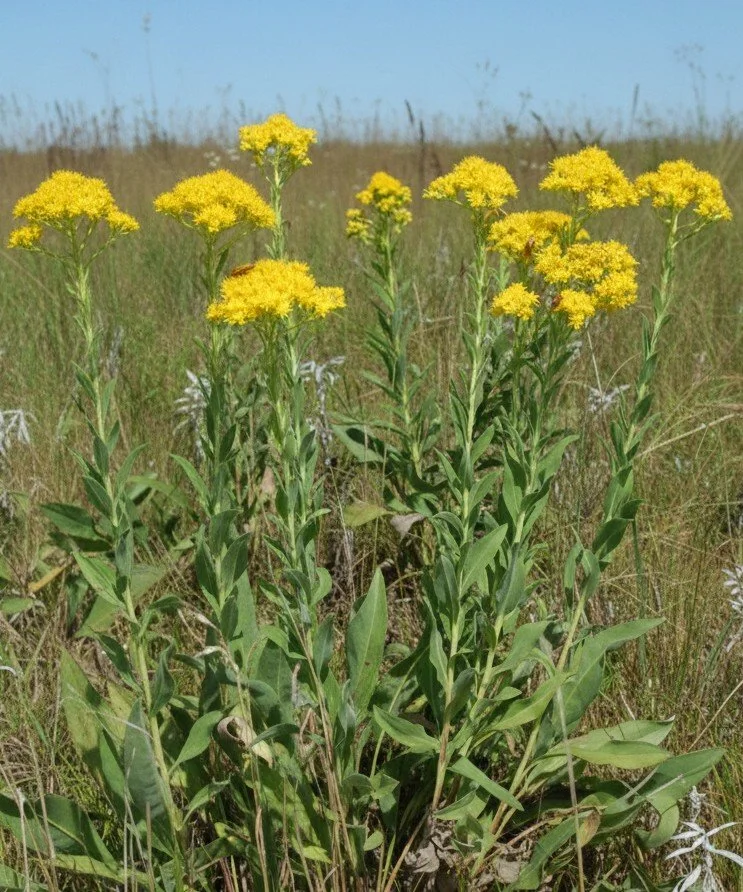
While most goldenrods wait for the cool air of fall to arrive, this eager native begins lighting up the landscape in mid-to-late summer. It features elegant, arching wands of tiny, nectar-rich yellow flowers that look like a burst of sunshine caught on a stem.
Unlike some of its taller, more aggressive relatives that can take over a space, this species stays at a moderate, manageable height and forms tidy clumps. It is the perfect choice for adding a "layered" look to your garden beds, filling the gap between your mid-summer blooms and the late-season asters.
Sun Exposure Full Sun to Partial Shade
Water Needs Low to Medium; very drought-tolerant
Soil Type Well-drained Sand, Loam, or Rocky soil
Mature Height 2 – 4 feet
Deer Resistance High
Bloom Time July – September
Bloom Color Yellow
Plant Spacing 1 – 3 feet
First to Bloom: As the name suggests, it is one of the earliest goldenrods to flower, providing a critical "bridge" of color between summer and fall.
Pollinator Powerhouse: The brilliant yellow plumes are a primary nectar source for a huge array of beneficial insects during the peak of summer heat.
Aggressing Spreader: Spreads by rhizomes. Keep this in mind when selecting your planting site, may not be suitable for small landscapes.
Thinning every few years is recommended.
Butterfly Fuel: It is a favorite stop for Monarchs, Viceroys, and hairstreaks as they begin their late-season activities.
Native Bee Support: It provides high-quality pollen for specialized native bees that rely on goldenrods to feed their young.
Songbird Food: In the winter, the dried seed heads offer a tiny but nutritious feast for chickadees and goldfinches.
*Don’t believe the myths—Goldenrod does not cause hay fever! Its pollen is heavy and sticky (designed to be carried by bees, not the wind). The real culprit for itchy eyes is usually Ragweed, which blooms at the same time but has inconspicuous green flowers. You can plant Early Goldenrod with confidence, knowing it brings beauty and health to your garden without the sneezing!
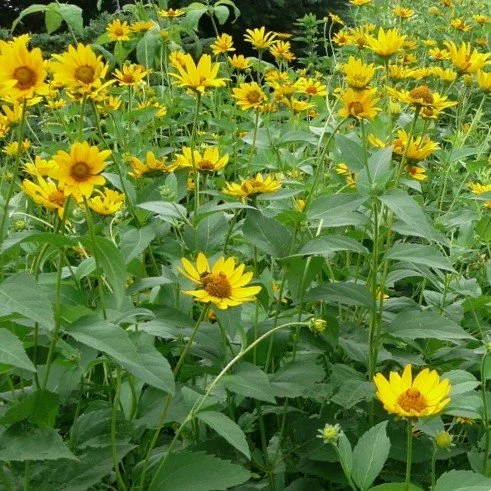
Early Sunflower (often called False Sunflower or Oxeye Sunflower) is a champion of the "pre-autumn" season. While it looks remarkably like a true sunflower, it’s actually a distinct native perennial that is far more manageable and long-lived in a garden setting.
A cheerful, multi-stemmed native that produces a profusion of daisy-like yellow flowers. It is one of the longest-blooming perennials in the summer garden, often starting its show weeks before the rest of the sunflower family.
Sun Exposure Full Sun to Partial Shade (Best in Full Sun)
Water Needs Low to Medium; drought-tolerant once established
Soil Type Adaptable; thrives in Clay, Loam, Sand, or Rocky soil
Mature Height 3 – 5 feet
Deer Resistance Moderate
Bloom Time June – September
Bloom Color Yellow
Plant Spacing 1.5 – 3 feet
Prolific Bloomer: Unlike true sunflowers that bloom once, this species is "deadhead friendly"—removing spent flowers will keep the gold coming all summer long.
Sturdy & Reliable: While it can get tall, its stems are generally stiffer than true sunflowers.However, in very rich soil, it can become "leggy," so it's actually happier in leaner, average soil.
Clump-Forming: It stays where you put it! Unlike some aggressive spreaders, this species grows in a tidy, non-invasive clump that increases in diameter over time.
Specialist Pollinator Support: It is a critical host for the Holcopasites heliopis bee—a tiny specialist pollinator that relies specifically on this plant.
Bird Buffet: If you leave the seed heads standing in the fall, they become a favorite snack for goldfinches and other small songbirds.
Pro Tip: Try planting Early sunflower with purple-blooming companions like Blazing Star or Ironweed that would contrast beautifully with all that yellow.
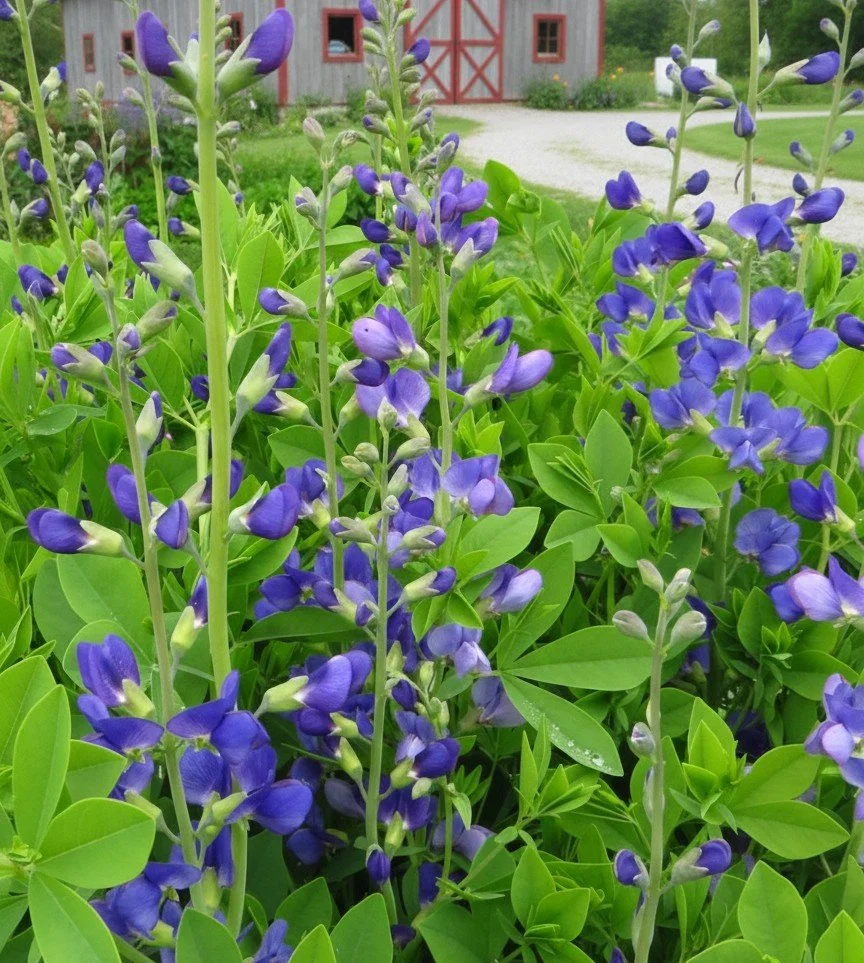
An elegant, long-lived native that looks more like a small shrub than a typical flower. In late spring, it produces tall spikes of deep indigo-blue flowers that resemble Lupine, providing a cool contrast to the yellow-heavy palette of the summer garden. It is often called the "Perennial of the Year" for good reason—it is practically indestructible and offers a shrub-like presence without the woody maintenance.
Sun Exposure Full Sun to Partial Shade (Best in Full Sun)
Water Needs Low to Medium; exceptionally drought-tolerant once established
Soil Type Adaptable; thrives in Clay, Loam, Sand, or Rocky soil
Mature Height 3 – 4 feet
Deer Resistance High
Bloom Time May – July
Bloom Color Blue
Plant Spacing 2 – 3 feet
Deep-Rooted Longevity: It features one of the deepest taproots of any native plant, making it nearly impossible to kill once established—but also very difficult to move! Pick its "forever home" carefully.
It will spend most of the first couple years developing mostly below ground
Shrub-like Structure: While it dies back to the ground in winter, it regrows into a dense, mounded shape with beautiful blue-green, clover-like foliage that stays attractive all summer long.
Because of it’s wide form, generous spacing is recommended.
Bees: The "pea-shaped" flowers are specifically designed for heavy-bodied bees, like Bumblebees, who are strong enough to push the petals open to reach the nectar.
Butterfly Host: It serves as a vital nursery for several butterfly species, including the Wild Indigo Duskywing and the Frosted Elfin.
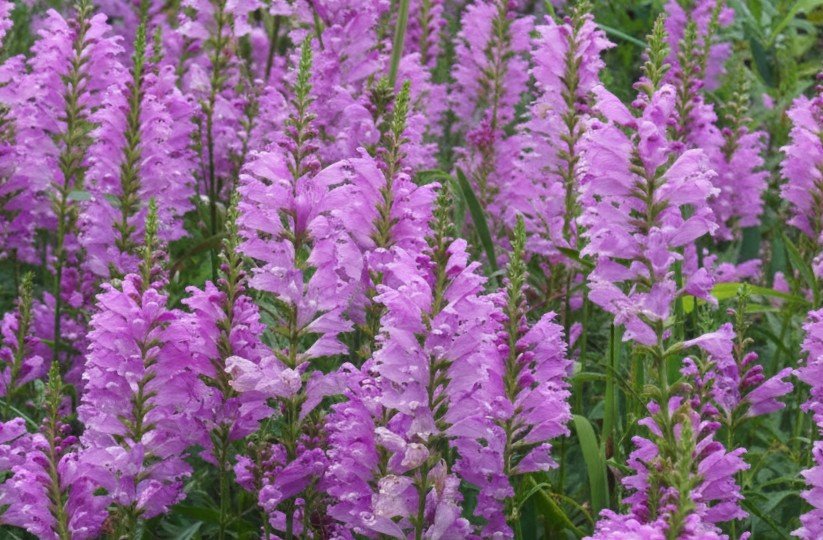
A member of the mint family, this plant is famous for its "obedient" flowers—if you bend a flower to the left or right, it will stay there (at least temporarily). It produces striking, snapdragon-like spikes of pink to lavender flowers that bloom from the bottom up.
Sun Exposure Full Sun to Partial Shade
Water Needs Medium; prefers consistent moisture but can handle dry spells
Soil Type Adaptable; thrives in Clay, Loam, or Sand
Mature Height 3 – 4 feet
Deer Resistance Moderate
Bloom Time August – September
Bloom Color Pink
Plant Spacing 1 – 2 feet
Vertical Accent: The square stems are incredibly sturdy and topped with 10-inch long spikes of flowers.
Vigorous Spreader: This plant spreads via rhizomes. In rich, moist soil, it can be quite assertive. It is perfect for filling a large area quickly but may require thinning every few years to keep it in its "assigned" layer. Please be mindful when choosing your planting site.
Hummingbirds: The tubular shape of the flowers are perfectly evolved for the beak of a Ruby-throated Hummingbird. They are one of the primary visitors to this plant in late summer.
Bumblebee Favorite: Large bees love to "crawl" inside the blossoms to reach the nectar, often emerging covered in white pollen.
Late-Season Support: Because it blooms into fall, it provides one of the last high-energy meals for pollinators preparing for winter or migration.
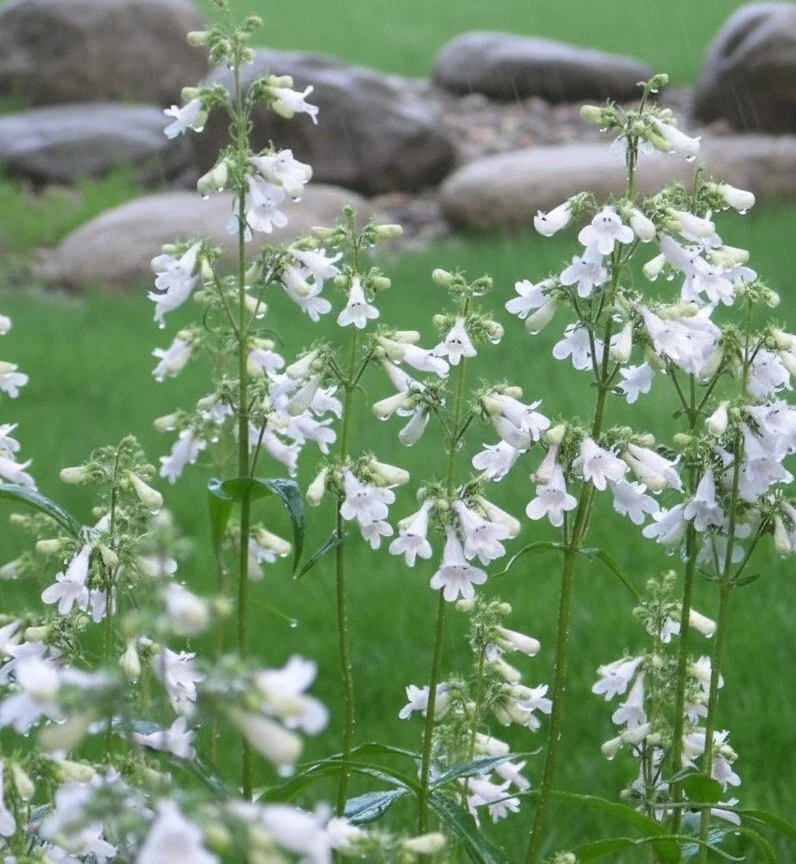
Foxglove Beardtongue is one of the most versatile and "polite" natives you can add to a garden. A standout among native perennials, this plant features smooth, upright stems topped with clusters of white, trumpet-shaped flowers. It gets its name from its resemblance to the classic Foxglove, but unlike its namesake, it is much hardier and easier to grow.
Sun Exposure Full Sun to Partial Shade
Water Needs Low to Medium; very adaptable
Soil Type Adaptable; Clay, Loam, Sand, or Rocky soil
Mature Height 3 – 4 feet
Deer Resistance Moderate - High
Bloom Time June – July
Bloom Color White
Plant Spacing 12 – 18 inches
Adaptable: It is very adaptable to light conditions and does well in areas such as clearings within forests, savannas and woods’ edges.
Tidy Habits: Foxglove Beardtongue is a well-behaved, clump-forming perennial that won't try to take over the yard.
Beardtongues: If you look closely inside a flower, you’ll see a tiny, hairy sterile stamen that looks like a "fuzzy tongue"—this is designed to help guide bees into the flower.
Hummingbirds: The white, tubular flowers are a primary early-season nectar source for Ruby-throated Hummingbirds.
Support for Specialist Bees: It provides vital pollen for several species of native bees that emerge just as the spring bulbs are finishing.
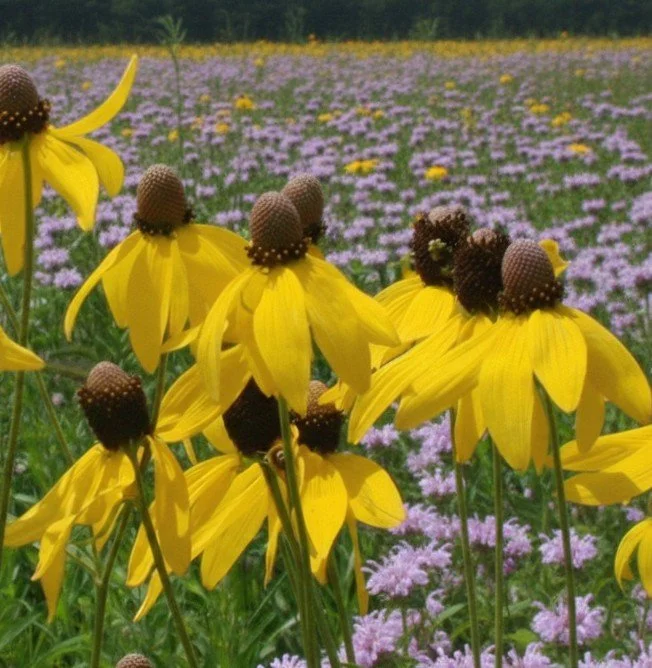
Gray-Headed Coneflower (also known as Yellow Coneflower) is famous for its distinctively drooping petals and a central gray cone that smells like anise or licorice when crushed. This prairie native is known for its tall, slender stems, rough leaves and yellow cheerful flowers. It adds a wonderful sense of motion to the garden, as the blooms sway in the slightest summer breeze. It is native to prairies and savannas and grows best in medium to medium-dry soil conditions.
Sun Exposure Full Sun to Partial Shade
Water Needs Low to Medium; very drought-tolerant once established
Soil Type Adaptable; thrives in Clay, Loam, Sand or Rocky soil
Mature Height 3 – 5 feet
Deer Resistance Moderate - High
Bloom Time July – September
Bloom Color Yellow
Plant Spacing 18 – 24 inches
Distinctive Silhouette: Features bright yellow petals that droop downward, highlighting a prominent gray central cone that turns chocolate brown as the seeds ripen.
Tough as Nails: It is incredibly resilient against heat and drought. It is a reliable "permanent resident" for the back or middle of your garden layers.
Fragrant Cones: When the seed heads are bruised or crushed, they release a pleasant scent described by some as licorice.
Pollinators: The flowers are a high-value nectar source for a diverse range of butterflies, bees and insects.
Winter Bird Feeder: Do not cut the stalks back in the fall! Goldfinches are especially fond of the seeds and will cling to the sturdy cones all winter long to feast.
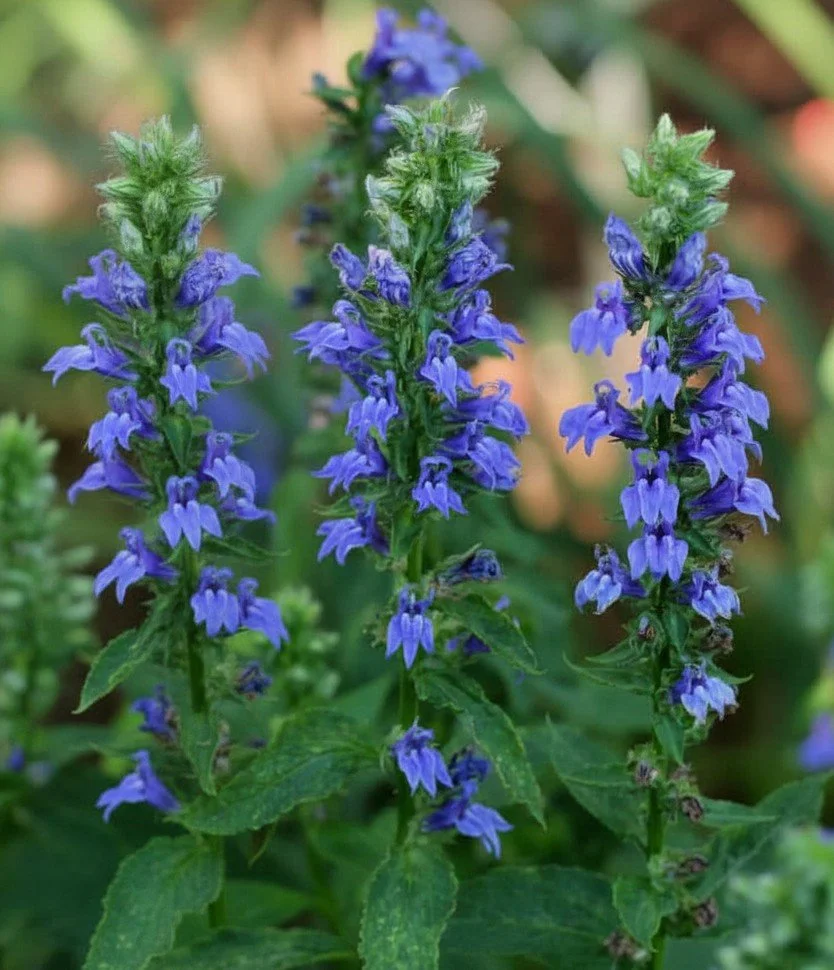
While many plants are masters of the dry, sunny prairie, Great Blue Lobelia is the perfect choice for the slightly cooler or damper spots in your landscape. A stunning, clump-forming native known for its densely packed spikes of tubular, bright blue flowers. It is a fantastic "structural" plant that brings a pop of rare color to the garden just as the mid-summer heat begins to peak. It prefers medium to wet soils, especially with a little shade.
Sun Exposure Full Sun to Partial Shade (Prefers some afternoon shade)
Water Needs Medium to High; prefers consistently moist soil
Soil Type Adaptable; thrives in Muck, Clay, or Loam
Mature Height 2 – 3 feet
Deer Resistance Moderate - High
Bloom Time July – October
Bloom Color Blue
Plant Spacing 12 – 18 inches
Color: The flowers are arranged in a crowded spike that bloom in true blue color from the bottom up.
Well-Behaved Growth: It is a clump-forming perennial that stays tidy and upright. While it may self-seed in moist conditions, it does not have aggressive rhizomes.
Versatile Placement: Can be found in wet prairies, pond and creek edges, soggy meadows, marshland borders and other moist areas.
Deer Resistant: It produces a compound called “lobeline” which deters herbivores.
Pollinators: The deep blue flower spikes attract many different bees and butterflies. You’ll often see bumblebees prying the petals apart to disappear entirely inside the bloom for nectar.
Hummingbirds: While they usually prefer red flowers (like its cousin, the Cardinal Flower), hummingbirds will frequently visit Great Blue Lobelia for its high nectar content.
Late-Season Support: Its long bloom period provides a reliable food source for pollinators during the transition into autumn.
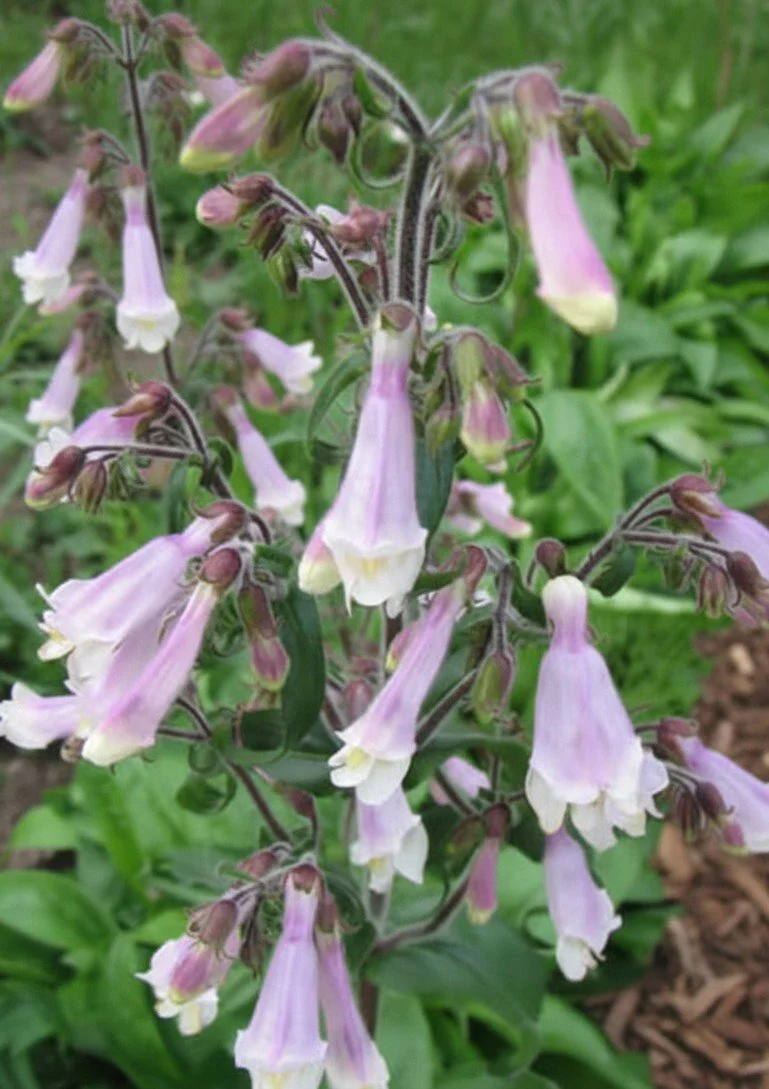
Blooming from May-June, Hairy Beardtongue attracts several types of bees, hummingbirds and butterflies. It is one of the more shade-tolerant Penstemons, making it a versatile choice for those tricky "transition" spots in your landscape. If you’re a fan of the "polite" nature of the Foxglove Beardtongue but want something a bit shorter and more textured for the front of your garden, Hairy Beardtongue is a perfect choice.
Sun Exposure Full Sun, Partial Shade, Shade
Water Needs Low to Medium; very drought-tolerant once established
Soil Type Well-drained Sand, Loam, or Rocky soil
Mature Height 18 inches
Deer Resistance Moderate - High
Bloom Time May – June
Bloom Color Lavendar, Pink
Plant Spacing 10 - 12 inches
Low-Profile: Reaching only about 1–2 feet, it is significantly shorter than its Foxglove cousin, making it an ideal "front-of-the-border" plant.
Blooms: The trumpet-shaped flowers range in color from lavenders and pink to white. The long, thin blooms have five petals with a “hairy” protruding lip.
Rock Garden Champion: Because it thrives in well-drained, rocky, or even poor soils, it is a great choice for rock gardens or edges where other plants might struggle with the heat.
Early Pollinator Resource: It blooms in late spring, providing a critical early-season nectar source for native bees and butterflies before the summer begins.
Hummingbirds: Just like its taller relatives, the tubular flowers are a magnet for Ruby-throated Hummingbirds.
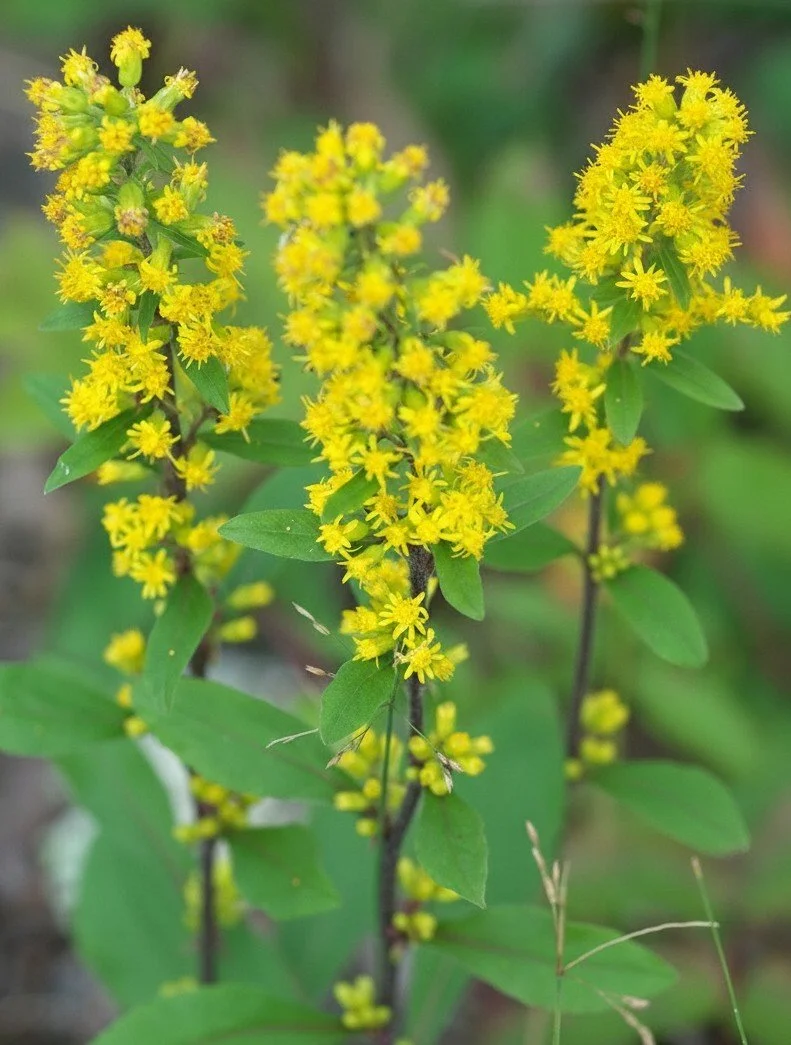
Unlike most goldenrods that branch out into arching plumes, this species grows in a distinct, upright spike, making it a fantastic structural choice for tight spaces or the middle of a layered bed. A distinctive and well-behaved goldenrod easily identified by its fuzzy, silver-haired stems and its unique upright growth habit. Rather than wide-spreading plumes, its flowers hug the stem in a dense, golden column, creating a "wand-like" appearance.
Sun Exposure Full Sun to Partial Shade
Water Needs Low to Medium; exceptionally drought-tolerant
Soil Type Well-drained Sand, Rocky, or Lean/Poor soil
Mature Height 1.5 – 3 feet
Deer Resistance High
Bloom Time August – October
Bloom Color Yellow
Plant Spacing 12 – 18 inches
Color: Its most striking feature is the dense coating of fine white hairs on the stem and leaves, giving the plant a soft, grayish-green cast even when it’s not in bloom. The yellow flowers are relatively large compared to other goldenrods, up to ¼ inch tall and face out from the branches.
Non-Aggressive Habit: Unlike its "runaway" relatives, Hairy Goldenrod is a clump-forming species. It stays in a tidy, vertical bunch, making it one of the best goldenrods for small landscapes or rock gardens.
Perfect for open dry woods, rocky outcrops, dunes.
Pollinators: The nectar-rich golden cylinders are a favorite for a variety of native bees, beneficial wasps, and butterflies.
Critical Fall Fuel: Because it blooms into October, it provides late season energy before the first hard frost.
*Don’t believe the myths—Goldenrod does not cause hay fever! Its pollen is heavy and sticky (designed to be carried by bees, not the wind). The real culprit for itchy eyes is usually Ragweed, which blooms at the same time but has inconspicuous green flowers. You can plant Hairy Goldenrod with confidence, knowing it brings beauty and health to your garden without the sneezing!
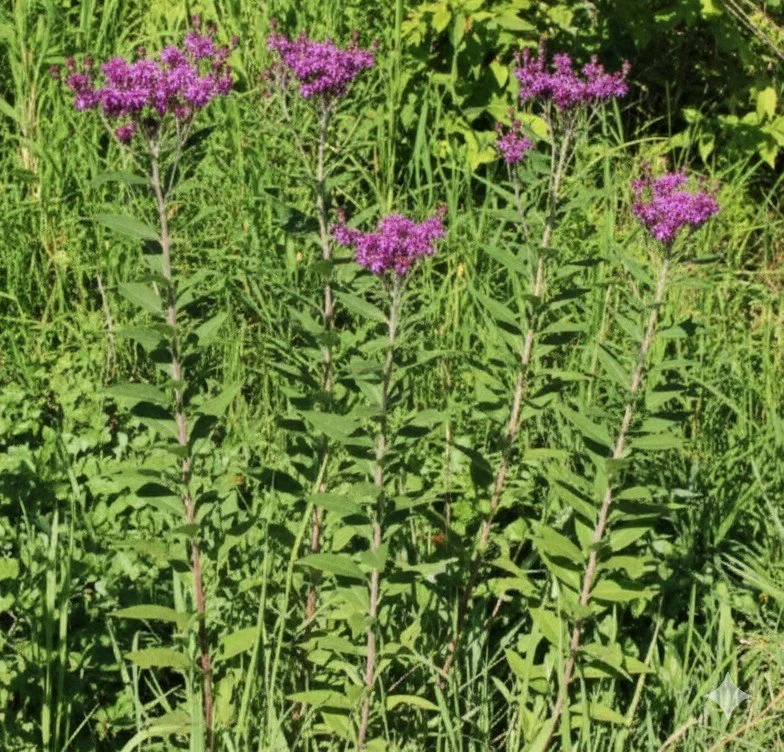
A stately and resilient native, Missouri Ironweed is prized for its intense purple flower clusters and its ability to stand tall without staking. Perhaps the showiest of Ironweeds, it acts as a majestic "anchor" in the garden, signaling the peak of the late-summer season. It provides the garden with a bright magenta color and beautiful, soft texture thanks to its distinctive fuzzy stems and leaves.
Sun Exposure Full Sun
Water Needs Medium; more drought-tolerant than other Ironweeds
Soil Type Adaptable; Clay, Loam, or Sandy/Rocky soil
Mature Height 5 – 6 feet
Deer Resistance High
Bloom Time July – October
Bloom Color Purple
Plant Spacing 2 – 3 feet
Foliage: Unlike its smoother cousins, V. missurica has fine white hairs on the undersides of the leaves and stems, giving the foliage a soft, slightly silvery-green appearance.
Deer Resistant: Ironweeds are bitter to the taste, so they are rarely browsed by deer.
Sturdy: True to its name, the stems are "iron-strong." It provides a rigid vertical line that won't flop over, even when topped with heavy clusters of blooms.
Blooms: Expect to wait 3 years for Ironweed to flower.
Pollinators: In late summer, you will often see this plant covered in Monarchs, Swallowtails, and Skippers. It is a vital fuel stop for migration. It is a high-value source of pollen and nectar for a variety of native bees.
Winter Interest: The spent flower heads turn a silver-tan to rusty-bronze color (hence "Iron" weed) and hold their seeds through the winter, feeding small songbirds like goldfinches.
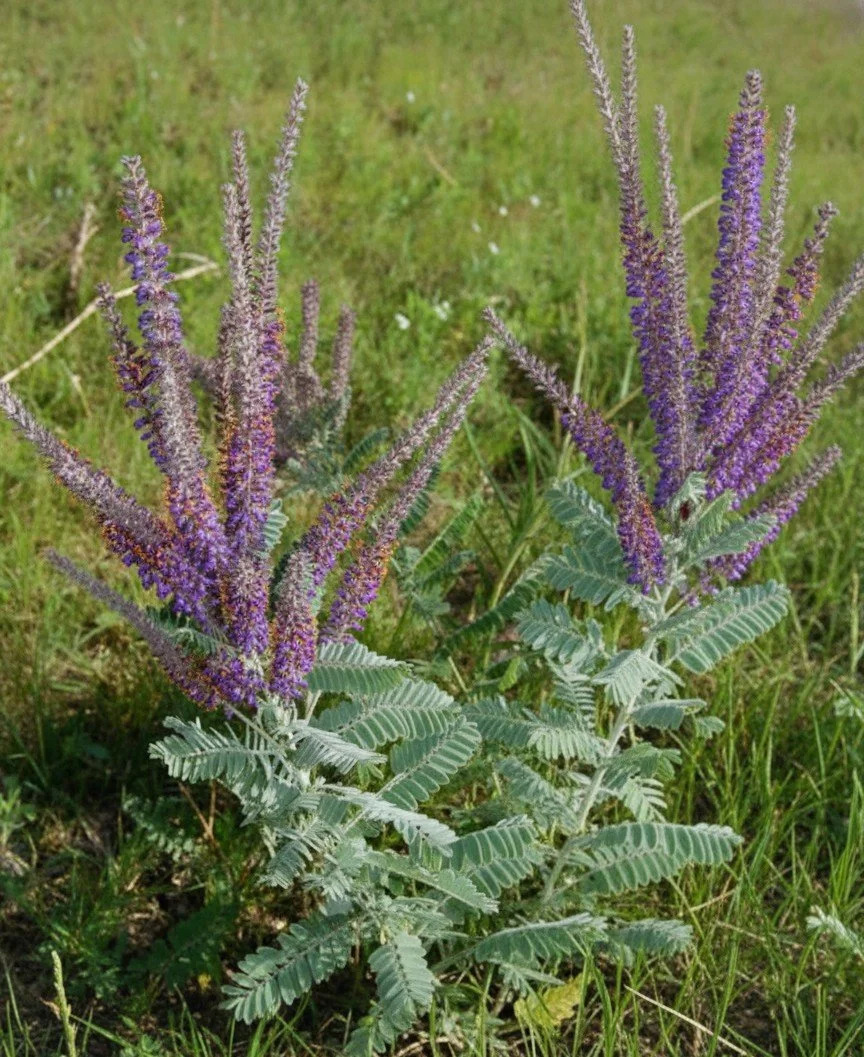
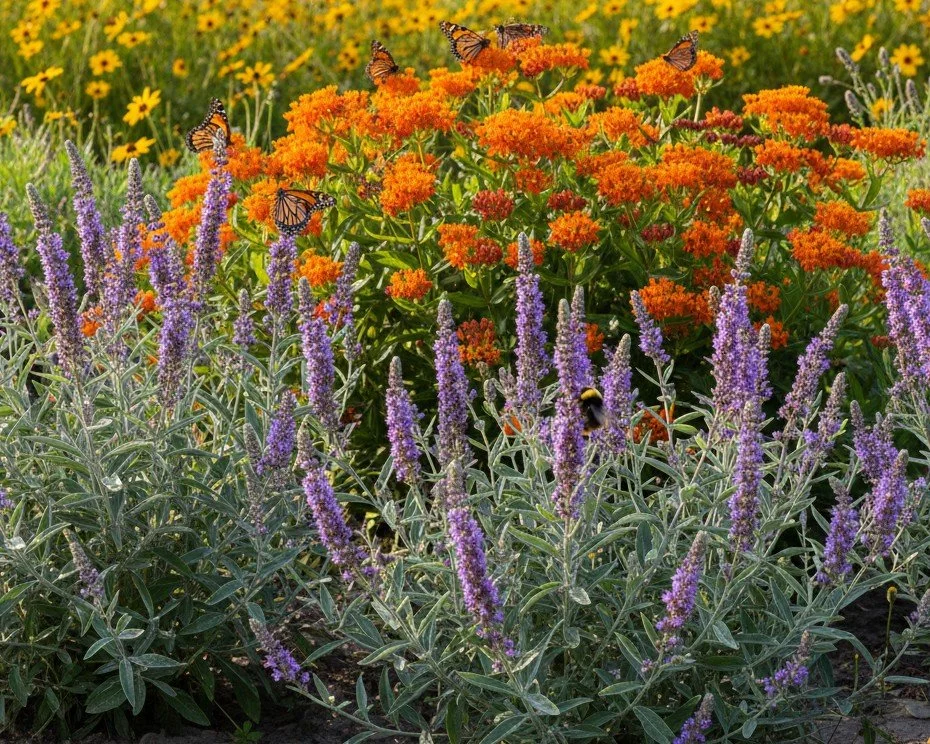
A unique perennial known for its stunning lead-colored (silvery-gray) foliage. In mid-summer, it produces dense, upright spikes of tiny, iridescent purple flowers, each topped with a bright orange-gold stamen. Taproots can reach up to 15’ deep, making it extremely drought tolerant and long-lived.
Sun Exposure Full Sun (will tolerate partial shade)
Water Needs Low; exceptionally drought-tolerant once established
Soil Type Well-drained Sand, Loam, or Rocky/Gravelly soil
Mature Height 2 – 3 feet
Deer Resistance High once established
Bloom Time June – July
Bloom Color Purple
Plant Spacing 1 – 2 feet
Deep-Rooted: Leadplant is famous for its massive taproot, which can extend up to 15 feet underground! This makes it one of the most drought-resistant plants in existence, though it also means it does not like to be moved once planted.
Leadplant is a woody shrub and can take several years to fully mature, during which time it should not be cut back.
Silvery Texture: The leaves are covered in fine, lead-colored hairs that give the plant a soft, "frosted" appearance. This silver foliage provides a beautiful contrast to the deep greens of other garden plants.
Nitrogen Fixer: As a member of the legume family, Leadplant works with soil bacteria to "fix" nitrogen, naturally enriching the soil for its neighbors.
Deer Resistant: Mature plants are typically deer resistant, but it will be best to protect your young plants with mesh or a cage. Rabbits and others will browse young Leadplants while they are getting established.
Pollinators: It is a high-value nectar source for several types of bees, beetles and other beneficial insects.
Butterfly Favorite: Its unique purple spikes are a magnet for various butterflies, including the Dogface Sulphur and various Hairstreaks.
Host Plant: It serves as a host for several moth and butterfly species.
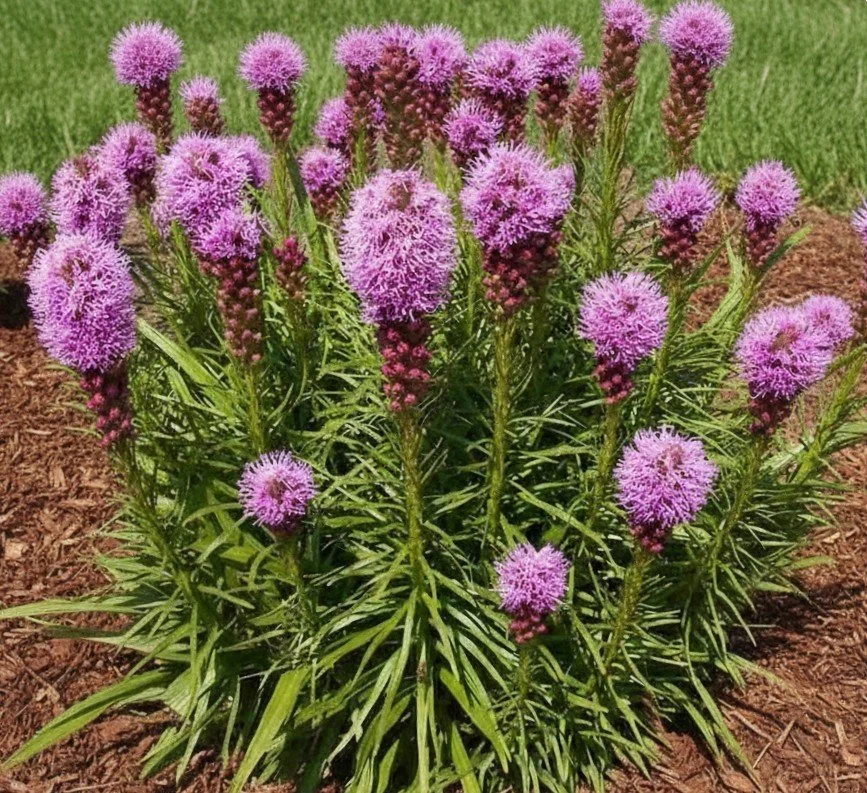
Also known as Dense Blazing Star, this plant features stiff, upright stems covered in grass-like foliage, topped with thick spikes of feathery, magenta-purple flowers that look like glowing sparklers in the summer sun. Marsh Blazing Star is native to moist meadows and marsh margins of the Midwest. It is a standard component of naturalized moist prairies, butterfly gardens, water feature margins, and rain gardens.
Sun Exposure Full Sun (preferred) to Partial Shade
Water Needs Medium to High; prefers moist soil but is quite adaptable
Soil Type Adaptable; thrives in Muck, Clay, Loam, or Moist Sand
Mature Height 3 – 5 feet
Deer Resistance Moderate - High
Bloom Time July – September
Bloom Color Lavendar - Purple
Plant Spacing 1 – 2 feet
Blooms: Unlike most spiked flowers that bloom from the bottom up, Liatris starts at the very tip of the wand and works its way down, extending its beauty over several weeks.
Corm-Based Growth: It grows from a bulb-like structure called a corm. This makes it a very "polite" neighbor; it won't spread aggressively or take over your garden beds.
Distinctive Texture: Before the flowers appear, the plant looks like a lush clump of fine, fountain-like grass, providing excellent green texture in the early spring.
Monarch Fuel: This is arguably one of the best plants for Monarch and other butterflies. During their migration, you will often see several butterflies jostling for position on a single flower spike.
Bumblebee Favorite: The feathery "stars" are packed with nectar, making them a high-priority stop for bumblebees and clearwing hummingbird moths.
Bird Feeder: If you leave the stalks up in the fall, goldfinches and other songbirds will visit the garden to feast on the small, nutritious seeds.
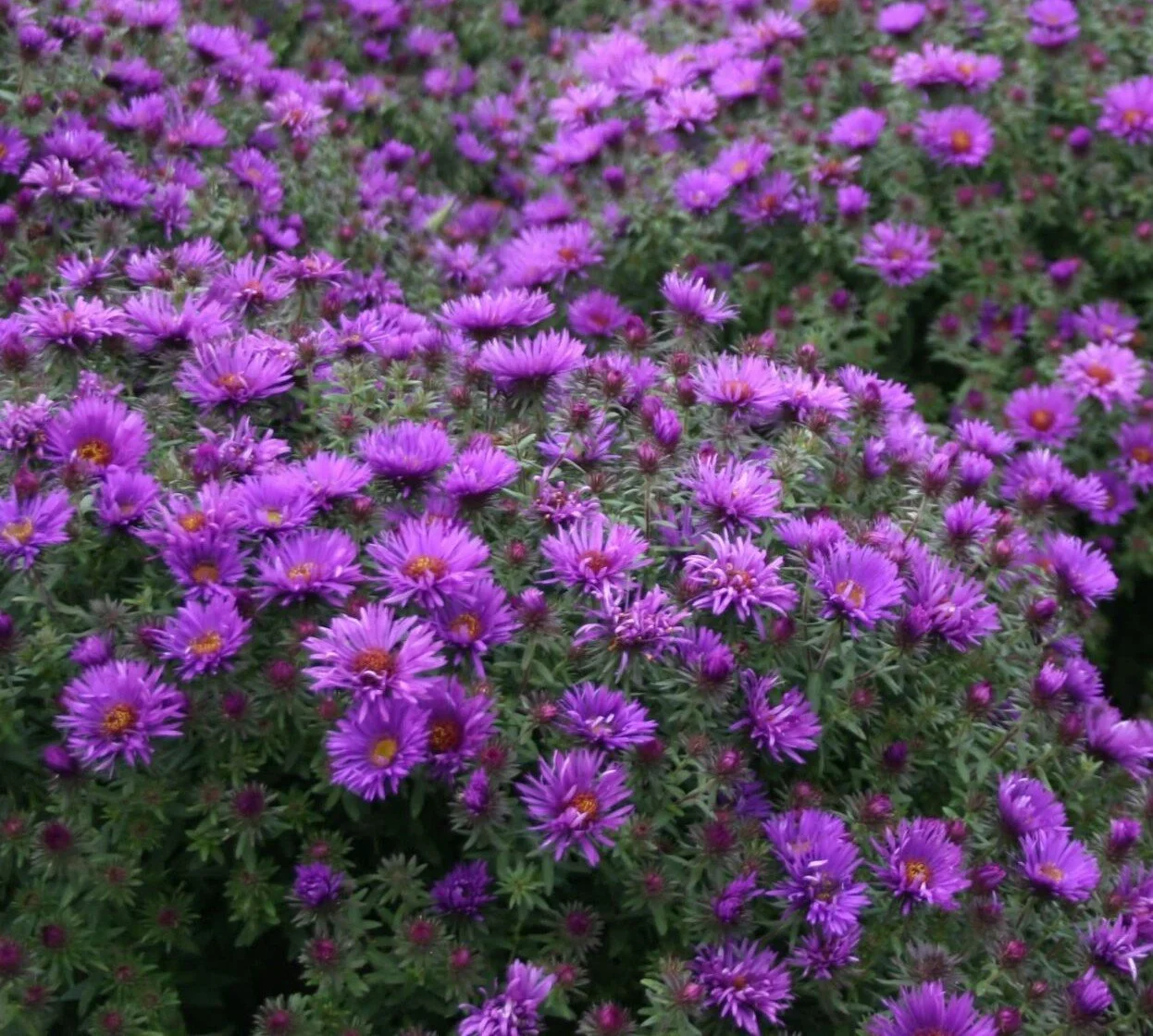
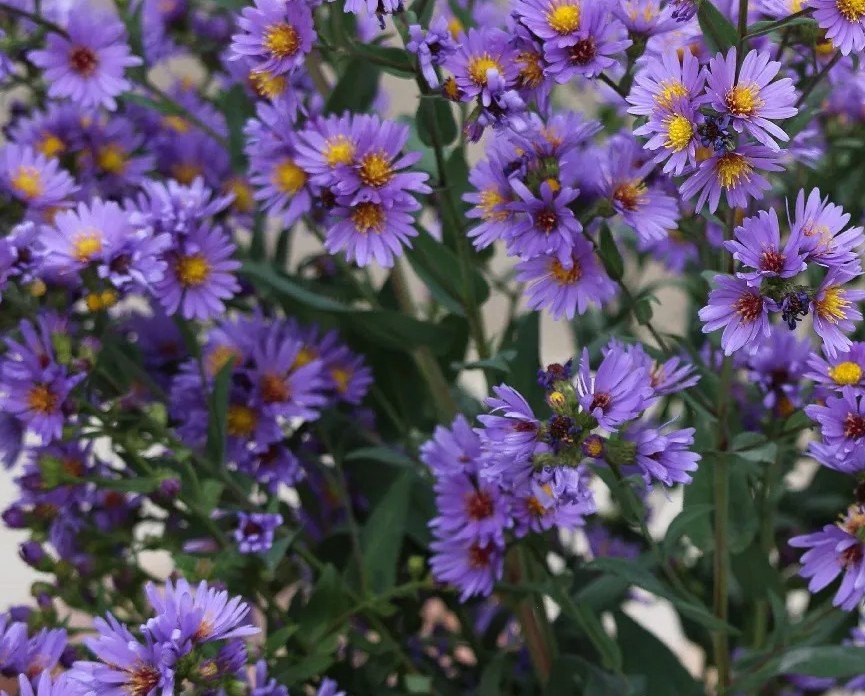
While other plants are winding down for winter, this aster explodes into a cloud of vivid purple and gold, providing one last massive feast for pollinators. A robust and showy native perennial that is famous for its late-season bloom. Its stems are topped with hundreds of daisy-like, deep violet-to-pink flowers with bright yellow centers, creating stunning color in the autumn landscape.
Sun Exposure Full Sun (best for bloom density) to Partial Shade
Water Needs Medium; prefers consistent moisture but is adaptable
Soil Type Adaptable; Muck, Clay, Loam, or Sand
Mature Height 3 – 5 feet
Deer Resistance Moderate
Bloom Time August – October
Bloom Color Purple
Plant Spacing 2 – 3 feet
Color: Blooms can range in color from purple, violet and shades of pink.
The "Hairy" Stem: Similar to the Hoary Vervain, the stems of New England Aster are covered in fine, bristly hairs, which helps with easy identification.
Foliage: It is natural for the bottom leaves of this plant to turn brown and drop off by late summer. This is just the plant focusing its energy on the flowers at the top! You can easily hide this by planting shorter natives in front of it.
Aggressive self-seeder: Please keep in mind when selecting your planting sites. Removal of the seed heads before the seed is ripe will help prevent it from spreading or the need to weed unwanted seedlings.
Migration Fuel: Provides critical, high-energy nectar for Monarchs and other butterflies into late fall.
Bees: It is a vital resource for late-emerging specialist bees and bumblebee queens who are preparing to overwinter.
Host Plant: It serves as a larval host for the Pearl Crescent butterfly and several species of moths.
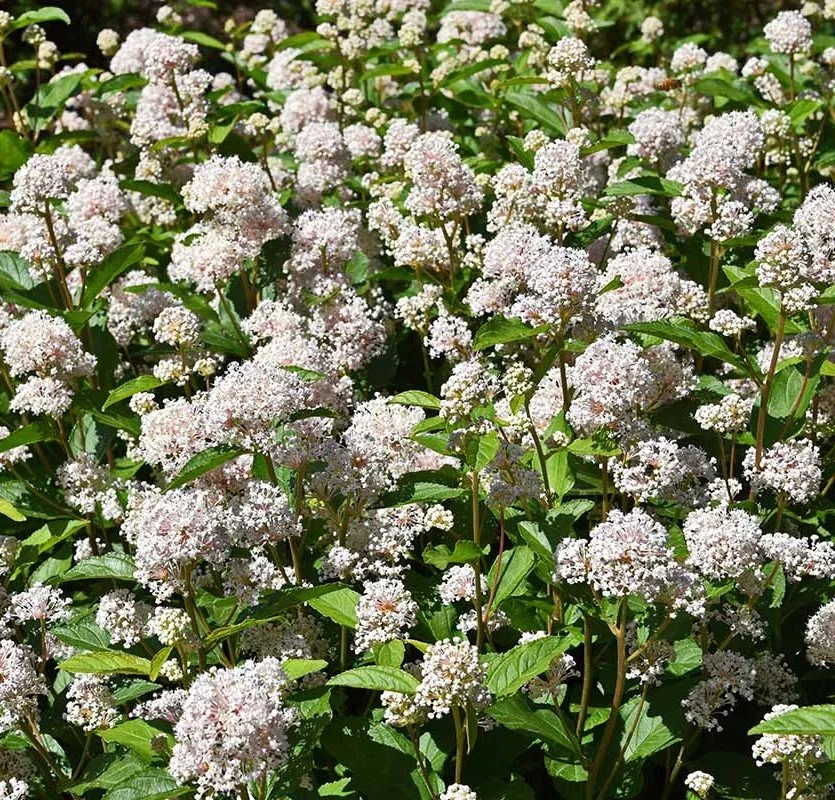
If you’re looking for a plant that bridges the gap between a flowering shrub and a perennial, New Jersey Tea (Ceanothus americanus) is a fascinating choice. It’s a compact shrub with a deep history—its leaves were actually used as a caffeine-free tea substitute during the American Revolution! A sturdy, low-growing deciduous shrub that produces clusters of tiny, fragrant white flowers on long stalks. It is one of the few shrubs that stays small enough to fit perfectly in a perennial border, offering a unique texture and a massive draw for pollinators.
Sun Exposure Full Sun to Partial Shade
Water Needs Low to Medium; exceptionally drought-tolerant once established
Soil Type Well-drained Sand, Loam, or Rocky/Gravelly soil
Mature Height 2 – 3 feet
Deer Resistance Moderate (deer and rabbits will browse this plant, especially when young)
Bloom Time June – August
Bloom Color White
Plant Spacing 2 – 3 feet
Deep Taproot: New Jersey Tea grows a massive, woody red root system that can go very deep. This makes it incredibly drought-proof but also means it hates being transplanted once it’s in the ground.
Nitrogen Fixer: It has a symbiotic relationship with soil bacteria that allows it to "fix" nitrogen, improving the soil quality for all the plants around it.
Blooms: The white flowers appear in dense, cylindrical clusters that look like pom poms from a distance, adding a soft, airy texture to the mid-summer garden.
Foliage: glossy leaves and a mounding shape that keeps it’s rich, green color throughout the growing season but loses it’s leaves in the winter.
If desired, pruning should be done in late winter or early spring before new growth starts. It typically takes about 3 years to reach maturity. Mature shrubs can be cut to the ground in the spring to encourage more rapid growth.
Pollinators: It is legendary for the sheer variety of insects it attracts, including bees, specialized wasps, butterflies and hummingbirds.
Host Plant: It is a critical larval host for the Mottled Duskywing butterfly and the Spring Azure butterfly.
Seed Source: Ripe seeds are eaten by wild turkeys and quail, and other large birds.
Pro Tip: Plant with Butterfly Weed, Coreopsis, Spiderwort or Prairie Dropseed.
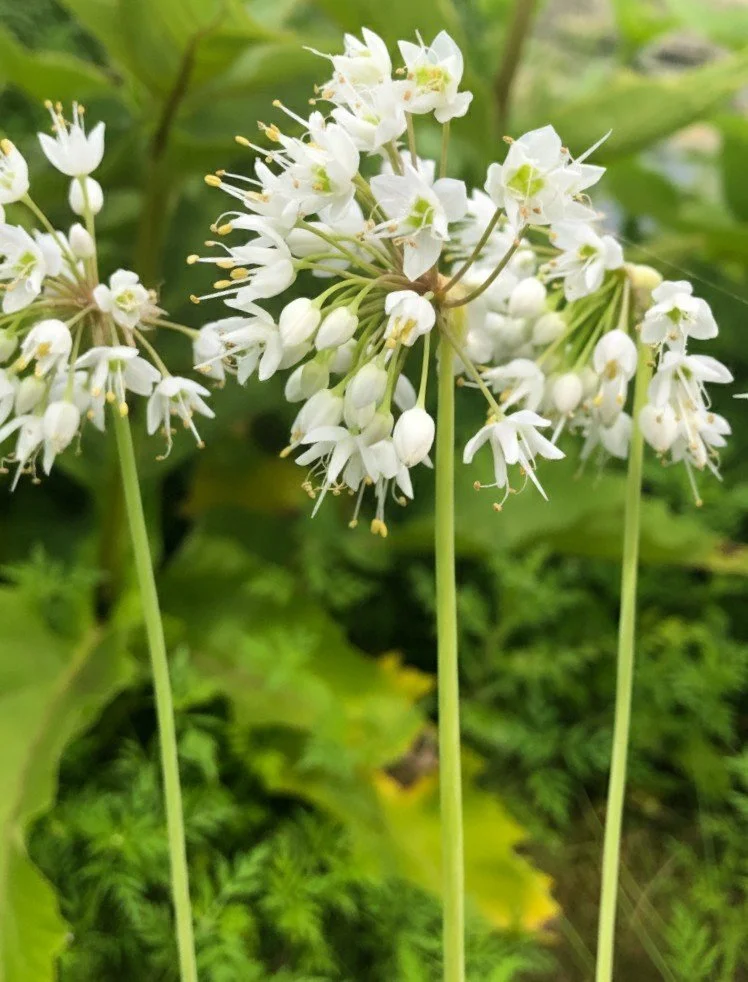
A graceful and hardy perennial that adds a soft, rounded texture to the garden. Unlike garden-variety onions, this native species is grown for its ornamental beauty and its ability to thrive in a wide range of moist soil conditions. It is easily recognized by its unique flower orientation; the clusters of soft white/pink to light lavender flowers to dangle downward “nodding” toward the ground.
Sun Exposure Full Sun to Partial Shade
Water Needs Medium
Soil Type Will do well in moist to medium Muck, Clay, Loam
Mature Height 1 – 2 feet
Deer Resistance High
Bloom Time July – August
Bloom Color White and Pink to Lavendar
Plant Spacing 4 – 8 inches
The "Nodding" Habit: The flower stalk has a distinctive bend at the top, causing the globe-shaped cluster of bell-like flowers to face the ground. This may help protect the nectar from rain and provides a unique silhouette.
Ornamental Foliage: It features narrow, grass-like leaves that remain tidy and green throughout the spring and summer, and the individual flower stems are often a burgundy color.
Non-Aggressive: While it can self-seed in ideal conditions, it grows from small bulbs and remains in a polite, upright clump that won't crowd out its neighbors.
Bees: The downward-facing flowers are a favorite for bumblebees and honeybees, who are strong enough to hang from the blossoms to collect nectar and pollen.
Pro Tip: Plant in mass for a more stunning display or mixed in with sedges or prairie grass.
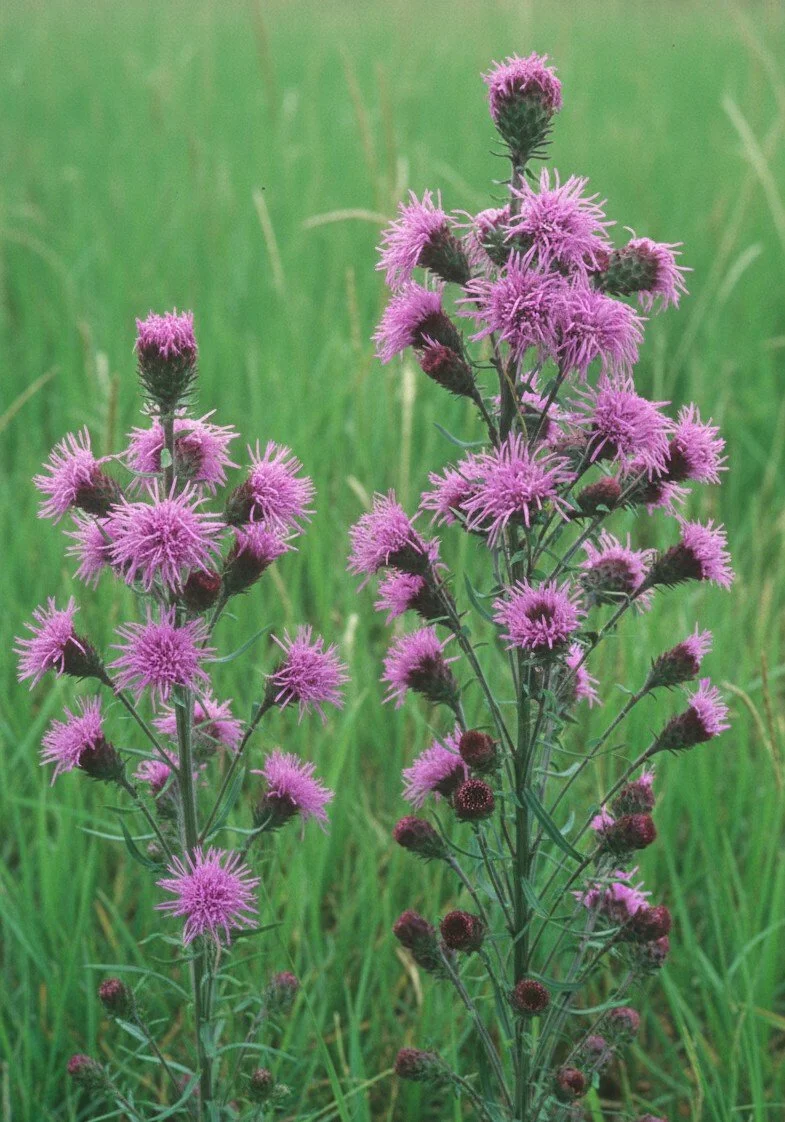
Often found in rocky openings and sandy savannas, this species is prized for its large, shaggy flower heads. Unlike other Blazing Stars with dense, tight spikes, Liatris scariosa has distinct, rounded thistle-like flower clusters that give it a more textured and "wild" appearance. Unlike it’s damp loving cousin Marsh Blazing Star, Northern Blazing Star prefers dry conditions.
Sun Exposure Full Sun to Partial Shade
Water Needs Low; highly drought-tolerant
Soil Type Well-drained Loam, Sand, Rocky, or Gravelly soil
Mature Height 2 - 3 feet
Deer Resistance Low, this Blazing Star is commonly browsed on by deer and rabbits
Bloom Time August – September
Bloom Color Purple
Plant Spacing 10 – 12 inches
Flowers: The flower heads are wider and more separated than other Liatris species, looking thistle-like and are about 1” across. Flowers can extend up to 18” of the overall plant stem.
Top-Down Bloomer: Like its relatives, it begins blooming at the top of the spike and works its way down, providing a long-lasting nectar source throughout the late summer.
Because of the top-heavy weight, plants may require staking to hold them upright.
Dry Specialist: This is one of the best Blazing Stars for "difficult" dry spots. It thrives in poor, thin soils where other plants might struggle to find nutrients.
Monarchs and Other Butterflies: This flower is loved by Monarchs and many other butterflies. The wide flower heads provide an easy platform for them to rest and refuel.
Bees: It attracts a wide variety of bees, especially bumblebees, who are attracted to the deep nectar wells.
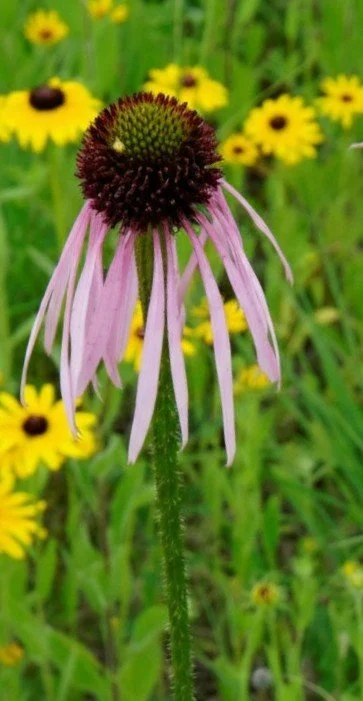
A classic prairie native, this species is prized for its early bloom time and its daisy-like flowers. Its pale pink-to-lavender petals hang gracefully around a tall, copper-colored central cone. Pale Purple Coneflower should be planted in well-drained soil and prefers full sunlight.
Sun Exposure Full Sun (preferred) to Partial Shade
Water Needs Low; highly drought-tolerant once established
Soil Type Well-drained Sand, Loam, or Rocky/Gravelly soil
Mature Height 2 – 3 feet
Deer Resistance High
Bloom Time June – July
Bloom Color Pink, Lavendar
Plant Spacing 10 – 18 inches
Blooms: Unlike the horizontal petals of the Purple Coneflower (E. purpurea), the petals of the Pale Purple Coneflower are very thin and droop dramatically downward, giving the flower a unique, elegant silhouette.
Deep Taproot: It possesses an incredibly deep taproot making it one of the most drought-resistant perennials for a sunny garden, but it should not be moved once established.
Early Starter: This species typically blooms 2–3 weeks earlier than other coneflowers, making it the perfect "bridge" between spring flowers and the heat of mid-summer.
Pollinators: It blooms in early summer when only a few other plants are in bloom, providing a massive amount of nectar for hummingbirds and butterflies. The leaves provide food for the Ottoe-skipper larva.
Goldfinch Favorite: In late summer and fall, the cones turn dark and fill with oil-rich seeds. You will often see Goldfinches perched directly on the cones, plucking out the seeds.
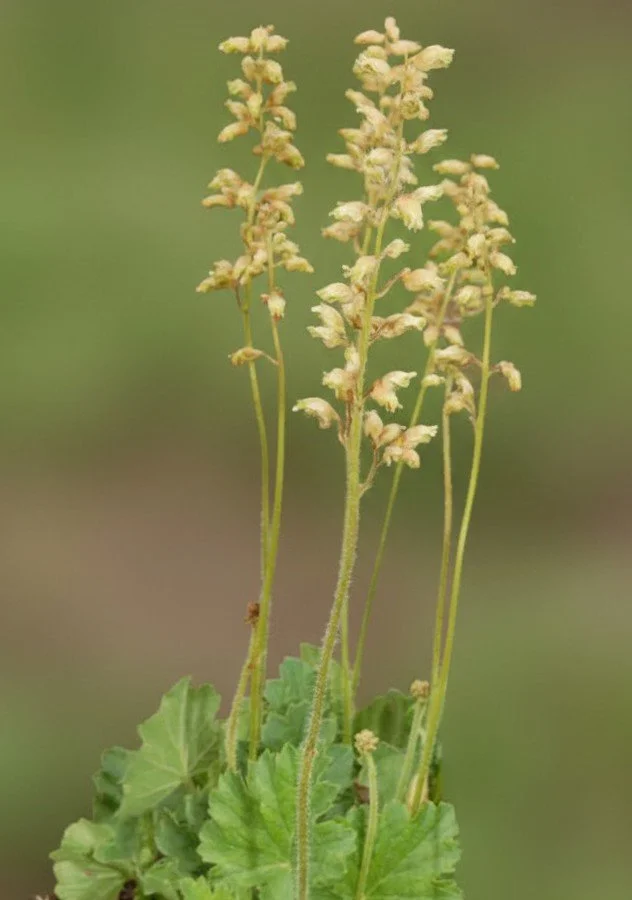
A mound-forming perennial prized for its decorative, curley-edged foliage with quite hairy undersides. In late spring, it sends up slender, leafless wands, often reaching 2-3 feet tall, topped with tiny, bell-shaped flowers that are a subtle blend of green, cream, and reddish-brown. The exserted stamens stick out like orange tongues from under the upper petal’s lip.
Sun Exposure Full Sun to Partial Shade
Water Needs Low to Medium
Soil Type Well-drained Loam or Sand or Gravely soil
Mature Height 1 – 2 feet (Foliage stays low; flower spikes reach higher)
Deer Resistance High
Bloom Time May – July
Bloom Color Pale Green or Cream
Plant Spacing 8 – 12 inches
Soil Moisture: It is tolerant of a wide range of soil moisture, but prefers areas with sand, gravel or other materials that allow moisture to easily drain from the planting site.
Roots: The roots are relatively shallow and may benefit from having winter mulch applied..
Early Pollinators: The tiny, bell-shaped flowers are specifically shaped for small native bees and flies that emerge in the late spring.
Hummingbirds and Butterflies: A variety of butterflies and hummingbirds are attracted to the bell-shaped blossoms.
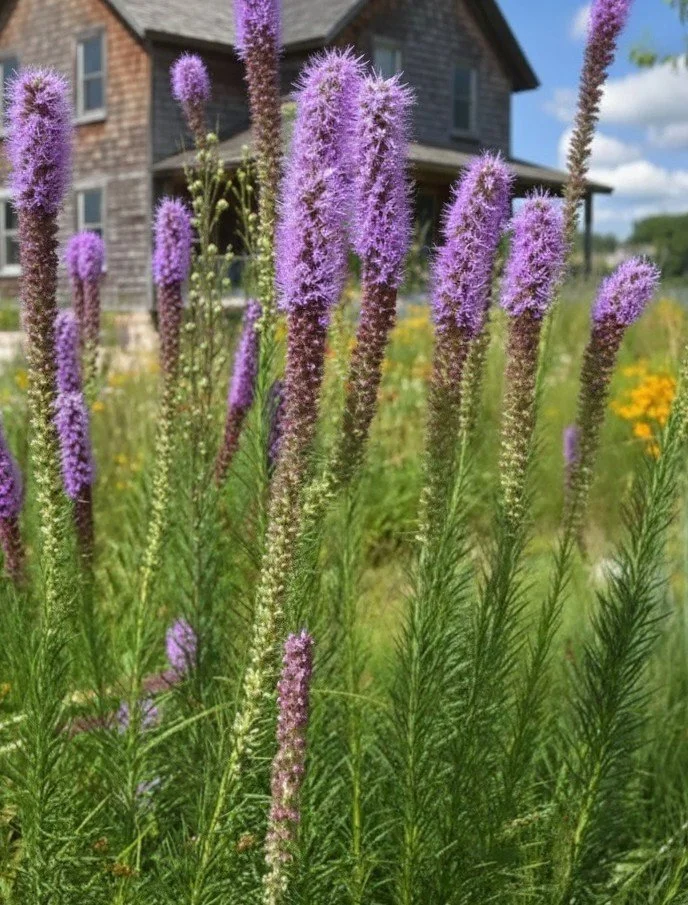
Prairie Blazing Star is famous for its exceptionally crowded flower spikes. The species name pycnostachya literally means "thick-spiked," which perfectly describes the way the fuzzy purple flowers are packed tightly together on the stem. It is an excellent species to plant in wet-medium perennial gardens or prairies.
Sun Exposure Full Sun to Partial Shade
Water Needs Medium; prefers consistent moisture but tolerates dry spells
Soil Type Clay, Loam, or Moist Sand
Mature Height 4 feet
Deer Resistance Moderate
Bloom Time July – September
Bloom Color Purple
Plant Spacing 12 – 18 inches
Blooms: Because the flowers are so densely packed, the entire top 1–2 feet of the plant becomes a solid column of vibrant purple. It creates a much bolder "block" of color than other Liatris species.
Top-Down Bloom: Like its cousins, it starts blooming at the very top of the spike and slowly works its way down, ensuring several weeks of continuous color.
Stalks: The stems are very rigid and covered in narrow, grass-like leaves, giving the plant a very clean, architectural look before it even begins to flower.
Butterflies: Along with the Marsh Blazing Star, this is a stop for Monarchs and other butterflies.
Bees and Hummingbirds: It is a favorite of bumblebees and other large native bees and hummingbirds in the height of summer.
Host Plant: Prairie Blazing Star is a host plant for numerous small moths.
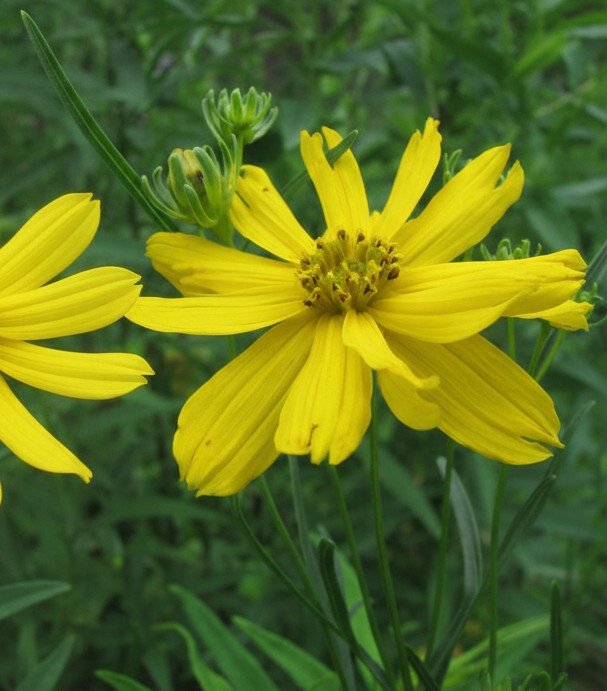
A long-lived and dependable perennial that forms tidy, upright clumps. In mid-summer it boasts bright yellow flowers for 3-4 weeks. Blooms are about 1-2 inches across and has deeply textured palmate leaves. While many other Coreopsis species can look a bit "wild" or floppy, Prairie Coreopsis is known for its stiff stems and unique, architectural foliage that stays attractive even when the plant isn't in bloom.
Sun Exposure Full Sun to Partial Shade
Water Needs Low to Medium; very drought-tolerant
Soil Type Sand, Loam, or Rocky soil (avoid overly rich or wet soils)
Mature Height 1.5 – 2 feet
Deer Resistance High
Bloom Time June – July
Bloom Color Yellow
Plant Spacing 12 – 18 inches
Unique Foliage: The leaves are deeply divided into three narrow lobes, resembling a bird's foot or a palm. This provides a distinct, "feathery" texture that contrasts beautifully with broad-leafed plants.
Upright Stems: Unlike some cousins that sprawl, this species stays strictly upright. Its stems are very sturdy, meaning it rarely needs staking and handles wind exceptionally well.
Rhizomatous Spreader: It spreads slowly via rhizomes and can potentially overwhelm small landscapes. Please be mindful when planting.
The rhizomes slowly form an underground mat that is excellent for stabilizing dry, sunny slopes and even sand dunes.
Pollinator Variety: The bright yellow, 1- 2 inch wide flowers are a magnet for various butterflies and skippers.
Bee Support: It is a high-value plant for many native bees and is considered a good species by Beekeepers.
Fall Seed Source: Like the "Tickseeds," it produces small, dark seeds that are a favorite for goldfinches and other small songbirds.
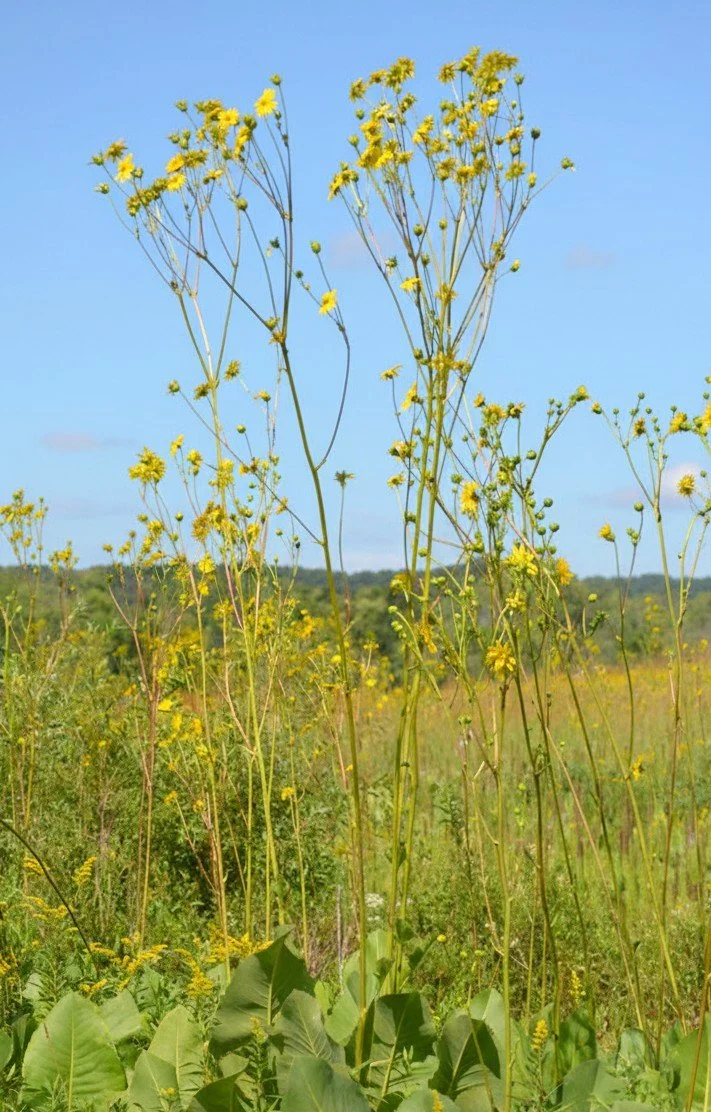
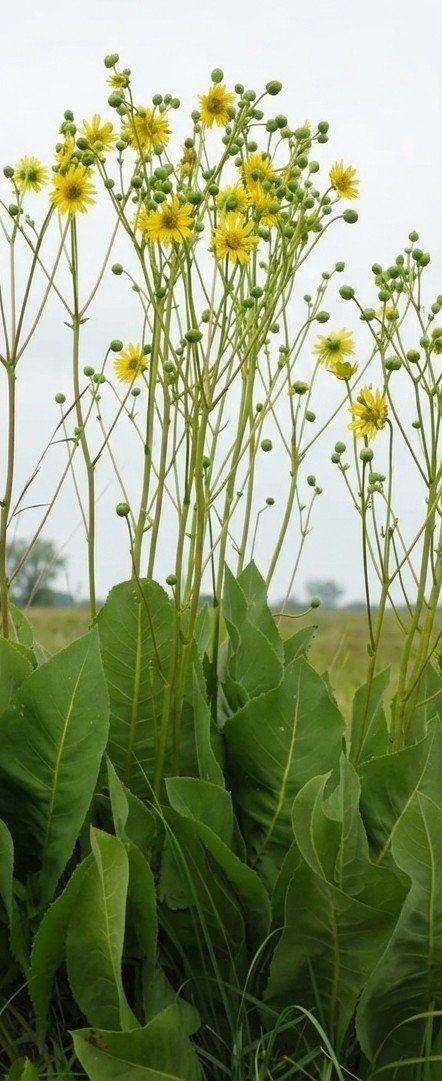
A long-lived, slow-growing giant known for having some of the largest leaves of any native plant. The foliage stays low to the ground in a dramatic clump, while the smooth, leafless flower stalks skyrocket upward, topped with bright, sunflower-like blooms.
Sun Exposure Full Sun to Partial Shade
Water Needs Medium; exceptionally drought-tolerant once established
Soil Type Clay, Loam, Sand or Rocky soil
Mature Height up to 9 feet
Deer Resistance High
Bloom Time July – September
Bloom Color Yellow
Plant Spacing 2 – 4 feet
Massive Leaves: The leaves can grow up to 18” long and 12” wide. They are stiff, leathery, and have a texture like sandpaper. Because they are held vertically to minimize sun exposure, they are incredibly efficient at surviving hot, dry summers.
Stems: Unlike its cousin, the Compass Plant, Prairie Dock has completely smooth, leafless flower stalks.
Roots: It grows a massive taproot that can reach 10–15 feet into the earth. This makes it very drought resistant, but it also means you must pick its forever home carefully, as it cannot be moved once established.
Pollinators: The yellow flowers attract large butterflies, honeybees and bumblebees.
Birds: Because the stalks are so strong and tall, they serve as excellent hunting perches and birds love the seed.
Pro Tip: Plant it at the very back of your border. The massive leaves provide a solid green "wall" at ground level, while the yellow flowers dance high above your New England Aster and Ironweed.
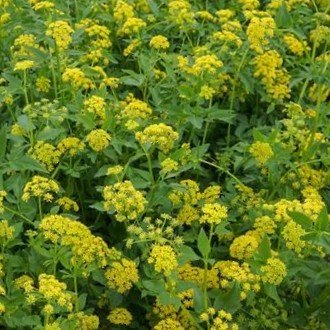
A dependable and cheerful perennial that belongs to the carrot family. It is easily recognized by its flat-topped, lace-like clusters (umbels) of tiny golden flowers. It’s a sturdy plant that brings a bright, airy feel to the garden just as the spring rains are beginning to taper off. It provides a much-needed burst of yellow in the late spring, filling the gap before your Coreopsis and Blazing Stars take the stage.
Sun Exposure Full Sun (preferred) to Partial Shade
Water Needs Low to Medium
Soil Type Adaptable; thrives in Clay, Loam, or Rocky soil
Mature Height 2 feet
Deer Resistance Moderate - High
Bloom Time April - May
Bloom Color Yellow
Plant Spacing 10 – 12 inches
Heart-Shaped Foliage: One of the easiest ways to identify Zizia aptera is by its "unlobed" heart-shaped leaves at the base of the plant.
Flowers: The flowers grow in "umbels," which look like tiny golden umbrellas. This structure provides a delicate, lacy appearance that contrasts beautifully with the heavier, broader leaves of neighboring plants.
Black Swallowtail Host: This is a host plant for the Black Swallowtail butterfly. Their caterpillars love to feed on the foliage.
Early Nectar Source: Because it blooms so early, it is a critical food source for emerging native bees and beneficial predatory insects.
Pollinator Diversity: The flat, open flower clusters make the nectar easily accessible to insects with short mouthparts, such as small flies and beetles that can't reach into deep tubular flowers.
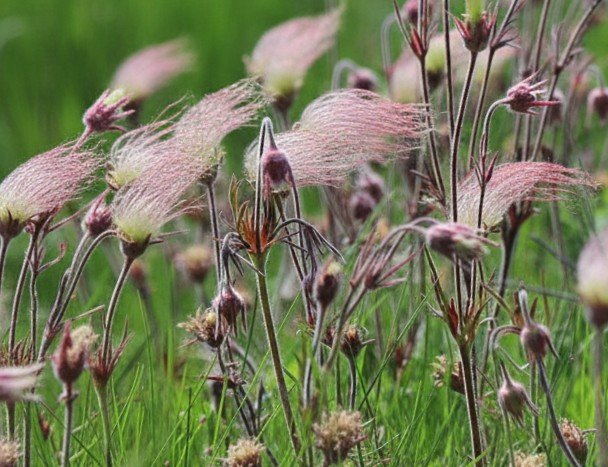
A distinctive and hardy ground-covering perennial. It’s a low-growing charmer that transforms after it blooms, turning from nodding pink bells into feathery, smoky pink seed heads.
Sun Exposure Full Sun to Partial Shade
Water Needs Low; prefers well-drained conditions
Soil Type Well-drained Loam, Sand, Rocky, or Gravelly soil
Mature Height 8 inches
Deer Resistance High
Bloom Time April – June
Bloom Color Pink/Red
Plant Spacing 6 – 8 inches
Nodding Bells: Before the "smoke" appears, each stem holds three small, reddish-pink bells that hang downward.
The "Smoke" Effect: After the nodding pink flowers are pollinated, the styles elongate into 2-inch long, feathery pink plumes. In a mass planting, these look like a low-lying pink cloud or "smoke" hovering over the ground.
Fern-like Foliage: The leaves are deeply serrated, soft, and resemble tiny fern fronds.
Slow Spreading: Prairie Smoke will slowly spread by rhizome in well-drained soils to form a ground cover and work well in in dry rock gardens.
Early Season Nectar: It is one of the earliest sources of food for a variety of bees and other pollinators.
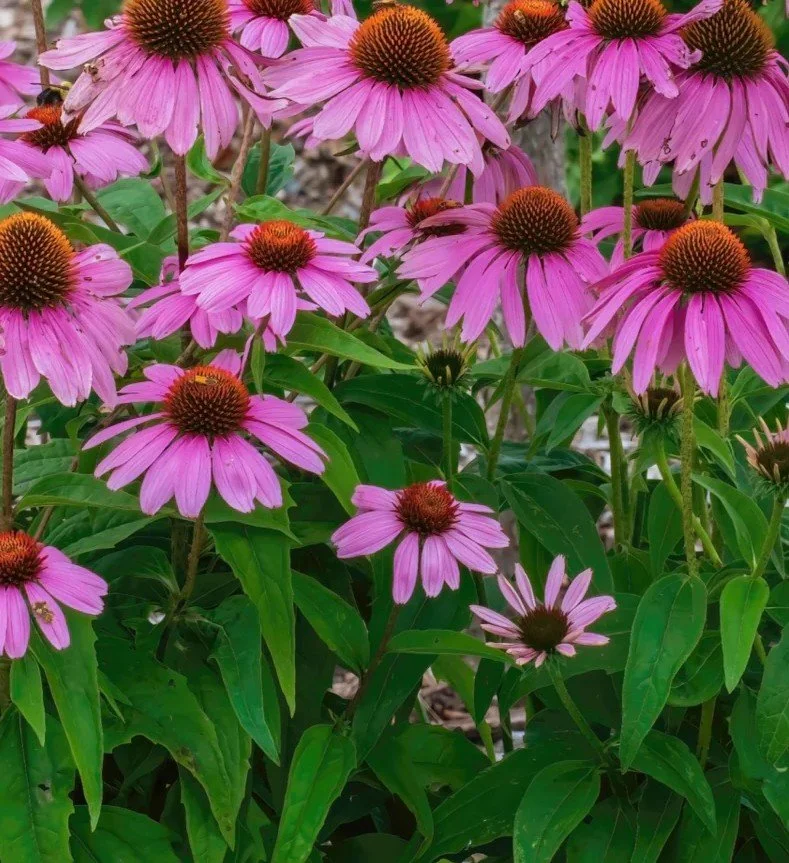
The Purple Coneflower is a quintessential prairie native, prized for its beauty and bloom time of about 2 months. With its tall, sturdy stems and showy flowers, this is a favorite nectar source for butterflies, bees and many other pollinators, including hummingbirds.
Sun Exposure Full Sun to Partial Shade
Water Needs Moderate to Low once established
Soil Type Needed Moist to Medium Loam, Clay, or Sandy soil
Mature Height 3 – 4 feet
Deer Resistance High
Bloom Time July – September
Bloom Color Purple
Plant Spacing 18 – 24 inches
Medium Soil Preferred: Once established, these plants are pretty drought-tolerant, but the entire plant can wilt if the soil becomes too dry in strong sunlight.
Growth is best in fertile loam, but the soil can contain some sand, clay or gravel.
Sturdy Stems: Unlike many tall perennials, the Purple Coneflower rarely needs staking. Its stems are tough and fibrous, standing tall even after heavy summer rains or wind.
Bloom Time: Purple Coneflowers have an approximately a 2-month bloom time and may re-bloom in the fall, especially if dead-headed early on.
Self-Seeding: While not invasive, Echinacea will happily drop seeds in open soil. This allows your patch to thicken naturally over time.
Pollinators: The central cone is a nectar goldmine. It is a favorite stop for Monarch butterflies, Swallowtails, and a massive variety of native bees.
Songbirds: Goldfinches are especially fond of this plant. They will often perch directly on the dried seed heads in late fall and winter to pluck out the protein-rich seeds.
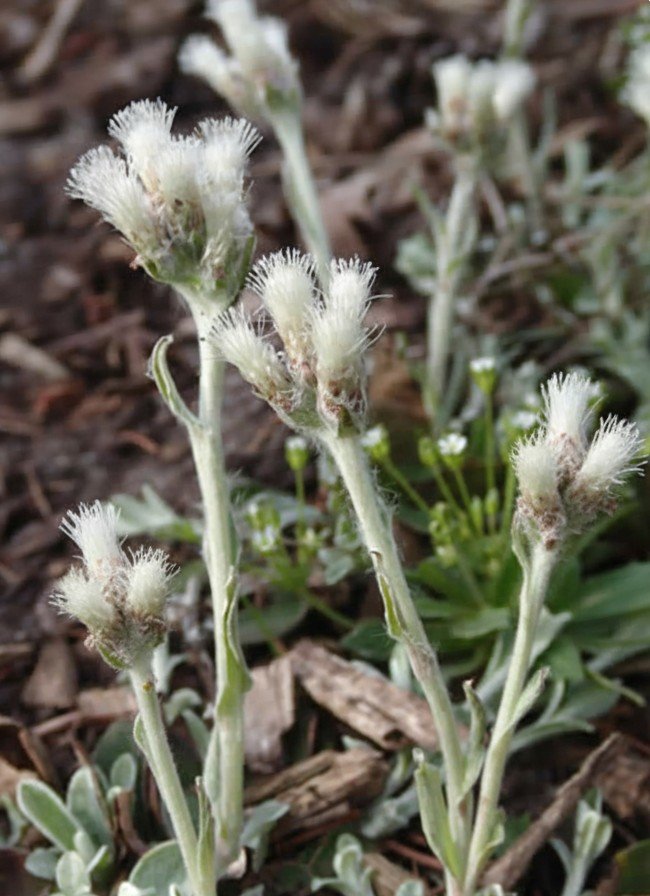
A member of the Aster family, Pussytoes is named for its soft, fuzzy flower heads that resemble a kitten’s paw. This plant is a rugged specialist for the difficult, dry spots in a landscape where other plants might struggle to take hold, such as in a rock garden. This plant is usually grown for it’s velvety leaves, not it’s white flower.
Sun Exposure Full Sun to Partial Shade
Water Needs Low; highly drought-tolerant
Soil Type Needed Well-drained Sand, Gravel, Rocky, or Lean/Poor soil
Mature Height 1–4 inches (foliage); up to 12 inches (flowers)
Deer Resistance High (parts of the plant are poisonous to deer and rabbits)
Bloom Time April – June
Bloom Color White
Plant Spacing 6 – 12 inches
Ground Cover: This plant spreads via stolons (above-ground runners) to create a tight, weed-suppressing carpet. It is an excellent native alternative to non-native groundcovers.
Silver Foliage: The leaves grow at ground level and are covered in tiny white hairs, giving the plant a soft, silvery-gray appearance.
Early Season "Paws": In mid-spring, fuzzy white-to-pinkish flower clusters rise above the foliage on slender stalks. Their unique texture is one of the earliest signs of life in a native rock garden.
Drought tolerant: Pussytoes thrives in "poor" soil. In fact, if the soil is too rich or heavily fertilized, the plant may become leggy or lose its tight, mat-forming habit. It loves the neglected corners of the yard.
Host Plant: Pussytoes is a critical host plant for the American Lady butterfly (Vanessa virginiensis).
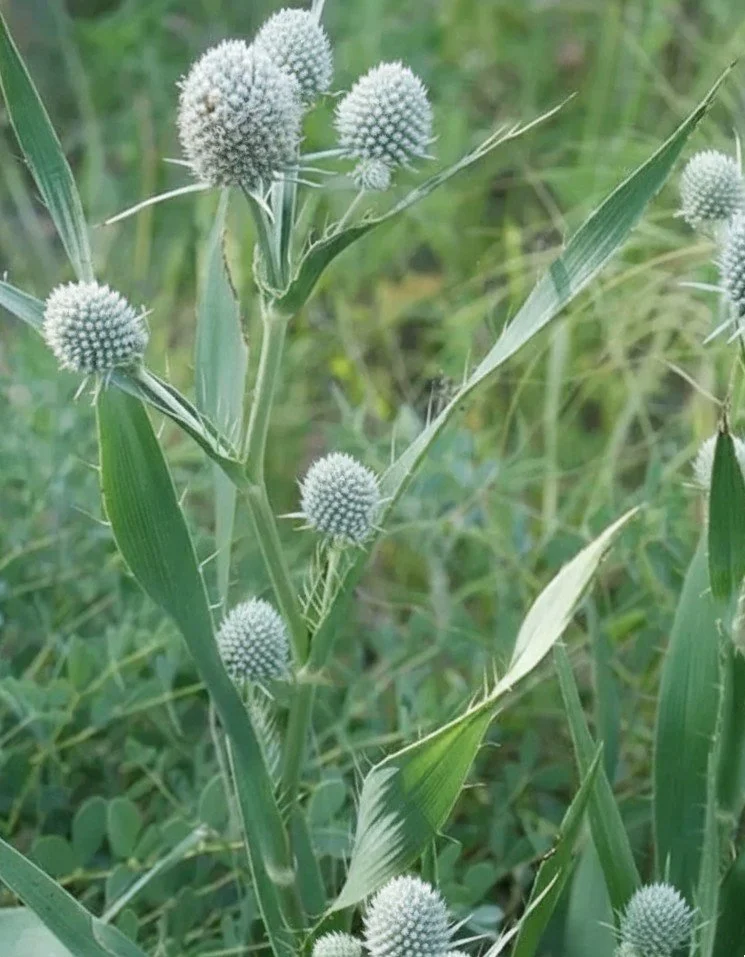
Rattlesnake Master is one of the most architectural and otherworldly plants in the tallgrass prairie. With its stiff, sword-like leaves and bristly, globe-shaped flower heads, it looks more like a desert yucca than a member of the carrot family. It adds a unique "silver-blue" cool tone to the garden.
Sun Exposure Full Sun
Water Needs Low to Moderate
Soil Type Clay, Loam, of Sand
Mature Height 4 feet
Deer Resistance High
Bloom Time July – September
Bloom Color White
Plant Spacing 18 – 24 inches
Yucca-Like Foliage: The long, bluish-green leaves feature small soft teeth along the edges, mimicking the look of a desert yucca.
Spherical Blooms: Unlike typical flat-topped flowers, Rattlesnake Master produces bristly white flower heads. These "prickly" globes start off green, turn white with a hint of blue, and eventually dry to a tan in the fall.
Pollinators: Small native bees, moths and flies will nectar on Rattlesnake Master.
No results match your search. Try removing a few filters.