
 Image 1 of 1
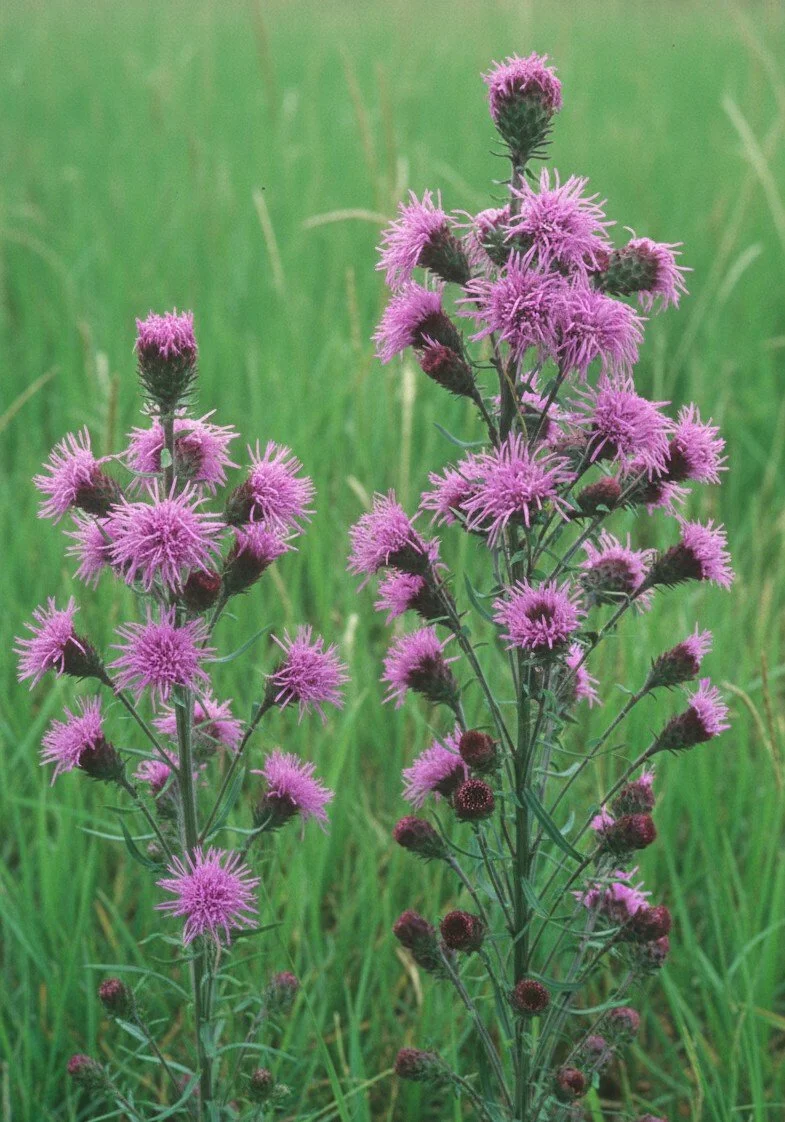
Often found in rocky openings and sandy savannas, this species is prized for its large, shaggy flower heads. Unlike other Blazing Stars with dense, tight spikes, Liatris scariosa has distinct, rounded thistle-like flower clusters that give it a more textured and "wild" appearance. Unlike it’s damp loving cousin Marsh Blazing Star, Northern Blazing Star prefers dry conditions.
Sun Exposure Full Sun to Partial Shade
Water Needs Low; highly drought-tolerant
Soil Type Well-drained Loam, Sand, Rocky, or Gravelly soil
Mature Height 2 - 3 feet
Deer Resistance Low, this Blazing Star is commonly browsed on by deer and rabbits
Bloom Time August – September
Bloom Color Purple
Plant Spacing 10 – 12 inches
Flowers: The flower heads are wider and more separated than other Liatris species, looking thistle-like and are about 1” across. Flowers can extend up to 18” of the overall plant stem.
Top-Down Bloomer: Like its relatives, it begins blooming at the top of the spike and works its way down, providing a long-lasting nectar source throughout the late summer.
Because of the top-heavy weight, plants may require staking to hold them upright.
Dry Specialist: This is one of the best Blazing Stars for "difficult" dry spots. It thrives in poor, thin soils where other plants might struggle to find nutrients.
Monarchs and Other Butterflies: This flower is loved by Monarchs and many other butterflies. The wide flower heads provide an easy platform for them to rest and refuel.
Bees: It attracts a wide variety of bees, especially bumblebees, who are attracted to the deep nectar wells.
Often found in rocky openings and sandy savannas, this species is prized for its large, shaggy flower heads. Unlike other Blazing Stars with dense, tight spikes, Liatris scariosa has distinct, rounded thistle-like flower clusters that give it a more textured and "wild" appearance. Unlike it’s damp loving cousin Marsh Blazing Star, Northern Blazing Star prefers dry conditions.
Sun Exposure Full Sun to Partial Shade
Water Needs Low; highly drought-tolerant
Soil Type Well-drained Loam, Sand, Rocky, or Gravelly soil
Mature Height 2 - 3 feet
Deer Resistance Low, this Blazing Star is commonly browsed on by deer and rabbits
Bloom Time August – September
Bloom Color Purple
Plant Spacing 10 – 12 inches
Flowers: The flower heads are wider and more separated than other Liatris species, looking thistle-like and are about 1” across. Flowers can extend up to 18” of the overall plant stem.
Top-Down Bloomer: Like its relatives, it begins blooming at the top of the spike and works its way down, providing a long-lasting nectar source throughout the late summer.
Because of the top-heavy weight, plants may require staking to hold them upright.
Dry Specialist: This is one of the best Blazing Stars for "difficult" dry spots. It thrives in poor, thin soils where other plants might struggle to find nutrients.
Monarchs and Other Butterflies: This flower is loved by Monarchs and many other butterflies. The wide flower heads provide an easy platform for them to rest and refuel.
Bees: It attracts a wide variety of bees, especially bumblebees, who are attracted to the deep nectar wells.