
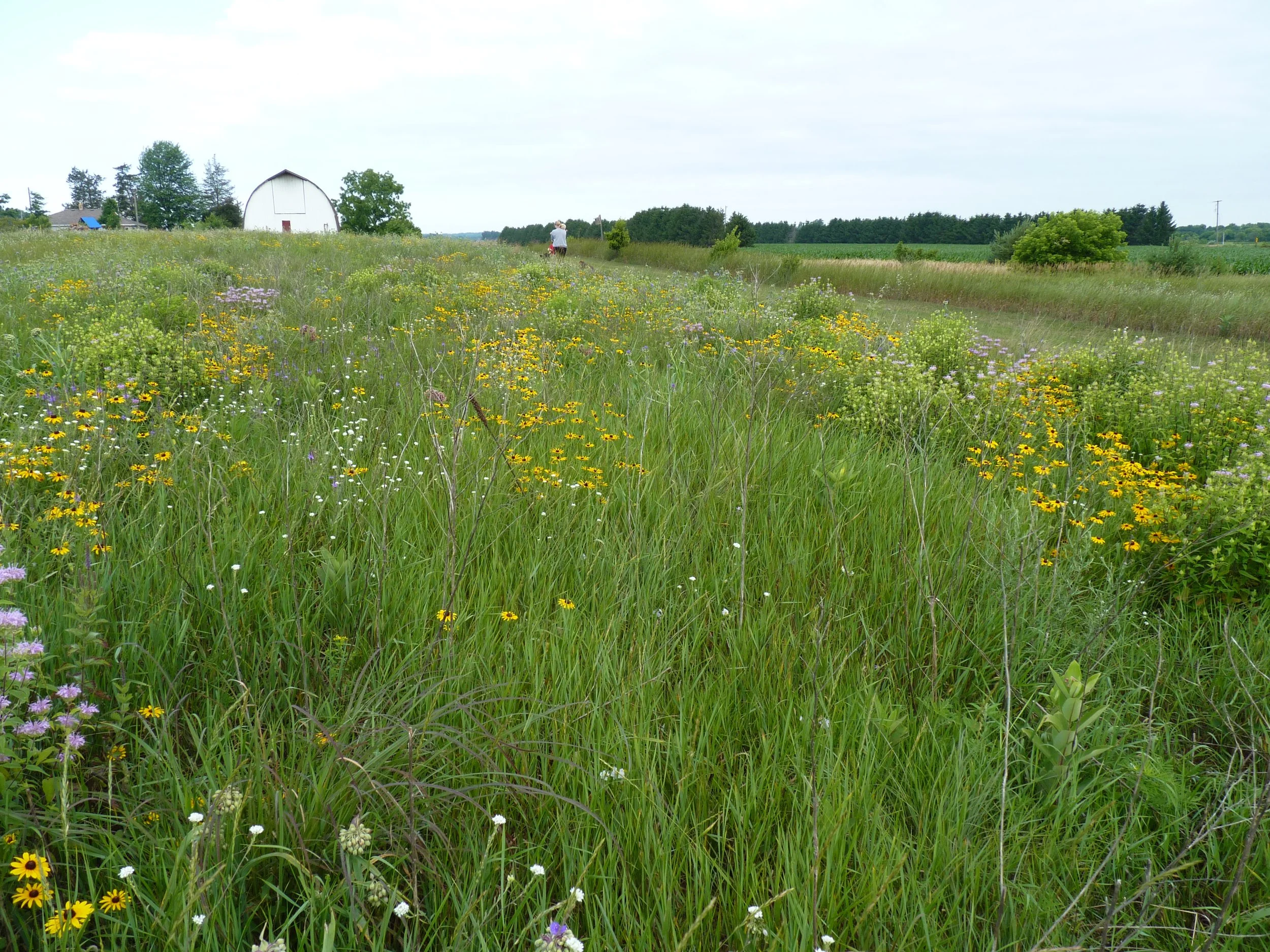
All Grasses
All Grasses
- All |
- Sun Exposure |
- Soil Moisture |
- Height |
- Warm Season |
- Cool Season |
- Deer Resistant |
- Black Walnut Tolerant |
Filters
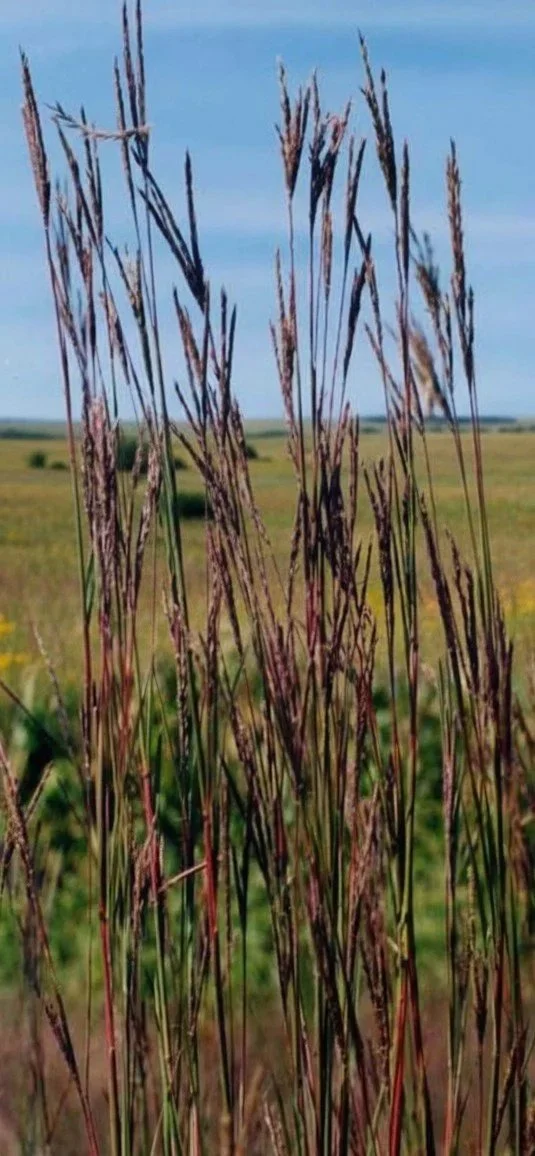
If you want to add height, and a sense of history to your landscape, look no further than Big Bluestem. Often called the "King of Native Grasses," this iconic plant was once the dominant species of the tallgrass prairie.
Plant Profile
Sun Exposure Full Sun to Part Shade
Water Needs Low to Medium (Drought Tolerant after established)
Soil Type Adaptable; can do well in Muck, Clay, Loam or Sand
Mature Height 5 to 8 feet
Deer Resistance High
Bloom Time June – September
Plant Spacing 2 – 3 feet
Plant Characteristics
"Turkey Foot" Seed Heads: In late summer, the grass produces distinct three-pronged flower spikes that resemble a turkey's foot. These spikes emerge in shades of purplish-red, adding a unique texture to your planting.
Color: The stems often have a blue-green hue in the spring and summer. As autumn arrives, the plant shifts into shades of copper, reddish-bronze or purple tones.
Deep-Rooted: With roots that can reach up to 10 feet deep, Big Bluestem is incredibly drought-tolerant and plays a massive role in soil health.
Privacy & Screening: Reaching heights of 7 feet, it serves as a fantastic, eco-friendly living fence or a backdrop for shorter flowering perennials.
Wildlife benefits
Pollinator Support: It serves as a critical larval host plant for several butterfly species, including the Delaware Skipper, Dusted Skipper, Arogos Skipper and Cobweb Skipper.
Songbirds: In the fall and winter, the protein-rich seeds provide a feast for songbirds like Juncos, Sparrows, and Finches. The sturdy, tall stems also offer excellent nesting material and winter cover.
Essential Shelter: The dense, upright clumps provide a safe "nursery" and overwintering habitat for beneficial insects (like ladybugs and native bees) and small mammals during the coldest months.
Pro Tip: Because Big Bluestem is a tall "warm-season" grass, it does most of its growing in the heat of mid-summer. Plant it at the back of your garden beds so it can rise up behind your early-blooming wildflowers as they begin to fade. Big Bluestem can be an aggressive spreader, so it is not recommended for small spaces.
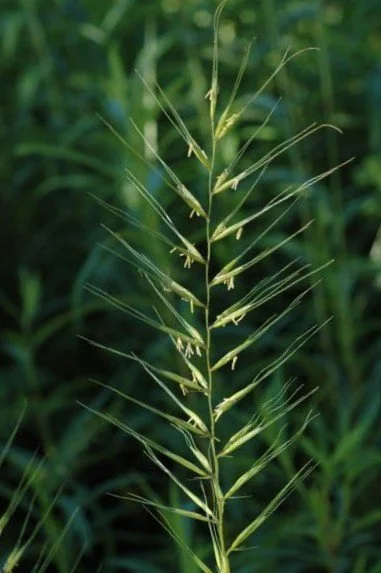
This native, cool-season grass is famous for its distinctive flower spikes that appear in mid-summer, resembling bristly brushes. Bottlebrush Grass is a shade-loving champion. It is one of the few native grasses that will happily illuminate the darker corners of your yard, providing vertical interest and a cool, "forest-floor" aesthetic.
Plant Profile
Sun Exposure Partial Shade to Full Shade
Water Needs Low to Moderate; quite drought-tolerant once established.
Soil Type Adaptable; thrives in rocky, loam, or dry clay soils.
Mature Height 2 – 4 feet (including flower spikes)
Deer Resistance High
Bloom Time June – August
Plant Spacing 12 – 18 inches
Plant Characteristics
Dry Shade Solution: One of the best plants for the "difficult" dry shade found under large trees where little else will grow.
Winter Interest: The seed heads remain attractive long after the growing season ends, standing tall through the frost and light snow.
Wildlife Benefits
Larval Host: This grass serves as a vital nursery for the Northern Pearly-eye butterfly.
Bird Forage: In late fall and winter, the seeds are a high-energy food source for small ground-feeding songbirds like juncos and sparrows.
Shelter: The tufted, bunch-forming habit provides excellent nesting material and cover for beneficial insects and small wildlife.
Pro Tip: For a stunning visual effect, plant Bottlebrush Grass in small clusters.
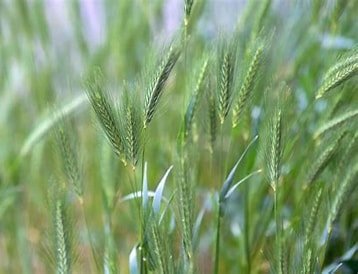
Best known for its heavy, arched seed heads that resemble cultivated rye or wheat, this cool-season bunchgrass adds a graceful "nodding" movement to any landscape.
Plant Profile
Sun Exposure Full Sun to Part Shade
Water Needs Medium-Low (Very Adaptable)
Soil Type Versatile; thrives in Sand, Loam, or Clay
Mature Height 4 to 5 feet
Deer Resistance Moderate - High
Bloom Time July – October
Plant Spacing 2 – 3 feet
Plant Characteristics
Canada Wild Rye is prized for its rapid growth and its ability to provide beauty even in the very first year of planting.
Distinctive Seed Heads: By mid-summer, the plant produces large, bristly spikes that curve downward under their own weight and creates a "nodding" movement to the grasses. The seed heads remain intact well into the winter, turning from green into a soft-tan.
Fast Establisher: Unlike some native grasses that take years to mature, Canada Wild Rye grows quickly. It is often used as a "nurse grass" to stabilize soil while slower perennials get established.
Versatile & Adaptable: It is remarkably unfussy about soil, thriving in everything from sandy loams to heavy clay, and can handle both moist and dry conditions.
Wildlife Benefits
Larval Host: It serves as a host plant for many Skipper butterflies and various species of moths.
Winter Bird Buffet: The seeds are a favorite for wild turkeys, sparrows and various songbirds during the winter months.
Superior Cover: The dense, clump-forming foliage provides excellent nesting habitat for ground-nesting birds and protection for small wildlife.
Pro Tip: Canada Wild Rye is a relatively short-lived perennial (usually 3–5 years), but it gracefully self-seeds. Allow the seed heads to drop in autumn to ensure a beautiful, self-sustaining stand for years to come.
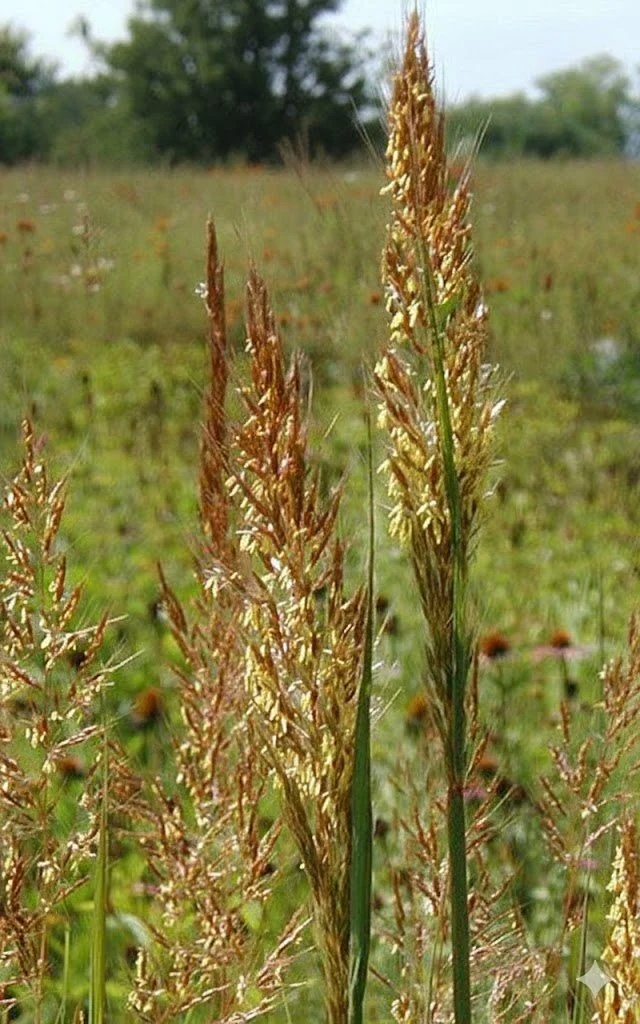
One of the "Big Four" species of the tallgrass prairie, this native perennial is known for it’s seed heads that turn golden-yellow to bronze in the fall.
Plant Profile
Sun Exposure Full Sun to Part Shade
Water Needs Low to Medium
Soil Type Adaptable; Sand, Loam, or Clay
Mature Height 5 to 6 feet
Deer Resistance High
Bloom Time August – September
Plant Spacing 2 – 3 feet
Plant Characteristics
Color: Clusters of bronze colored seed with golden stems. It is one of the first warm season grasses to form seeds.
Erosion Control & Privacy: Thanks to its sturdy, deep root system and tall stature, it works beautifully as a natural screen or to help stabilize soil on slopes and larger properties.
Low Maintenance: Highly adaptable and resilient, it thrives in a variety of conditions once established, requiring very little attention from the gardener.
Wildlife Benefits
Pollinator Host: It is a vital larval host plant for several butterfly species, including the Pepper and Salt Skipper and the Ottoe Skipper.
Bird Habitat: The nutrient-rich seeds are a primary food source for songbirds throughout the fall, while the tall, stiff stems provide excellent nesting material and cover for ground-dwelling birds.
Beneficial Shelter: The base of the plant offers protected overwintering sites for native bees and other helpful insects.
Pro-Tip: Indian Grass can be an aggressive grower that spreads in two ways: through its heavy seed drop in the fall and via short underground stems called rhizomes, so it is usually not recommended for small landscapes.
To control the seeds: Simply cut back the feathery plumes in late autumn before they shatter.
To control the roots: If you are planting in a smaller garden bed, you can "trench" around the base of the plant once a year with a sharp spade to sever the rhizomes and keep the clump from expanding into its neighbors. This makes it a great choice for both expansive meadows and managed borders!
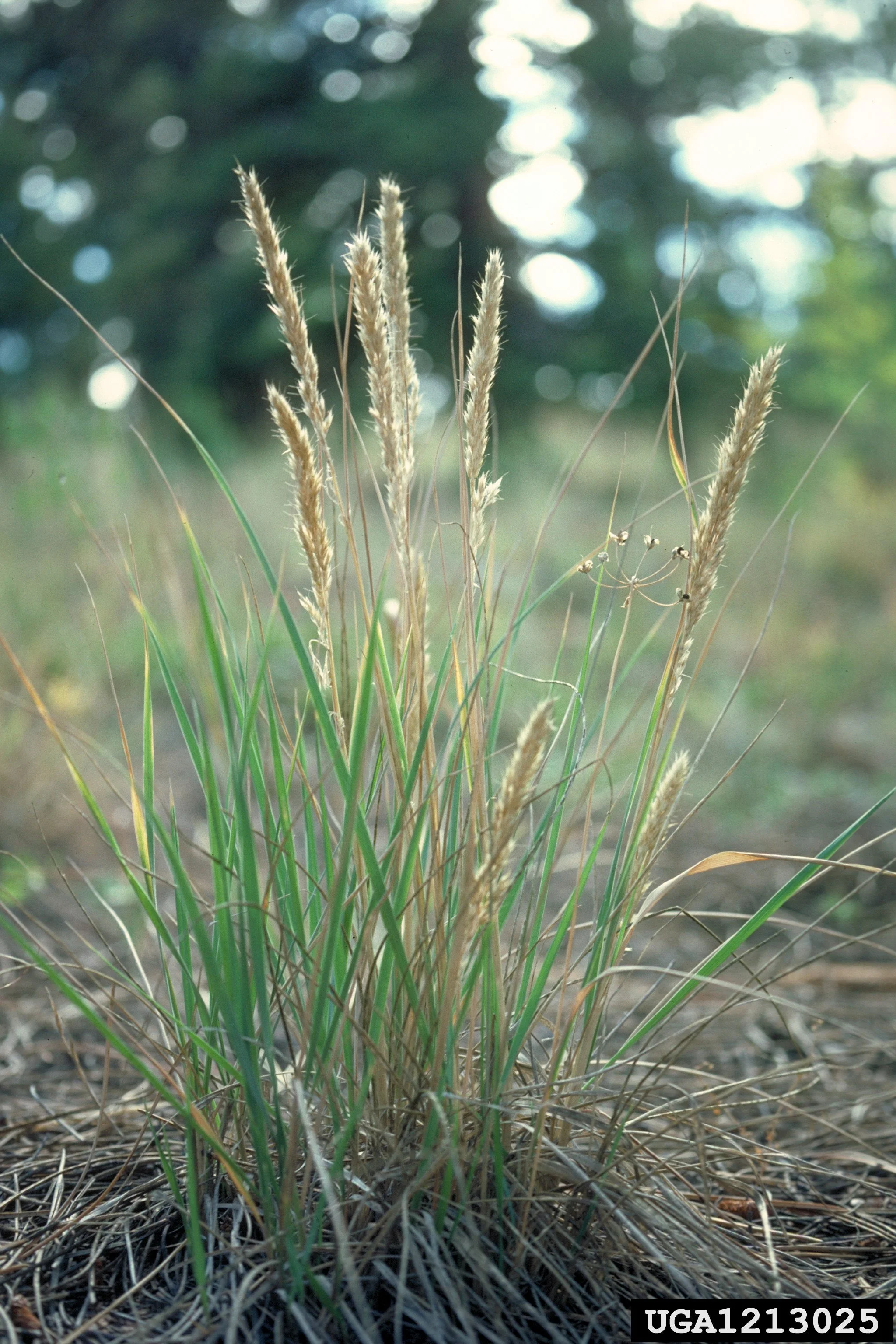
This compact cool-season bunchgrass is one of the earliest to bloom, and thrives in tough, dry spots making it ideal for structured garden borders or rock gardens.
Plant Profile
Sun Exposure Full Sun
Water Needs Low (Drought Tolerant after established, thrives in dry soil)
Soil Type Loam, Sand, Gravelly, or Well-drained Poor Soils
Mature Height 2 feet
Deer Resistance High
Bloom Time June – July
Plant Spacing 10 – 12 inches
Plant Characteristics
Early Season Interest: While many native grasses don't peak until autumn, June Grass reaches its full glory in early summer. It produces dense, plumes of silvery-green seed heads that transition to tan by mid summer. Foliage is an attractive green-gray.
Compact & Tidy: Reaching only about 1 to 2 feet in height, it is an excellent "front-of-the-border" plant. It stays in a neat, upright clump and does not flop, making it perfect for smaller suburban landscapes.
Drought Powerhouse: This is one of the most drought-tolerant native grasses available. Once established, it requires almost no supplemental watering, even in the heat of mid-summer.
Wildlife Benefit
Pollinator Support: It serves as a larval host plant for several species of Skipper butterflies.
Songbird Food: The small, dense seeds are a valuable food source for finches, sparrows and other small songbirds in the late spring-summer months.
Pro Tip: For visual impact, plant June Grass in "drifts" or groups of 3–5. The silver-green tint of the blades creates a beautiful contrast when paired with dark-leafed plants or vibrant wildflowers like Coneflowers and Black-eyed Susans.
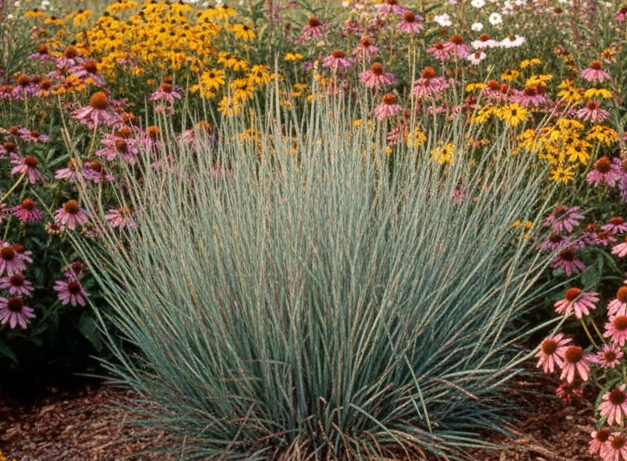
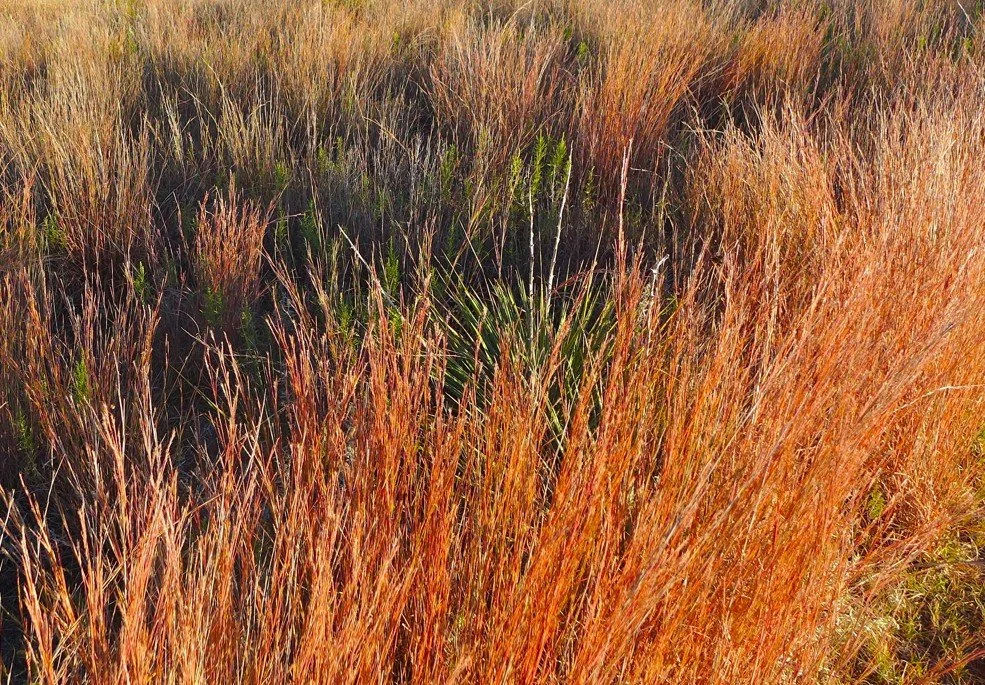
This iconic North American native is commonly used in both restoration and landscaping projects and is very drought tolerant but can do will in moist settings too.
Plant Profile
Sun Exposure Full Sun to Part Shade
Water Needs Low (Drought Tolerant after established)
Soil Type Well-drained; thrives in Sand, Loam, or Clay
Mature Height 2 to 3 feet
Deer Resistance High
Bloom Time July – October
Plant Spacing 2 – 3 feet
Plant Characteristics
Color: In the spring and summer, the slender blades emerge in shades of blue-green. After the first frost, the entire plant transforms into shades of brown, copper, and deep crimson that will remain all winter.
Winter Interest: The stems are famously sturdy and remain upright even under the weight of light snow. In winter, the seed heads turn into fluffy, white tufts.
Compact "Columnar" Habit: Little Bluestem grows in neat, vertical clumps. Its upright nature makes it a perfect choice for formal borders, or as an accent in your landscape.
Extreme Hardiness: This grass thrives in poor soils, intense heat, and periods of significant drought once its deep root system is established.
Wildlife Benefits
Butterfly Larval Host: It is the primary host plant for several species of Skipper butterflies, providing essential food for their caterpillars.
Insects: Insects that feed on Little Bluestem include grasshoppers, leafhoppers, Prairie Walking Sticks, beetles and spittlebugs.
Winter Food Source: The high-protein seeds are a critical food resource for small songbirds throughout the winter.
Protective Cover: The dense, bunch-forming base of the plant provides vital nesting sites for queen bumble bees and shelter for ground-dwelling wildlife.
Pro-Tip: Resist the urge to cut it back in the fall! Leaving the stalks standing until early spring not only provides critical habitat for overwintering pollinators but also ensures you get to enjoy that stunning coppery-red color against the winter snow.
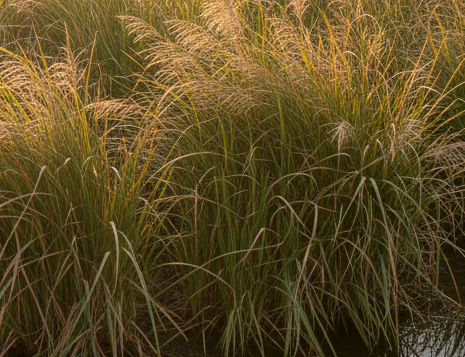
This is a high-performance plant for "tough" areas. Its vigorous, spreading root system makes it an unmatched choice for controlling erosion on steep banks or stabilizing soil along shorelines and drainage ditches. It is also a good choice for combatting invasive Reed Canary Grass by a water’s edge. This native grass is known for its long, arching blades that gracefully weep toward the ground, shimmering with a distinct golden hue in the autumn.
Plant Profile
Sun Exposure Full Sun (preferred) - Partial Shade
Water Needs Moderate to High; thrives in wet to moist conditions.
Soil Type Adaptable; prefers muck, clay, wet loam or sand.
Mature Height 6 – 8 feet
Deer Resistance High
Bloom Time July – September
Plant Spacing 2 – 3 feet (Allow plenty of room to spread).
Plant Characteristics
Natural Erosion Control: Its deep, rhizomatous roots are excellent for stabilizing shifting soil or eroding banks around ponds or streambanks in full sun.
Habitat: wet prairies, prairie swales, marshes and swaps.
Color: The foliage transitions from green to bright gold as the temperatures drop
Wildlife Benefits
Crucial Cover and nesting habitat: The dense, tall thickets provide essential nesting sites and thermal cover for marsh birds, waterfowl, and small mammals.
Insect and moths: insects and the larvae of several moths are specialist feeders of Cord Grass. Species include the Four-lined Borer Moth, Torticid Moth and Many-Lined Cordgrass moth.
Food source: Seed heads and rootstocks are eaten by Black Ducks, Mallards, Canada Geese and Muskrats.
Pro Tip: Prairie Cord Grass is a vigorous spreader. While it is perfect for large areas or restoration projects, it may be too assertive for a small, tidy perennial border. For best results, plant it in areas where it has plenty of room to roam or where its root system can be utilized for soil stabilization.
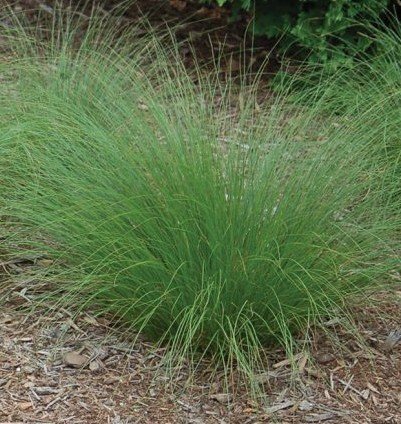
Widely considered the most beautiful of all native short grasses, it is prized for its fine, hair-like texture and its incredibly tidy, fountain-like habit.
Plant Profile
Sun Exposure Full Sun to Part Shade
Water Needs Low to Medium (Drought Tolerant after established)
Soil Type Adaptable; thrives in hot, well-drained Loam, Sand, or Clay
Mature Height 2 feet
Deer Resistance High
Bloom Time August – October
Plant Spacing 2 – 3 feet
Plant Characteristics
Prairie Dropseed is the "slow and steady" winner of the garden, forming a perfect, emerald-green mound that looks intentional and groomed without any pruning.
Unique Fragrance: In late summer, the airy flower panicles emerge, carrying a distinct and pleasant scent that many describe assmelling of cilantro or coriander.
Fountain Shape: The exceptionally fine foliage arches gracefully downward, creating a soft, rounded mound.
Color: As the temperatures drop, the green leaves shift into a honey yellow, which eventually fades to a tan that persists through the winter.
Tough as Nails: Despite its delicate appearance, this grass is incredibly long-lived and rugged. It is remarkably drought-tolerant once established and excels in sunny, hot, dry conditions.
Wildlife Benefits
Seed source: As the name "Dropseed" suggests, the plant produces small, nutritious seeds that "drop" to the ground in fall, providing a critical late-season food for seed eating birds.
Butterfly Host: It is a larval host for several species of Skipper butterflies.
Essential Cover: Because it grows in dense, permanent mounds, it provides perfect nesting sites for native bees and protective winter cover for small beneficial insects.
Pro-Tip: Prairie Dropseed is a slow grower, often taking 3 years to reach its full size, but it is well worth the wait. Also, because of its dense, mounding habit and long lifespan (often living for decades), it can be used as weed-suppressing groundcover.
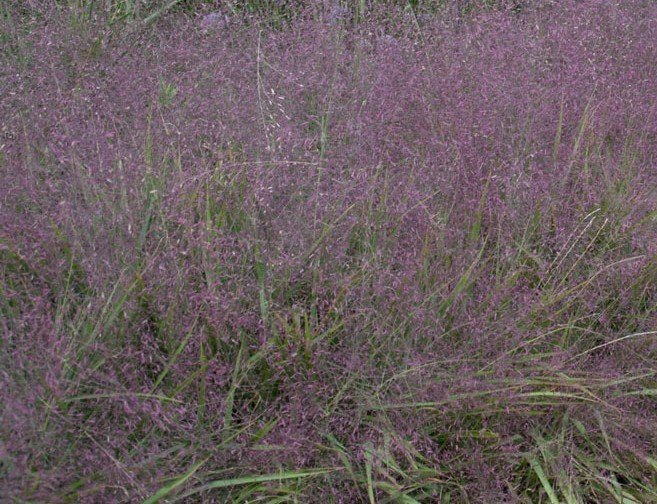
This low-growing native grass is a true showstopper when it reaches peak bloom. It’s seed heads bloom in mid-summer producing a haze of light to bright purple flowers that hover over the foliage like a fine, colorful mist.
Purple Love Grass is the perfect solution for those "difficult" sunny spots. It thrives in lean, sandy, or rocky soils where other plants might struggle, making it an excellent choice for rock gardens, sandy coastal slopes, or as a groundcover along a driveway.
Plant Profile
Sun Exposure Full Sun (preferred) to Partial Shade
Water Needs Low; very drought-tolerant once established.
Soil Type Sand, gravelly, or well-drained poor soils
Mature Height 1 – 2 feet
Deer Resistance High
Bloom Time July - August
Plant Spacing 1 - 2 feet
Plant Characteristics
Low Profile, High Impact: It stays short and tidy for most of the year, then explodes into a haze of color just as other plants are starting to fade.
Black Walnut and salt tolerant: One of the few ornamental grasses that can handle road salt, making it more ideal for planting near sidewalks and streets.
Wildlife Benefits
Late-Season Nectar: The delicate flowers provide a food source for small native bees and beneficial insects during the heat of late summer.
Butterfly Host: This grass serves as a vital larval host for the Zabulon Skipper.
Pro Tip: For the most dramatic effect, plant Purple Love Grass in large drifts.
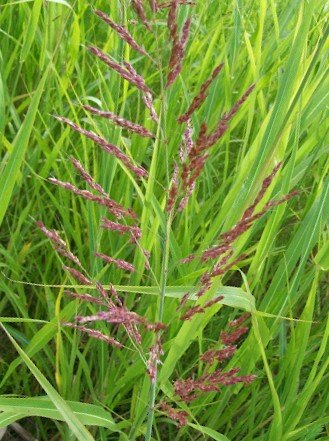
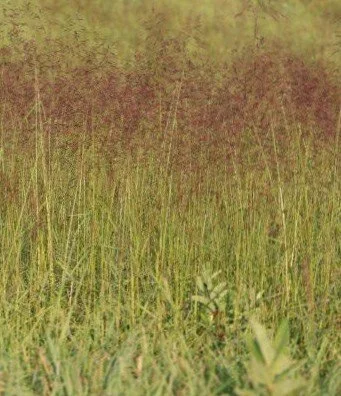
A tall, graceful native perennial, this grass is prized for its shimmering, airy plumes that emerge in late summer. The flower heads are a deep, reddish-purple and possess a unique, slightly oily texture that catches the light, earning it the nickname "Greasy Grass." Purpletop is a bunch-forming grass that is exceptionally adaptable, making it a perfect choice for naturalized meadows, woodland edges, or as a textured backdrop in a sunny perennial bed.
Plant Profile
Sun Exposure Full Sun to Partial Shade
Water Needs Low to Moderate; very drought-tolerant once settled.
Soil Type Adaptable; thrives in poor, rocky, or sandy soils.
Mature Height 4 – 5 feet
Deer Resistance Moderate
Bloom Time August – October
Plant Spacing 18 – 24 inches
Plant Characteristics
Color: When planted in groups, it puts a stunning reddish-purple top onto meadows and fields from late summer to early fall.
Tough as Nails: Highly resistant to heat, humidity, and performs exceptionally well in "lean" soil where other plants fail. It is tolerant of road salt so can frequently be found in ditches.
Wildlife Benefits
Butterfly Host: It serves as a vital larval host for several species of butterflies, including the Crossline Skipper, Common Wood Nymph, and the Little Glassywing.
Winter Forage: The seeds are highly nutritious and are a favorite for songbirds and upland game birds during the colder months.
Pro Tip: For the best visual impact, plant Purpletop Grass in sweeping drifts where its purple "haze" can be appreciated from a distance.
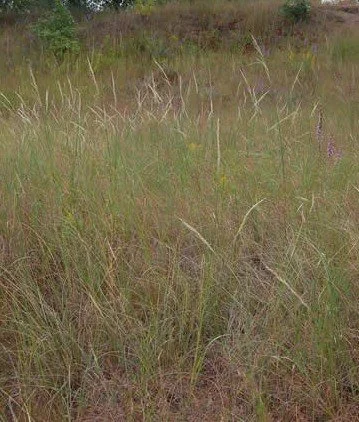
If you have a site with challenging, sandy soil where other plants struggle to take hold, Prairie Sand Reed is your solution. This tall, warm-season native grass is the ultimate "stabilizer," known for its massive root system and its ability to thrive in the most well-drained, arid conditions.
Plant Profile
Sun Exposure Full Sun to Part Shade
Water Needs Very Low (Drought Tolerant once established)
Soil Type Sand, Loam, or Rocky; excels in poor soils
Mature Height 6 feet
Deer Resistance High
Bloom Time July – September
Plant Spacing 18 – 36 inches
Plant Characteristics
Superior Erosion Control: This grass has an extensive network of deep roots and underground rhizomes. It is great for stabilizing sandy slopes, dunes, or any area prone to shifting soil.
Color: It features wide, light-green leaves that curve gracefully during the summer. In autumn, the foliage transitions to a pale gold or straw yellow.
Sun-Loving and Drought-tolerant: Native to the Great Plains and sand dunes, this plant is virtually unbothered by intense summer heat or prolonged dry spells. It is one of the most drought-tolerant grasses available.
Wildlife Benefits
Birds: The large, sturdy stalks provide excellent nesting sites and cover for songbirds, while the seeds offer a valuable food source in late fall.
Host Plant: It serves as a larval host for various species of Skipper butterflies, supporting the local pollinator lifecycle.
Winter Shelter: Because it remains upright through most of the winter, it provides vital windbreaks and protection for small wildlife during harsh weather.
Pro-Tip: Unlike "clump-forming" grasses that stay in a neat ball (like Prairie Dropseed), Prairie Sand Reed is a rhizomatous grass, meaning it spreads underground to create a solid mat. This makes it your best friend for steep, sandy hillsides or "problem areas" where soil washes away during rain.
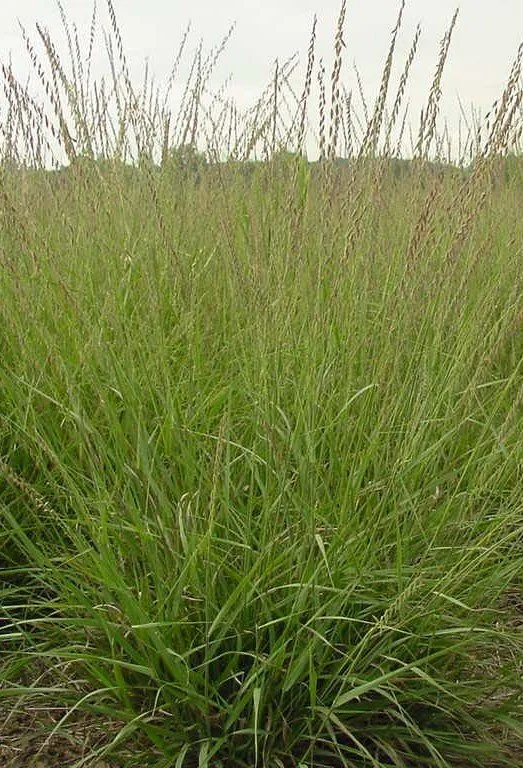
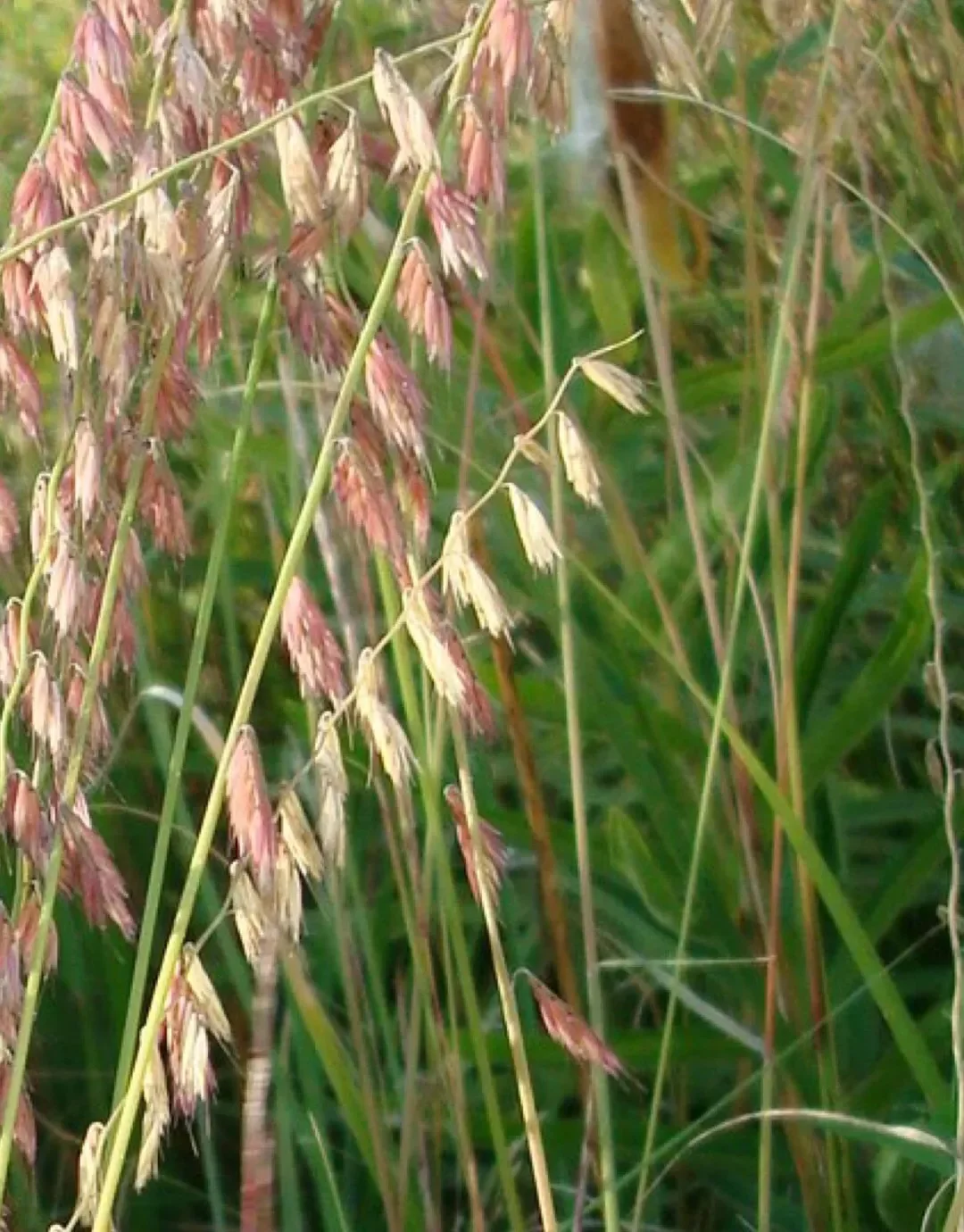
This mid-sized, warm-season grass is easily recognized by its unique and charming seed heads, which hang neatly from just one side of the stem.
Plant Profile
Sun Exposure Full Sun to Part Shade
Water Needs Low (Very Drought Tolerant)
Soil Type Adaptable; thrives in Sand, Loam, medium Clay or gravely soil
Mature Height 2 feet
Deer Resistance High
Bloom Time August – September
Plant Spacing 10 – 24 inches
Plant Characteristics
Side-Oats Grama is the perfect "neighbor-friendly" native—it stays at a manageable height and doesn't get aggressive.
Unique "One-Sided" Blooms: In mid-summer, the plant produces tall stalks adorned with tiny, oat-like seeds that all hang from one side. In bloom, these seeds feature tiny, bright red-to-purple anthers that give the plant a subtle color. This plant holds it shape well into the winter months. The foliage turns from green-blue foliage to shades of gold.
Compact and Versatile: Reaching only 2 feet in height, it is an ideal choice for the middle of a garden border. It won't tower over your wildflowers but provides enough structure to keep the garden looking organized.
Extremely Adaptable: It is highly drought-tolerant and can thrive in almost any soil condition, from dry sand to heavy clay.
Wildlife Benefits
It is a vital larval host plant for at least 5 species of Skipper butterflies, including the Dotted Skipper and the Leonard’s Skipper.
The seeds are a favorite food source for various songbirds that forage on the ground.
Pro-Tip: Side-oats Grama’s clumping tendency and moderate height pair well with shorter wildflowers like Prairie Smoke or Purple Coneflower.
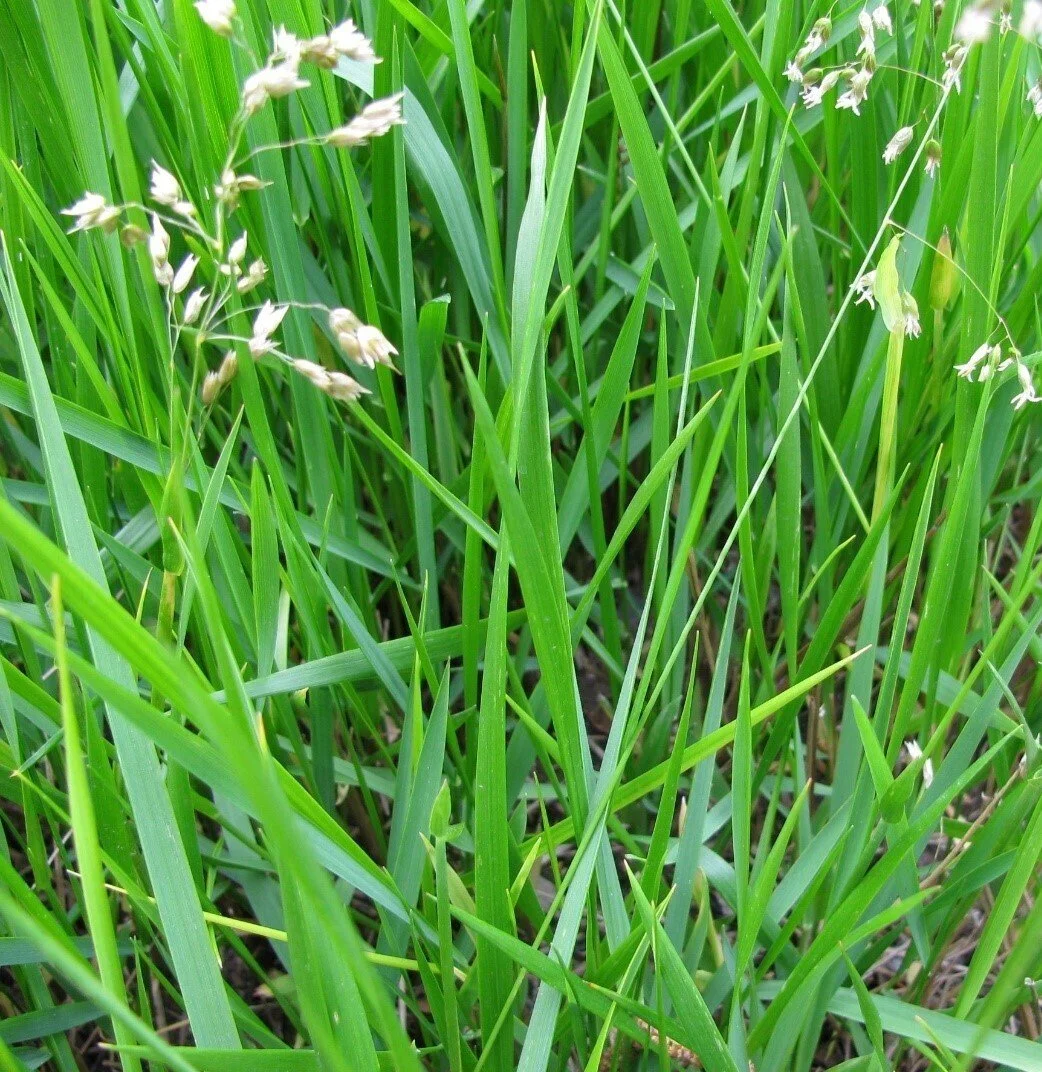
A plant steeped in history and cherished for its scent, Sweet Grass is one of the most beloved native grasses in North America. Its name comes from the sweet, vanilla-like fragrance produced by the coumarin in its leaves, which becomes especially potent when the grass is dried or crushed. Many North American indigenous cultures burn Sweet Grass in ceremonies to invite the presence of good spirits.
Plant Profile
Sun Exposure Full Sun to Partial Shade
Water Needs High; prefers consistently moist to wet soil.
Soil Type rich Muck, moist Clay, Loam or Sandy soils; thrives near water sources.
Mature Height 1 – 2 feet
Deer Resistance High
Bloom Time May – July
Plant Spacing 1 – 2 feet (Spreads to fill gaps).
Plant Characteristics
Signature Scent: Unlike most grasses, Sweet Grass produces a sweet aroma when rubbing the leaves.
Wet Ground Solution: It is a perfect choice for the edges of ponds, low-lying areas of the yard, or rain gardens.
Aggressive spreader: Can be difficult to eliminate if it spreads to unwanted areas. Spreads by rhizomes. Pick a planting site with this in mind.
Wildlife Benefits
Early Season Growth: As a cool-season grass, it provides early green-up and cover for wildlife emerging in the spring.
Habitat: While wind-pollinated, the dense mats provide essential shelter for ground-nesting beneficial insects.
Pro Tip: To harvest for scent, wait until the blades are long and vibrant in mid-summer. Cut the grass, let it wilt slightly, and then braid it while it is still flexible. As it dries, the braid will hold its sweet, vanilla-like fragrance for months!
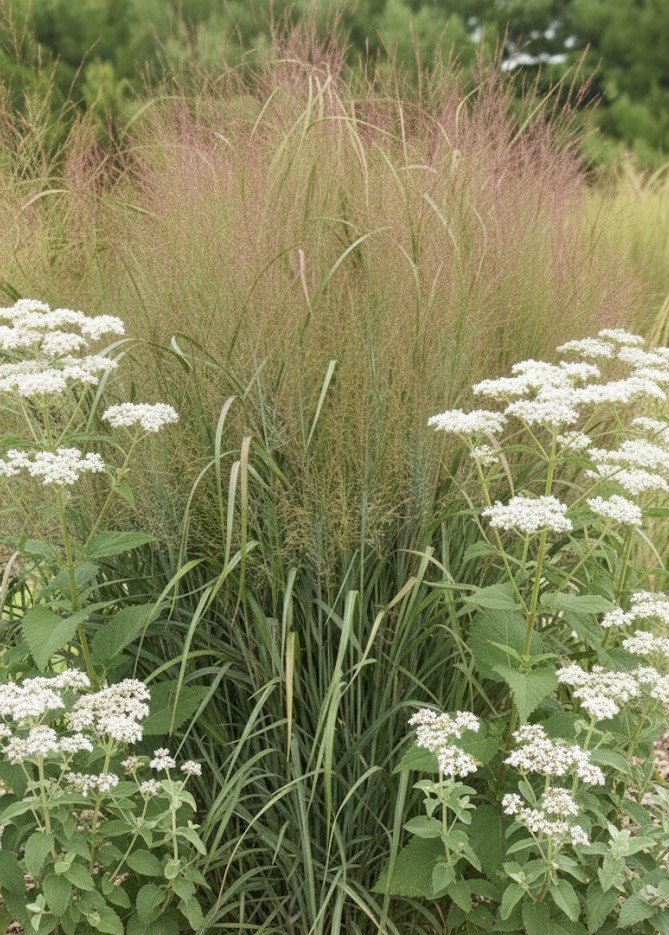
Switchgrass is celebrated for its sturdy upright habit, seasonal color, and incredible ability to thrive in almost any environment—from dry uplands to damp shoreline edges.
Plant Profile
Sun Exposure Full Sun to Part Shade
Water Needs Adaptable; Low to High
Soil Type Adaptable; thrives in Clay, Loam, Sand, or Muck
Mature Height 4 - 5 feet
Deer Resistance High
Bloom Time July – September
Plant Spacing 2 – 4 feet
Plant Characteristics
Unlike many plants that flop over in the rain or snow, Switchgrass stays remarkably upright. Its stiff, columnar stems provide a strong vertical element in the garden through all four seasons providing winter cover for land birds and small mammals.
Color: In late summer to fall, the plant is topped with airy, purple cloud-like finely textured flower panicles. The foliage typically starts as a medium green and in autumn, the plant transforms into a golden-yellow, eventually fading to a tan.
Resilience: Switchgrass is famous for its deep roots. It is exceptionally drought-tolerant once established, yet it is one of the few native grasses that can also handle "wet feet" and occasional flooding.
Prolific self-seeder: Use with caution in very small landscapes.
Wildlife Benefits
Winter Cover: Because it stays standing during heavy snow, it provides essential cover and protection for ground-nesting birds, rabbits, and beneficial insects.
Songbirds: The abundant, tiny seeds produced in the airy panicles are a favorite winter food source for sparrows, juncos, and goldfinches.
Pollinator Support: It serves as a larval host for several species of Skipper butterflies.
Pro-Tip: Resist the urge to cut your Switchgrass back in late fall or early winter. Switchgrass provides is a nesting site for bees and cover for birds. Wait until late March or early April to cut the old stems back. You want to cut them down to about 4–6 inches from the ground just before the new green shoots start to emerge from the base.
No results found
No results match your search. Try removing a few filters.