
 Image 1 of 1
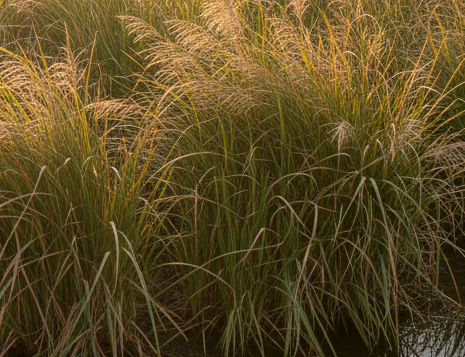
This is a high-performance plant for "tough" areas. Its vigorous, spreading root system makes it an unmatched choice for controlling erosion on steep banks or stabilizing soil along shorelines and drainage ditches. It is also a good choice for combatting invasive Reed Canary Grass by a water’s edge. This native grass is known for its long, arching blades that gracefully weep toward the ground, shimmering with a distinct golden hue in the autumn.
Sun Exposure Full Sun (preferred) - Partial Shade
Water Needs Moderate to High; thrives in wet to moist conditions.
Soil Type Adaptable; prefers muck, clay, wet loam or sand.
Mature Height 6 – 8 feet
Deer Resistance High
Bloom Time July – September
Plant Spacing 2 – 3 feet (Allow plenty of room to spread).
Natural Erosion Control: Its deep, rhizomatous roots are excellent for stabilizing shifting soil or eroding banks around ponds or streambanks in full sun.
Habitat: wet prairies, prairie swales, marshes and swaps.
Color: The foliage transitions from green to bright gold as the temperatures drop
Crucial Cover and nesting habitat: The dense, tall thickets provide essential nesting sites and thermal cover for marsh birds, waterfowl, and small mammals.
Insect and moths: insects and the larvae of several moths are specialist feeders of Cord Grass. Species include the Four-lined Borer Moth, Torticid Moth and Many-Lined Cordgrass moth.
Food source: Seed heads and rootstocks are eaten by Black Ducks, Mallards, Canada Geese and Muskrats.
Pro Tip: Prairie Cord Grass is a vigorous spreader. While it is perfect for large areas or restoration projects, it may be too assertive for a small, tidy perennial border. For best results, plant it in areas where it has plenty of room to roam or where its root system can be utilized for soil stabilization.
This is a high-performance plant for "tough" areas. Its vigorous, spreading root system makes it an unmatched choice for controlling erosion on steep banks or stabilizing soil along shorelines and drainage ditches. It is also a good choice for combatting invasive Reed Canary Grass by a water’s edge. This native grass is known for its long, arching blades that gracefully weep toward the ground, shimmering with a distinct golden hue in the autumn.
Sun Exposure Full Sun (preferred) - Partial Shade
Water Needs Moderate to High; thrives in wet to moist conditions.
Soil Type Adaptable; prefers muck, clay, wet loam or sand.
Mature Height 6 – 8 feet
Deer Resistance High
Bloom Time July – September
Plant Spacing 2 – 3 feet (Allow plenty of room to spread).
Natural Erosion Control: Its deep, rhizomatous roots are excellent for stabilizing shifting soil or eroding banks around ponds or streambanks in full sun.
Habitat: wet prairies, prairie swales, marshes and swaps.
Color: The foliage transitions from green to bright gold as the temperatures drop
Crucial Cover and nesting habitat: The dense, tall thickets provide essential nesting sites and thermal cover for marsh birds, waterfowl, and small mammals.
Insect and moths: insects and the larvae of several moths are specialist feeders of Cord Grass. Species include the Four-lined Borer Moth, Torticid Moth and Many-Lined Cordgrass moth.
Food source: Seed heads and rootstocks are eaten by Black Ducks, Mallards, Canada Geese and Muskrats.
Pro Tip: Prairie Cord Grass is a vigorous spreader. While it is perfect for large areas or restoration projects, it may be too assertive for a small, tidy perennial border. For best results, plant it in areas where it has plenty of room to roam or where its root system can be utilized for soil stabilization.