
 Image 1 of 1
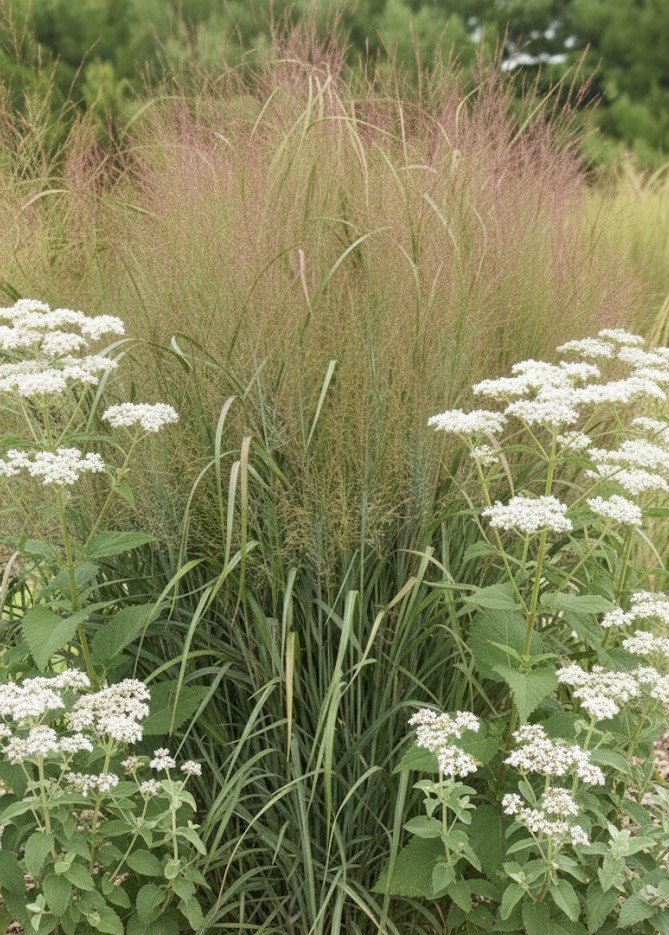
Switchgrass is celebrated for its sturdy upright habit, seasonal color, and incredible ability to thrive in almost any environment—from dry uplands to damp shoreline edges.
Sun Exposure Full Sun to Part Shade
Water Needs Adaptable; Low to High
Soil Type Adaptable; thrives in Clay, Loam, Sand, or Muck
Mature Height 4 - 5 feet
Deer Resistance High
Bloom Time July – September
Plant Spacing 2 – 4 feet
Unlike many plants that flop over in the rain or snow, Switchgrass stays remarkably upright. Its stiff, columnar stems provide a strong vertical element in the garden through all four seasons providing winter cover for land birds and small mammals.
Color: In late summer to fall, the plant is topped with airy, purple cloud-like finely textured flower panicles. The foliage typically starts as a medium green and in autumn, the plant transforms into a golden-yellow, eventually fading to a tan.
Resilience: Switchgrass is famous for its deep roots. It is exceptionally drought-tolerant once established, yet it is one of the few native grasses that can also handle "wet feet" and occasional flooding.
Prolific self-seeder: Use with caution in very small landscapes.
Winter Cover: Because it stays standing during heavy snow, it provides essential cover and protection for ground-nesting birds, rabbits, and beneficial insects.
Songbirds: The abundant, tiny seeds produced in the airy panicles are a favorite winter food source for sparrows, juncos, and goldfinches.
Pollinator Support: It serves as a larval host for several species of Skipper butterflies.
Pro-Tip: Resist the urge to cut your Switchgrass back in late fall or early winter. Switchgrass provides is a nesting site for bees and cover for birds. Wait until late March or early April to cut the old stems back. You want to cut them down to about 4–6 inches from the ground just before the new green shoots start to emerge from the base.
Switchgrass is celebrated for its sturdy upright habit, seasonal color, and incredible ability to thrive in almost any environment—from dry uplands to damp shoreline edges.
Sun Exposure Full Sun to Part Shade
Water Needs Adaptable; Low to High
Soil Type Adaptable; thrives in Clay, Loam, Sand, or Muck
Mature Height 4 - 5 feet
Deer Resistance High
Bloom Time July – September
Plant Spacing 2 – 4 feet
Unlike many plants that flop over in the rain or snow, Switchgrass stays remarkably upright. Its stiff, columnar stems provide a strong vertical element in the garden through all four seasons providing winter cover for land birds and small mammals.
Color: In late summer to fall, the plant is topped with airy, purple cloud-like finely textured flower panicles. The foliage typically starts as a medium green and in autumn, the plant transforms into a golden-yellow, eventually fading to a tan.
Resilience: Switchgrass is famous for its deep roots. It is exceptionally drought-tolerant once established, yet it is one of the few native grasses that can also handle "wet feet" and occasional flooding.
Prolific self-seeder: Use with caution in very small landscapes.
Winter Cover: Because it stays standing during heavy snow, it provides essential cover and protection for ground-nesting birds, rabbits, and beneficial insects.
Songbirds: The abundant, tiny seeds produced in the airy panicles are a favorite winter food source for sparrows, juncos, and goldfinches.
Pollinator Support: It serves as a larval host for several species of Skipper butterflies.
Pro-Tip: Resist the urge to cut your Switchgrass back in late fall or early winter. Switchgrass provides is a nesting site for bees and cover for birds. Wait until late March or early April to cut the old stems back. You want to cut them down to about 4–6 inches from the ground just before the new green shoots start to emerge from the base.