
 Image 1 of 1
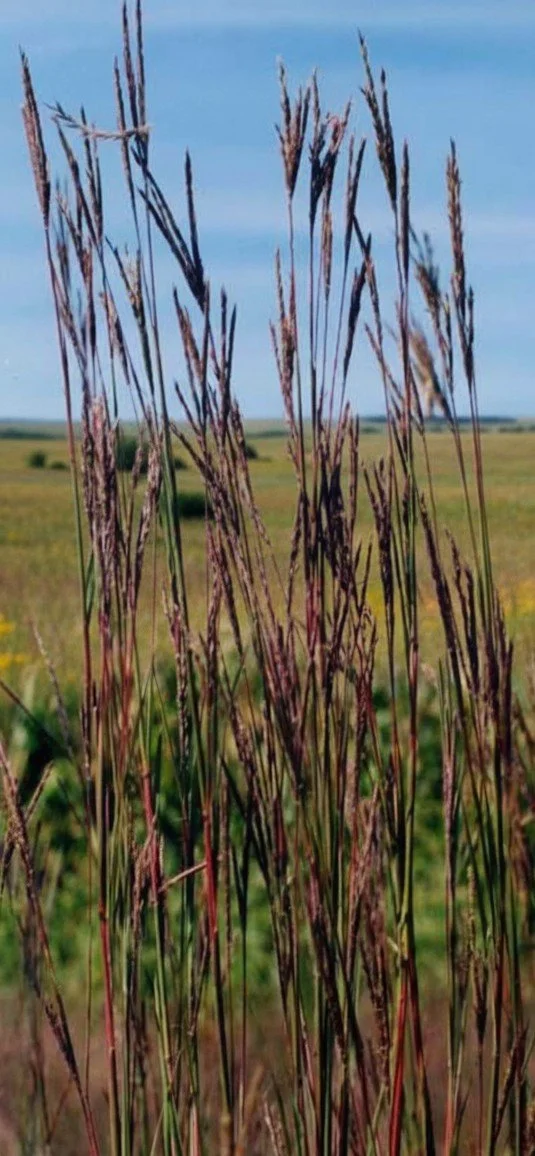
If you want to add height, and a sense of history to your landscape, look no further than Big Bluestem. Often called the "King of Native Grasses," this iconic plant was once the dominant species of the tallgrass prairie.
Sun Exposure Full Sun to Part Shade
Water Needs Low to Medium (Drought Tolerant after established)
Soil Type Adaptable; can do well in Muck, Clay, Loam or Sand
Mature Height 5 to 8 feet
Deer Resistance High
Bloom Time June – September
Plant Spacing 2 – 3 feet
"Turkey Foot" Seed Heads: In late summer, the grass produces distinct three-pronged flower spikes that resemble a turkey's foot. These spikes emerge in shades of purplish-red, adding a unique texture to your planting.
Color: The stems often have a blue-green hue in the spring and summer. As autumn arrives, the plant shifts into shades of copper, reddish-bronze or purple tones.
Deep-Rooted: With roots that can reach up to 10 feet deep, Big Bluestem is incredibly drought-tolerant and plays a massive role in soil health.
Privacy & Screening: Reaching heights of 7 feet, it serves as a fantastic, eco-friendly living fence or a backdrop for shorter flowering perennials.
Pollinator Support: It serves as a critical larval host plant for several butterfly species, including the Delaware Skipper, Dusted Skipper, Arogos Skipper and Cobweb Skipper.
Songbirds: In the fall and winter, the protein-rich seeds provide a feast for songbirds like Juncos, Sparrows, and Finches. The sturdy, tall stems also offer excellent nesting material and winter cover.
Essential Shelter: The dense, upright clumps provide a safe "nursery" and overwintering habitat for beneficial insects (like ladybugs and native bees) and small mammals during the coldest months.
Pro Tip: Because Big Bluestem is a tall "warm-season" grass, it does most of its growing in the heat of mid-summer. Plant it at the back of your garden beds so it can rise up behind your early-blooming wildflowers as they begin to fade. Big Bluestem can be an aggressive spreader, so it is not recommended for small spaces.
If you want to add height, and a sense of history to your landscape, look no further than Big Bluestem. Often called the "King of Native Grasses," this iconic plant was once the dominant species of the tallgrass prairie.
Sun Exposure Full Sun to Part Shade
Water Needs Low to Medium (Drought Tolerant after established)
Soil Type Adaptable; can do well in Muck, Clay, Loam or Sand
Mature Height 5 to 8 feet
Deer Resistance High
Bloom Time June – September
Plant Spacing 2 – 3 feet
"Turkey Foot" Seed Heads: In late summer, the grass produces distinct three-pronged flower spikes that resemble a turkey's foot. These spikes emerge in shades of purplish-red, adding a unique texture to your planting.
Color: The stems often have a blue-green hue in the spring and summer. As autumn arrives, the plant shifts into shades of copper, reddish-bronze or purple tones.
Deep-Rooted: With roots that can reach up to 10 feet deep, Big Bluestem is incredibly drought-tolerant and plays a massive role in soil health.
Privacy & Screening: Reaching heights of 7 feet, it serves as a fantastic, eco-friendly living fence or a backdrop for shorter flowering perennials.
Pollinator Support: It serves as a critical larval host plant for several butterfly species, including the Delaware Skipper, Dusted Skipper, Arogos Skipper and Cobweb Skipper.
Songbirds: In the fall and winter, the protein-rich seeds provide a feast for songbirds like Juncos, Sparrows, and Finches. The sturdy, tall stems also offer excellent nesting material and winter cover.
Essential Shelter: The dense, upright clumps provide a safe "nursery" and overwintering habitat for beneficial insects (like ladybugs and native bees) and small mammals during the coldest months.
Pro Tip: Because Big Bluestem is a tall "warm-season" grass, it does most of its growing in the heat of mid-summer. Plant it at the back of your garden beds so it can rise up behind your early-blooming wildflowers as they begin to fade. Big Bluestem can be an aggressive spreader, so it is not recommended for small spaces.