
 Image 1 of 2
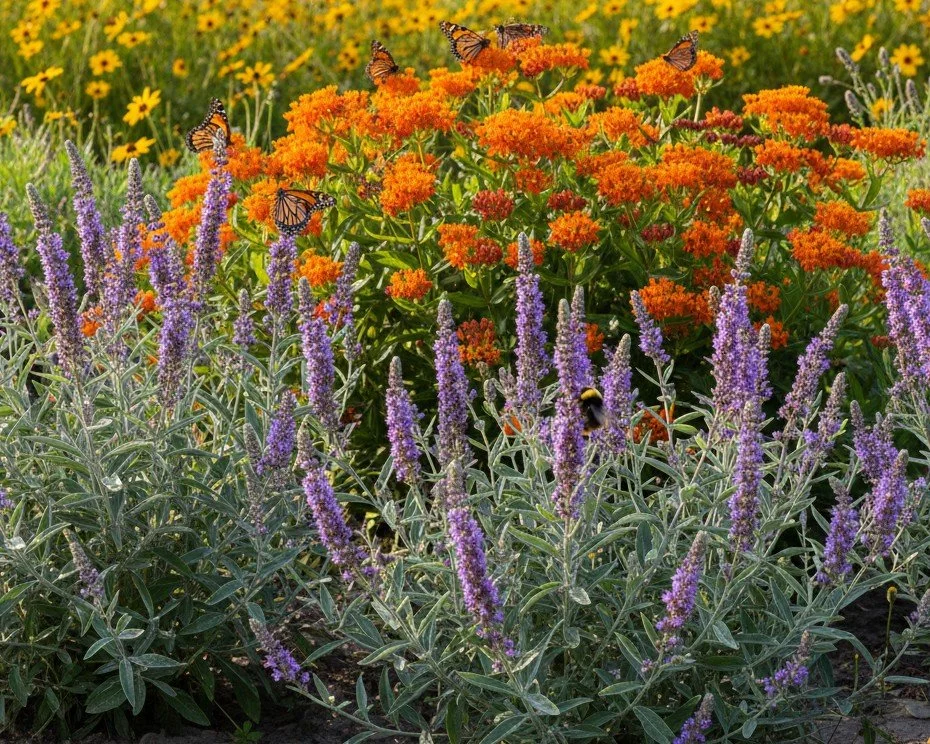 Image 2 of 2
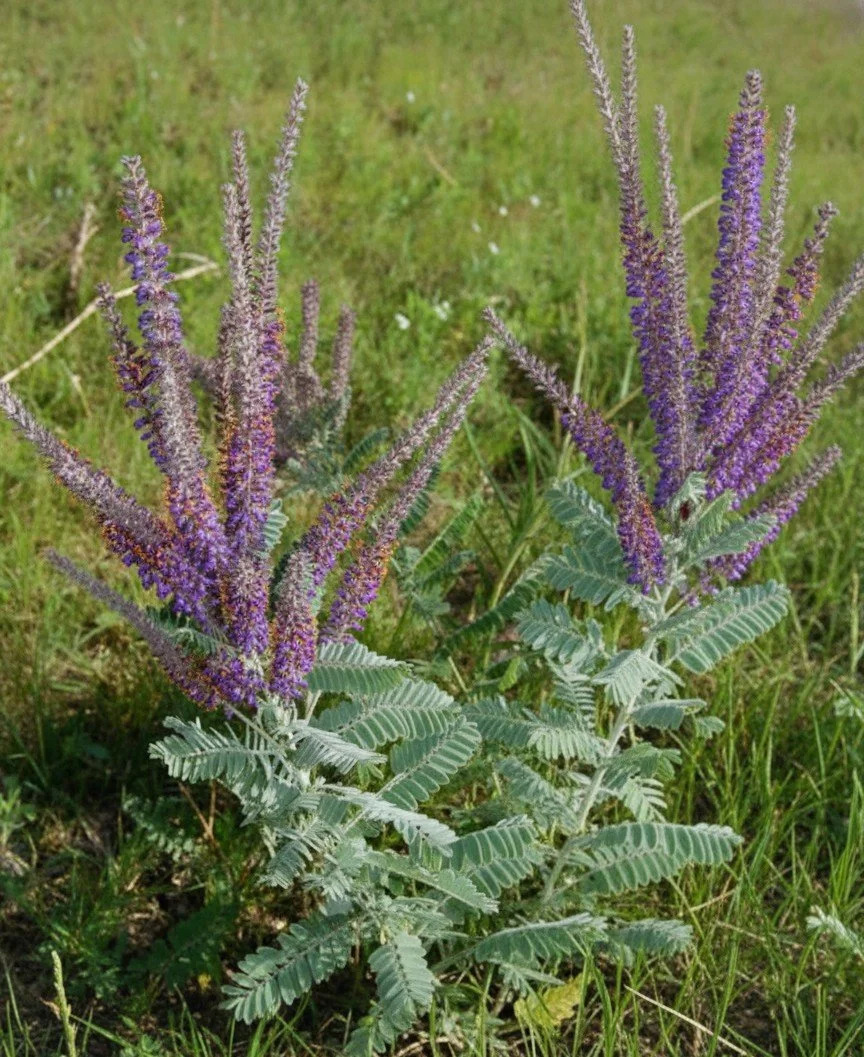
A unique perennial known for its stunning lead-colored (silvery-gray) foliage. In mid-summer, it produces dense, upright spikes of tiny, iridescent purple flowers, each topped with a bright orange-gold stamen. Taproots can reach up to 15’ deep, making it extremely drought tolerant and long-lived.
Sun Exposure Full Sun (will tolerate partial shade)
Water Needs Low; exceptionally drought-tolerant once established
Soil Type Well-drained Sand, Loam, or Rocky/Gravelly soil
Mature Height 2 – 3 feet
Deer Resistance High once established
Bloom Time June – July
Bloom Color Purple
Plant Spacing 1 – 2 feet
Deep-Rooted: Leadplant is famous for its massive taproot, which can extend up to 15 feet underground! This makes it one of the most drought-resistant plants in existence, though it also means it does not like to be moved once planted.
Leadplant is a woody shrub and can take several years to fully mature, during which time it should not be cut back.
Silvery Texture: The leaves are covered in fine, lead-colored hairs that give the plant a soft, "frosted" appearance. This silver foliage provides a beautiful contrast to the deep greens of other garden plants.
Nitrogen Fixer: As a member of the legume family, Leadplant works with soil bacteria to "fix" nitrogen, naturally enriching the soil for its neighbors.
Deer Resistant: Mature plants are typically deer resistant, but it will be best to protect your young plants with mesh or a cage. Rabbits and others will browse young Leadplants while they are getting established.
Pollinators: It is a high-value nectar source for several types of bees, beetles and other beneficial insects.
Butterfly Favorite: Its unique purple spikes are a magnet for various butterflies, including the Dogface Sulphur and various Hairstreaks.
Host Plant: It serves as a host for several moth and butterfly species.
A unique perennial known for its stunning lead-colored (silvery-gray) foliage. In mid-summer, it produces dense, upright spikes of tiny, iridescent purple flowers, each topped with a bright orange-gold stamen. Taproots can reach up to 15’ deep, making it extremely drought tolerant and long-lived.
Sun Exposure Full Sun (will tolerate partial shade)
Water Needs Low; exceptionally drought-tolerant once established
Soil Type Well-drained Sand, Loam, or Rocky/Gravelly soil
Mature Height 2 – 3 feet
Deer Resistance High once established
Bloom Time June – July
Bloom Color Purple
Plant Spacing 1 – 2 feet
Deep-Rooted: Leadplant is famous for its massive taproot, which can extend up to 15 feet underground! This makes it one of the most drought-resistant plants in existence, though it also means it does not like to be moved once planted.
Leadplant is a woody shrub and can take several years to fully mature, during which time it should not be cut back.
Silvery Texture: The leaves are covered in fine, lead-colored hairs that give the plant a soft, "frosted" appearance. This silver foliage provides a beautiful contrast to the deep greens of other garden plants.
Nitrogen Fixer: As a member of the legume family, Leadplant works with soil bacteria to "fix" nitrogen, naturally enriching the soil for its neighbors.
Deer Resistant: Mature plants are typically deer resistant, but it will be best to protect your young plants with mesh or a cage. Rabbits and others will browse young Leadplants while they are getting established.
Pollinators: It is a high-value nectar source for several types of bees, beetles and other beneficial insects.
Butterfly Favorite: Its unique purple spikes are a magnet for various butterflies, including the Dogface Sulphur and various Hairstreaks.
Host Plant: It serves as a host for several moth and butterfly species.