
 Image 1 of 1
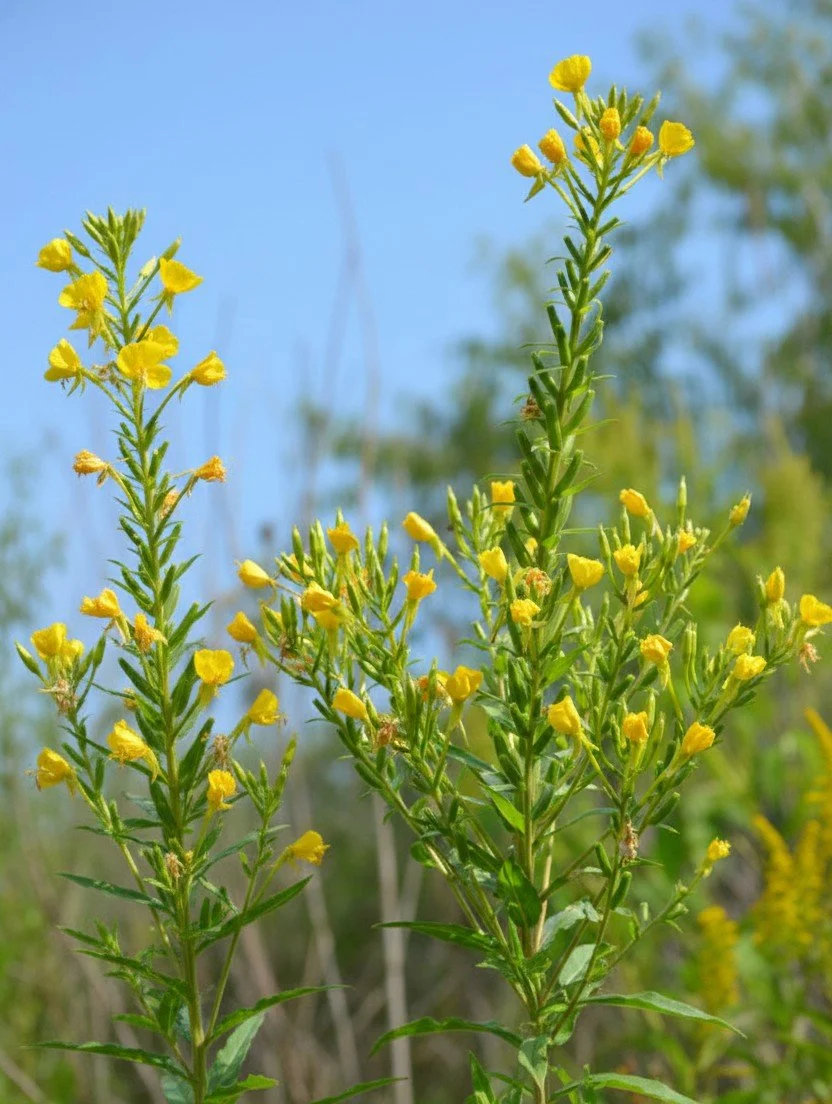
Just like the goldenrod, this plant is a "bridge" species—but while the goldenrod bridges the seasons, the Evening Primrose bridges day and night! While most flowers wake up with the sun, this native waits for the twilight. It features bowl-shaped yellow blossoms that unfurl in late afternoon and evening.
Sun Exposure Full Sun to Partial Shade
Water Needs Low to Medium; very drought-tolerant
Soil Type Adaptable; prefers Sandy, Rocky, or Lean soil
Mature Height 4 – 6 feet
Deer Resistance Low - Moderate
Bloom Time July – October
Bloom Color Yellow
Plant Spacing 1 – 2 feet
Long Bloom Time: It is one of the last natives blooming into late fall.
Hardy & Resilient: It thrives in "neglected" areas where other plants struggle. It is highly resistant to pests and can handle poor, dry soils with ease.
Polinators: Although labeled as a weed by some, it is a very important native plant with a long bloom time. It benefits many different kinds of bees, nectaring moths, butterfiles, and caterpillars.
The "Night Shift": The flowers attract sphinx moths (hawk moths), which are nocturnal.
Hummingbirds: Though they open late, the flowers stay open long enough for hummingbirds to visit them for a breakfast snack in the early morning.
Garden Note: Common Evening Primrose is a prolific self-seeder. Because it is a biennial, it relies on dropping seeds to ensure a new generation blooms every year. If you want to limit its spread, simply snip off the seed pods after the flowering season is finished!
Just like the goldenrod, this plant is a "bridge" species—but while the goldenrod bridges the seasons, the Evening Primrose bridges day and night! While most flowers wake up with the sun, this native waits for the twilight. It features bowl-shaped yellow blossoms that unfurl in late afternoon and evening.
Sun Exposure Full Sun to Partial Shade
Water Needs Low to Medium; very drought-tolerant
Soil Type Adaptable; prefers Sandy, Rocky, or Lean soil
Mature Height 4 – 6 feet
Deer Resistance Low - Moderate
Bloom Time July – October
Bloom Color Yellow
Plant Spacing 1 – 2 feet
Long Bloom Time: It is one of the last natives blooming into late fall.
Hardy & Resilient: It thrives in "neglected" areas where other plants struggle. It is highly resistant to pests and can handle poor, dry soils with ease.
Polinators: Although labeled as a weed by some, it is a very important native plant with a long bloom time. It benefits many different kinds of bees, nectaring moths, butterfiles, and caterpillars.
The "Night Shift": The flowers attract sphinx moths (hawk moths), which are nocturnal.
Hummingbirds: Though they open late, the flowers stay open long enough for hummingbirds to visit them for a breakfast snack in the early morning.
Garden Note: Common Evening Primrose is a prolific self-seeder. Because it is a biennial, it relies on dropping seeds to ensure a new generation blooms every year. If you want to limit its spread, simply snip off the seed pods after the flowering season is finished!