
 Image 1 of 1
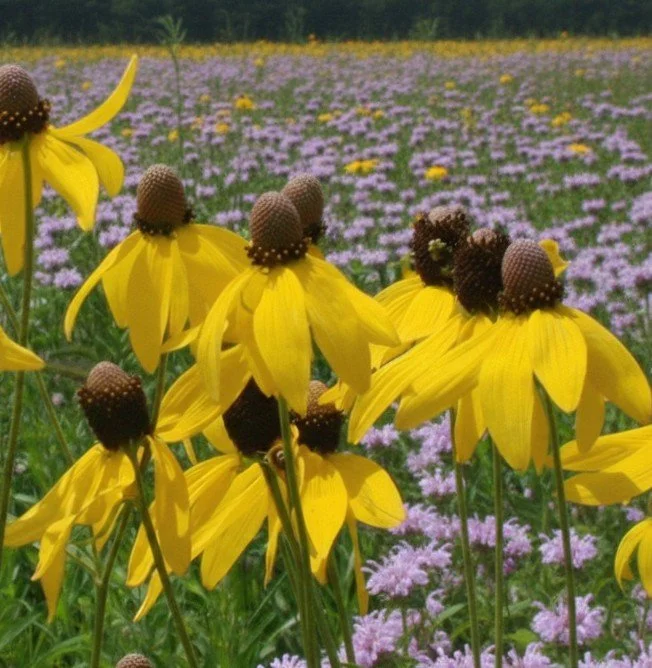
Gray-Headed Coneflower (also known as Yellow Coneflower) is famous for its distinctively drooping petals and a central gray cone that smells like anise or licorice when crushed. This prairie native is known for its tall, slender stems, rough leaves and yellow cheerful flowers. It adds a wonderful sense of motion to the garden, as the blooms sway in the slightest summer breeze. It is native to prairies and savannas and grows best in medium to medium-dry soil conditions.
Sun Exposure Full Sun to Partial Shade
Water Needs Low to Medium; very drought-tolerant once established
Soil Type Adaptable; thrives in Clay, Loam, Sand or Rocky soil
Mature Height 3 – 5 feet
Deer Resistance Moderate - High
Bloom Time July – September
Bloom Color Yellow
Plant Spacing 18 – 24 inches
Distinctive Silhouette: Features bright yellow petals that droop downward, highlighting a prominent gray central cone that turns chocolate brown as the seeds ripen.
Tough as Nails: It is incredibly resilient against heat and drought. It is a reliable "permanent resident" for the back or middle of your garden layers.
Fragrant Cones: When the seed heads are bruised or crushed, they release a pleasant scent described by some as licorice.
Pollinators: The flowers are a high-value nectar source for a diverse range of butterflies, bees and insects.
Winter Bird Feeder: Do not cut the stalks back in the fall! Goldfinches are especially fond of the seeds and will cling to the sturdy cones all winter long to feast.
Gray-Headed Coneflower (also known as Yellow Coneflower) is famous for its distinctively drooping petals and a central gray cone that smells like anise or licorice when crushed. This prairie native is known for its tall, slender stems, rough leaves and yellow cheerful flowers. It adds a wonderful sense of motion to the garden, as the blooms sway in the slightest summer breeze. It is native to prairies and savannas and grows best in medium to medium-dry soil conditions.
Sun Exposure Full Sun to Partial Shade
Water Needs Low to Medium; very drought-tolerant once established
Soil Type Adaptable; thrives in Clay, Loam, Sand or Rocky soil
Mature Height 3 – 5 feet
Deer Resistance Moderate - High
Bloom Time July – September
Bloom Color Yellow
Plant Spacing 18 – 24 inches
Distinctive Silhouette: Features bright yellow petals that droop downward, highlighting a prominent gray central cone that turns chocolate brown as the seeds ripen.
Tough as Nails: It is incredibly resilient against heat and drought. It is a reliable "permanent resident" for the back or middle of your garden layers.
Fragrant Cones: When the seed heads are bruised or crushed, they release a pleasant scent described by some as licorice.
Pollinators: The flowers are a high-value nectar source for a diverse range of butterflies, bees and insects.
Winter Bird Feeder: Do not cut the stalks back in the fall! Goldfinches are especially fond of the seeds and will cling to the sturdy cones all winter long to feast.