
 Image 1 of 1
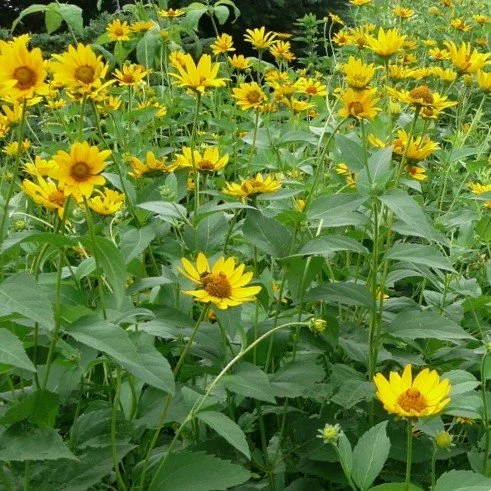
Early Sunflower (often called False Sunflower or Oxeye Sunflower) is a champion of the "pre-autumn" season. While it looks remarkably like a true sunflower, it’s actually a distinct native perennial that is far more manageable and long-lived in a garden setting.
A cheerful, multi-stemmed native that produces a profusion of daisy-like yellow flowers. It is one of the longest-blooming perennials in the summer garden, often starting its show weeks before the rest of the sunflower family.
Sun Exposure Full Sun to Partial Shade (Best in Full Sun)
Water Needs Low to Medium; drought-tolerant once established
Soil Type Adaptable; thrives in Clay, Loam, Sand, or Rocky soil
Mature Height 3 – 5 feet
Deer Resistance Moderate
Bloom Time June – September
Bloom Color Yellow
Plant Spacing 1.5 – 3 feet
Prolific Bloomer: Unlike true sunflowers that bloom once, this species is "deadhead friendly"—removing spent flowers will keep the gold coming all summer long.
Sturdy & Reliable: While it can get tall, its stems are generally stiffer than true sunflowers.However, in very rich soil, it can become "leggy," so it's actually happier in leaner, average soil.
Clump-Forming: It stays where you put it! Unlike some aggressive spreaders, this species grows in a tidy, non-invasive clump that increases in diameter over time.
Specialist Pollinator Support: It is a critical host for the Holcopasites heliopis bee—a tiny specialist pollinator that relies specifically on this plant.
Bird Buffet: If you leave the seed heads standing in the fall, they become a favorite snack for goldfinches and other small songbirds.
Pro Tip: Try planting Early sunflower with purple-blooming companions like Blazing Star or Ironweed that would contrast beautifully with all that yellow.
Early Sunflower (often called False Sunflower or Oxeye Sunflower) is a champion of the "pre-autumn" season. While it looks remarkably like a true sunflower, it’s actually a distinct native perennial that is far more manageable and long-lived in a garden setting.
A cheerful, multi-stemmed native that produces a profusion of daisy-like yellow flowers. It is one of the longest-blooming perennials in the summer garden, often starting its show weeks before the rest of the sunflower family.
Sun Exposure Full Sun to Partial Shade (Best in Full Sun)
Water Needs Low to Medium; drought-tolerant once established
Soil Type Adaptable; thrives in Clay, Loam, Sand, or Rocky soil
Mature Height 3 – 5 feet
Deer Resistance Moderate
Bloom Time June – September
Bloom Color Yellow
Plant Spacing 1.5 – 3 feet
Prolific Bloomer: Unlike true sunflowers that bloom once, this species is "deadhead friendly"—removing spent flowers will keep the gold coming all summer long.
Sturdy & Reliable: While it can get tall, its stems are generally stiffer than true sunflowers.However, in very rich soil, it can become "leggy," so it's actually happier in leaner, average soil.
Clump-Forming: It stays where you put it! Unlike some aggressive spreaders, this species grows in a tidy, non-invasive clump that increases in diameter over time.
Specialist Pollinator Support: It is a critical host for the Holcopasites heliopis bee—a tiny specialist pollinator that relies specifically on this plant.
Bird Buffet: If you leave the seed heads standing in the fall, they become a favorite snack for goldfinches and other small songbirds.
Pro Tip: Try planting Early sunflower with purple-blooming companions like Blazing Star or Ironweed that would contrast beautifully with all that yellow.