
 Image 1 of 1
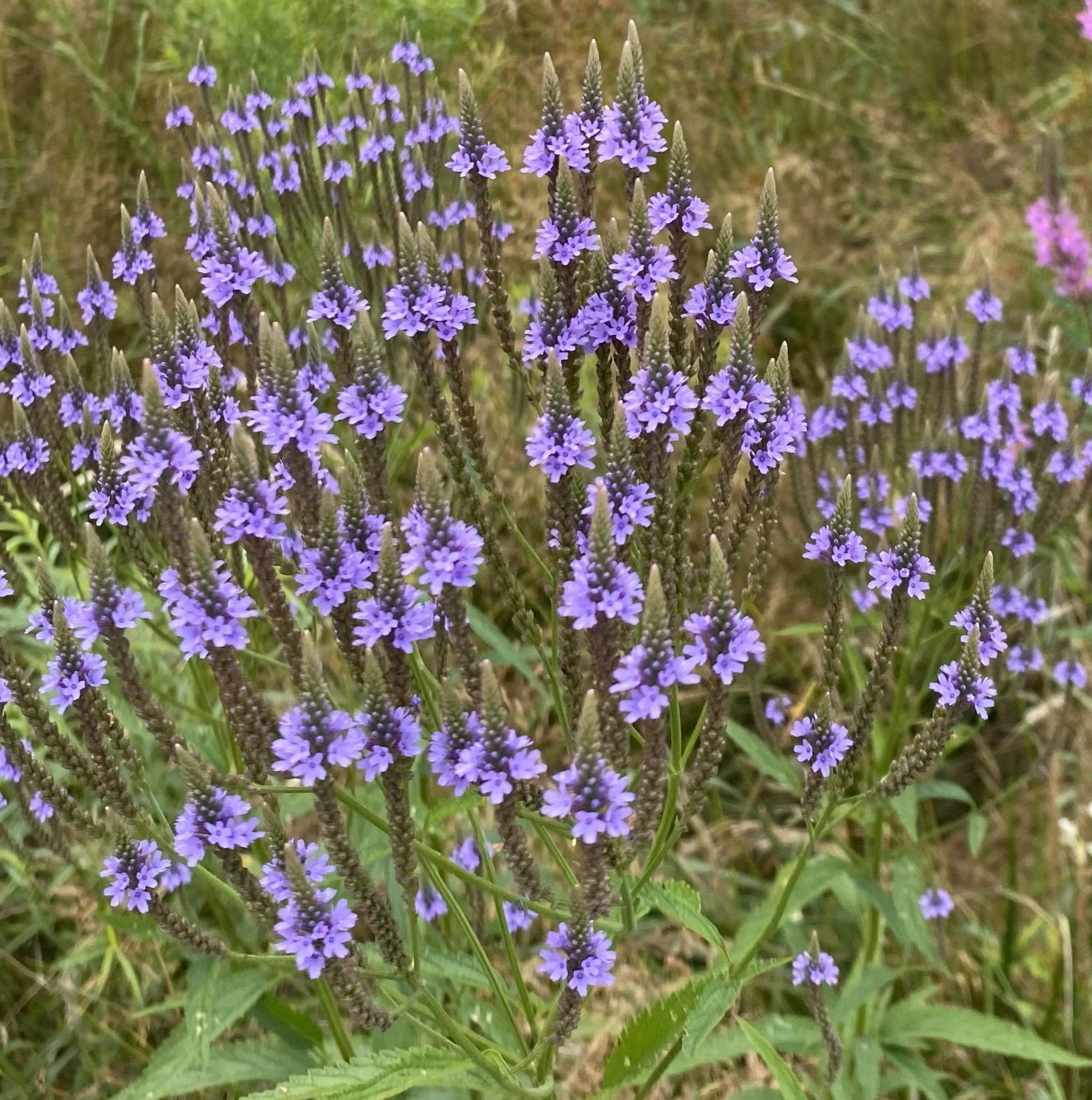
This native perennial is easily recognized by its unique branching flower spikes that resemble a multi-armed candelabra. Tiny, vibrant violet-blue flowers bloom in succession from the bottom up in the July heat. Unlike many garden perennials that shy away from "wet feet," Verbena hastata thrives in moist-to-wet soils, making it an invaluable choice for rain gardens, pond edges, or that low-lying corner of the yard where other plants struggle.
Sun Exposure Full Sun to Partial Shade
Water Needs Moderate to High; standing water is not tolerated, but it prefers consistently moist soil.
Soil Type Moist to wet; Can tolerate Muck, Clay, Loam or Sand.
Mature Height 4 - 6 feet
Deer Resistance Moderate to High
Bloom Time July – September
Bloom Color Blue
Plant Spacing 18 – 24 inches
Vertical Interest: Its tall, slender habit adds height without adding bulk, allowing it to weave beautifully between other plants.
Naturalizes Easily: A biennial plant that is a wonderful self-seeder. It also will slowly spread through rhizomes allowing it to fill in gaps over time, but it will not compete well with more aggressive vegetation.
Color: The violet-blue flower spikes can bloom for up to 2 months.
Butterfly Magnet: A vital nectar source for a wide array of butterflies, including Swallowtails, Fritillaries, and Skippers.
Native Bee Support: Blue vervain attracts a variety of different native bees.
Songbird Food: In the fall, the slender spikes produce tiny seeds that are a favorite for finches, and sparrows.
Pro Tip: Because Blue Vervain grows quite tall and narrow, plant it in clusters of three or more. This creates a stunning "haze" of purple-blue color that is much more impactful than a single specimen, and it provides extra support for the stems in windy areas.
This native perennial is easily recognized by its unique branching flower spikes that resemble a multi-armed candelabra. Tiny, vibrant violet-blue flowers bloom in succession from the bottom up in the July heat. Unlike many garden perennials that shy away from "wet feet," Verbena hastata thrives in moist-to-wet soils, making it an invaluable choice for rain gardens, pond edges, or that low-lying corner of the yard where other plants struggle.
Sun Exposure Full Sun to Partial Shade
Water Needs Moderate to High; standing water is not tolerated, but it prefers consistently moist soil.
Soil Type Moist to wet; Can tolerate Muck, Clay, Loam or Sand.
Mature Height 4 - 6 feet
Deer Resistance Moderate to High
Bloom Time July – September
Bloom Color Blue
Plant Spacing 18 – 24 inches
Vertical Interest: Its tall, slender habit adds height without adding bulk, allowing it to weave beautifully between other plants.
Naturalizes Easily: A biennial plant that is a wonderful self-seeder. It also will slowly spread through rhizomes allowing it to fill in gaps over time, but it will not compete well with more aggressive vegetation.
Color: The violet-blue flower spikes can bloom for up to 2 months.
Butterfly Magnet: A vital nectar source for a wide array of butterflies, including Swallowtails, Fritillaries, and Skippers.
Native Bee Support: Blue vervain attracts a variety of different native bees.
Songbird Food: In the fall, the slender spikes produce tiny seeds that are a favorite for finches, and sparrows.
Pro Tip: Because Blue Vervain grows quite tall and narrow, plant it in clusters of three or more. This creates a stunning "haze" of purple-blue color that is much more impactful than a single specimen, and it provides extra support for the stems in windy areas.