
 Image 1 of 1
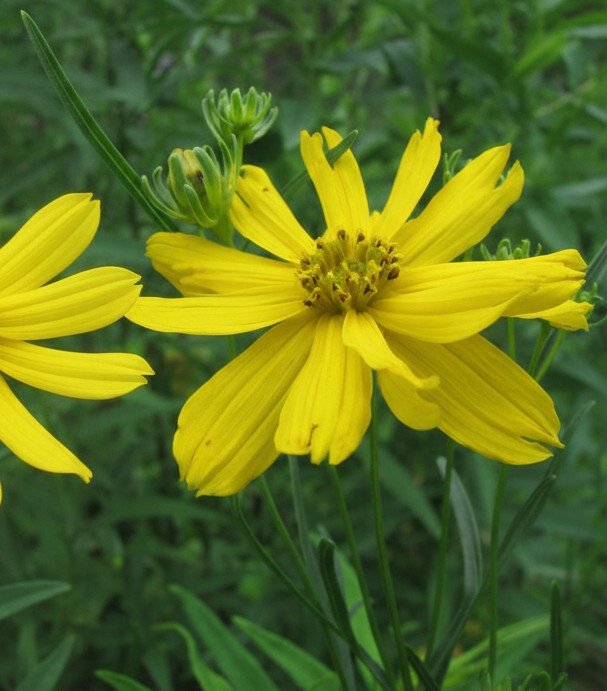
A long-lived and dependable perennial that forms tidy, upright clumps. In mid-summer it boasts bright yellow flowers for 3-4 weeks. Blooms are about 1-2 inches across and has deeply textured palmate leaves. While many other Coreopsis species can look a bit "wild" or floppy, Prairie Coreopsis is known for its stiff stems and unique, architectural foliage that stays attractive even when the plant isn't in bloom.
Sun Exposure Full Sun to Partial Shade
Water Needs Low to Medium; very drought-tolerant
Soil Type Sand, Loam, or Rocky soil (avoid overly rich or wet soils)
Mature Height 1.5 – 2 feet
Deer Resistance High
Bloom Time June – July
Bloom Color Yellow
Plant Spacing 12 – 18 inches
Unique Foliage: The leaves are deeply divided into three narrow lobes, resembling a bird's foot or a palm. This provides a distinct, "feathery" texture that contrasts beautifully with broad-leafed plants.
Upright Stems: Unlike some cousins that sprawl, this species stays strictly upright. Its stems are very sturdy, meaning it rarely needs staking and handles wind exceptionally well.
Rhizomatous Spreader: It spreads slowly via rhizomes and can potentially overwhelm small landscapes. Please be mindful when planting.
The rhizomes slowly form an underground mat that is excellent for stabilizing dry, sunny slopes and even sand dunes.
Pollinator Variety: The bright yellow, 1- 2 inch wide flowers are a magnet for various butterflies and skippers.
Bee Support: It is a high-value plant for many native bees and is considered a good species by Beekeepers.
Fall Seed Source: Like the "Tickseeds," it produces small, dark seeds that are a favorite for goldfinches and other small songbirds.
A long-lived and dependable perennial that forms tidy, upright clumps. In mid-summer it boasts bright yellow flowers for 3-4 weeks. Blooms are about 1-2 inches across and has deeply textured palmate leaves. While many other Coreopsis species can look a bit "wild" or floppy, Prairie Coreopsis is known for its stiff stems and unique, architectural foliage that stays attractive even when the plant isn't in bloom.
Sun Exposure Full Sun to Partial Shade
Water Needs Low to Medium; very drought-tolerant
Soil Type Sand, Loam, or Rocky soil (avoid overly rich or wet soils)
Mature Height 1.5 – 2 feet
Deer Resistance High
Bloom Time June – July
Bloom Color Yellow
Plant Spacing 12 – 18 inches
Unique Foliage: The leaves are deeply divided into three narrow lobes, resembling a bird's foot or a palm. This provides a distinct, "feathery" texture that contrasts beautifully with broad-leafed plants.
Upright Stems: Unlike some cousins that sprawl, this species stays strictly upright. Its stems are very sturdy, meaning it rarely needs staking and handles wind exceptionally well.
Rhizomatous Spreader: It spreads slowly via rhizomes and can potentially overwhelm small landscapes. Please be mindful when planting.
The rhizomes slowly form an underground mat that is excellent for stabilizing dry, sunny slopes and even sand dunes.
Pollinator Variety: The bright yellow, 1- 2 inch wide flowers are a magnet for various butterflies and skippers.
Bee Support: It is a high-value plant for many native bees and is considered a good species by Beekeepers.
Fall Seed Source: Like the "Tickseeds," it produces small, dark seeds that are a favorite for goldfinches and other small songbirds.