
 Image 1 of 1
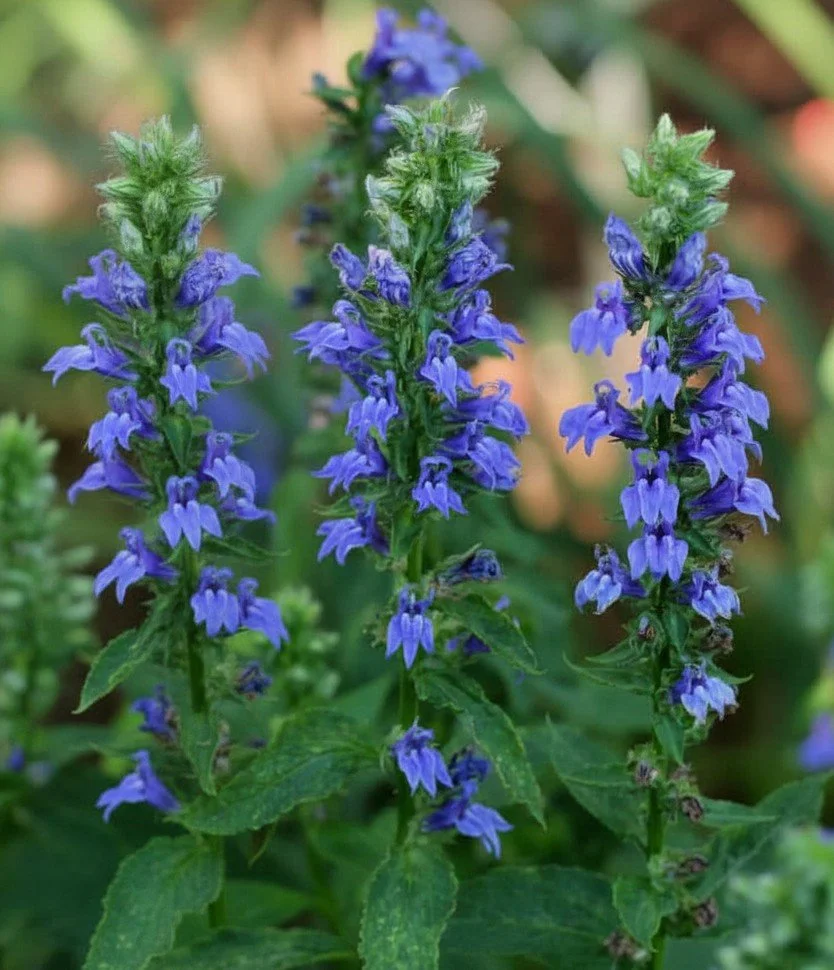
While many plants are masters of the dry, sunny prairie, Great Blue Lobelia is the perfect choice for the slightly cooler or damper spots in your landscape. A stunning, clump-forming native known for its densely packed spikes of tubular, bright blue flowers. It is a fantastic "structural" plant that brings a pop of rare color to the garden just as the mid-summer heat begins to peak. It prefers medium to wet soils, especially with a little shade.
Sun Exposure Full Sun to Partial Shade (Prefers some afternoon shade)
Water Needs Medium to High; prefers consistently moist soil
Soil Type Adaptable; thrives in Muck, Clay, or Loam
Mature Height 2 – 3 feet
Deer Resistance Moderate - High
Bloom Time July – October
Bloom Color Blue
Plant Spacing 12 – 18 inches
Color: The flowers are arranged in a crowded spike that bloom in true blue color from the bottom up.
Well-Behaved Growth: It is a clump-forming perennial that stays tidy and upright. While it may self-seed in moist conditions, it does not have aggressive rhizomes.
Versatile Placement: Can be found in wet prairies, pond and creek edges, soggy meadows, marshland borders and other moist areas.
Deer Resistant: It produces a compound called “lobeline” which deters herbivores.
Pollinators: The deep blue flower spikes attract many different bees and butterflies. You’ll often see bumblebees prying the petals apart to disappear entirely inside the bloom for nectar.
Hummingbirds: While they usually prefer red flowers (like its cousin, the Cardinal Flower), hummingbirds will frequently visit Great Blue Lobelia for its high nectar content.
Late-Season Support: Its long bloom period provides a reliable food source for pollinators during the transition into autumn.
While many plants are masters of the dry, sunny prairie, Great Blue Lobelia is the perfect choice for the slightly cooler or damper spots in your landscape. A stunning, clump-forming native known for its densely packed spikes of tubular, bright blue flowers. It is a fantastic "structural" plant that brings a pop of rare color to the garden just as the mid-summer heat begins to peak. It prefers medium to wet soils, especially with a little shade.
Sun Exposure Full Sun to Partial Shade (Prefers some afternoon shade)
Water Needs Medium to High; prefers consistently moist soil
Soil Type Adaptable; thrives in Muck, Clay, or Loam
Mature Height 2 – 3 feet
Deer Resistance Moderate - High
Bloom Time July – October
Bloom Color Blue
Plant Spacing 12 – 18 inches
Color: The flowers are arranged in a crowded spike that bloom in true blue color from the bottom up.
Well-Behaved Growth: It is a clump-forming perennial that stays tidy and upright. While it may self-seed in moist conditions, it does not have aggressive rhizomes.
Versatile Placement: Can be found in wet prairies, pond and creek edges, soggy meadows, marshland borders and other moist areas.
Deer Resistant: It produces a compound called “lobeline” which deters herbivores.
Pollinators: The deep blue flower spikes attract many different bees and butterflies. You’ll often see bumblebees prying the petals apart to disappear entirely inside the bloom for nectar.
Hummingbirds: While they usually prefer red flowers (like its cousin, the Cardinal Flower), hummingbirds will frequently visit Great Blue Lobelia for its high nectar content.
Late-Season Support: Its long bloom period provides a reliable food source for pollinators during the transition into autumn.