
 Image 1 of 1
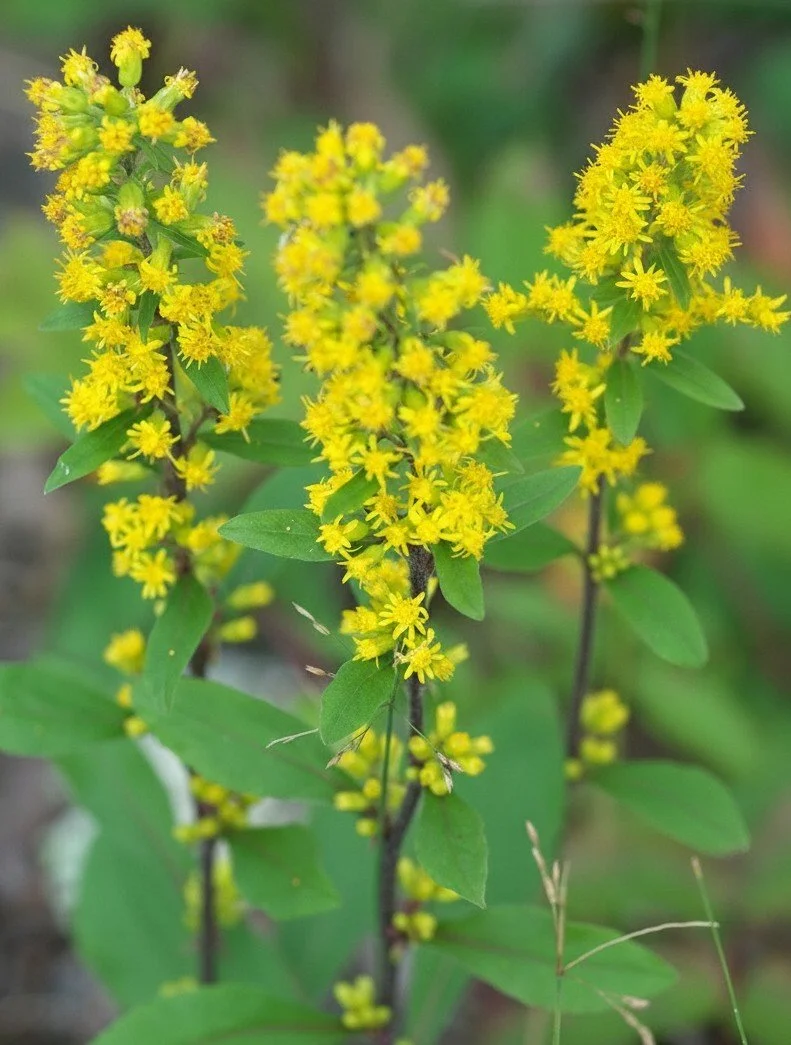
Unlike most goldenrods that branch out into arching plumes, this species grows in a distinct, upright spike, making it a fantastic structural choice for tight spaces or the middle of a layered bed. A distinctive and well-behaved goldenrod easily identified by its fuzzy, silver-haired stems and its unique upright growth habit. Rather than wide-spreading plumes, its flowers hug the stem in a dense, golden column, creating a "wand-like" appearance.
Sun Exposure Full Sun to Partial Shade
Water Needs Low to Medium; exceptionally drought-tolerant
Soil Type Well-drained Sand, Rocky, or Lean/Poor soil
Mature Height 1.5 – 3 feet
Deer Resistance High
Bloom Time August – October
Bloom Color Yellow
Plant Spacing 12 – 18 inches
Color: Its most striking feature is the dense coating of fine white hairs on the stem and leaves, giving the plant a soft, grayish-green cast even when it’s not in bloom. The yellow flowers are relatively large compared to other goldenrods, up to ¼ inch tall and face out from the branches.
Non-Aggressive Habit: Unlike its "runaway" relatives, Hairy Goldenrod is a clump-forming species. It stays in a tidy, vertical bunch, making it one of the best goldenrods for small landscapes or rock gardens.
Perfect for open dry woods, rocky outcrops, dunes.
Pollinators: The nectar-rich golden cylinders are a favorite for a variety of native bees, beneficial wasps, and butterflies.
Critical Fall Fuel: Because it blooms into October, it provides late season energy before the first hard frost.
*Don’t believe the myths—Goldenrod does not cause hay fever! Its pollen is heavy and sticky (designed to be carried by bees, not the wind). The real culprit for itchy eyes is usually Ragweed, which blooms at the same time but has inconspicuous green flowers. You can plant Hairy Goldenrod with confidence, knowing it brings beauty and health to your garden without the sneezing!
Unlike most goldenrods that branch out into arching plumes, this species grows in a distinct, upright spike, making it a fantastic structural choice for tight spaces or the middle of a layered bed. A distinctive and well-behaved goldenrod easily identified by its fuzzy, silver-haired stems and its unique upright growth habit. Rather than wide-spreading plumes, its flowers hug the stem in a dense, golden column, creating a "wand-like" appearance.
Sun Exposure Full Sun to Partial Shade
Water Needs Low to Medium; exceptionally drought-tolerant
Soil Type Well-drained Sand, Rocky, or Lean/Poor soil
Mature Height 1.5 – 3 feet
Deer Resistance High
Bloom Time August – October
Bloom Color Yellow
Plant Spacing 12 – 18 inches
Color: Its most striking feature is the dense coating of fine white hairs on the stem and leaves, giving the plant a soft, grayish-green cast even when it’s not in bloom. The yellow flowers are relatively large compared to other goldenrods, up to ¼ inch tall and face out from the branches.
Non-Aggressive Habit: Unlike its "runaway" relatives, Hairy Goldenrod is a clump-forming species. It stays in a tidy, vertical bunch, making it one of the best goldenrods for small landscapes or rock gardens.
Perfect for open dry woods, rocky outcrops, dunes.
Pollinators: The nectar-rich golden cylinders are a favorite for a variety of native bees, beneficial wasps, and butterflies.
Critical Fall Fuel: Because it blooms into October, it provides late season energy before the first hard frost.
*Don’t believe the myths—Goldenrod does not cause hay fever! Its pollen is heavy and sticky (designed to be carried by bees, not the wind). The real culprit for itchy eyes is usually Ragweed, which blooms at the same time but has inconspicuous green flowers. You can plant Hairy Goldenrod with confidence, knowing it brings beauty and health to your garden without the sneezing!