
 Image 1 of 1
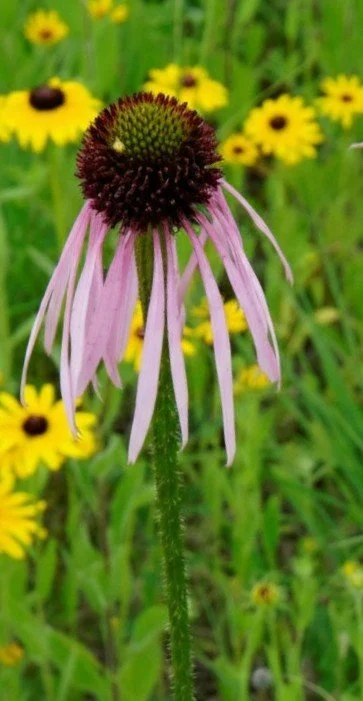
A classic prairie native, this species is prized for its early bloom time and its daisy-like flowers. Its pale pink-to-lavender petals hang gracefully around a tall, copper-colored central cone. Pale Purple Coneflower should be planted in well-drained soil and prefers full sunlight.
Sun Exposure Full Sun (preferred) to Partial Shade
Water Needs Low; highly drought-tolerant once established
Soil Type Well-drained Sand, Loam, or Rocky/Gravelly soil
Mature Height 2 – 3 feet
Deer Resistance High
Bloom Time June – July
Bloom Color Pink, Lavendar
Plant Spacing 10 – 18 inches
Blooms: Unlike the horizontal petals of the Purple Coneflower (E. purpurea), the petals of the Pale Purple Coneflower are very thin and droop dramatically downward, giving the flower a unique, elegant silhouette.
Deep Taproot: It possesses an incredibly deep taproot making it one of the most drought-resistant perennials for a sunny garden, but it should not be moved once established.
Early Starter: This species typically blooms 2–3 weeks earlier than other coneflowers, making it the perfect "bridge" between spring flowers and the heat of mid-summer.
Pollinators: It blooms in early summer when only a few other plants are in bloom, providing a massive amount of nectar for hummingbirds and butterflies. The leaves provide food for the Ottoe-skipper larva.
Goldfinch Favorite: In late summer and fall, the cones turn dark and fill with oil-rich seeds. You will often see Goldfinches perched directly on the cones, plucking out the seeds.
A classic prairie native, this species is prized for its early bloom time and its daisy-like flowers. Its pale pink-to-lavender petals hang gracefully around a tall, copper-colored central cone. Pale Purple Coneflower should be planted in well-drained soil and prefers full sunlight.
Sun Exposure Full Sun (preferred) to Partial Shade
Water Needs Low; highly drought-tolerant once established
Soil Type Well-drained Sand, Loam, or Rocky/Gravelly soil
Mature Height 2 – 3 feet
Deer Resistance High
Bloom Time June – July
Bloom Color Pink, Lavendar
Plant Spacing 10 – 18 inches
Blooms: Unlike the horizontal petals of the Purple Coneflower (E. purpurea), the petals of the Pale Purple Coneflower are very thin and droop dramatically downward, giving the flower a unique, elegant silhouette.
Deep Taproot: It possesses an incredibly deep taproot making it one of the most drought-resistant perennials for a sunny garden, but it should not be moved once established.
Early Starter: This species typically blooms 2–3 weeks earlier than other coneflowers, making it the perfect "bridge" between spring flowers and the heat of mid-summer.
Pollinators: It blooms in early summer when only a few other plants are in bloom, providing a massive amount of nectar for hummingbirds and butterflies. The leaves provide food for the Ottoe-skipper larva.
Goldfinch Favorite: In late summer and fall, the cones turn dark and fill with oil-rich seeds. You will often see Goldfinches perched directly on the cones, plucking out the seeds.