
 Image 1 of 1
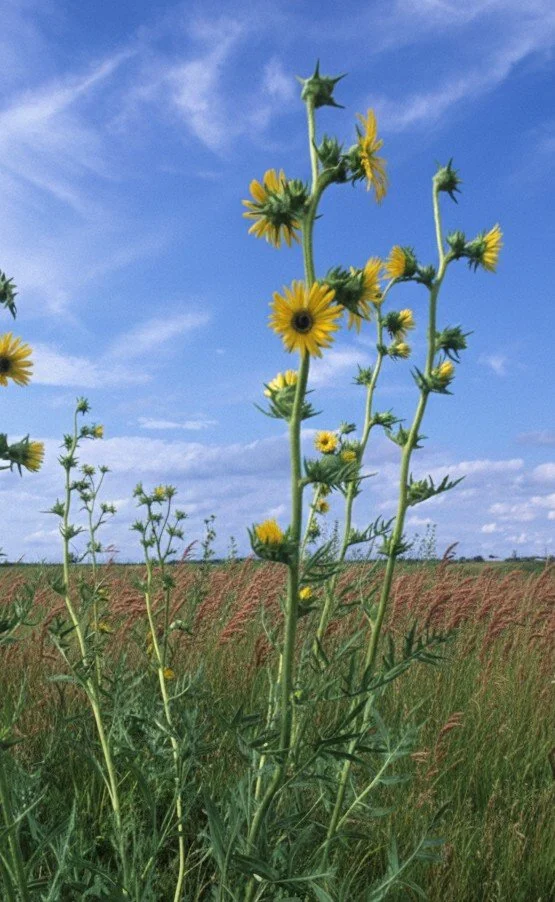
This towering native perennial is famous for its deeply lobed, sandpaper-like leaves that traditionally orient themselves North and South to avoid the intense midday sun—giving the plant its iconic name.Rising on sturdy, sap-filled stalks, its cheerful, sunflower-like yellow blooms provide a vertical element that can be seen from across the yard.
It is a slow-growing "anchor" species that invests its early years into developing a massive taproot that can reach up to 15 feet deep. This incredible root system makes it virtually bulletproof against drought and extreme heat, allowing it to remain lush and vibrant even when the rest of the garden is parched.
Sun Exposure Full Sun to Partial Shade
Water Needs Low to Medium; exceptionally drought-tolerant
Soil Type Loam, Sand
Mature Height 5 – 8 feet
Deer Resistance High
Bloom Time June – September
Bloom Color Yellow
Plant Spacing 3 – 5 feet
Height: Given rich soil, compass plants can reach upwards of 8 feet in height.
Living Compass: The large basal leaves align with the Earth’s magnetic poles to maximize water use in the leaves and increase CO2 gain.
Centuries-Long Life: This is a "legacy plant." Once established, a single Compass Plant can live for up to 100 years, becoming a permanent fixture of your home's ecosystem.
Pollinators: The resin-rich flowers are a favorite of bees, and butterflies.
Birds: Seeds are a high-energy food source for goldfinches and other songbirds throughout the fall and a favorite perching spot.
Pro Tip: Patience is a virtue with the Compass Plant! Because it spends its first few seasons focused on growing that legendary 15-foot taproot, it may only produce a small cluster of leaves at first. Don't be fooled—it is building the foundation for a lifetime of beauty. Due to this taproot, it is very difficult to move once planted, so choose its "forever home" in a sunny spot with plenty of vertical room to grow.
This towering native perennial is famous for its deeply lobed, sandpaper-like leaves that traditionally orient themselves North and South to avoid the intense midday sun—giving the plant its iconic name.Rising on sturdy, sap-filled stalks, its cheerful, sunflower-like yellow blooms provide a vertical element that can be seen from across the yard.
It is a slow-growing "anchor" species that invests its early years into developing a massive taproot that can reach up to 15 feet deep. This incredible root system makes it virtually bulletproof against drought and extreme heat, allowing it to remain lush and vibrant even when the rest of the garden is parched.
Sun Exposure Full Sun to Partial Shade
Water Needs Low to Medium; exceptionally drought-tolerant
Soil Type Loam, Sand
Mature Height 5 – 8 feet
Deer Resistance High
Bloom Time June – September
Bloom Color Yellow
Plant Spacing 3 – 5 feet
Height: Given rich soil, compass plants can reach upwards of 8 feet in height.
Living Compass: The large basal leaves align with the Earth’s magnetic poles to maximize water use in the leaves and increase CO2 gain.
Centuries-Long Life: This is a "legacy plant." Once established, a single Compass Plant can live for up to 100 years, becoming a permanent fixture of your home's ecosystem.
Pollinators: The resin-rich flowers are a favorite of bees, and butterflies.
Birds: Seeds are a high-energy food source for goldfinches and other songbirds throughout the fall and a favorite perching spot.
Pro Tip: Patience is a virtue with the Compass Plant! Because it spends its first few seasons focused on growing that legendary 15-foot taproot, it may only produce a small cluster of leaves at first. Don't be fooled—it is building the foundation for a lifetime of beauty. Due to this taproot, it is very difficult to move once planted, so choose its "forever home" in a sunny spot with plenty of vertical room to grow.