
 Image 1 of 1
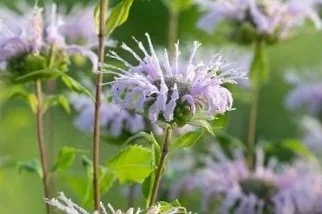
Bergamot (commonly known as Bee Balm or Monarda) is known for its distinct, "shredded" crown-like blooms and aromatic foliage. This hardy perennial is a member of the mint family and does well in all but the wettest of soils. It’s fragrant flowers are a popular nectar source for butterflies, bees and hummingbirds.
Sun Exposure Full Sun to Partial Shade
Water Needs Moderate; prefers consistent moisture but is drought-tolerant once established.
Soil Type Tolerates Muck, Clay, Loam and Sand, and poor soils.
Mature Height 4 - 5 feet
Deer Resistance High
Bloom Time July – September
Bloom Color Lavendar
Plant Spacing 2 - 3 feet
The leaves release a minty or oregano-like scent when crushed.
Its unique flower shape has tube-like blossom structures.
Naturally resistant to many pests, making it an easy-care choice of plants.
Bergamot is one of the few plants that consistently draws hummingbirds, butterflies, and native bees simultaneously.
Serves as a host plant for several species of the Hermit Sphinx and the Raspberry Pyrausta moths.
Fun Fact: For generations, Bergamot was valued by Indigenous communities and early settlers as a healing plant, commonly brewed as a tea or used in simple remedies.
Bergamot (commonly known as Bee Balm or Monarda) is known for its distinct, "shredded" crown-like blooms and aromatic foliage. This hardy perennial is a member of the mint family and does well in all but the wettest of soils. It’s fragrant flowers are a popular nectar source for butterflies, bees and hummingbirds.
Sun Exposure Full Sun to Partial Shade
Water Needs Moderate; prefers consistent moisture but is drought-tolerant once established.
Soil Type Tolerates Muck, Clay, Loam and Sand, and poor soils.
Mature Height 4 - 5 feet
Deer Resistance High
Bloom Time July – September
Bloom Color Lavendar
Plant Spacing 2 - 3 feet
The leaves release a minty or oregano-like scent when crushed.
Its unique flower shape has tube-like blossom structures.
Naturally resistant to many pests, making it an easy-care choice of plants.
Bergamot is one of the few plants that consistently draws hummingbirds, butterflies, and native bees simultaneously.
Serves as a host plant for several species of the Hermit Sphinx and the Raspberry Pyrausta moths.
Fun Fact: For generations, Bergamot was valued by Indigenous communities and early settlers as a healing plant, commonly brewed as a tea or used in simple remedies.