
 Image 1 of 1
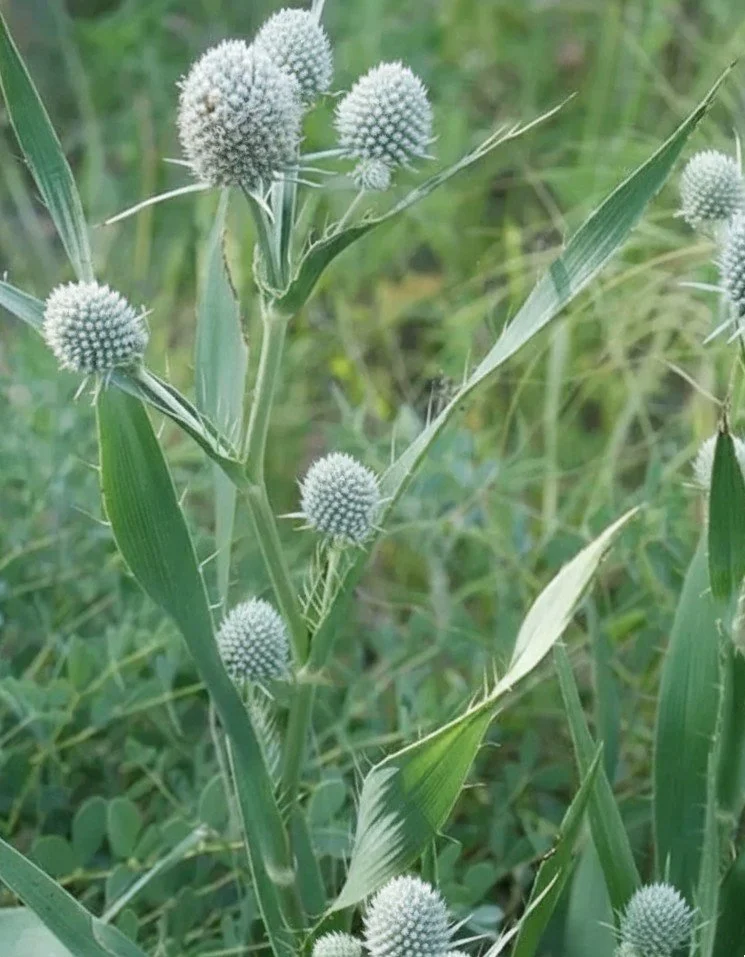
Rattlesnake Master is one of the most architectural and otherworldly plants in the tallgrass prairie. With its stiff, sword-like leaves and bristly, globe-shaped flower heads, it looks more like a desert yucca than a member of the carrot family. It adds a unique "silver-blue" cool tone to the garden.
Sun Exposure Full Sun
Water Needs Low to Moderate
Soil Type Clay, Loam, of Sand
Mature Height 4 feet
Deer Resistance High
Bloom Time July – September
Bloom Color White
Plant Spacing 18 – 24 inches
Yucca-Like Foliage: The long, bluish-green leaves feature small soft teeth along the edges, mimicking the look of a desert yucca.
Spherical Blooms: Unlike typical flat-topped flowers, Rattlesnake Master produces bristly white flower heads. These "prickly" globes start off green, turn white with a hint of blue, and eventually dry to a tan in the fall.
Pollinators: Small native bees, moths and flies will nectar on Rattlesnake Master.
Rattlesnake Master is one of the most architectural and otherworldly plants in the tallgrass prairie. With its stiff, sword-like leaves and bristly, globe-shaped flower heads, it looks more like a desert yucca than a member of the carrot family. It adds a unique "silver-blue" cool tone to the garden.
Sun Exposure Full Sun
Water Needs Low to Moderate
Soil Type Clay, Loam, of Sand
Mature Height 4 feet
Deer Resistance High
Bloom Time July – September
Bloom Color White
Plant Spacing 18 – 24 inches
Yucca-Like Foliage: The long, bluish-green leaves feature small soft teeth along the edges, mimicking the look of a desert yucca.
Spherical Blooms: Unlike typical flat-topped flowers, Rattlesnake Master produces bristly white flower heads. These "prickly" globes start off green, turn white with a hint of blue, and eventually dry to a tan in the fall.
Pollinators: Small native bees, moths and flies will nectar on Rattlesnake Master.