
 Image 1 of 1
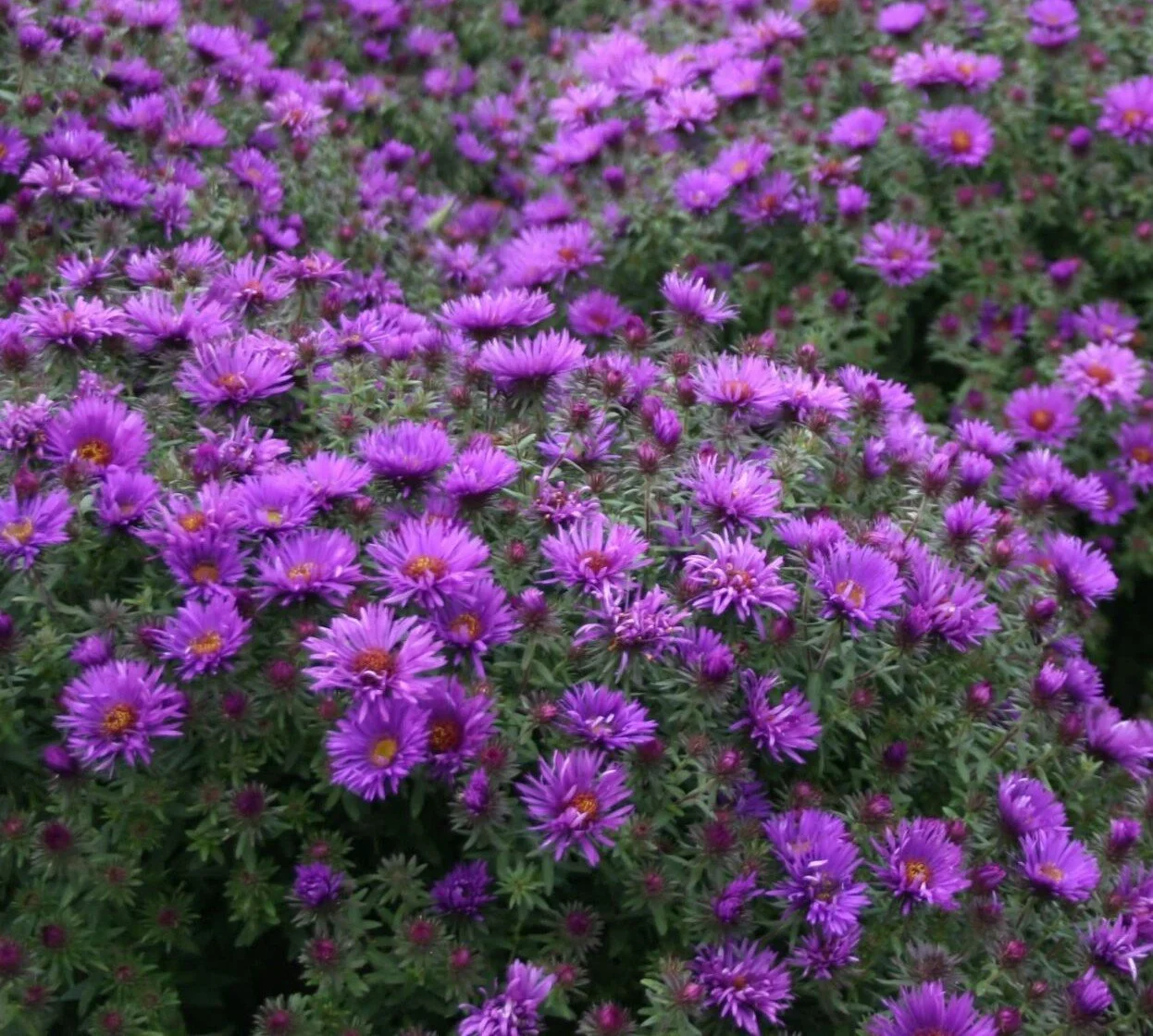
While other plants are winding down for winter, this aster explodes into a cloud of vivid purple and gold, providing one last massive feast for pollinators. A robust and showy native perennial that is famous for its late-season bloom. Its stems are topped with hundreds of daisy-like, deep violet-to-pink flowers with bright yellow centers, creating stunning color in the autumn landscape.
Sun Exposure Full Sun (best for bloom density) to Partial Shade
Water Needs Medium; prefers consistent moisture but is adaptable
Soil Type Adaptable; Muck, Clay, Loam, or Sand
Mature Height 3 – 5 feet
Deer Resistance Moderate
Bloom Time August – October
Bloom Color Purple
Plant Spacing 2 – 3 feet
Color: Blooms can range in color from purple, violet and shades of pink.
The "Hairy" Stem: Similar to the Hoary Vervain, the stems of New England Aster are covered in fine, bristly hairs, which helps with easy identification.
Foliage: It is natural for the bottom leaves of this plant to turn brown and drop off by late summer. This is just the plant focusing its energy on the flowers at the top! You can easily hide this by planting shorter natives in front of it.
Aggressive self-seeder: Please keep in mind when selecting your planting sites. Removal of the seed heads before the seed is ripe will help prevent it from spreading or the need to weed unwanted seedlings.
Migration Fuel: Provides critical, high-energy nectar for Monarchs and other butterflies into late fall.
Bees: It is a vital resource for late-emerging specialist bees and bumblebee queens who are preparing to overwinter.
Host Plant: It serves as a larval host for the Pearl Crescent butterfly and several species of moths.
While other plants are winding down for winter, this aster explodes into a cloud of vivid purple and gold, providing one last massive feast for pollinators. A robust and showy native perennial that is famous for its late-season bloom. Its stems are topped with hundreds of daisy-like, deep violet-to-pink flowers with bright yellow centers, creating stunning color in the autumn landscape.
Sun Exposure Full Sun (best for bloom density) to Partial Shade
Water Needs Medium; prefers consistent moisture but is adaptable
Soil Type Adaptable; Muck, Clay, Loam, or Sand
Mature Height 3 – 5 feet
Deer Resistance Moderate
Bloom Time August – October
Bloom Color Purple
Plant Spacing 2 – 3 feet
Color: Blooms can range in color from purple, violet and shades of pink.
The "Hairy" Stem: Similar to the Hoary Vervain, the stems of New England Aster are covered in fine, bristly hairs, which helps with easy identification.
Foliage: It is natural for the bottom leaves of this plant to turn brown and drop off by late summer. This is just the plant focusing its energy on the flowers at the top! You can easily hide this by planting shorter natives in front of it.
Aggressive self-seeder: Please keep in mind when selecting your planting sites. Removal of the seed heads before the seed is ripe will help prevent it from spreading or the need to weed unwanted seedlings.
Migration Fuel: Provides critical, high-energy nectar for Monarchs and other butterflies into late fall.
Bees: It is a vital resource for late-emerging specialist bees and bumblebee queens who are preparing to overwinter.
Host Plant: It serves as a larval host for the Pearl Crescent butterfly and several species of moths.