
 Image 1 of 1
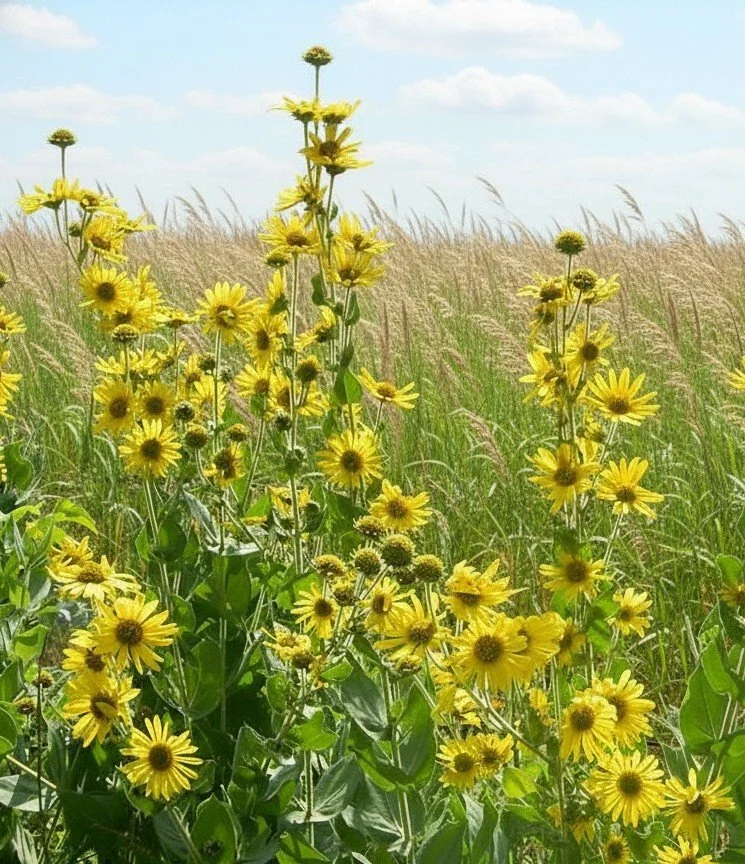
This native is named for the soft, silvery-gray "down" or fuzz that covers its stems and foliage, giving the entire plant a frosty-blue tint. When the mid-summer heat arrives, it erupts in a cheerful display of multi-flowered stalks topped with bright, 2-inch golden-yellow blooms.
What sets the Downy Sunflower apart is its incredible versatility. It is one of the few sunflowers that stays at a manageable height. It is a rugged survivor that handles the hottest, driest corners of your yard with ease, maintaining its silver-green luster even in the peak of a summer drought.
Sun Exposure Full Sun to Partial Sun
Water Needs Low to Medium; very drought-tolerant
Soil Type Poor, drier, Clay, Sand, Rocky, or Well-Drained Loam
Mature Height 4 - 5 feet
Deer Resistance Moderate - High
Bloom Time August – September
Bloom Color Yellow
Plant Spacing 2 – 3 feet
Aggressive Spreader: please consider when picking your planting location. Removal of the seed head before it is ripe is preferable if you do not want to weed seedlings.
Compact Habit: Unlike the towering 8-foot giants, Downy Sunflower stays relatively short and sturdy, rarely requiring staking or support.
Prolific Bloomer: Rather than one single flower head, each plant produces numerous branches, resulting in a dense "bouquet" of yellow flowers on every stalk.
Nectar: Its late-summer blooms are a vital resource for long-tongued bees, butterflies, and skippers during the hottest months of the year.
Bird Seed Source: In the fall, the flower heads dry into nutritious "bird feeders." Chickadees and Goldfinches will cling to the stems to feast on the oil-rich seeds.
Host Plant: It serves as a nursery for the Silvery Checkerspot butterfly and several species of moths.
This native is named for the soft, silvery-gray "down" or fuzz that covers its stems and foliage, giving the entire plant a frosty-blue tint. When the mid-summer heat arrives, it erupts in a cheerful display of multi-flowered stalks topped with bright, 2-inch golden-yellow blooms.
What sets the Downy Sunflower apart is its incredible versatility. It is one of the few sunflowers that stays at a manageable height. It is a rugged survivor that handles the hottest, driest corners of your yard with ease, maintaining its silver-green luster even in the peak of a summer drought.
Sun Exposure Full Sun to Partial Sun
Water Needs Low to Medium; very drought-tolerant
Soil Type Poor, drier, Clay, Sand, Rocky, or Well-Drained Loam
Mature Height 4 - 5 feet
Deer Resistance Moderate - High
Bloom Time August – September
Bloom Color Yellow
Plant Spacing 2 – 3 feet
Aggressive Spreader: please consider when picking your planting location. Removal of the seed head before it is ripe is preferable if you do not want to weed seedlings.
Compact Habit: Unlike the towering 8-foot giants, Downy Sunflower stays relatively short and sturdy, rarely requiring staking or support.
Prolific Bloomer: Rather than one single flower head, each plant produces numerous branches, resulting in a dense "bouquet" of yellow flowers on every stalk.
Nectar: Its late-summer blooms are a vital resource for long-tongued bees, butterflies, and skippers during the hottest months of the year.
Bird Seed Source: In the fall, the flower heads dry into nutritious "bird feeders." Chickadees and Goldfinches will cling to the stems to feast on the oil-rich seeds.
Host Plant: It serves as a nursery for the Silvery Checkerspot butterfly and several species of moths.