
 Image 1 of 1
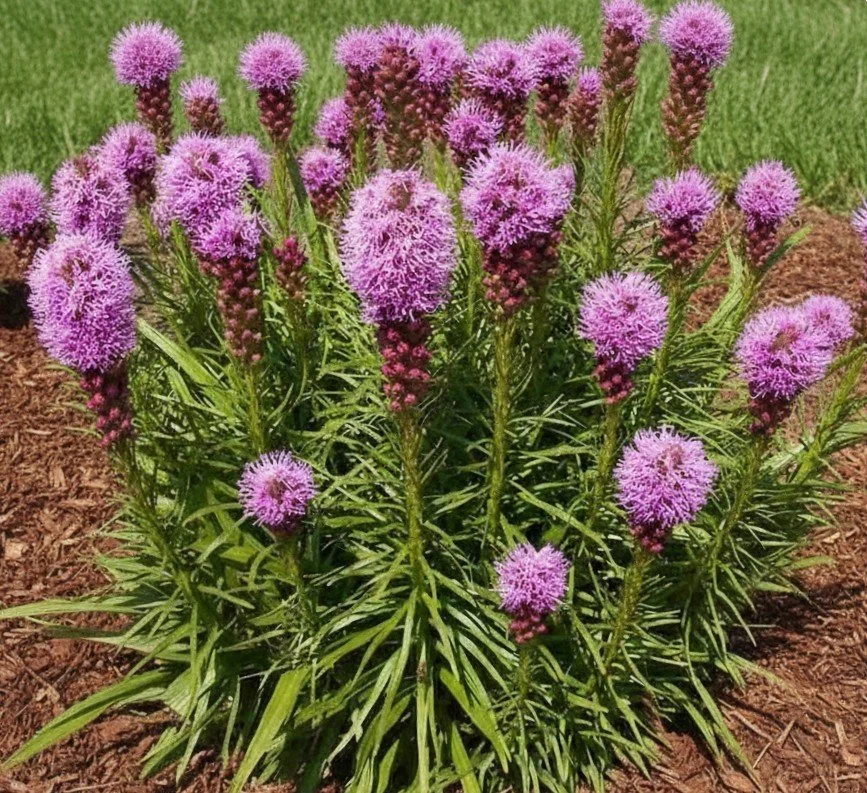
Also known as Dense Blazing Star, this plant features stiff, upright stems covered in grass-like foliage, topped with thick spikes of feathery, magenta-purple flowers that look like glowing sparklers in the summer sun. Marsh Blazing Star is native to moist meadows and marsh margins of the Midwest. It is a standard component of naturalized moist prairies, butterfly gardens, water feature margins, and rain gardens.
Sun Exposure Full Sun (preferred) to Partial Shade
Water Needs Medium to High; prefers moist soil but is quite adaptable
Soil Type Adaptable; thrives in Muck, Clay, Loam, or Moist Sand
Mature Height 3 – 5 feet
Deer Resistance Moderate - High
Bloom Time July – September
Bloom Color Lavendar - Purple
Plant Spacing 1 – 2 feet
Blooms: Unlike most spiked flowers that bloom from the bottom up, Liatris starts at the very tip of the wand and works its way down, extending its beauty over several weeks.
Corm-Based Growth: It grows from a bulb-like structure called a corm. This makes it a very "polite" neighbor; it won't spread aggressively or take over your garden beds.
Distinctive Texture: Before the flowers appear, the plant looks like a lush clump of fine, fountain-like grass, providing excellent green texture in the early spring.
Monarch Fuel: This is arguably one of the best plants for Monarch and other butterflies. During their migration, you will often see several butterflies jostling for position on a single flower spike.
Bumblebee Favorite: The feathery "stars" are packed with nectar, making them a high-priority stop for bumblebees and clearwing hummingbird moths.
Bird Feeder: If you leave the stalks up in the fall, goldfinches and other songbirds will visit the garden to feast on the small, nutritious seeds.
Also known as Dense Blazing Star, this plant features stiff, upright stems covered in grass-like foliage, topped with thick spikes of feathery, magenta-purple flowers that look like glowing sparklers in the summer sun. Marsh Blazing Star is native to moist meadows and marsh margins of the Midwest. It is a standard component of naturalized moist prairies, butterfly gardens, water feature margins, and rain gardens.
Sun Exposure Full Sun (preferred) to Partial Shade
Water Needs Medium to High; prefers moist soil but is quite adaptable
Soil Type Adaptable; thrives in Muck, Clay, Loam, or Moist Sand
Mature Height 3 – 5 feet
Deer Resistance Moderate - High
Bloom Time July – September
Bloom Color Lavendar - Purple
Plant Spacing 1 – 2 feet
Blooms: Unlike most spiked flowers that bloom from the bottom up, Liatris starts at the very tip of the wand and works its way down, extending its beauty over several weeks.
Corm-Based Growth: It grows from a bulb-like structure called a corm. This makes it a very "polite" neighbor; it won't spread aggressively or take over your garden beds.
Distinctive Texture: Before the flowers appear, the plant looks like a lush clump of fine, fountain-like grass, providing excellent green texture in the early spring.
Monarch Fuel: This is arguably one of the best plants for Monarch and other butterflies. During their migration, you will often see several butterflies jostling for position on a single flower spike.
Bumblebee Favorite: The feathery "stars" are packed with nectar, making them a high-priority stop for bumblebees and clearwing hummingbird moths.
Bird Feeder: If you leave the stalks up in the fall, goldfinches and other songbirds will visit the garden to feast on the small, nutritious seeds.