
 Image 1 of 1
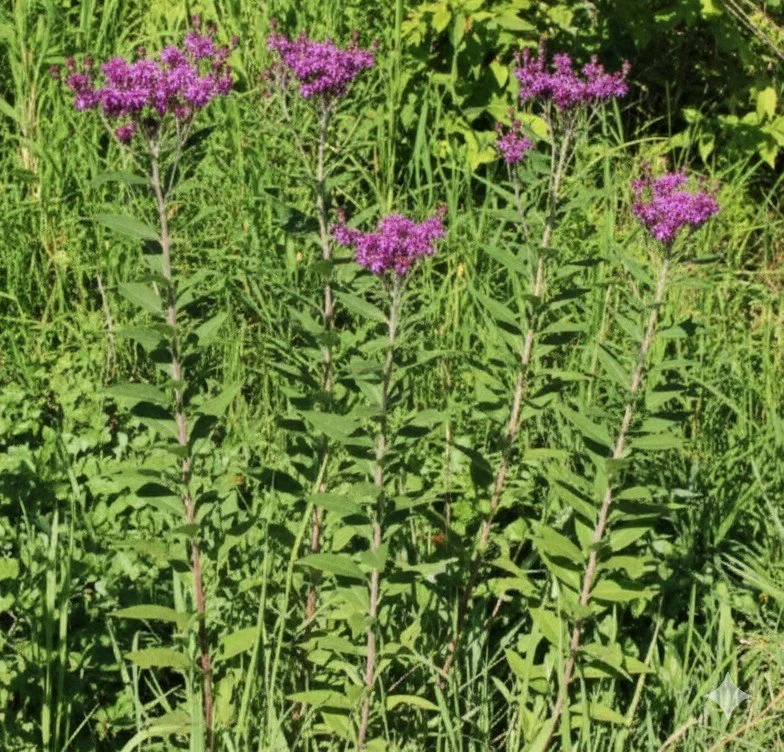
A stately and resilient native, Missouri Ironweed is prized for its intense purple flower clusters and its ability to stand tall without staking. Perhaps the showiest of Ironweeds, it acts as a majestic "anchor" in the garden, signaling the peak of the late-summer season. It provides the garden with a bright magenta color and beautiful, soft texture thanks to its distinctive fuzzy stems and leaves.
Sun Exposure Full Sun
Water Needs Medium; more drought-tolerant than other Ironweeds
Soil Type Adaptable; Clay, Loam, or Sandy/Rocky soil
Mature Height 5 – 6 feet
Deer Resistance High
Bloom Time July – October
Bloom Color Purple
Plant Spacing 2 – 3 feet
Foliage: Unlike its smoother cousins, V. missurica has fine white hairs on the undersides of the leaves and stems, giving the foliage a soft, slightly silvery-green appearance.
Deer Resistant: Ironweeds are bitter to the taste, so they are rarely browsed by deer.
Sturdy: True to its name, the stems are "iron-strong." It provides a rigid vertical line that won't flop over, even when topped with heavy clusters of blooms.
Blooms: Expect to wait 3 years for Ironweed to flower.
Pollinators: In late summer, you will often see this plant covered in Monarchs, Swallowtails, and Skippers. It is a vital fuel stop for migration. It is a high-value source of pollen and nectar for a variety of native bees.
Winter Interest: The spent flower heads turn a silver-tan to rusty-bronze color (hence "Iron" weed) and hold their seeds through the winter, feeding small songbirds like goldfinches.
A stately and resilient native, Missouri Ironweed is prized for its intense purple flower clusters and its ability to stand tall without staking. Perhaps the showiest of Ironweeds, it acts as a majestic "anchor" in the garden, signaling the peak of the late-summer season. It provides the garden with a bright magenta color and beautiful, soft texture thanks to its distinctive fuzzy stems and leaves.
Sun Exposure Full Sun
Water Needs Medium; more drought-tolerant than other Ironweeds
Soil Type Adaptable; Clay, Loam, or Sandy/Rocky soil
Mature Height 5 – 6 feet
Deer Resistance High
Bloom Time July – October
Bloom Color Purple
Plant Spacing 2 – 3 feet
Foliage: Unlike its smoother cousins, V. missurica has fine white hairs on the undersides of the leaves and stems, giving the foliage a soft, slightly silvery-green appearance.
Deer Resistant: Ironweeds are bitter to the taste, so they are rarely browsed by deer.
Sturdy: True to its name, the stems are "iron-strong." It provides a rigid vertical line that won't flop over, even when topped with heavy clusters of blooms.
Blooms: Expect to wait 3 years for Ironweed to flower.
Pollinators: In late summer, you will often see this plant covered in Monarchs, Swallowtails, and Skippers. It is a vital fuel stop for migration. It is a high-value source of pollen and nectar for a variety of native bees.
Winter Interest: The spent flower heads turn a silver-tan to rusty-bronze color (hence "Iron" weed) and hold their seeds through the winter, feeding small songbirds like goldfinches.