
 Image 1 of 1
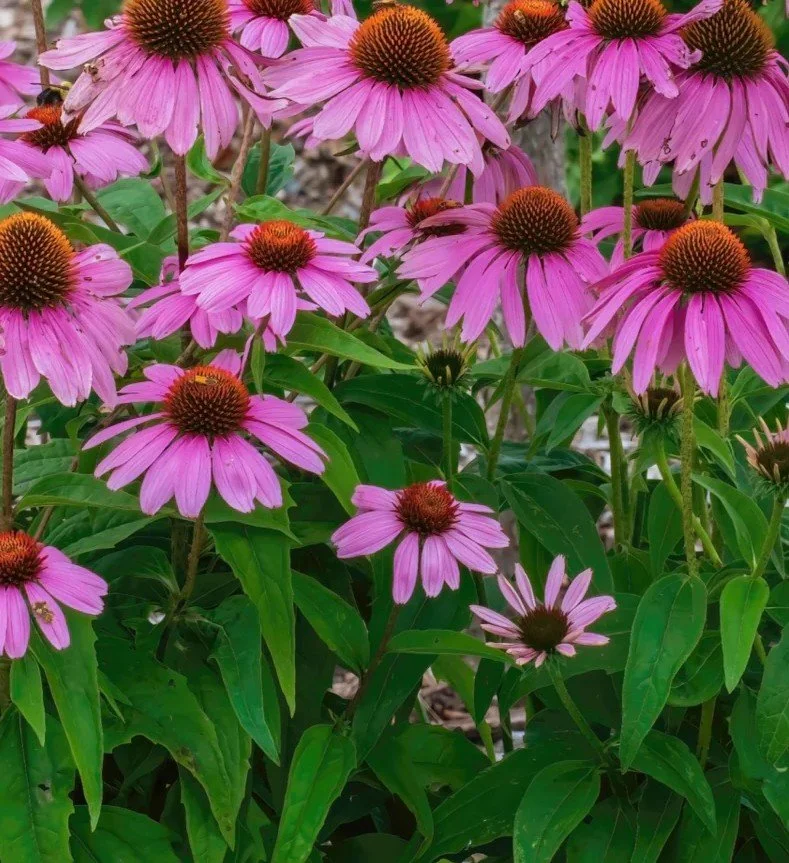
The Purple Coneflower is a quintessential prairie native, prized for its beauty and bloom time of about 2 months. With its tall, sturdy stems and showy flowers, this is a favorite nectar source for butterflies, bees and many other pollinators, including hummingbirds.
Sun Exposure Full Sun to Partial Shade
Water Needs Moderate to Low once established
Soil Type Needed Moist to Medium Loam, Clay, or Sandy soil
Mature Height 3 – 4 feet
Deer Resistance High
Bloom Time July – September
Bloom Color Purple
Plant Spacing 18 – 24 inches
Medium Soil Preferred: Once established, these plants are pretty drought-tolerant, but the entire plant can wilt if the soil becomes too dry in strong sunlight.
Growth is best in fertile loam, but the soil can contain some sand, clay or gravel.
Sturdy Stems: Unlike many tall perennials, the Purple Coneflower rarely needs staking. Its stems are tough and fibrous, standing tall even after heavy summer rains or wind.
Bloom Time: Purple Coneflowers have an approximately a 2-month bloom time and may re-bloom in the fall, especially if dead-headed early on.
Self-Seeding: While not invasive, Echinacea will happily drop seeds in open soil. This allows your patch to thicken naturally over time.
Pollinators: The central cone is a nectar goldmine. It is a favorite stop for Monarch butterflies, Swallowtails, and a massive variety of native bees.
Songbirds: Goldfinches are especially fond of this plant. They will often perch directly on the dried seed heads in late fall and winter to pluck out the protein-rich seeds.
The Purple Coneflower is a quintessential prairie native, prized for its beauty and bloom time of about 2 months. With its tall, sturdy stems and showy flowers, this is a favorite nectar source for butterflies, bees and many other pollinators, including hummingbirds.
Sun Exposure Full Sun to Partial Shade
Water Needs Moderate to Low once established
Soil Type Needed Moist to Medium Loam, Clay, or Sandy soil
Mature Height 3 – 4 feet
Deer Resistance High
Bloom Time July – September
Bloom Color Purple
Plant Spacing 18 – 24 inches
Medium Soil Preferred: Once established, these plants are pretty drought-tolerant, but the entire plant can wilt if the soil becomes too dry in strong sunlight.
Growth is best in fertile loam, but the soil can contain some sand, clay or gravel.
Sturdy Stems: Unlike many tall perennials, the Purple Coneflower rarely needs staking. Its stems are tough and fibrous, standing tall even after heavy summer rains or wind.
Bloom Time: Purple Coneflowers have an approximately a 2-month bloom time and may re-bloom in the fall, especially if dead-headed early on.
Self-Seeding: While not invasive, Echinacea will happily drop seeds in open soil. This allows your patch to thicken naturally over time.
Pollinators: The central cone is a nectar goldmine. It is a favorite stop for Monarch butterflies, Swallowtails, and a massive variety of native bees.
Songbirds: Goldfinches are especially fond of this plant. They will often perch directly on the dried seed heads in late fall and winter to pluck out the protein-rich seeds.