
Medium-Dry
Medium-Dry
Filters
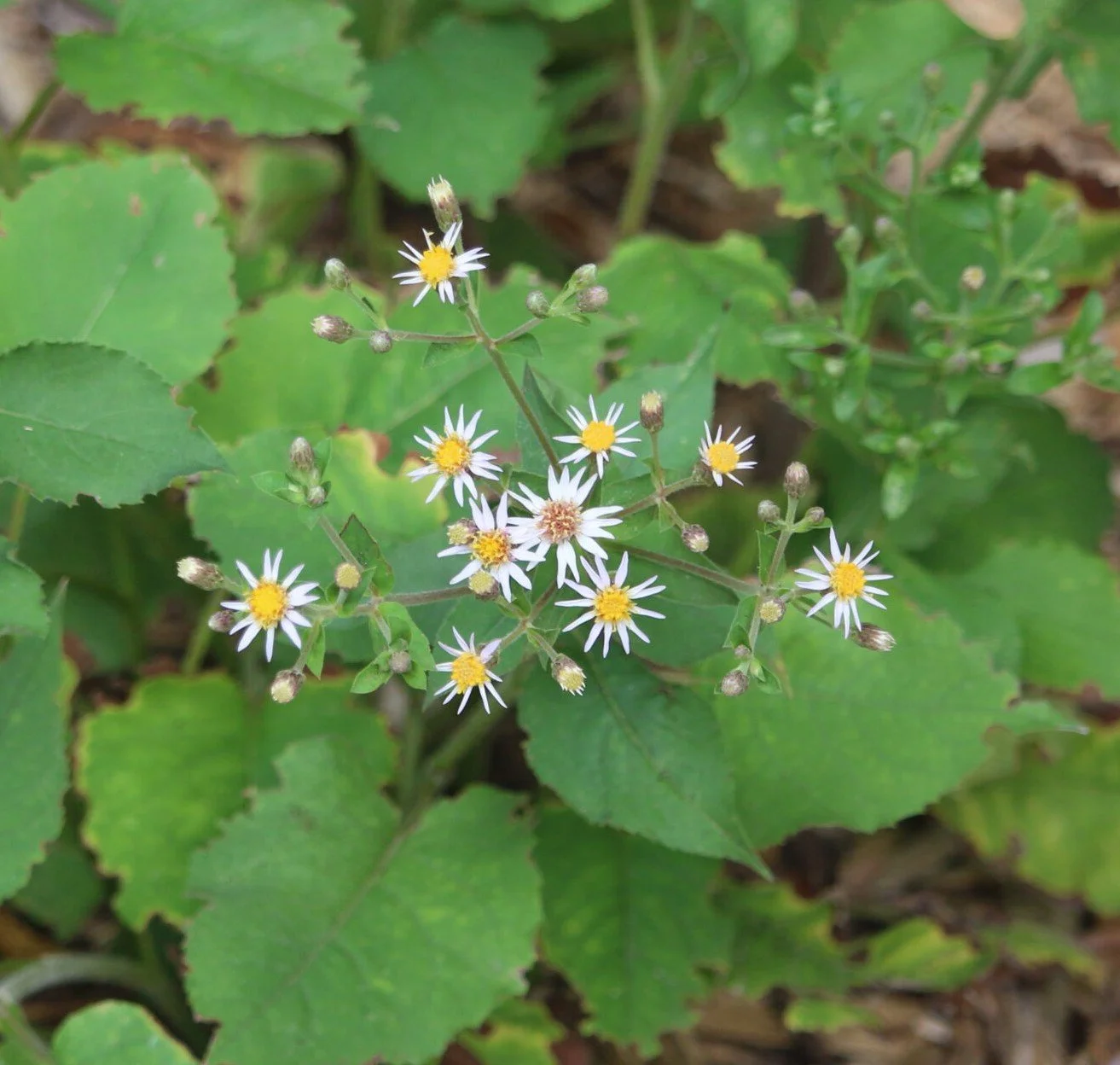
If you are looking for the perfect groundcover for a shady spot, Big-Leaved Aster is an exceptional choice. Named for its oversized, heart-shaped basal leaves that can grow up to 6 inches wide, this native perennial creates a lush, low-growing carpet of green that effectively suppresses weeds. In late summer and early autumn, it sends up sturdy stems topped with delicate, star-like flowers that range from white to pale violet-blue. This plant is a powerhouse for the woodland garden, thriving in the dappled light and dry shade where many other plants struggle.
Plant Profile
Sun Exposure Part Shade to Full Shade
Water Needs Moderate; once established, it is notably drought-tolerant
Soil Type Will grow in Muck, Clay, Loam or Sand
Mature Height 1 to 2 feet (when in bloom)
Deer Resistance Moderate
Bloom Time August – October
Bloom Color White
Plant Spacing 2 to 3 feet
Plant Characteristics
Foliage: The large, "big-leaved" base provides excellent texture and ground coverage even before the flowers appear.
Late Season Color: Offers beautiful, cooling lavender or white blooms just as the rest of the summer garden begins to fade.
Potentially Aggressive Groundcover: Spreads via rhizomes to form a dense, maintenance-free colony over time. Could overwhelm small landscapes so keep in mind when picking your planting site.
Wildlife Benefits
Pollinator Support: Provides a vital late-season food source for native bees, honeybees, and butterflies.
Host Plant: Serves as a larval host for the Pearl Crescent butterfly and several species of moths.
Seeds for Birds: The dried flower heads provide small seeds that are enjoyed by goldfinches and other songbirds in the fall.
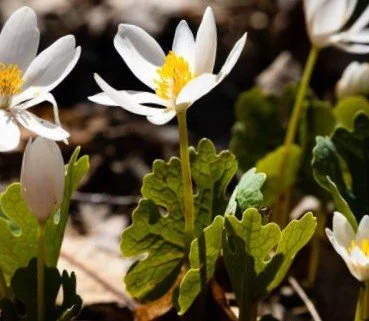
This native North American perennial is famous for its "wraparound" leaves and brilliant white blossoms that emerge while most of the garden is still waking up. It gets its name from the bright reddish-orange sap found in its roots, which was historically used as a natural dye.
Bloodroot emerges after the snow melts and before the deciduous trees leaf out. The flower bud emerges wrapped tightly in a single, deeply lobed, light green leaf. Once the flower blooms, the leaf unfurls to provide a lush, uniquely shaped groundcover that remains beautiful well into the summer before going dormant.
Plant Profile
Sun Exposure Part Shade to Full Shade
Water Needs Medium; keep soil moist but well-drained
Soil Type Rich to neutral loam, woodland soil
Mature Height 6 to 12 inches
Deer Resistance High
Bloom Time April, May
Bloom Color White
Plant Spacing 6 to 10 inches
Plant Characteristics and Wildlife Value
Pollinator Friendly: One of the earliest food sources for native bees and pollinators. Ants are attracted to a sweet part on the seed and are instrumental in distributing this spring ephemeral around the woods
Naturalizing: Over time, Bloodroot will slowly spread via rhizomes to create a stunning colony under deciduous trees.
Low Maintenance: Once established in the right shade environment, it requires very little intervention.
Unique Foliage: Even after the petals drop, the large, scalloped leaves offer a unique texture that contrasts beautifully with ferns and other woodland plants.
Note: Use caution when handling the roots, as the red sap can stain skin and clothing.
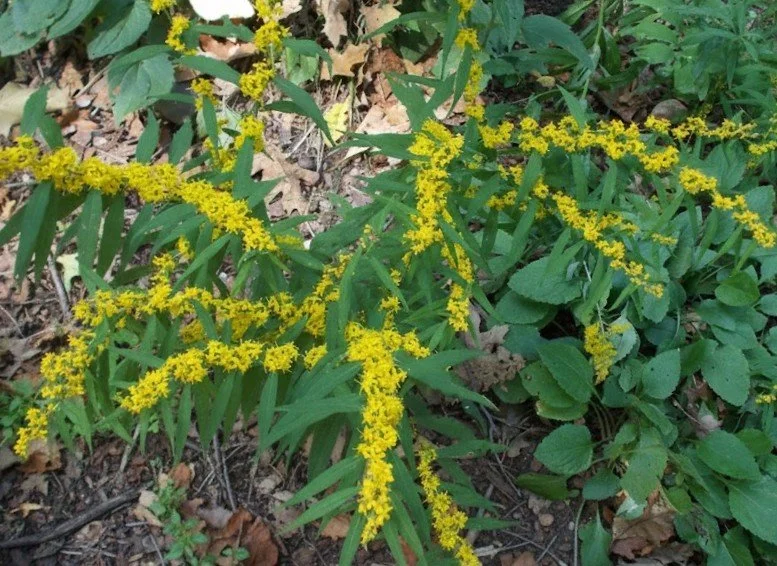
Unlike the sun-loving goldenrods of open fields, Blue-stemmed Goldenrod (also known as Wreath Goldenrod) is adapted for the forest floor. It is easily identified by its distinctive, arching stems that take on a unique dark, somewhat bluish tone. Rather than a large plume at the tip, this species produces dainty clusters of bright yellow flowers tucked into the leaf axils along the length of the stem. This gives the plant a graceful, wand-like appearance that brightens up the deep shade of a woodland garden in the late fall.
Plant Profile
Sun Exposure Part Shade to Full Shade
Water Needs Medium; well-drained
Soil Type Loam, Sand
Mature Height 2 to 3 feet
Deer Resistance High
Bloom Time August – October
Bloom Color Yellow
Plant Spacing 2 to 3 feet
Plant Characteristics and Wildlife Benefit
Non-Aggressive: Unlike some of its cousins, Blue-stemmed Goldenrod is well-behaved and clump-forming, making it safe for smaller garden beds.
Distinctive Color: The smooth, wiry stems provide a beautiful dark contrast to the vivid yellow flowers.
Fall Brightness: It provides a necessary pop of "golden hour" color to shady corners when most other shade plants have finished blooming.
Critical Pollinator Resource: Provides essential nectar and pollen for late-season bees and migrating Monarch butterflies.
Specialist Bees: Supports several species of specialist bees that rely solely on goldenrods for their survival.
*Goldenrods are often blamed for the cause of hayfever, but this is not the case. Their pollen is large and sticky and cannot become airborne to make it into your sinuses. The large, sticky pollen is great for adhering to the bodies of visiting insects and are a vitally important to be included in landscapes.
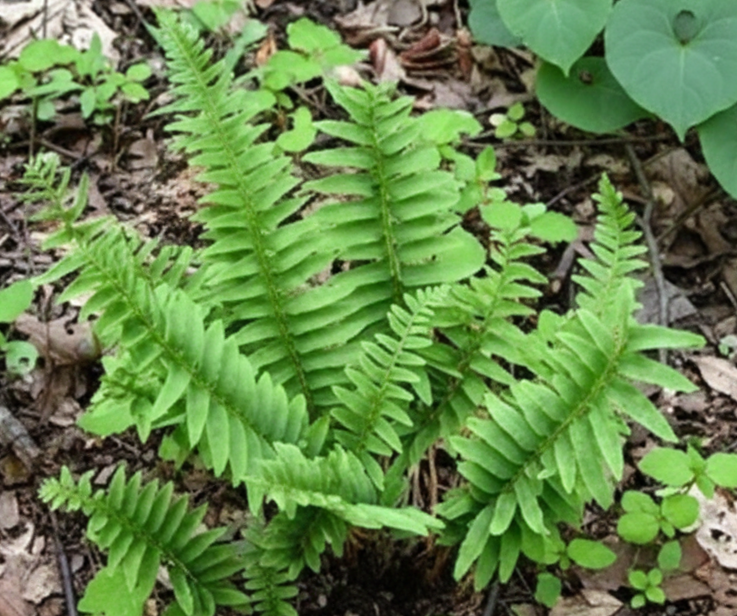
The Christmas Fern is one of the most reliable and beloved evergreen ferns of the North American woodland. It earned its name because its glossy, deep-green fronds stay vibrant and fresh even through the winter. This fern grows in a fountain-like clump 1-2 feet wide, but will not creep. It is a slow-growing but incredibly sturdy plant that provides a lush, consistent backdrop for colorful spring ephemerals like Bloodroot or Wild Ginger.
Plant Profile
Sun Exposure Part Shade to Full Shade
Water Needs Medium; drought-tolerant once established
Soil Type Well-drained, moist Loam or Sand
Mature Height 1 to 2 feet
Deer Resistance High
Bloom Time Non-flowering (Produces spores in late summer)
Plant Spacing 1.5 to 2 feet
Key Characteristics
Evergreen Interest: Unlike many ferns that die back at the first frost, the Christmas Fern remains green all winter, providing much-needed color in a dormant landscape.
Easy Identification: Look for the "stocking" shape at the base of each pinna (leaflet)—a small lobe that looks like a tiny Christmas stocking or Santa’s boot.
Low Maintenance: Highly adaptable - It is one of the few ferns that can tolerate slightly drier soil conditions once its root system is mature.
Black Walnut Resistant
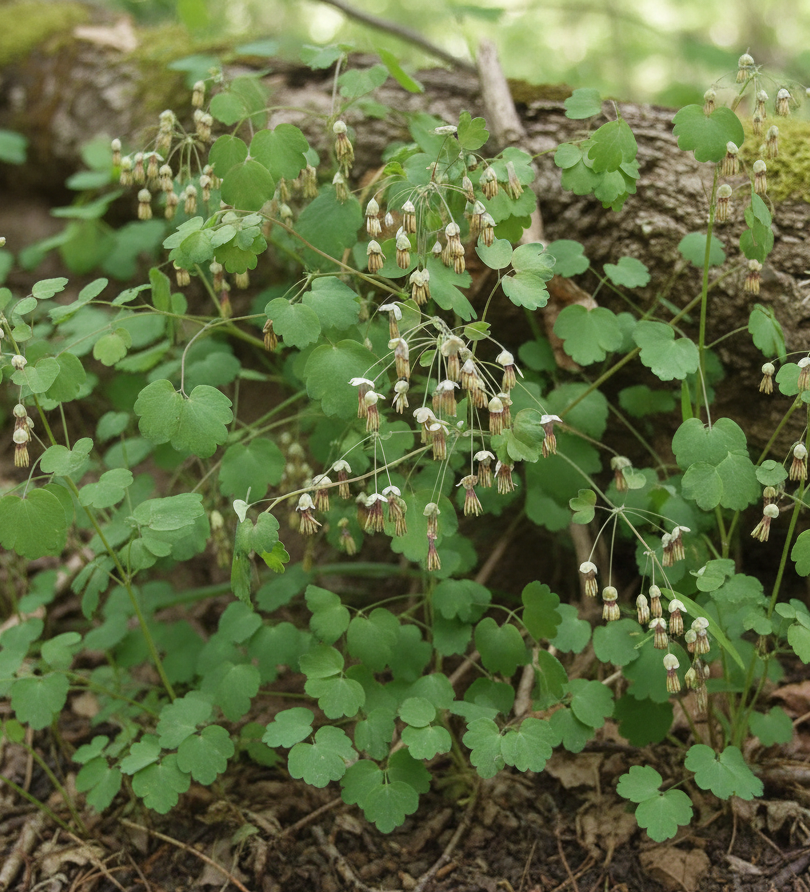
Known for its delicate, fern-like foliage that resembles a Maidenhair Fern or Columbine, this native perennial adds a soft, airy texture to any shaded garden. It is one of the first plants to emerge in the spring. The dioecious plant grows either male, or female or female flowers on separate plants. The male plants produce dangling, tassel-like yellow stamens that look like tiny chandeliers. The female plants tend to maintain a more upright appearance and are greenish-white flowers with pale purple pistils. This understated beauty is perfect for gardeners who appreciate intricate details and fine foliage.
Plant Profile & Care
Sun Exposure Part Shade to Full Shade
Water Needs Medium; prefers consistent moisture
Soil Type Rich, moist, well-drained Loam or Sandy soils
Mature Height 1 to 2 feet
Deer Resistance High
Bloom Time April – May
Bloom color White
Plant Spacing 10 - 12 inches
Plant Characteristics and Wildlife Benefit
Lacy Foliage: The blue-green, compound leaves remain attractive throughout the growing season, providing a beautiful contrast to broader-leaved plants like Wild Ginger.
Wind Pollinated: Because it relies on the wind rather than insects for pollination, its flowers have a unique, hanging structure designed to catch the spring breeze. It is best to plant several plants near each other since seed production is dependent on the wind.
Non-Aggressive: A polite clump-forming plant that fits perfectly into a rock garden or as an accent along a woodland path.
Host Plant: Serves as a food source for several specialized moth species, including the Pink-Tinted Beauty.
Black Walnut Tolerant
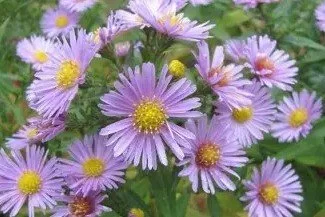
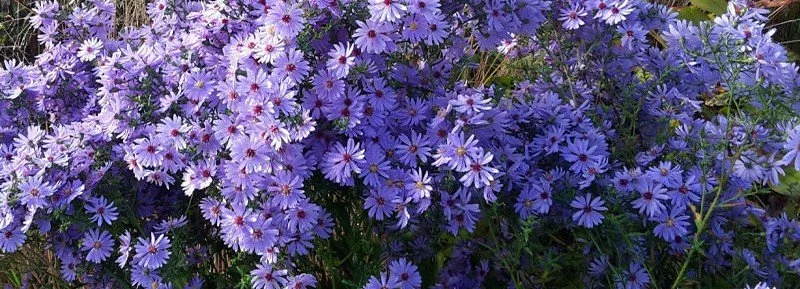
While many woodland plants go dormant by late summer, this native perennial erupts into a cloud of small, starry blossoms that range from sky blue to rich lavender with creamy yellow centers. It is easily recognized by its attractive, heart-shaped (cordate) leaves at the base, which give way to airy, branching stems as it reaches for the autumn sun. It is a tough, versatile plant that bridges the gap between the end of summer and the first frost, providing a soft, cooling aesthetic to the woodland edge.
Plant Profile
Sun Exposure Part Shade to Full Shade
Water Needs Moderate; can handle dry shade once established
Soil Type Clay, Loam, or Sand
Mature Height 2 to 3 feet
Deer Resistance Moderate
Bloom Time September – October
Bloom Color light blue to lavender
Plant Spacing 1.5 to 2 feet
Plant Characteristics
Shade Brilliance: One of the most prolific bloomers for shaded areas
Textural Foliage: The basal leaves provide a lovely, dark green groundcover early in the season before the flowering stalks emerge.
Adaptable & Hardy: Thrives in the difficult "dry shade" found under established deciduous trees where other perennials might wilt.
Potentially Aggressive Spreader: Could overwhelm small landscapes. Choose planting sites with this in mind.
Wildlife Benefits
Pollinator Magnet: An absolutely vital nectar source for late-season bees and butterflies
Bird Support: Like many asters, the small seeds are a favorite for foraging songbirds during the late autumn and early winter months.
Biodiversity: Acts as a host plant for several species of checkerspot butterflies and moths.
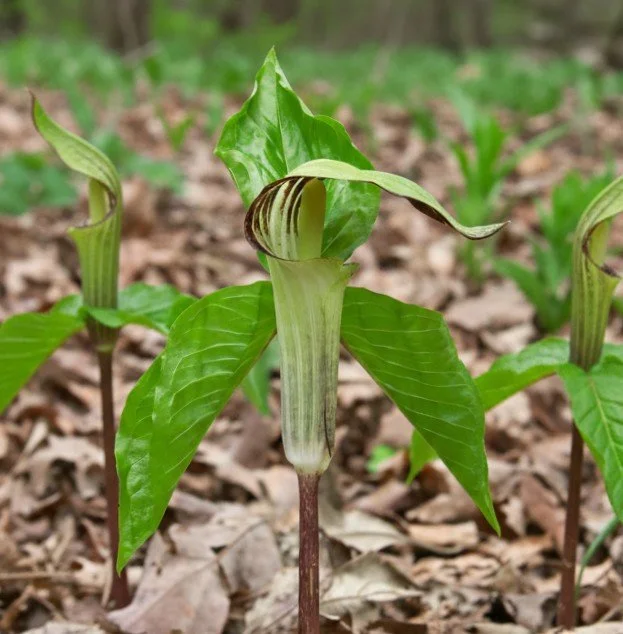
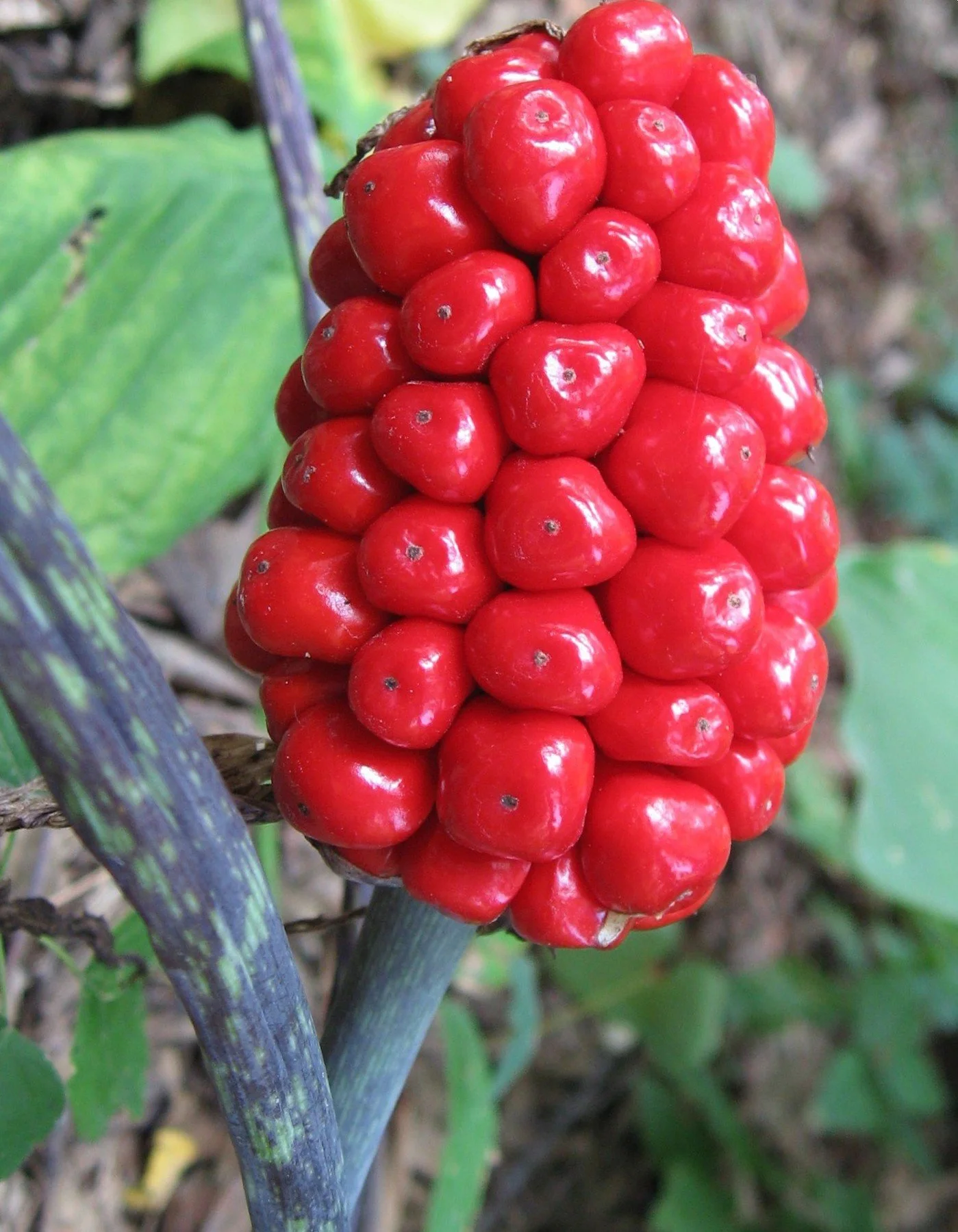
Jack-in-the-Pulpit is one of the most recognizable plants of the North American spring woodland. It is famous for its unusual, chalice-like flower structure called a "spathe," which curves over a central spike known as the "spadix" (or "Jack"). This hooded flower often features striking vertical stripes in shades of green, maroon, or deep purple.
Beyond its spring bloom, this plant remains a standout. Its large, three-parted leaves remain throughout the summer, and by autumn, the flower transforms into a stunning cluster of bright, shiny red berries that pop against the forest floor.
Plant Profile
Sun Exposure Part Shade to Full Shade
Water Needs Medium to High; prefers consistently moist soil
Soil Type Rich, Muck, Clay, Loam or Sand, seasonally wet locations
Mature Height 1 to 2 feet
Deer Resistance High
Bloom Time April – June
Plant Spacing 10 - 18 inches
Plant Characteristics
Appearance: The hooded "pulpit" offers a unique, architectural look that contrasts beautifully with soft ferns and mosses.
Fascinating Biology: A single plant can change its biological sex from year to year based on the nutrients stored in its underground corm.
Fall Color: The shiny green berries that form in mid-summer turns a brilliant, waxy red, providing a second season of high visual interest.
Black Walnut Tolerant
Wildlife Benefits
Specialized Pollination: Attracts small gnats and flies that are lured into the spathe to facilitate pollination.
Fruit for Birds: The bright red berry clusters are a food source for several woodland birds, including Wild Turkeys and Wood Thrushes.
Natural Indicator: Its presence often signals a healthy, undisturbed woodland ecosystem with rich, high-quality soil.
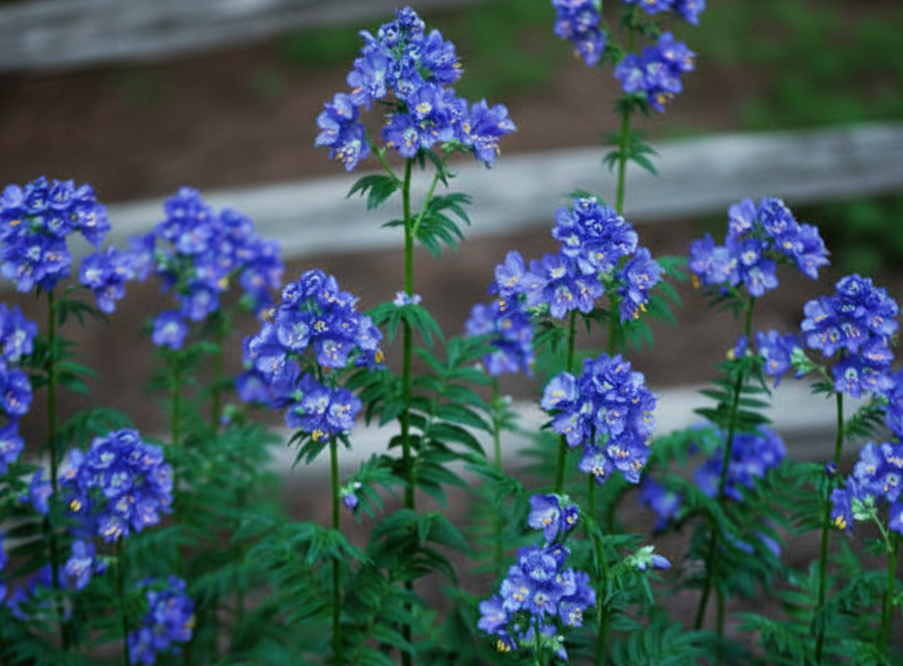
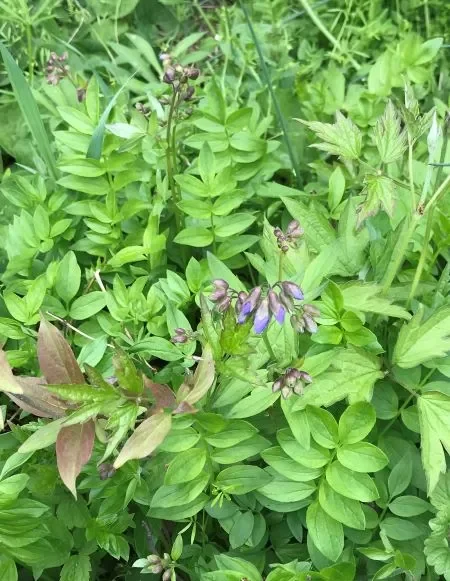
Jacob's Ladder is a classic spring beauty whose name comes from its unique, ladder-like foliage—neat rows of small, paired leaflets that climb up the stems like the rungs of a ladder. In mid-to-late spring, this lush greenery is topped with clusters of delicate, bell-shaped flowers ranging from shades of pink to blue.
This native perennial is highly prized for its "polite" growing habit. It forms a tidy, mounded clump that provides a fine-textured backdrop for larger woodland plants. Whether planted along a shaded walkway or tucked into a rock garden, Jacob’s Ladder offers a cooling, serene presence as the garden transitions from spring to summer.
Plant Profile & Care
Sun Exposure Full Sun (if has adequate moisture) Part Shade to Full Shade (preferred)
Water Needs Medium; prefers consistent moisture
Soil Type Loose, rich, moist, well-drained Clay, Loam or Sandy soils
Mature Height 1 foot
Deer Resistance High
Bloom Time April – June
Bloom Color Blue
Plant Spacing 6 to 12 inches
Plant Characteristics and Wildlife Benefit
Foliage: The "ladder" leaves provide exceptional texture and remain attractive long after the short blooming flowers have faded.
Tolerant & Tough: Unlike some delicate spring wildflowers, Jacob’s Ladder is quite sturdy and can handle a variety of soil conditions as long as it doesn't dry out completely.
Black Walnut Tolerant
Early Pollinator Support: The bell-shaped blooms are a favorite for early-emerging native bees, including mining bees and bumblebees.
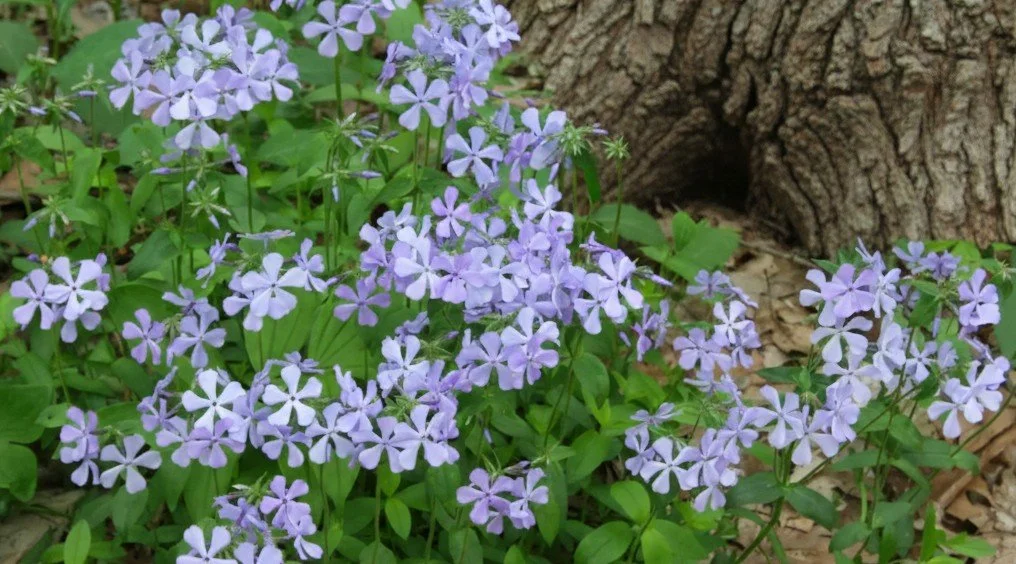
Unlike the tall garden phlox of midsummer, this native variety stays low to the ground, forming drifts of sky-blue to pale lavender blossoms. The plant features semi-evergreen foliage that stays close to the earth, sending up slender flowering stems. It is the perfect choice for naturalizing under deciduous trees, where it creates a "blue mist" effect that bridges the gap between early spring bulbs and summer greenery. It is also known as Woodland Phlox.
Plant Profile
Sun Exposure Part Shade to Full Shade
Water Needs Medium; prefers consistent moisture
Soil Type Rich, moist, well-drained Clay, Loam or woodland soil
Mature Height 10 to 15 inches
Deer Resistance Low toModerate
Bloom Time April, May, June
Bloom Color Blue
Plant Spacing 10 to 12 inches
Black Walnut Tolerant
Plant Characteristics
Blooms: The flowers range from pale lavender or violet to blue. The flowers sit atop sticky stems and have a slight sweet fragrance.
Versatile Groundcover: While it is a clumping perennial, it will slowly spread via creeping stems that root at the nodes, making it an excellent filler for woodland gaps.
Early Season Structure: The foliage remains attractive throughout the summer after the blooms have finished, providing a lush green base for other plants.
How to Identify: Phlox have 5 petals and the leaves on Phlox have opposite leaves. There is an invasive look-alike, Dame’s Rocket, that has 4 petals and alternate leaves.
Wildlife Benefits
Pollinator Magnet: The long-tubed flowers are a critical early-season nectar source for long-tongued insects, especially to hummingbirds, Clearwing Moths and butterflies.
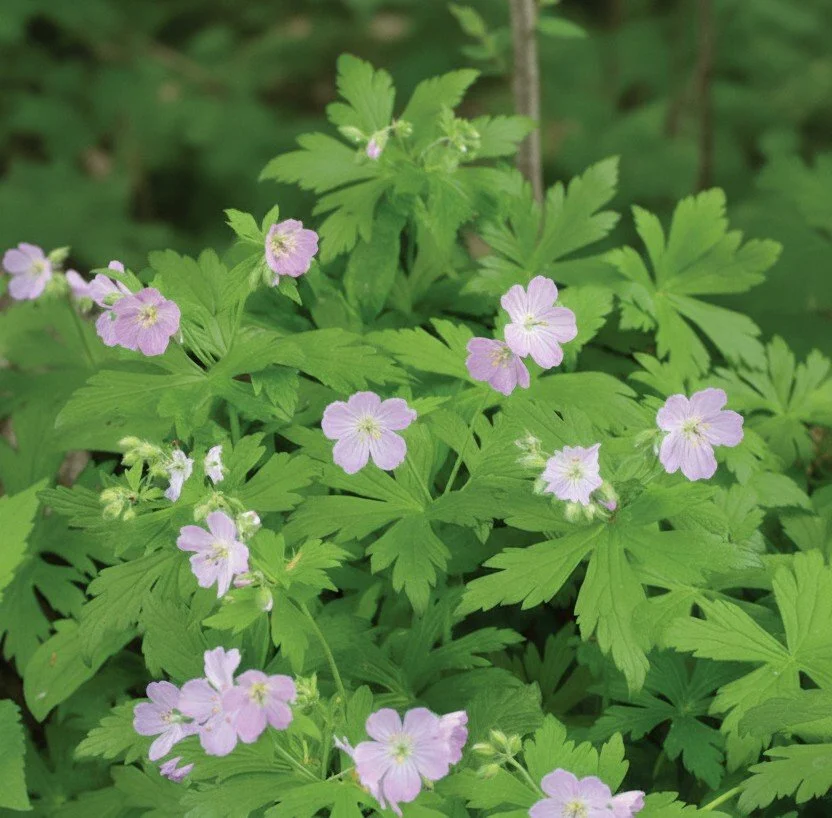
This native perennial is highly prized for its loose clusters of five-petaled, rose-pink to lavender-purple flowers that are very attractive to pollinators. Each bloom is etched with delicate fine lines that act as "nectar guides" for visiting pollinators. Unlike its cultivated cousins, the Wild Geranium is perfectly suited for the dappled light of a forest edge or a shaded garden bed, but it will do just as well in the sun!
Plant Profile
Sun Exposure Full Sun, Part Shade, Shade
Water Needs Medium; prefers consistent moisture but is quite adaptable
Soil Type Rich, moist, well-drained Clay, Loam or Sand
Mature Height 1 to 2 feet
Deer Resistance High
Bloom Time April – July
Bloom Color Lavendar
Plant Spacing 10 to 12 inches
Black Walnut Tolerant
Plant Characteristics
Self-Seeding Beauty: One of the most charming features is its seed pods, which resemble a crane’s bill. When ripe, they "spring" open to launch seeds several feet away, allowing the plant to naturalize beautifully without being aggressive.
Textured Foliage: The large, hand-shaped leaves provide an excellent mid-height filler that covers the ground effectively, helping to suppress weeds.
Versatility: While it loves the shade, it can handle more sun if the soil is kept sufficiently moist.
Wildlife Benefits
Nectar Source: A vital early-season food source for many native bees, including mining bees, mason bees, and bumblebees.
Butterfly Support: Frequently visited by several species of butterflies and skippers for its accessible nectar.
Host Plant: Serves as a host for the larvae of various moths including the White-Marked Tussock moth.
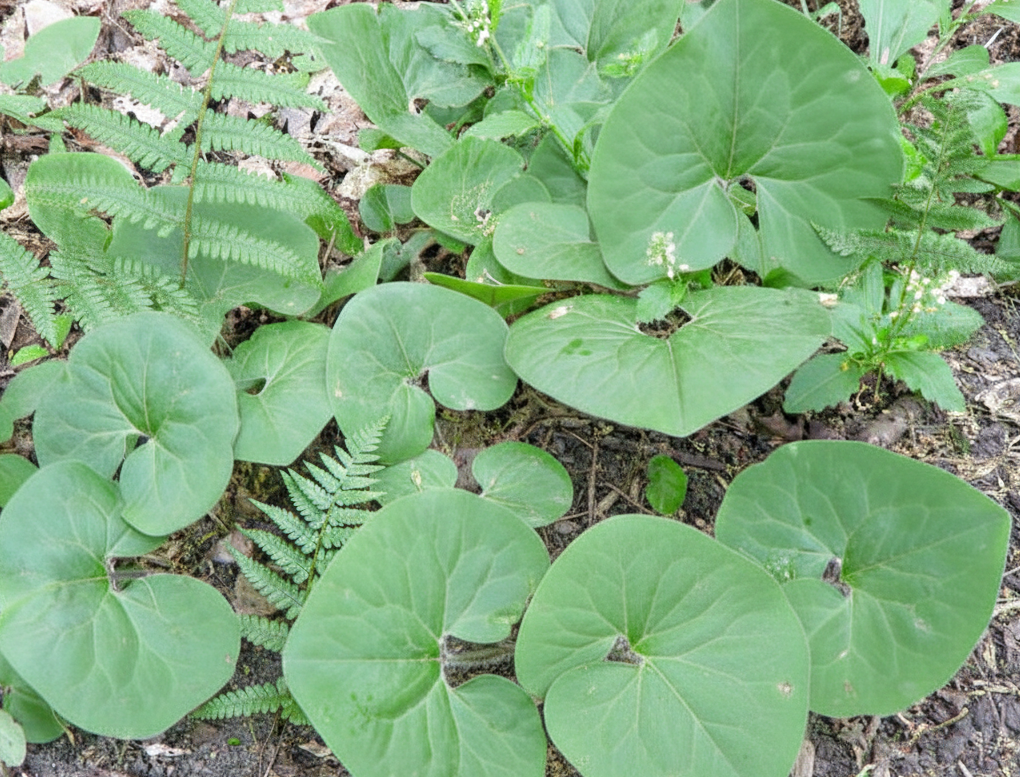
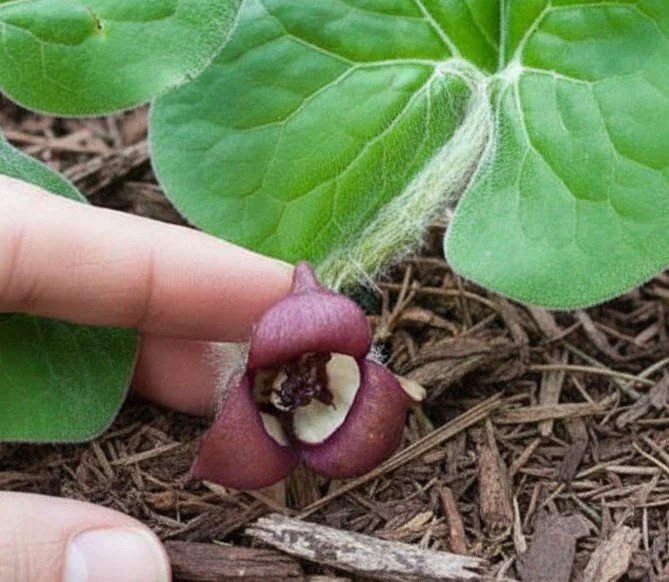
Wild Ginger is a low-growing native groundcover that is a "must-have" for any serious shade gardener. It is best known for its magnificent, heart-shaped leaves that have a soft texture and a rich, green finish. These large, lush leaves overlap to create a dense, weed-suppressing carpet that stays beautiful from early spring until the first hard frost. One of the most charming secrets of Wild Ginger is its flower. In early spring, look beneath the heavy foliage to find unique, jug-shaped, reddish-purple blooms tucked right against the soil. These "hidden" flowers are designed to be pollinated by ground-dwelling insects like beetles and ants.
Plant Profile
Sun Exposure Part Shade to Full Shade
Water Needs Medium to High; thrives with consistent moisture
Soil Type Loam, Clay or Sand
Mature Height 6 to 10 inches
Deer Resistance High
Bloom Time April – June
Bloom Color Reddish -purple
Plant Spacing 6 to 12 inches
Black Walnut Tolerant
Plant Characteristics
Texture: The heart-shaped leaves can be 6” in diameter. Leaves are shiny when open and the stems are hairy. It will keep its foliage throughout the season.
Superior Groundcover: Because it spreads via shallow rhizomes, it is excellent for stabilizing soil on shaded slopes or filling in the "floor" of a woodland garden.
Drought Tolerant Once Established: While it prefers moisture, it is surprisingly resilient in dry shade once its root system has taken hold.
Wildlife Benefits
Pipevine Swallowtail Host: This plant is an essential host for the beautiful Pipevine Swallowtail butterfly; its leaves provide the primary food source for their caterpillars.
Ground-Level Habitat: The dense, low canopy creates a cool, moist microclimate that is vital for spiders, beetles, and small amphibians.
Ant Dispersal: The seeds have a fatty attachment called an elaiosome, which encourages ants to carry them to new locations, helping the plant naturalize in your garden.
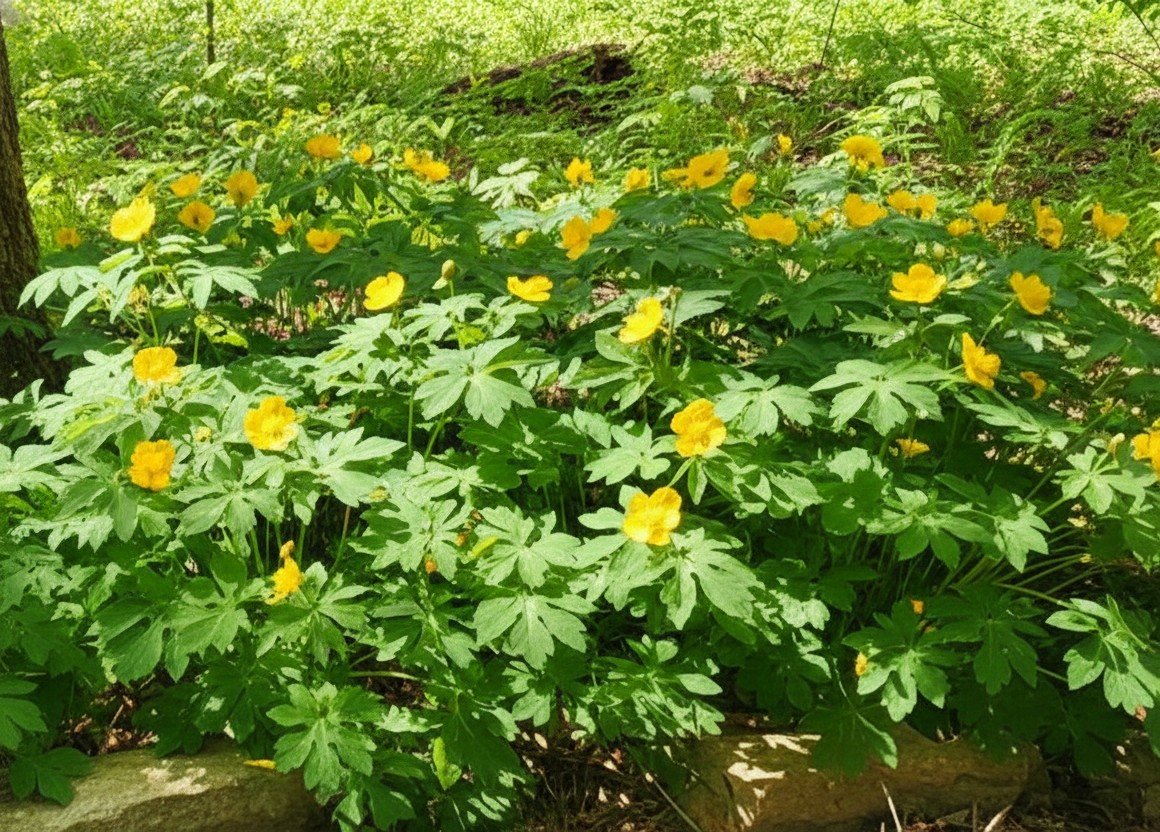
Often called the Celandine Poppy, the Wood Poppy is a beacon of brilliant color for the spring woodland garden. This native perennial is famous for its large, four-petaled flowers in a stunning shade of buttercup-yellow. A standout feature of this plant is its ornamental seed pods—puffy, nodding, and covered in soft hairs, they look like tiny hanging lanterns. It is an exceptionally easy-to-grow native that thrives in those tricky shaded spots where other plants might struggle, creating a cheerful, sun-drenched look even in the deepest shadows.
Plant Profile
Sun Exposure Part Shade to Full Shade
Water Needs Medium to High; likes consistent moisture
Soil Type Rich, moist Loam
Mature Height 1 foot
Deer Resistance Moderate
Bloom Time April – May
Bloom Color Yellow
Plant Spacing 10 to 12 inches
Black Walnut Tolerant
Plant Characteristics
Luminous Spring Blooms: Produces 2-inch wide, golden-yellow flowers that stand out against the dark greens of a shade garden.
Textured Groundcover: The bold, fern-like leaves create a mounding habit that fills in beautifully under the canopy of trees.
Self-Naturalizing: It is a prolific seeder in ideal conditions, making it perfect for gardeners who want to establish a sweeping "carpet" of gold over time.
Wildlife Benefits
Pollinator Support: The pollen-rich flowers are a magnet for native bees, including bumblebees and early-emerging mining bees.
Ant Partnership: Like Wild Ginger, Wood Poppy seeds have a fatty "treat" (elaiosome) that encourages ants to carry and plant them throughout your garden.
Mammal Food Source: While the foliage is generally avoided by deer and rabbits, the seeds are a valued snack for woodland mice and chipmunks.
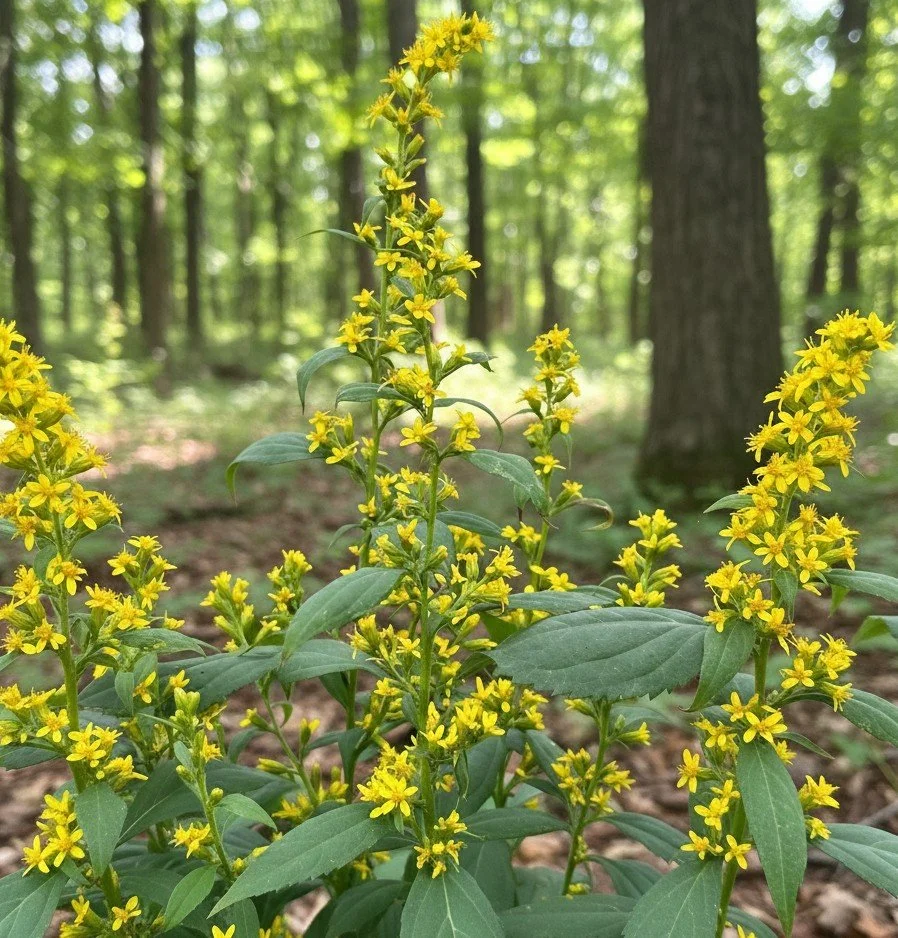
Unlike many of its sun-loving relatives, this native perennial thrives in the cool, dappled light of the forest floor. It earns its name from its unique, wiry stems that "zig-zag" back and forth between the leaves. Starting in late summer and continuing through autumn, the stems are adorned with delicate, bright yellow flower clusters that seem to burst from the leaf axils. The leaves themselves are broad, ovate, and sharply toothed, providing a coarse texture that contrasts beautifully with finer ferns or sedges.
Plant Profile
Sun Exposure Part Shade to Full Shade
Water Needs Medium; prefers consistent moisture but tolerates dry spells
Soil Type Average, well-drained Loam or Clay-loam
Mature Height 2 to 3 feet
Deer Resistance High
Bloom Time August – October
Bloom Color Yellow
Plant Spacing 1 to 2 feet
Black Walnut Tolerant
Plant Characteristics
Shade-Loving Brilliance: One of the few goldenrods that will bloom in shade, making it essential for brightening dark corners.
Pollinator Powerhouse: A critical late-season nectar source that helps bees and butterflies stock up for winter.
Potentially Aggressive spreader: May not be suited for small landscapes because of spreading. Keep this in mind when picking a planting location.
Wildlife Benefits
Butterfly Favorite: Highly attractive to migrating Monarchs and resident hairstreak butterflies.
Bird Food: The seeds are often consumed by goldfinches and other small songbirds during the winter months.
Host Plant: Supports several species of specialized moths including the Wavy-Lined emerald and Green Leuconycta.
*Goldenrods are often blamed for the cause of hayfever, but this is not the case. Their pollen is large and sticky and cannot become airborne to make it into your sinuses. The large, sticky pollen is great for adhering to the bodies of visiting insects and are a vitally important to be included in landscapes.
No results found
No results match your search. Try removing a few filters.