
 Image 1 of 1
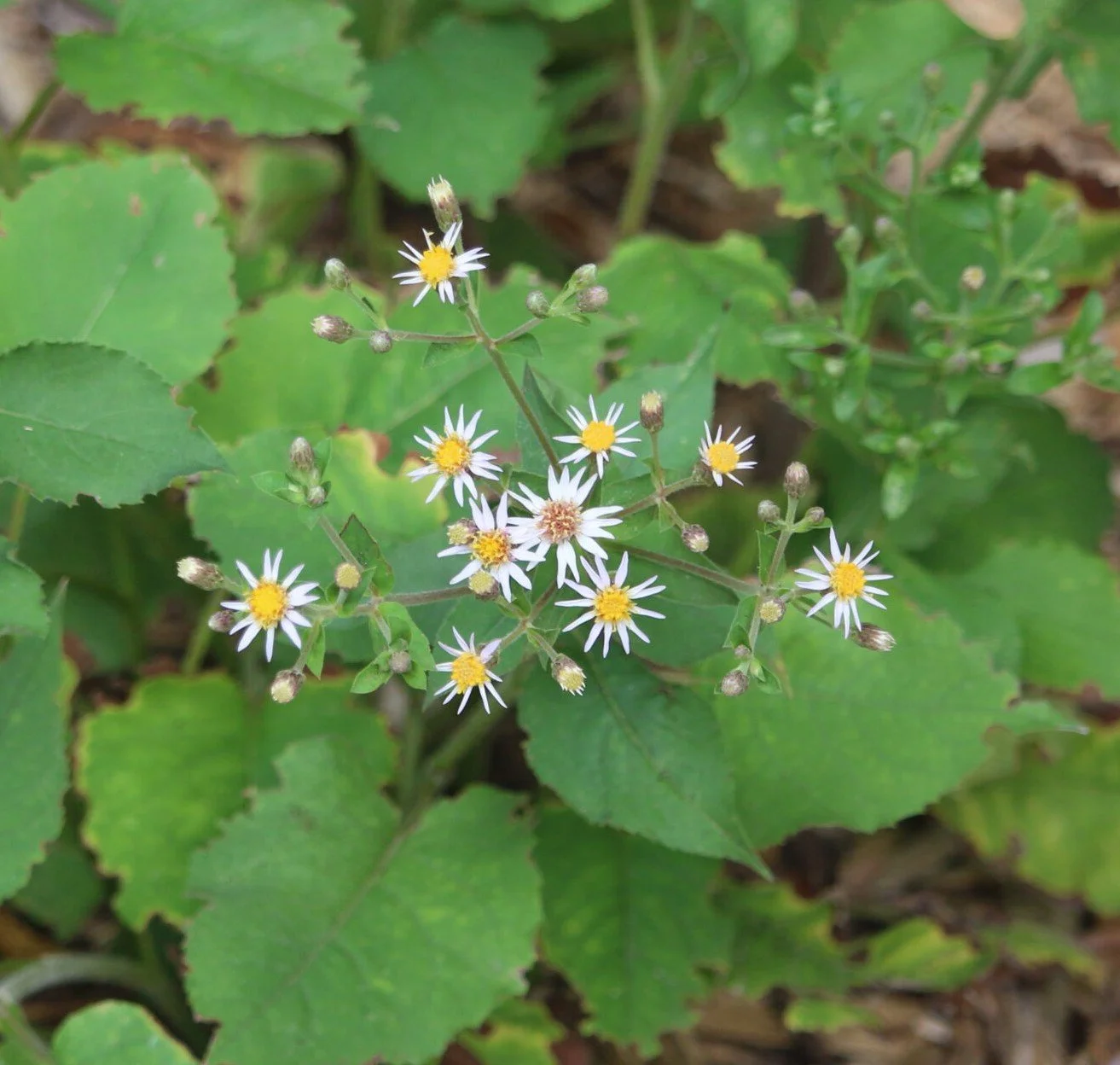
If you are looking for the perfect groundcover for a shady spot, Big-Leaved Aster is an exceptional choice. Named for its oversized, heart-shaped basal leaves that can grow up to 6 inches wide, this native perennial creates a lush, low-growing carpet of green that effectively suppresses weeds. In late summer and early autumn, it sends up sturdy stems topped with delicate, star-like flowers that range from white to pale violet-blue. This plant is a powerhouse for the woodland garden, thriving in the dappled light and dry shade where many other plants struggle.
Sun Exposure Part Shade to Full Shade
Water Needs Moderate; once established, it is notably drought-tolerant
Soil Type Will grow in Muck, Clay, Loam or Sand
Mature Height 1 to 2 feet (when in bloom)
Deer Resistance Moderate
Bloom Time August – October
Bloom Color White
Plant Spacing 2 to 3 feet
Foliage: The large, "big-leaved" base provides excellent texture and ground coverage even before the flowers appear.
Late Season Color: Offers beautiful, cooling lavender or white blooms just as the rest of the summer garden begins to fade.
Potentially Aggressive Groundcover: Spreads via rhizomes to form a dense, maintenance-free colony over time. Could overwhelm small landscapes so keep in mind when picking your planting site.
Pollinator Support: Provides a vital late-season food source for native bees, honeybees, and butterflies.
Host Plant: Serves as a larval host for the Pearl Crescent butterfly and several species of moths.
Seeds for Birds: The dried flower heads provide small seeds that are enjoyed by goldfinches and other songbirds in the fall.
If you are looking for the perfect groundcover for a shady spot, Big-Leaved Aster is an exceptional choice. Named for its oversized, heart-shaped basal leaves that can grow up to 6 inches wide, this native perennial creates a lush, low-growing carpet of green that effectively suppresses weeds. In late summer and early autumn, it sends up sturdy stems topped with delicate, star-like flowers that range from white to pale violet-blue. This plant is a powerhouse for the woodland garden, thriving in the dappled light and dry shade where many other plants struggle.
Sun Exposure Part Shade to Full Shade
Water Needs Moderate; once established, it is notably drought-tolerant
Soil Type Will grow in Muck, Clay, Loam or Sand
Mature Height 1 to 2 feet (when in bloom)
Deer Resistance Moderate
Bloom Time August – October
Bloom Color White
Plant Spacing 2 to 3 feet
Foliage: The large, "big-leaved" base provides excellent texture and ground coverage even before the flowers appear.
Late Season Color: Offers beautiful, cooling lavender or white blooms just as the rest of the summer garden begins to fade.
Potentially Aggressive Groundcover: Spreads via rhizomes to form a dense, maintenance-free colony over time. Could overwhelm small landscapes so keep in mind when picking your planting site.
Pollinator Support: Provides a vital late-season food source for native bees, honeybees, and butterflies.
Host Plant: Serves as a larval host for the Pearl Crescent butterfly and several species of moths.
Seeds for Birds: The dried flower heads provide small seeds that are enjoyed by goldfinches and other songbirds in the fall.