
 Image 1 of 1
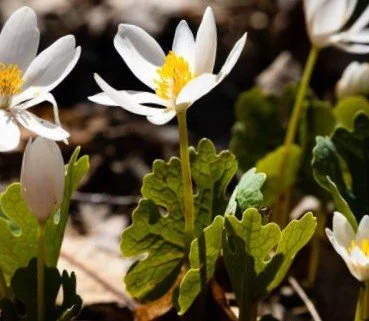
This native North American perennial is famous for its "wraparound" leaves and brilliant white blossoms that emerge while most of the garden is still waking up. It gets its name from the bright reddish-orange sap found in its roots, which was historically used as a natural dye.
Bloodroot emerges after the snow melts and before the deciduous trees leaf out. The flower bud emerges wrapped tightly in a single, deeply lobed, light green leaf. Once the flower blooms, the leaf unfurls to provide a lush, uniquely shaped groundcover that remains beautiful well into the summer before going dormant.
Sun Exposure Part Shade to Full Shade
Water Needs Medium; keep soil moist but well-drained
Soil Type Rich to neutral loam, woodland soil
Mature Height 6 to 12 inches
Deer Resistance High
Bloom Time April, May
Bloom Color White
Plant Spacing 6 to 10 inches
Pollinator Friendly: One of the earliest food sources for native bees and pollinators. Ants are attracted to a sweet part on the seed and are instrumental in distributing this spring ephemeral around the woods
Naturalizing: Over time, Bloodroot will slowly spread via rhizomes to create a stunning colony under deciduous trees.
Low Maintenance: Once established in the right shade environment, it requires very little intervention.
Unique Foliage: Even after the petals drop, the large, scalloped leaves offer a unique texture that contrasts beautifully with ferns and other woodland plants.
Note: Use caution when handling the roots, as the red sap can stain skin and clothing.
This native North American perennial is famous for its "wraparound" leaves and brilliant white blossoms that emerge while most of the garden is still waking up. It gets its name from the bright reddish-orange sap found in its roots, which was historically used as a natural dye.
Bloodroot emerges after the snow melts and before the deciduous trees leaf out. The flower bud emerges wrapped tightly in a single, deeply lobed, light green leaf. Once the flower blooms, the leaf unfurls to provide a lush, uniquely shaped groundcover that remains beautiful well into the summer before going dormant.
Sun Exposure Part Shade to Full Shade
Water Needs Medium; keep soil moist but well-drained
Soil Type Rich to neutral loam, woodland soil
Mature Height 6 to 12 inches
Deer Resistance High
Bloom Time April, May
Bloom Color White
Plant Spacing 6 to 10 inches
Pollinator Friendly: One of the earliest food sources for native bees and pollinators. Ants are attracted to a sweet part on the seed and are instrumental in distributing this spring ephemeral around the woods
Naturalizing: Over time, Bloodroot will slowly spread via rhizomes to create a stunning colony under deciduous trees.
Low Maintenance: Once established in the right shade environment, it requires very little intervention.
Unique Foliage: Even after the petals drop, the large, scalloped leaves offer a unique texture that contrasts beautifully with ferns and other woodland plants.
Note: Use caution when handling the roots, as the red sap can stain skin and clothing.