
 Image 1 of 1
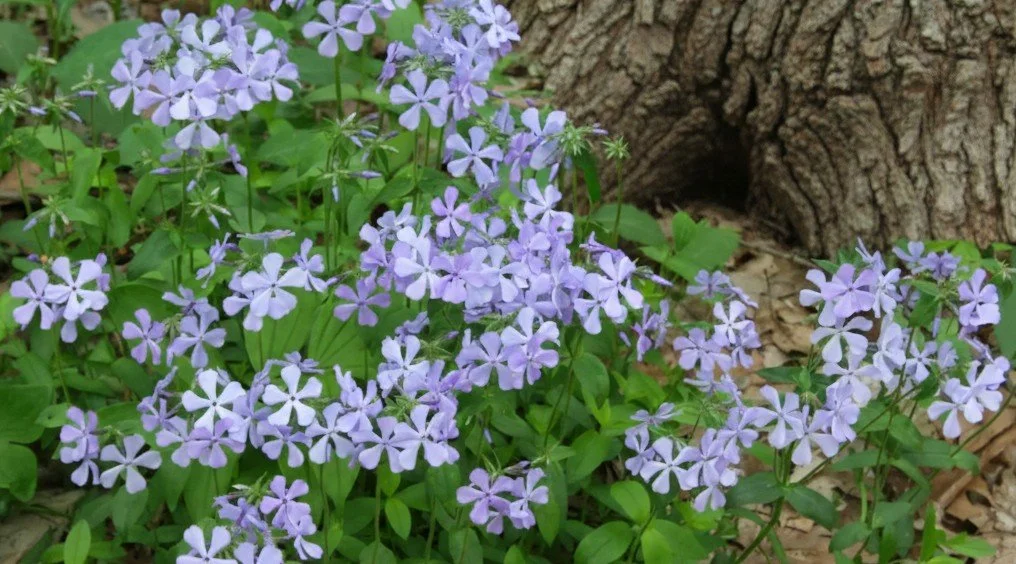
Unlike the tall garden phlox of midsummer, this native variety stays low to the ground, forming drifts of sky-blue to pale lavender blossoms. The plant features semi-evergreen foliage that stays close to the earth, sending up slender flowering stems. It is the perfect choice for naturalizing under deciduous trees, where it creates a "blue mist" effect that bridges the gap between early spring bulbs and summer greenery. It is also known as Woodland Phlox.
Sun Exposure Part Shade to Full Shade
Water Needs Medium; prefers consistent moisture
Soil Type Rich, moist, well-drained Clay, Loam or woodland soil
Mature Height 10 to 15 inches
Deer Resistance Low toModerate
Bloom Time April, May, June
Bloom Color Blue
Plant Spacing 10 to 12 inches
Black Walnut Tolerant
Blooms: The flowers range from pale lavender or violet to blue. The flowers sit atop sticky stems and have a slight sweet fragrance.
Versatile Groundcover: While it is a clumping perennial, it will slowly spread via creeping stems that root at the nodes, making it an excellent filler for woodland gaps.
Early Season Structure: The foliage remains attractive throughout the summer after the blooms have finished, providing a lush green base for other plants.
How to Identify: Phlox have 5 petals and the leaves on Phlox have opposite leaves. There is an invasive look-alike, Dame’s Rocket, that has 4 petals and alternate leaves.
Pollinator Magnet: The long-tubed flowers are a critical early-season nectar source for long-tongued insects, especially to hummingbirds, Clearwing Moths and butterflies.
Unlike the tall garden phlox of midsummer, this native variety stays low to the ground, forming drifts of sky-blue to pale lavender blossoms. The plant features semi-evergreen foliage that stays close to the earth, sending up slender flowering stems. It is the perfect choice for naturalizing under deciduous trees, where it creates a "blue mist" effect that bridges the gap between early spring bulbs and summer greenery. It is also known as Woodland Phlox.
Sun Exposure Part Shade to Full Shade
Water Needs Medium; prefers consistent moisture
Soil Type Rich, moist, well-drained Clay, Loam or woodland soil
Mature Height 10 to 15 inches
Deer Resistance Low toModerate
Bloom Time April, May, June
Bloom Color Blue
Plant Spacing 10 to 12 inches
Black Walnut Tolerant
Blooms: The flowers range from pale lavender or violet to blue. The flowers sit atop sticky stems and have a slight sweet fragrance.
Versatile Groundcover: While it is a clumping perennial, it will slowly spread via creeping stems that root at the nodes, making it an excellent filler for woodland gaps.
Early Season Structure: The foliage remains attractive throughout the summer after the blooms have finished, providing a lush green base for other plants.
How to Identify: Phlox have 5 petals and the leaves on Phlox have opposite leaves. There is an invasive look-alike, Dame’s Rocket, that has 4 petals and alternate leaves.
Pollinator Magnet: The long-tubed flowers are a critical early-season nectar source for long-tongued insects, especially to hummingbirds, Clearwing Moths and butterflies.