
 Image 1 of 1
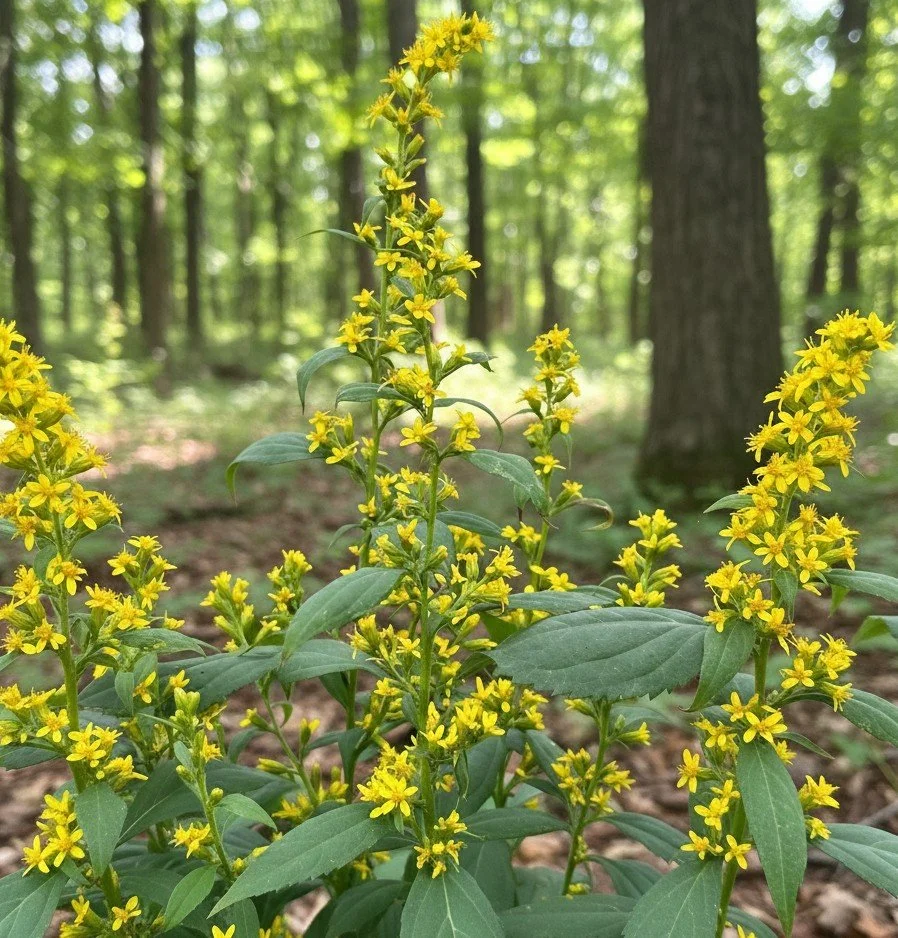
Unlike many of its sun-loving relatives, this native perennial thrives in the cool, dappled light of the forest floor. It earns its name from its unique, wiry stems that "zig-zag" back and forth between the leaves. Starting in late summer and continuing through autumn, the stems are adorned with delicate, bright yellow flower clusters that seem to burst from the leaf axils. The leaves themselves are broad, ovate, and sharply toothed, providing a coarse texture that contrasts beautifully with finer ferns or sedges.
Sun Exposure Part Shade to Full Shade
Water Needs Medium; prefers consistent moisture but tolerates dry spells
Soil Type Average, well-drained Loam or Clay-loam
Mature Height 2 to 3 feet
Deer Resistance High
Bloom Time August – October
Bloom Color Yellow
Plant Spacing 1 to 2 feet
Black Walnut Tolerant
Shade-Loving Brilliance: One of the few goldenrods that will bloom in shade, making it essential for brightening dark corners.
Pollinator Powerhouse: A critical late-season nectar source that helps bees and butterflies stock up for winter.
Potentially Aggressive spreader: May not be suited for small landscapes because of spreading. Keep this in mind when picking a planting location.
Butterfly Favorite: Highly attractive to migrating Monarchs and resident hairstreak butterflies.
Bird Food: The seeds are often consumed by goldfinches and other small songbirds during the winter months.
Host Plant: Supports several species of specialized moths including the Wavy-Lined emerald and Green Leuconycta.
*Goldenrods are often blamed for the cause of hayfever, but this is not the case. Their pollen is large and sticky and cannot become airborne to make it into your sinuses. The large, sticky pollen is great for adhering to the bodies of visiting insects and are a vitally important to be included in landscapes.
Unlike many of its sun-loving relatives, this native perennial thrives in the cool, dappled light of the forest floor. It earns its name from its unique, wiry stems that "zig-zag" back and forth between the leaves. Starting in late summer and continuing through autumn, the stems are adorned with delicate, bright yellow flower clusters that seem to burst from the leaf axils. The leaves themselves are broad, ovate, and sharply toothed, providing a coarse texture that contrasts beautifully with finer ferns or sedges.
Sun Exposure Part Shade to Full Shade
Water Needs Medium; prefers consistent moisture but tolerates dry spells
Soil Type Average, well-drained Loam or Clay-loam
Mature Height 2 to 3 feet
Deer Resistance High
Bloom Time August – October
Bloom Color Yellow
Plant Spacing 1 to 2 feet
Black Walnut Tolerant
Shade-Loving Brilliance: One of the few goldenrods that will bloom in shade, making it essential for brightening dark corners.
Pollinator Powerhouse: A critical late-season nectar source that helps bees and butterflies stock up for winter.
Potentially Aggressive spreader: May not be suited for small landscapes because of spreading. Keep this in mind when picking a planting location.
Butterfly Favorite: Highly attractive to migrating Monarchs and resident hairstreak butterflies.
Bird Food: The seeds are often consumed by goldfinches and other small songbirds during the winter months.
Host Plant: Supports several species of specialized moths including the Wavy-Lined emerald and Green Leuconycta.
*Goldenrods are often blamed for the cause of hayfever, but this is not the case. Their pollen is large and sticky and cannot become airborne to make it into your sinuses. The large, sticky pollen is great for adhering to the bodies of visiting insects and are a vitally important to be included in landscapes.