
 Image 1 of 1
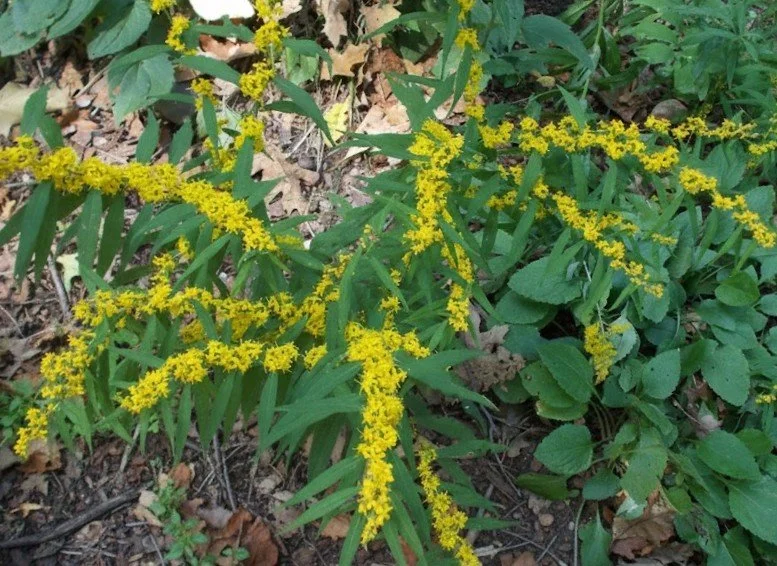
Unlike the sun-loving goldenrods of open fields, Blue-stemmed Goldenrod (also known as Wreath Goldenrod) is adapted for the forest floor. It is easily identified by its distinctive, arching stems that take on a unique dark, somewhat bluish tone. Rather than a large plume at the tip, this species produces dainty clusters of bright yellow flowers tucked into the leaf axils along the length of the stem. This gives the plant a graceful, wand-like appearance that brightens up the deep shade of a woodland garden in the late fall.
Sun Exposure Part Shade to Full Shade
Water Needs Medium; well-drained
Soil Type Loam, Sand
Mature Height 2 to 3 feet
Deer Resistance High
Bloom Time August – October
Bloom Color Yellow
Plant Spacing 2 to 3 feet
Non-Aggressive: Unlike some of its cousins, Blue-stemmed Goldenrod is well-behaved and clump-forming, making it safe for smaller garden beds.
Distinctive Color: The smooth, wiry stems provide a beautiful dark contrast to the vivid yellow flowers.
Fall Brightness: It provides a necessary pop of "golden hour" color to shady corners when most other shade plants have finished blooming.
Critical Pollinator Resource: Provides essential nectar and pollen for late-season bees and migrating Monarch butterflies.
Specialist Bees: Supports several species of specialist bees that rely solely on goldenrods for their survival.
*Goldenrods are often blamed for the cause of hayfever, but this is not the case. Their pollen is large and sticky and cannot become airborne to make it into your sinuses. The large, sticky pollen is great for adhering to the bodies of visiting insects and are a vitally important to be included in landscapes.
Unlike the sun-loving goldenrods of open fields, Blue-stemmed Goldenrod (also known as Wreath Goldenrod) is adapted for the forest floor. It is easily identified by its distinctive, arching stems that take on a unique dark, somewhat bluish tone. Rather than a large plume at the tip, this species produces dainty clusters of bright yellow flowers tucked into the leaf axils along the length of the stem. This gives the plant a graceful, wand-like appearance that brightens up the deep shade of a woodland garden in the late fall.
Sun Exposure Part Shade to Full Shade
Water Needs Medium; well-drained
Soil Type Loam, Sand
Mature Height 2 to 3 feet
Deer Resistance High
Bloom Time August – October
Bloom Color Yellow
Plant Spacing 2 to 3 feet
Non-Aggressive: Unlike some of its cousins, Blue-stemmed Goldenrod is well-behaved and clump-forming, making it safe for smaller garden beds.
Distinctive Color: The smooth, wiry stems provide a beautiful dark contrast to the vivid yellow flowers.
Fall Brightness: It provides a necessary pop of "golden hour" color to shady corners when most other shade plants have finished blooming.
Critical Pollinator Resource: Provides essential nectar and pollen for late-season bees and migrating Monarch butterflies.
Specialist Bees: Supports several species of specialist bees that rely solely on goldenrods for their survival.
*Goldenrods are often blamed for the cause of hayfever, but this is not the case. Their pollen is large and sticky and cannot become airborne to make it into your sinuses. The large, sticky pollen is great for adhering to the bodies of visiting insects and are a vitally important to be included in landscapes.