
 Image 1 of 1
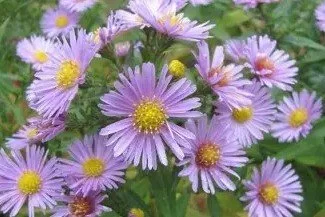
While many woodland plants go dormant by late summer, this native perennial erupts into a cloud of small, starry blossoms that range from sky blue to rich lavender with creamy yellow centers. It is easily recognized by its attractive, heart-shaped (cordate) leaves at the base, which give way to airy, branching stems as it reaches for the autumn sun. It is a tough, versatile plant that bridges the gap between the end of summer and the first frost, providing a soft, cooling aesthetic to the woodland edge.
Sun Exposure Part Shade to Full Shade
Water Needs Moderate; can handle dry shade once established
Soil Type Clay, Loam, or Sand
Mature Height 2 to 3 feet
Deer Resistance Moderate
Bloom Time September – October
Bloom Color light blue to lavender
Plant Spacing 1.5 to 2 feet
Shade Brilliance: One of the most prolific bloomers for shaded areas
Textural Foliage: The basal leaves provide a lovely, dark green groundcover early in the season before the flowering stalks emerge.
Adaptable & Hardy: Thrives in the difficult "dry shade" found under established deciduous trees where other perennials might wilt.
Potentially Aggressive Spreader: Could overwhelm small landscapes. Choose planting sites with this in mind.
Pollinator Magnet: An absolutely vital nectar source for late-season bees and butterflies
Bird Support: Like many asters, the small seeds are a favorite for foraging songbirds during the late autumn and early winter months.
Biodiversity: Acts as a host plant for several species of checkerspot butterflies and moths.
While many woodland plants go dormant by late summer, this native perennial erupts into a cloud of small, starry blossoms that range from sky blue to rich lavender with creamy yellow centers. It is easily recognized by its attractive, heart-shaped (cordate) leaves at the base, which give way to airy, branching stems as it reaches for the autumn sun. It is a tough, versatile plant that bridges the gap between the end of summer and the first frost, providing a soft, cooling aesthetic to the woodland edge.
Sun Exposure Part Shade to Full Shade
Water Needs Moderate; can handle dry shade once established
Soil Type Clay, Loam, or Sand
Mature Height 2 to 3 feet
Deer Resistance Moderate
Bloom Time September – October
Bloom Color light blue to lavender
Plant Spacing 1.5 to 2 feet
Shade Brilliance: One of the most prolific bloomers for shaded areas
Textural Foliage: The basal leaves provide a lovely, dark green groundcover early in the season before the flowering stalks emerge.
Adaptable & Hardy: Thrives in the difficult "dry shade" found under established deciduous trees where other perennials might wilt.
Potentially Aggressive Spreader: Could overwhelm small landscapes. Choose planting sites with this in mind.
Pollinator Magnet: An absolutely vital nectar source for late-season bees and butterflies
Bird Support: Like many asters, the small seeds are a favorite for foraging songbirds during the late autumn and early winter months.
Biodiversity: Acts as a host plant for several species of checkerspot butterflies and moths.