
 Image 1 of 2
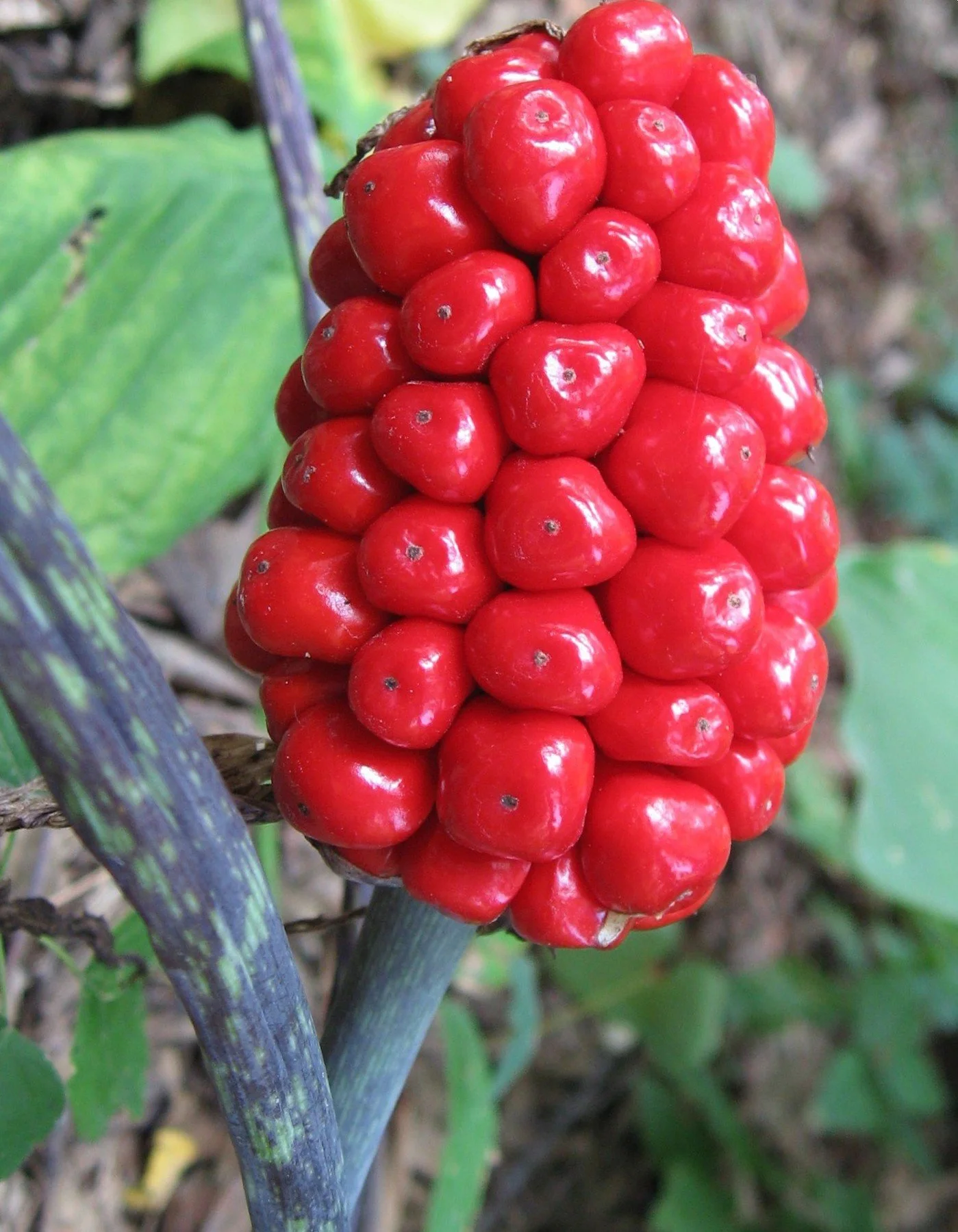 Image 2 of 2
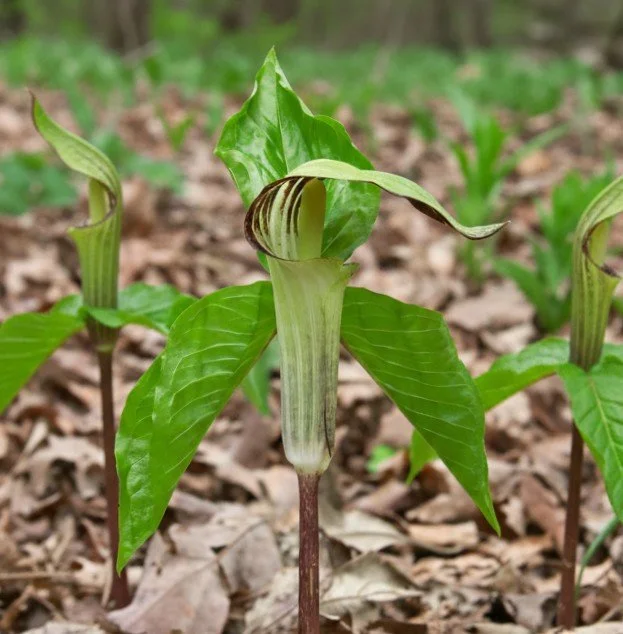
Jack-in-the-Pulpit is one of the most recognizable plants of the North American spring woodland. It is famous for its unusual, chalice-like flower structure called a "spathe," which curves over a central spike known as the "spadix" (or "Jack"). This hooded flower often features striking vertical stripes in shades of green, maroon, or deep purple.
Beyond its spring bloom, this plant remains a standout. Its large, three-parted leaves remain throughout the summer, and by autumn, the flower transforms into a stunning cluster of bright, shiny red berries that pop against the forest floor.
Sun Exposure Part Shade to Full Shade
Water Needs Medium to High; prefers consistently moist soil
Soil Type Rich, Muck, Clay, Loam or Sand, seasonally wet locations
Mature Height 1 to 2 feet
Deer Resistance High
Bloom Time April – June
Plant Spacing 10 - 18 inches
Appearance: The hooded "pulpit" offers a unique, architectural look that contrasts beautifully with soft ferns and mosses.
Fascinating Biology: A single plant can change its biological sex from year to year based on the nutrients stored in its underground corm.
Fall Color: The shiny green berries that form in mid-summer turns a brilliant, waxy red, providing a second season of high visual interest.
Black Walnut Tolerant
Specialized Pollination: Attracts small gnats and flies that are lured into the spathe to facilitate pollination.
Fruit for Birds: The bright red berry clusters are a food source for several woodland birds, including Wild Turkeys and Wood Thrushes.
Natural Indicator: Its presence often signals a healthy, undisturbed woodland ecosystem with rich, high-quality soil.
Jack-in-the-Pulpit is one of the most recognizable plants of the North American spring woodland. It is famous for its unusual, chalice-like flower structure called a "spathe," which curves over a central spike known as the "spadix" (or "Jack"). This hooded flower often features striking vertical stripes in shades of green, maroon, or deep purple.
Beyond its spring bloom, this plant remains a standout. Its large, three-parted leaves remain throughout the summer, and by autumn, the flower transforms into a stunning cluster of bright, shiny red berries that pop against the forest floor.
Sun Exposure Part Shade to Full Shade
Water Needs Medium to High; prefers consistently moist soil
Soil Type Rich, Muck, Clay, Loam or Sand, seasonally wet locations
Mature Height 1 to 2 feet
Deer Resistance High
Bloom Time April – June
Plant Spacing 10 - 18 inches
Appearance: The hooded "pulpit" offers a unique, architectural look that contrasts beautifully with soft ferns and mosses.
Fascinating Biology: A single plant can change its biological sex from year to year based on the nutrients stored in its underground corm.
Fall Color: The shiny green berries that form in mid-summer turns a brilliant, waxy red, providing a second season of high visual interest.
Black Walnut Tolerant
Specialized Pollination: Attracts small gnats and flies that are lured into the spathe to facilitate pollination.
Fruit for Birds: The bright red berry clusters are a food source for several woodland birds, including Wild Turkeys and Wood Thrushes.
Natural Indicator: Its presence often signals a healthy, undisturbed woodland ecosystem with rich, high-quality soil.