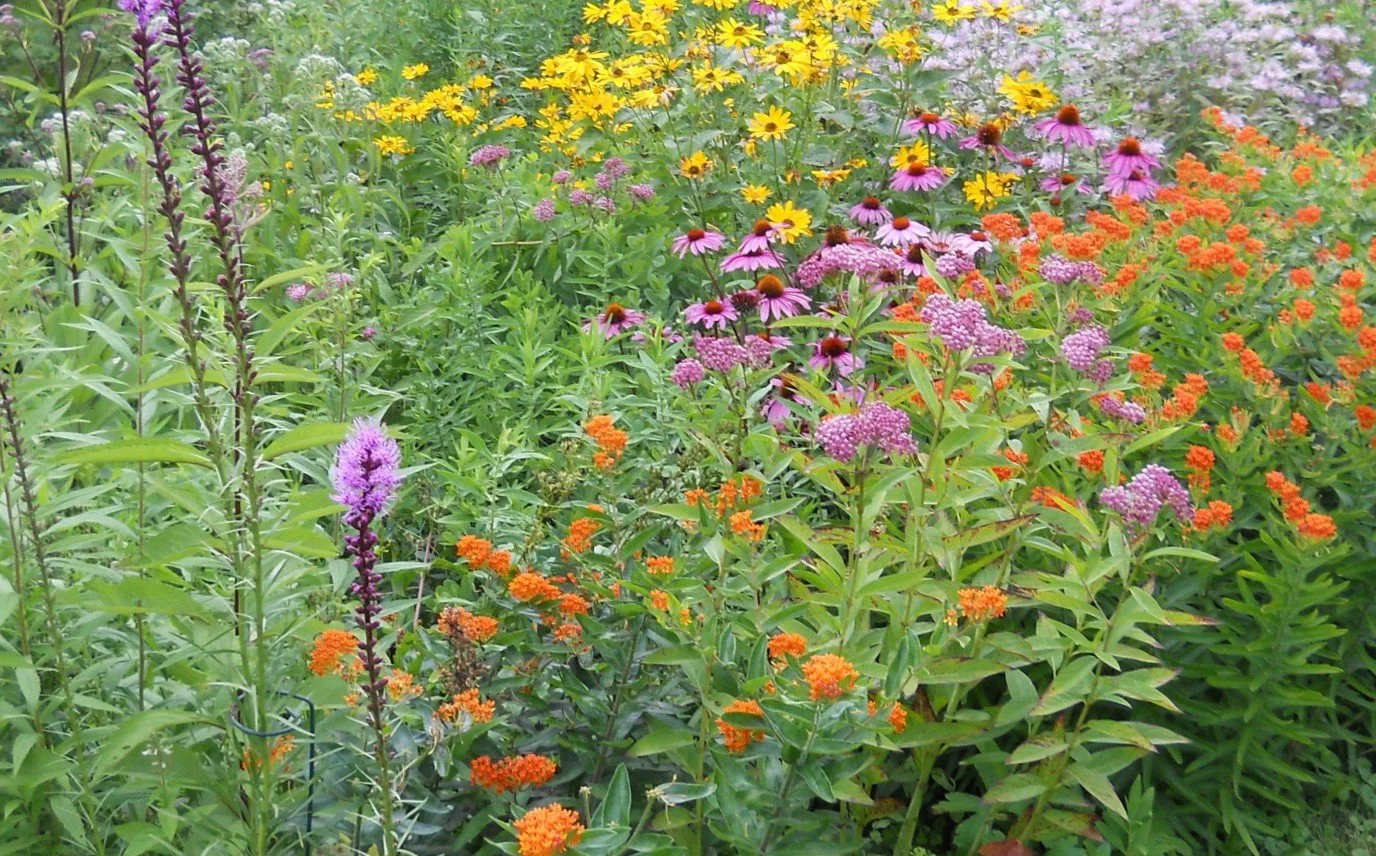
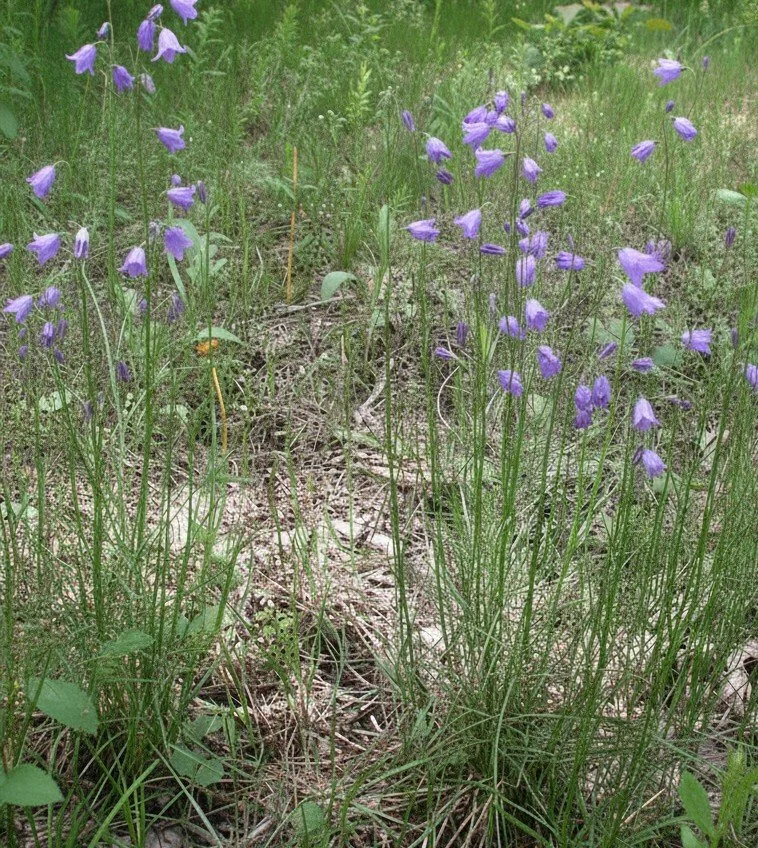
Harebell looks incredibly delicate with its wiry stems and nodding bells, but don’t let the looks fool you—this is a rugged survivor that can grow in the toughest of conditions. Known for its paper-thin, violet-blue bells that seem to float in the air, the Harebell is a versatile perennial that adds a touch of "fairytale" charm to the garden. It is famously long-blooming, often starting in early summer and continuing until the first hard frost.
Sun Exposure Full Sun to Partial Shade
Water Needs Low to Medium; very drought-tolerant once established
Soil Type Well-drained Loam, Sand, Rocky, or Gravelly soil
Mature Height 12 inches
Deer Resistance Moderate
Bloom Time June – September
Bloom Color Purple
Plant Spacing 6 – 8 inches
Unique Foliage: Its species name, rotundifolia, refers to its round basal leaves that appear in early spring. However, as the flower stalks rise, those leaves wither, leaving only very thin, grass-like foliage that makes the flowers look like they are hovering.
Resilient: Despite their "hair-like" stems, Harebells are remarkably wind-resistant and can handle harsh, exposed sites. They are the perfect choice for a rock garden or a stony edge.
Does well in dry sand, rocky crevices and gravelly soils.
Bloom Time: While many natives have a short window, the Harebell will often keep producing new bells for several months, especially if the spent blossoms are dead-headed.
Polinators: It is a favorite of small native bees..
Hummingbirds: Though small, hummingbirds are often seen investigating the blue bells during their mid-summer rounds.
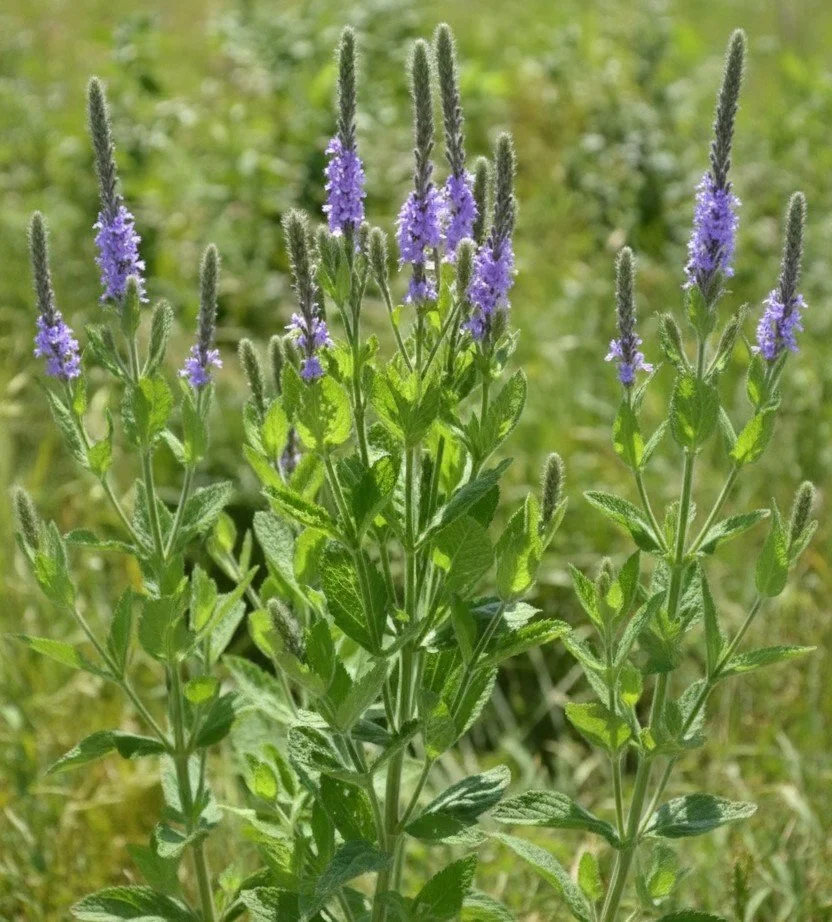
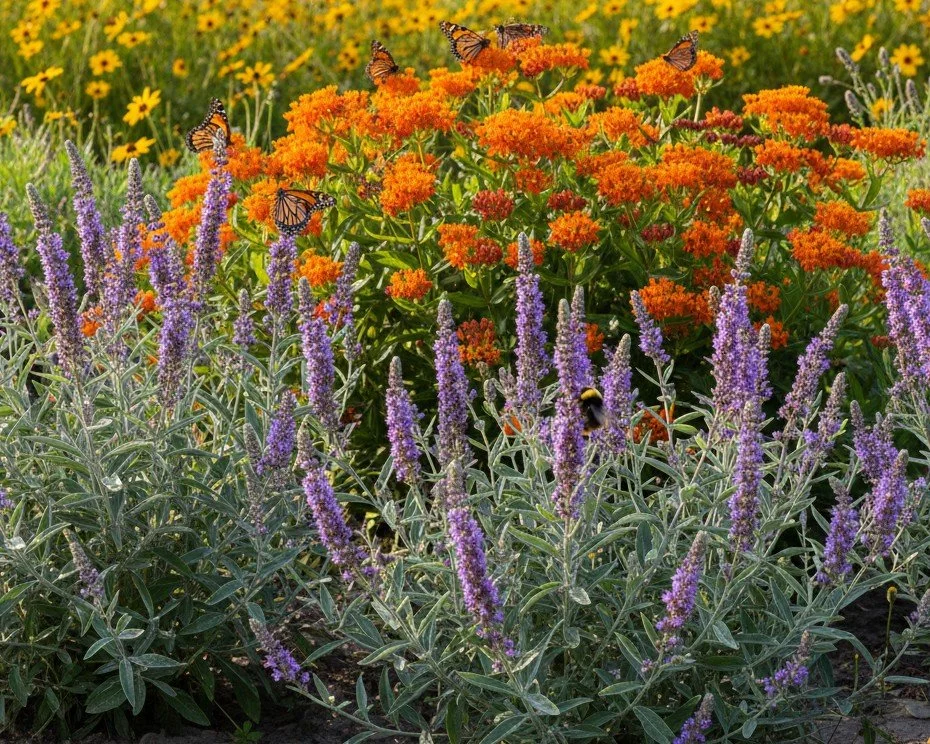
A standout for its narrow, upright spires of lavender-purple flowers that bloom from the bottom up, Hoary Vervain adds a formal "candelabra" look to the landscape. It is remarkably drought-tolerant and maintains its silver-green foliage even during the most punishing summer heat.
Sun Exposure Full Sun to Partial Shade
Water Needs Low; very drought-tolerant
Soil Type Well-drained Sand, Loam, or Rocky/Gravelly soil
Mature Height 2 feet
Deer Resistance High
Bloom Time June – September
Bloom Color Purple, Blue
Plant Spacing 10 – 12 inches
Blooms: The flowers are arranged on long, slender spikes that bloom from the bottom to the top. This results in a very long flowering season as the rings of purple slowly "climb" the stem.
Silvery Texture: The leaves are thick, serrated, and covered in soft white hairs, which protect the plant from water loss and give the foliage a unique frosted look.
Non-Aggressive: While it can self-seed in open soil, it grows in a neat, strictly vertical clump, making it a "polite" neighbor that won't flop over or crowd out other plants.
Butterflies: It is a high-priority nectar source for many butterflies, including the Common Buckeye, Silver-spotted Skipper, and various Hairstreaks.
Specialist Bee Support: It is a vital plant for the Verbena Bee (Calliopsis nebraskensis), which specializes in collecting pollen from this specific genus.
Host Plant: It serves as the larval host for the Common Buckeye butterfly.
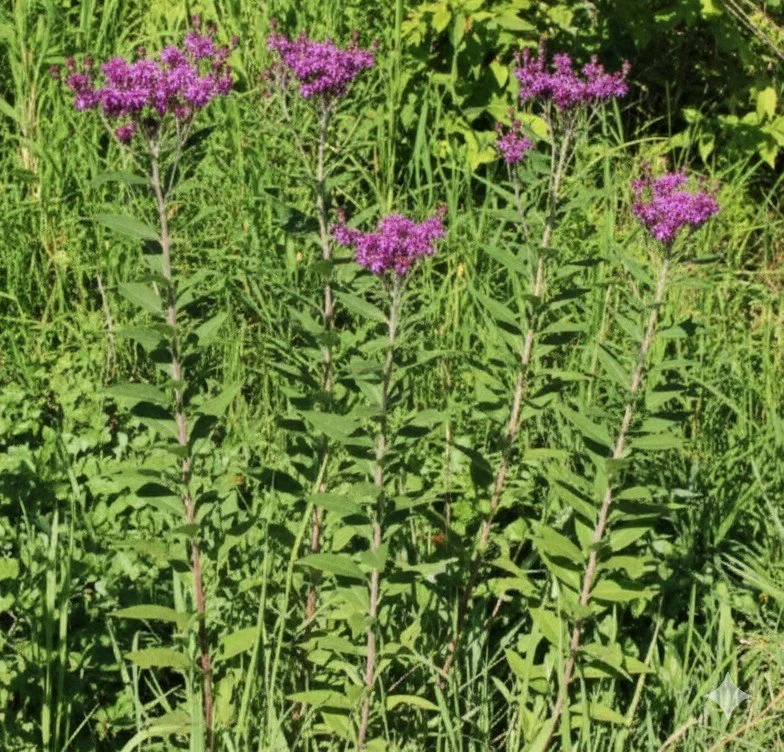
A stately and resilient native, Missouri Ironweed is prized for its intense purple flower clusters and its ability to stand tall without staking. Perhaps the showiest of Ironweeds, it acts as a majestic "anchor" in the garden, signaling the peak of the late-summer season. It provides the garden with a bright magenta color and beautiful, soft texture thanks to its distinctive fuzzy stems and leaves.
Sun Exposure Full Sun
Water Needs Medium; more drought-tolerant than other Ironweeds
Soil Type Adaptable; Clay, Loam, or Sandy/Rocky soil
Mature Height 5 – 6 feet
Deer Resistance High
Bloom Time July – October
Bloom Color Purple
Plant Spacing 2 – 3 feet
Foliage: Unlike its smoother cousins, V. missurica has fine white hairs on the undersides of the leaves and stems, giving the foliage a soft, slightly silvery-green appearance.
Deer Resistant: Ironweeds are bitter to the taste, so they are rarely browsed by deer.
Sturdy: True to its name, the stems are "iron-strong." It provides a rigid vertical line that won't flop over, even when topped with heavy clusters of blooms.
Blooms: Expect to wait 3 years for Ironweed to flower.
Pollinators: In late summer, you will often see this plant covered in Monarchs, Swallowtails, and Skippers. It is a vital fuel stop for migration. It is a high-value source of pollen and nectar for a variety of native bees.
Winter Interest: The spent flower heads turn a silver-tan to rusty-bronze color (hence "Iron" weed) and hold their seeds through the winter, feeding small songbirds like goldfinches.
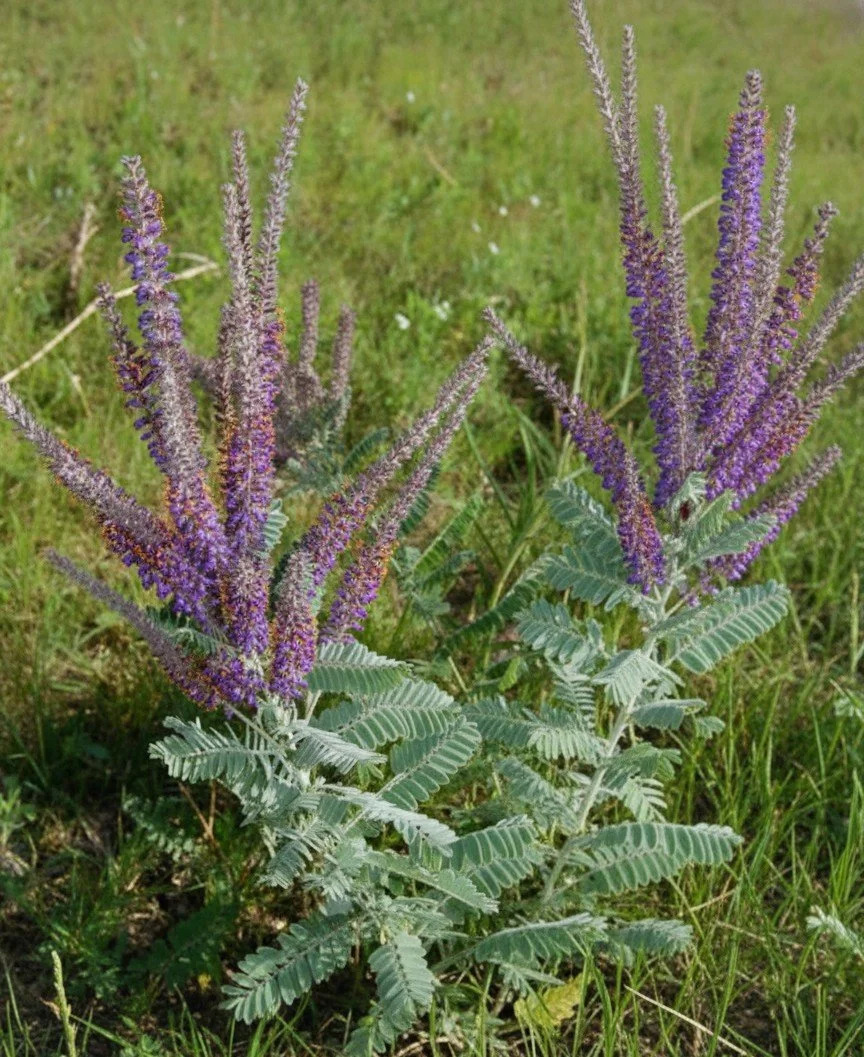
A unique perennial known for its stunning lead-colored (silvery-gray) foliage. In mid-summer, it produces dense, upright spikes of tiny, iridescent purple flowers, each topped with a bright orange-gold stamen. Taproots can reach up to 15’ deep, making it extremely drought tolerant and long-lived.
Sun Exposure Full Sun (will tolerate partial shade)
Water Needs Low; exceptionally drought-tolerant once established
Soil Type Well-drained Sand, Loam, or Rocky/Gravelly soil
Mature Height 2 – 3 feet
Deer Resistance High once established
Bloom Time June – July
Bloom Color Purple
Plant Spacing 1 – 2 feet
Deep-Rooted: Leadplant is famous for its massive taproot, which can extend up to 15 feet underground! This makes it one of the most drought-resistant plants in existence, though it also means it does not like to be moved once planted.
Leadplant is a woody shrub and can take several years to fully mature, during which time it should not be cut back.
Silvery Texture: The leaves are covered in fine, lead-colored hairs that give the plant a soft, "frosted" appearance. This silver foliage provides a beautiful contrast to the deep greens of other garden plants.
Nitrogen Fixer: As a member of the legume family, Leadplant works with soil bacteria to "fix" nitrogen, naturally enriching the soil for its neighbors.
Deer Resistant: Mature plants are typically deer resistant, but it will be best to protect your young plants with mesh or a cage. Rabbits and others will browse young Leadplants while they are getting established.
Pollinators: It is a high-value nectar source for several types of bees, beetles and other beneficial insects.
Butterfly Favorite: Its unique purple spikes are a magnet for various butterflies, including the Dogface Sulphur and various Hairstreaks.
Host Plant: It serves as a host for several moth and butterfly species.
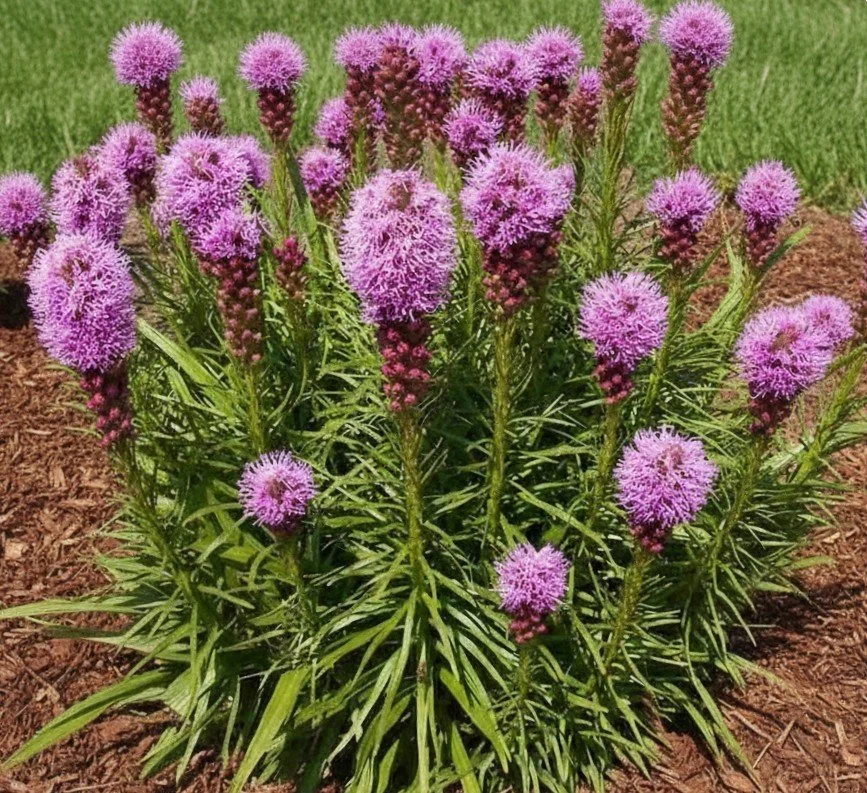
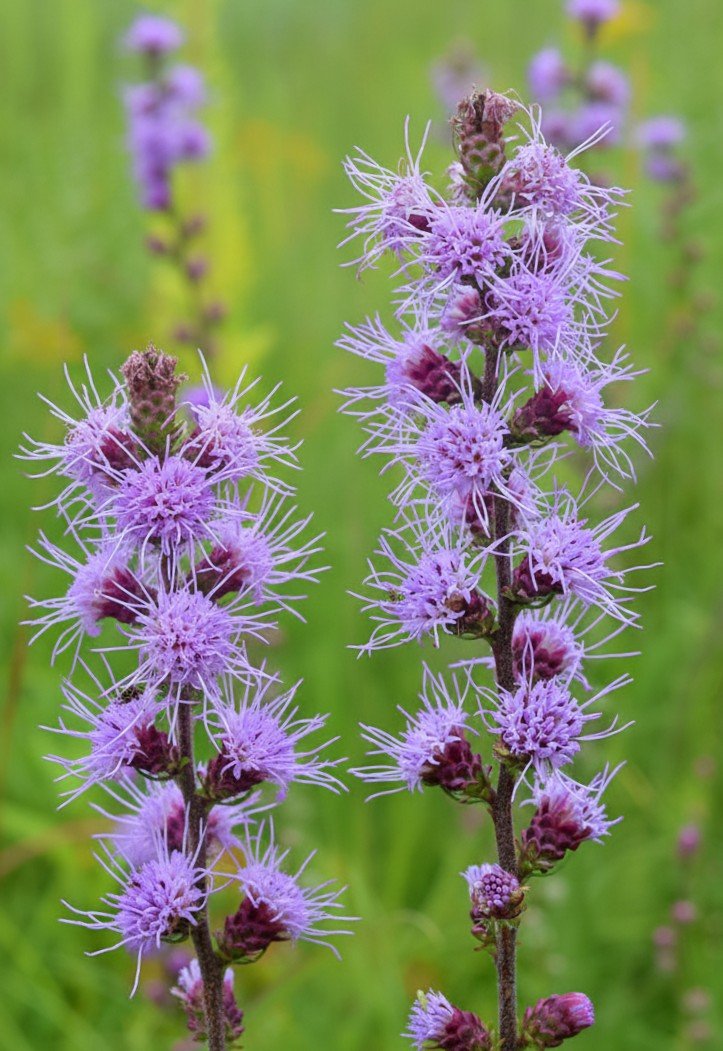
Also known as Dense Blazing Star, this plant features stiff, upright stems covered in grass-like foliage, topped with thick spikes of feathery, magenta-purple flowers that look like glowing sparklers in the summer sun. Marsh Blazing Star is native to moist meadows and marsh margins of the Midwest. It is a standard component of naturalized moist prairies, butterfly gardens, water feature margins, and rain gardens.
Sun Exposure Full Sun (preferred) to Partial Shade
Water Needs Medium to High; prefers moist soil but is quite adaptable
Soil Type Adaptable; thrives in Muck, Clay, Loam, or Moist Sand
Mature Height 3 – 5 feet
Deer Resistance Moderate - High
Bloom Time July – September
Bloom Color Lavendar - Purple
Plant Spacing 1 – 2 feet
Blooms: Unlike most spiked flowers that bloom from the bottom up, Liatris starts at the very tip of the wand and works its way down, extending its beauty over several weeks.
Corm-Based Growth: It grows from a bulb-like structure called a corm. This makes it a very "polite" neighbor; it won't spread aggressively or take over your garden beds.
Distinctive Texture: Before the flowers appear, the plant looks like a lush clump of fine, fountain-like grass, providing excellent green texture in the early spring.
Monarch Fuel: This is arguably one of the best plants for Monarch and other butterflies. During their migration, you will often see several butterflies jostling for position on a single flower spike.
Bumblebee Favorite: The feathery "stars" are packed with nectar, making them a high-priority stop for bumblebees and clearwing hummingbird moths.
Bird Feeder: If you leave the stalks up in the fall, goldfinches and other songbirds will visit the garden to feast on the small, nutritious seeds.
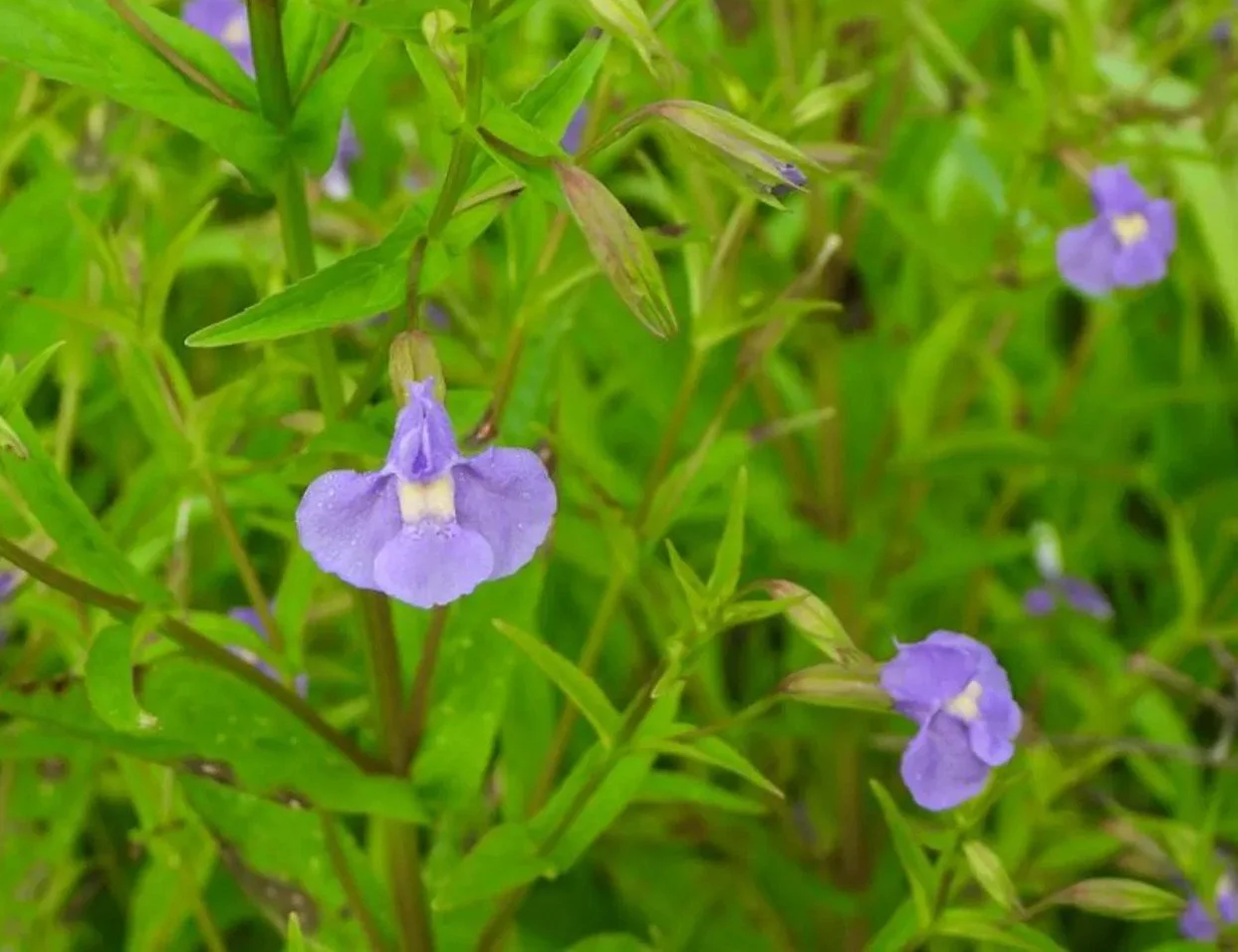
Monkey Flower (Mimulus ringens) is the charming specialist of the "wet feet" zones. It gets its name because the individual blossoms are said to resemble the face of a monkey. A delightful, upright perennial known for its snapdragon-like, purple-blue flowers. It is the perfect choice for the edges of a garden where water tends to collect, or for adding a splash of cool color to a rain garden or pond edge.
Sun Exposure Full Sun to Partial Shade
Water Needs High; prefers consistently wet or mucky soil
Soil Type Muck, Clay, Loam
Mature Height 2 feet
Deer Resistance Moderate - High
Bloom Time June – September
Bloom Color Purple
Plant Spacing 1 - 2 feet
Blooms: While it may not have a massive burst of flowers all at once, it produces blooms continuously for several months, ensuring there is always a pop of purple-blue in the wet spots of your yard.
Clasping Foliage: The dark green, lance-shaped leaves "clasp" the stem directly without a stalk, giving the plant a very clean, structured look even when it isn't in flower.
Moisture: Requires consistently moist soils and will spread slowly into a bushy plant.
Bumblebees: The flowers are specifically designed for bumblebees, who are strong enough to force their way into the partially closed throat of the flower to reach the nectar.
Butterflies: Swallowtails, skippers and other midsize butterflies will frequent this plant.
Hummingbird Stop: Because of the tubular shape of the flowers, it is a frequent destination for Ruby-throated Hummingbirds.
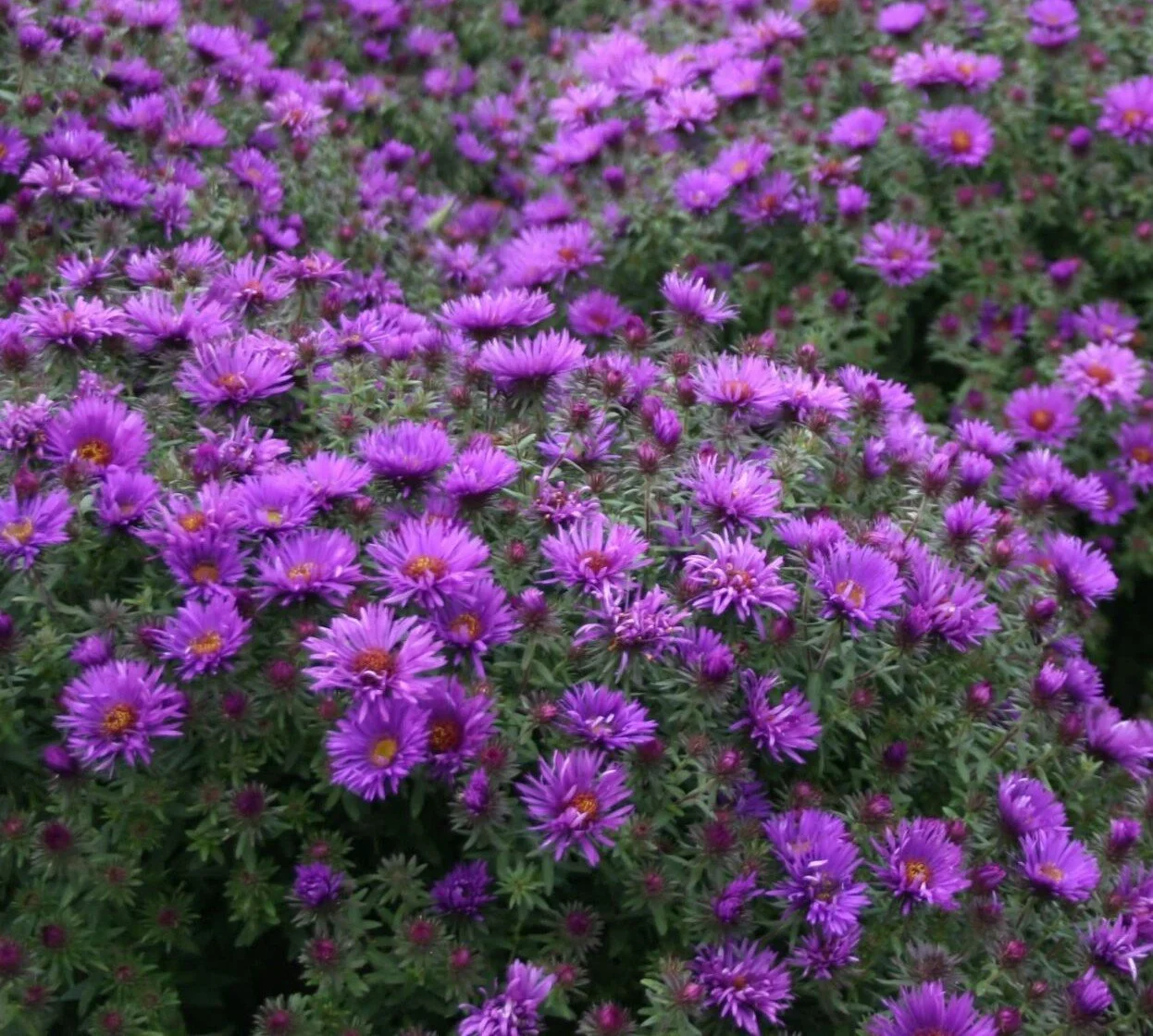
While other plants are winding down for winter, this aster explodes into a cloud of vivid purple and gold, providing one last massive feast for pollinators. A robust and showy native perennial that is famous for its late-season bloom. Its stems are topped with hundreds of daisy-like, deep violet-to-pink flowers with bright yellow centers, creating stunning color in the autumn landscape.
Sun Exposure Full Sun (best for bloom density) to Partial Shade
Water Needs Medium; prefers consistent moisture but is adaptable
Soil Type Adaptable; Muck, Clay, Loam, or Sand
Mature Height 3 – 5 feet
Deer Resistance Moderate
Bloom Time August – October
Bloom Color Purple
Plant Spacing 2 – 3 feet
Color: Blooms can range in color from purple, violet and shades of pink.
The "Hairy" Stem: Similar to the Hoary Vervain, the stems of New England Aster are covered in fine, bristly hairs, which helps with easy identification.
Foliage: It is natural for the bottom leaves of this plant to turn brown and drop off by late summer. This is just the plant focusing its energy on the flowers at the top! You can easily hide this by planting shorter natives in front of it.
Aggressive self-seeder: Please keep in mind when selecting your planting sites. Removal of the seed heads before the seed is ripe will help prevent it from spreading or the need to weed unwanted seedlings.
Migration Fuel: Provides critical, high-energy nectar for Monarchs and other butterflies into late fall.
Bees: It is a vital resource for late-emerging specialist bees and bumblebee queens who are preparing to overwinter.
Host Plant: It serves as a larval host for the Pearl Crescent butterfly and several species of moths.
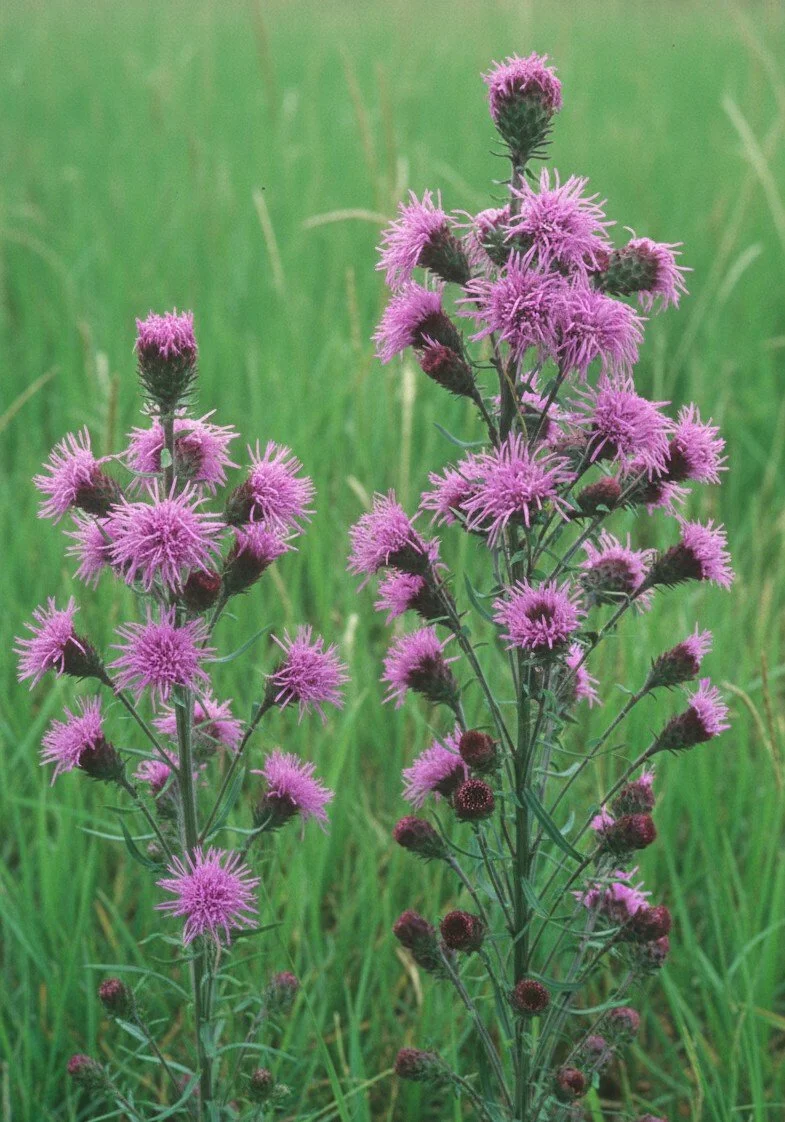
Often found in rocky openings and sandy savannas, this species is prized for its large, shaggy flower heads. Unlike other Blazing Stars with dense, tight spikes, Liatris scariosa has distinct, rounded thistle-like flower clusters that give it a more textured and "wild" appearance. Unlike it’s damp loving cousin Marsh Blazing Star, Northern Blazing Star prefers dry conditions.
Sun Exposure Full Sun to Partial Shade
Water Needs Low; highly drought-tolerant
Soil Type Well-drained Loam, Sand, Rocky, or Gravelly soil
Mature Height 2 - 3 feet
Deer Resistance Low, this Blazing Star is commonly browsed on by deer and rabbits
Bloom Time August – September
Bloom Color Purple
Plant Spacing 10 – 12 inches
Flowers: The flower heads are wider and more separated than other Liatris species, looking thistle-like and are about 1” across. Flowers can extend up to 18” of the overall plant stem.
Top-Down Bloomer: Like its relatives, it begins blooming at the top of the spike and works its way down, providing a long-lasting nectar source throughout the late summer.
Because of the top-heavy weight, plants may require staking to hold them upright.
Dry Specialist: This is one of the best Blazing Stars for "difficult" dry spots. It thrives in poor, thin soils where other plants might struggle to find nutrients.
Monarchs and Other Butterflies: This flower is loved by Monarchs and many other butterflies. The wide flower heads provide an easy platform for them to rest and refuel.
Bees: It attracts a wide variety of bees, especially bumblebees, who are attracted to the deep nectar wells.
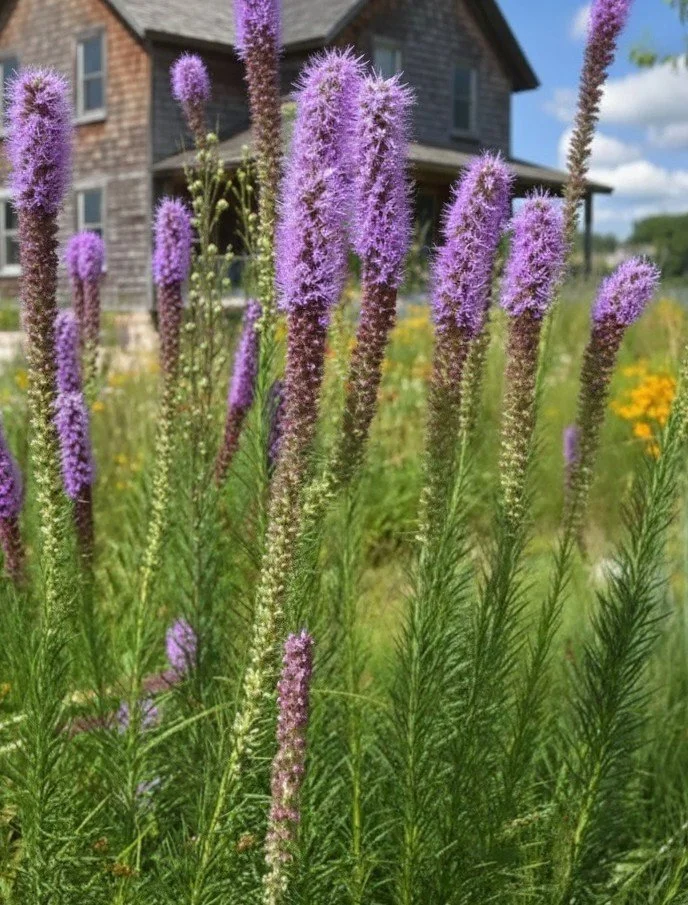
Prairie Blazing Star is famous for its exceptionally crowded flower spikes. The species name pycnostachya literally means "thick-spiked," which perfectly describes the way the fuzzy purple flowers are packed tightly together on the stem. It is an excellent species to plant in wet-medium perennial gardens or prairies.
Sun Exposure Full Sun to Partial Shade
Water Needs Medium; prefers consistent moisture but tolerates dry spells
Soil Type Clay, Loam, or Moist Sand
Mature Height 4 feet
Deer Resistance Moderate
Bloom Time July – September
Bloom Color Purple
Plant Spacing 12 – 18 inches
Blooms: Because the flowers are so densely packed, the entire top 1–2 feet of the plant becomes a solid column of vibrant purple. It creates a much bolder "block" of color than other Liatris species.
Top-Down Bloom: Like its cousins, it starts blooming at the very top of the spike and slowly works its way down, ensuring several weeks of continuous color.
Stalks: The stems are very rigid and covered in narrow, grass-like leaves, giving the plant a very clean, architectural look before it even begins to flower.
Butterflies: Along with the Marsh Blazing Star, this is a stop for Monarchs and other butterflies.
Bees and Hummingbirds: It is a favorite of bumblebees and other large native bees and hummingbirds in the height of summer.
Host Plant: Prairie Blazing Star is a host plant for numerous small moths.
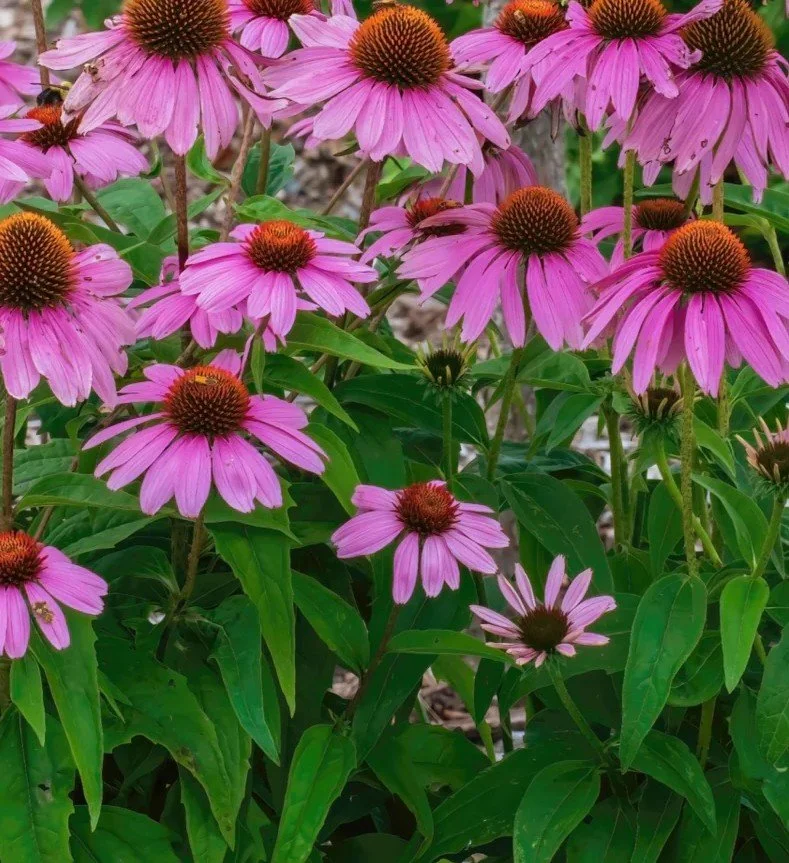
The Purple Coneflower is a quintessential prairie native, prized for its beauty and bloom time of about 2 months. With its tall, sturdy stems and showy flowers, this is a favorite nectar source for butterflies, bees and many other pollinators, including hummingbirds.
Sun Exposure Full Sun to Partial Shade
Water Needs Moderate to Low once established
Soil Type Needed Moist to Medium Loam, Clay, or Sandy soil
Mature Height 3 – 4 feet
Deer Resistance High
Bloom Time July – September
Bloom Color Purple
Plant Spacing 18 – 24 inches
Medium Soil Preferred: Once established, these plants are pretty drought-tolerant, but the entire plant can wilt if the soil becomes too dry in strong sunlight.
Growth is best in fertile loam, but the soil can contain some sand, clay or gravel.
Sturdy Stems: Unlike many tall perennials, the Purple Coneflower rarely needs staking. Its stems are tough and fibrous, standing tall even after heavy summer rains or wind.
Bloom Time: Purple Coneflowers have an approximately a 2-month bloom time and may re-bloom in the fall, especially if dead-headed early on.
Self-Seeding: While not invasive, Echinacea will happily drop seeds in open soil. This allows your patch to thicken naturally over time.
Pollinators: The central cone is a nectar goldmine. It is a favorite stop for Monarch butterflies, Swallowtails, and a massive variety of native bees.
Songbirds: Goldfinches are especially fond of this plant. They will often perch directly on the dried seed heads in late fall and winter to pluck out the protein-rich seeds.
No results match your search. Try removing a few filters.