
 Image 1 of 1
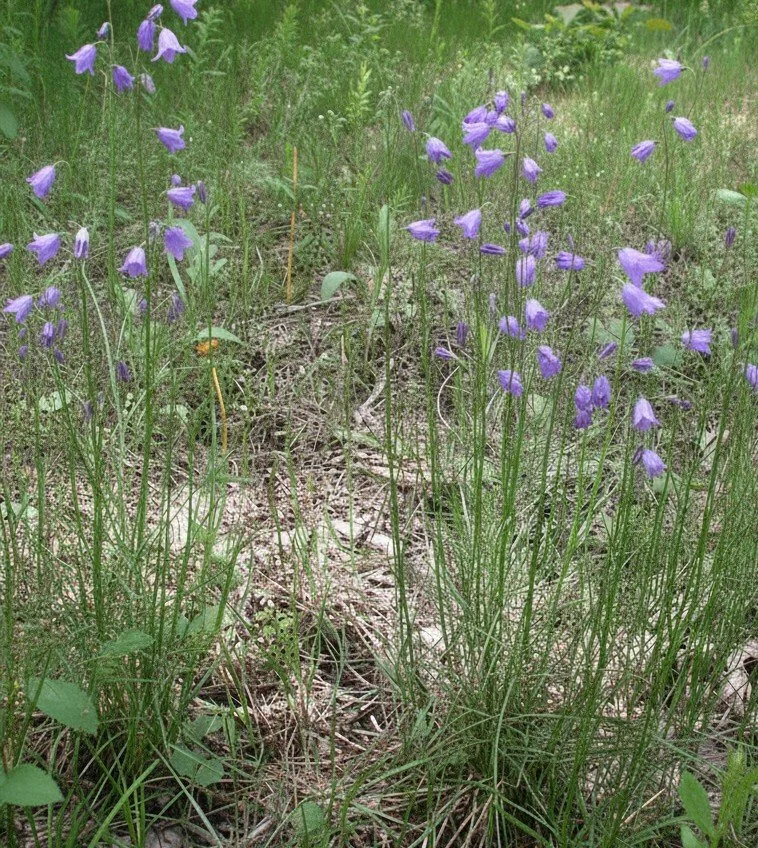
Harebell looks incredibly delicate with its wiry stems and nodding bells, but don’t let the looks fool you—this is a rugged survivor that can grow in the toughest of conditions. Known for its paper-thin, violet-blue bells that seem to float in the air, the Harebell is a versatile perennial that adds a touch of "fairytale" charm to the garden. It is famously long-blooming, often starting in early summer and continuing until the first hard frost.
Sun Exposure Full Sun to Partial Shade
Water Needs Low to Medium; very drought-tolerant once established
Soil Type Well-drained Loam, Sand, Rocky, or Gravelly soil
Mature Height 12 inches
Deer Resistance Moderate
Bloom Time June – September
Bloom Color Purple
Plant Spacing 6 – 8 inches
Unique Foliage: Its species name, rotundifolia, refers to its round basal leaves that appear in early spring. However, as the flower stalks rise, those leaves wither, leaving only very thin, grass-like foliage that makes the flowers look like they are hovering.
Resilient: Despite their "hair-like" stems, Harebells are remarkably wind-resistant and can handle harsh, exposed sites. They are the perfect choice for a rock garden or a stony edge.
Does well in dry sand, rocky crevices and gravelly soils.
Bloom Time: While many natives have a short window, the Harebell will often keep producing new bells for several months, especially if the spent blossoms are dead-headed.
Polinators: It is a favorite of small native bees..
Hummingbirds: Though small, hummingbirds are often seen investigating the blue bells during their mid-summer rounds.
Harebell looks incredibly delicate with its wiry stems and nodding bells, but don’t let the looks fool you—this is a rugged survivor that can grow in the toughest of conditions. Known for its paper-thin, violet-blue bells that seem to float in the air, the Harebell is a versatile perennial that adds a touch of "fairytale" charm to the garden. It is famously long-blooming, often starting in early summer and continuing until the first hard frost.
Sun Exposure Full Sun to Partial Shade
Water Needs Low to Medium; very drought-tolerant once established
Soil Type Well-drained Loam, Sand, Rocky, or Gravelly soil
Mature Height 12 inches
Deer Resistance Moderate
Bloom Time June – September
Bloom Color Purple
Plant Spacing 6 – 8 inches
Unique Foliage: Its species name, rotundifolia, refers to its round basal leaves that appear in early spring. However, as the flower stalks rise, those leaves wither, leaving only very thin, grass-like foliage that makes the flowers look like they are hovering.
Resilient: Despite their "hair-like" stems, Harebells are remarkably wind-resistant and can handle harsh, exposed sites. They are the perfect choice for a rock garden or a stony edge.
Does well in dry sand, rocky crevices and gravelly soils.
Bloom Time: While many natives have a short window, the Harebell will often keep producing new bells for several months, especially if the spent blossoms are dead-headed.
Polinators: It is a favorite of small native bees..
Hummingbirds: Though small, hummingbirds are often seen investigating the blue bells during their mid-summer rounds.