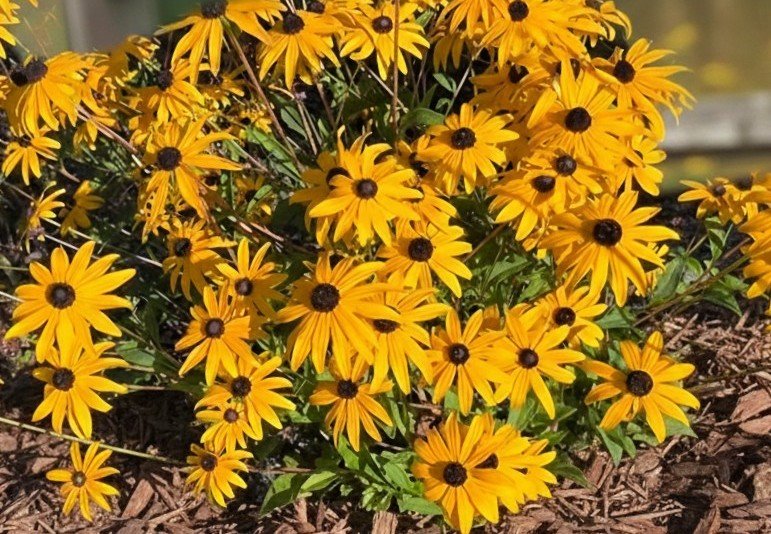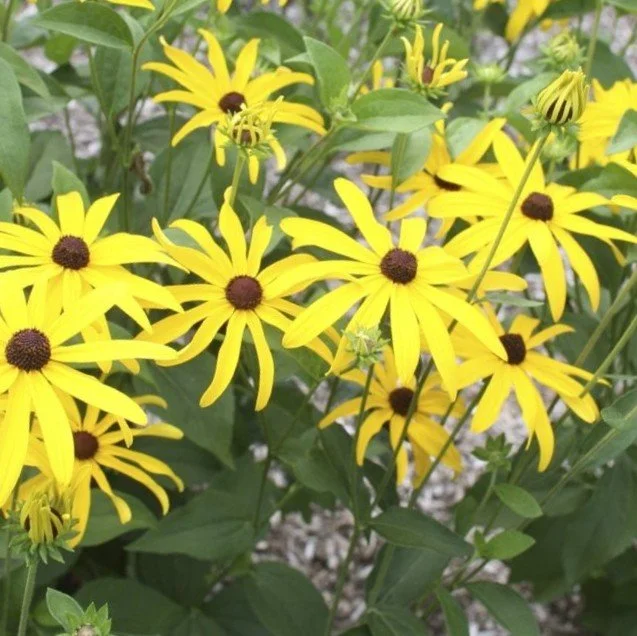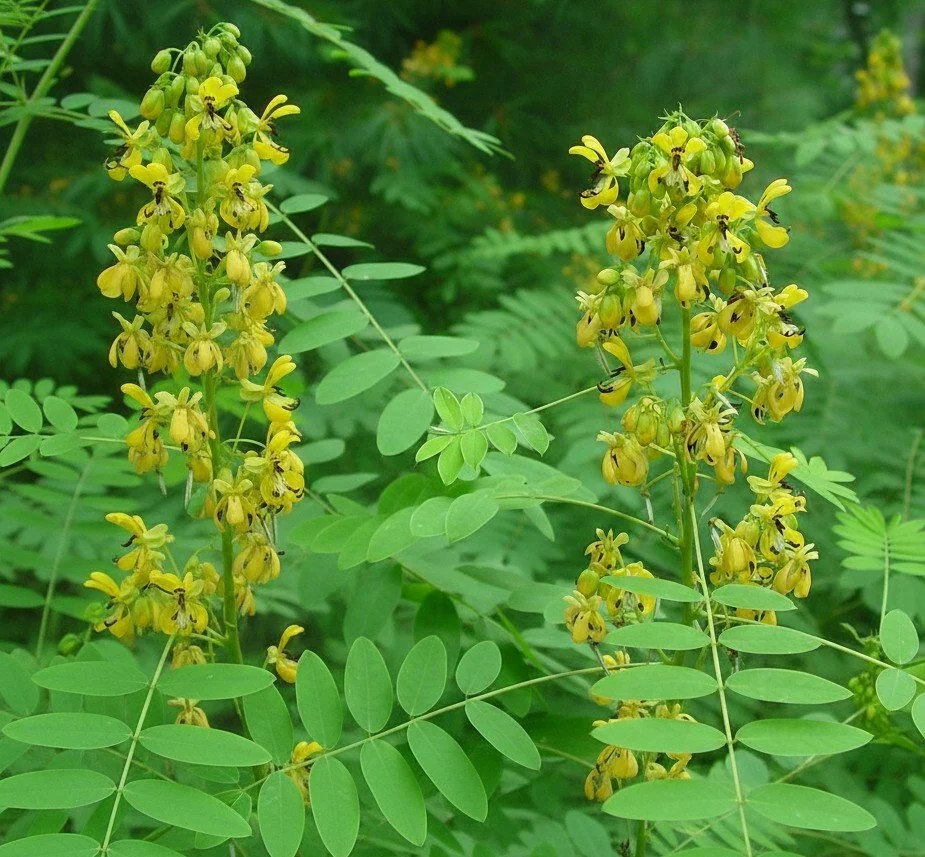
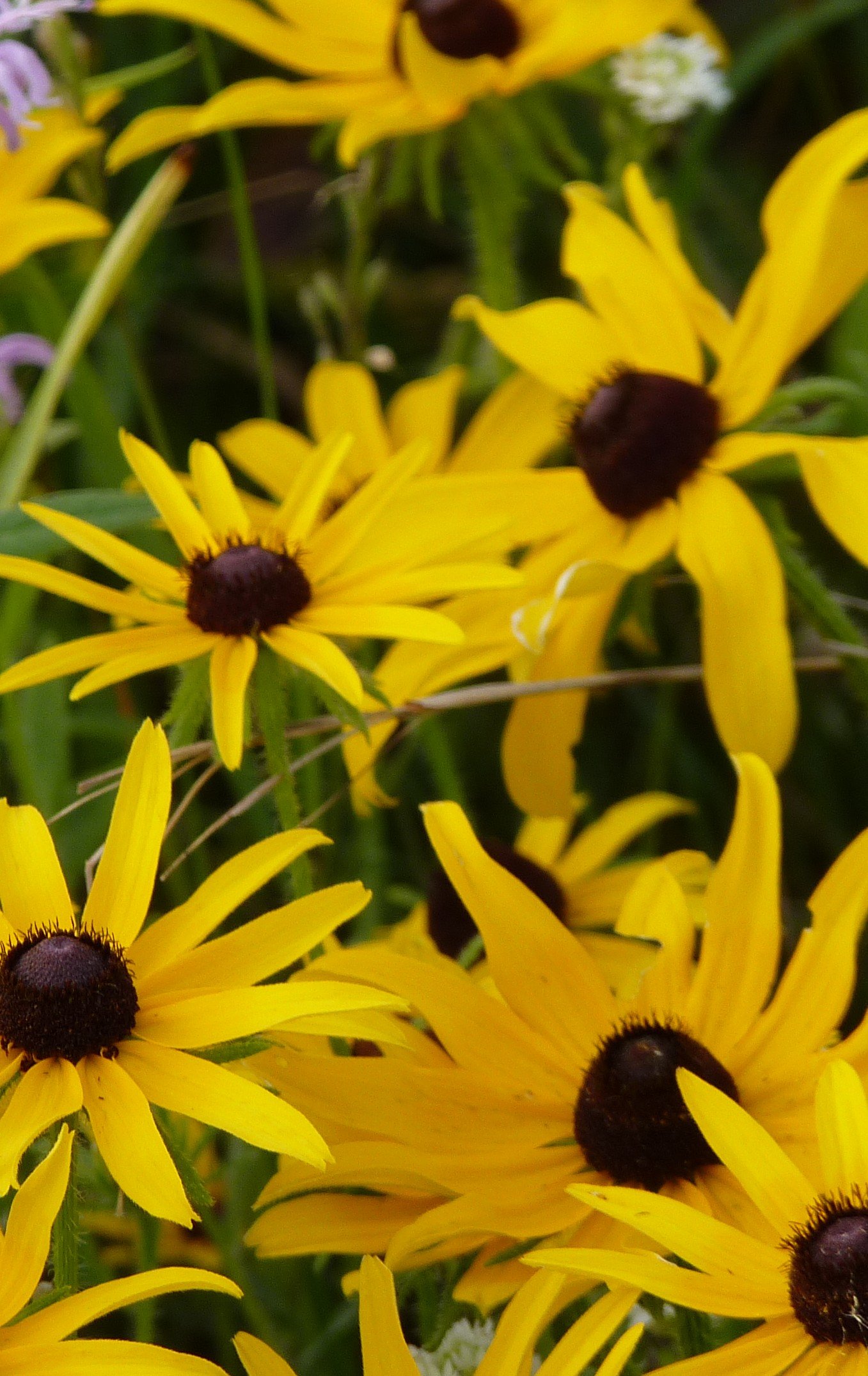
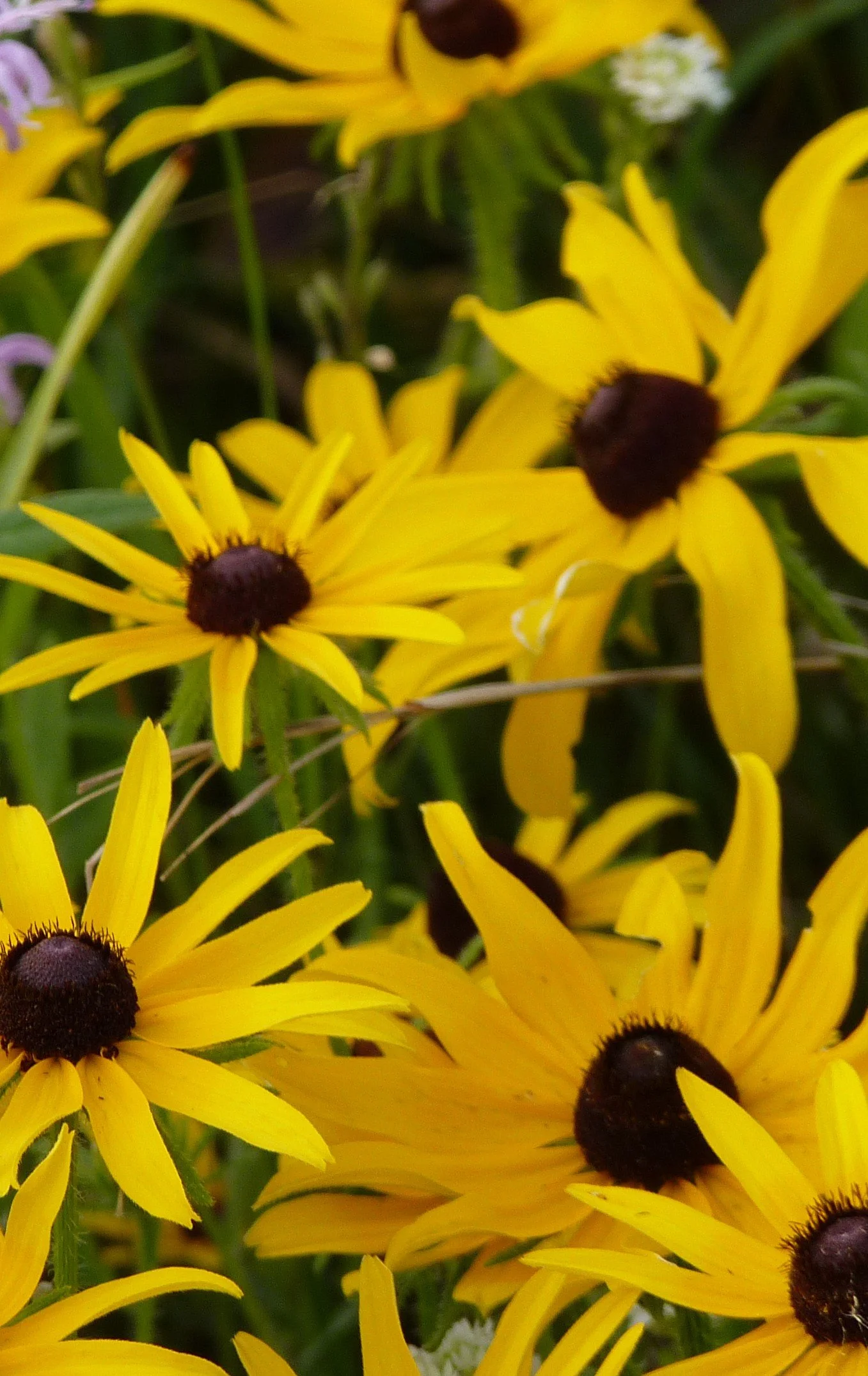
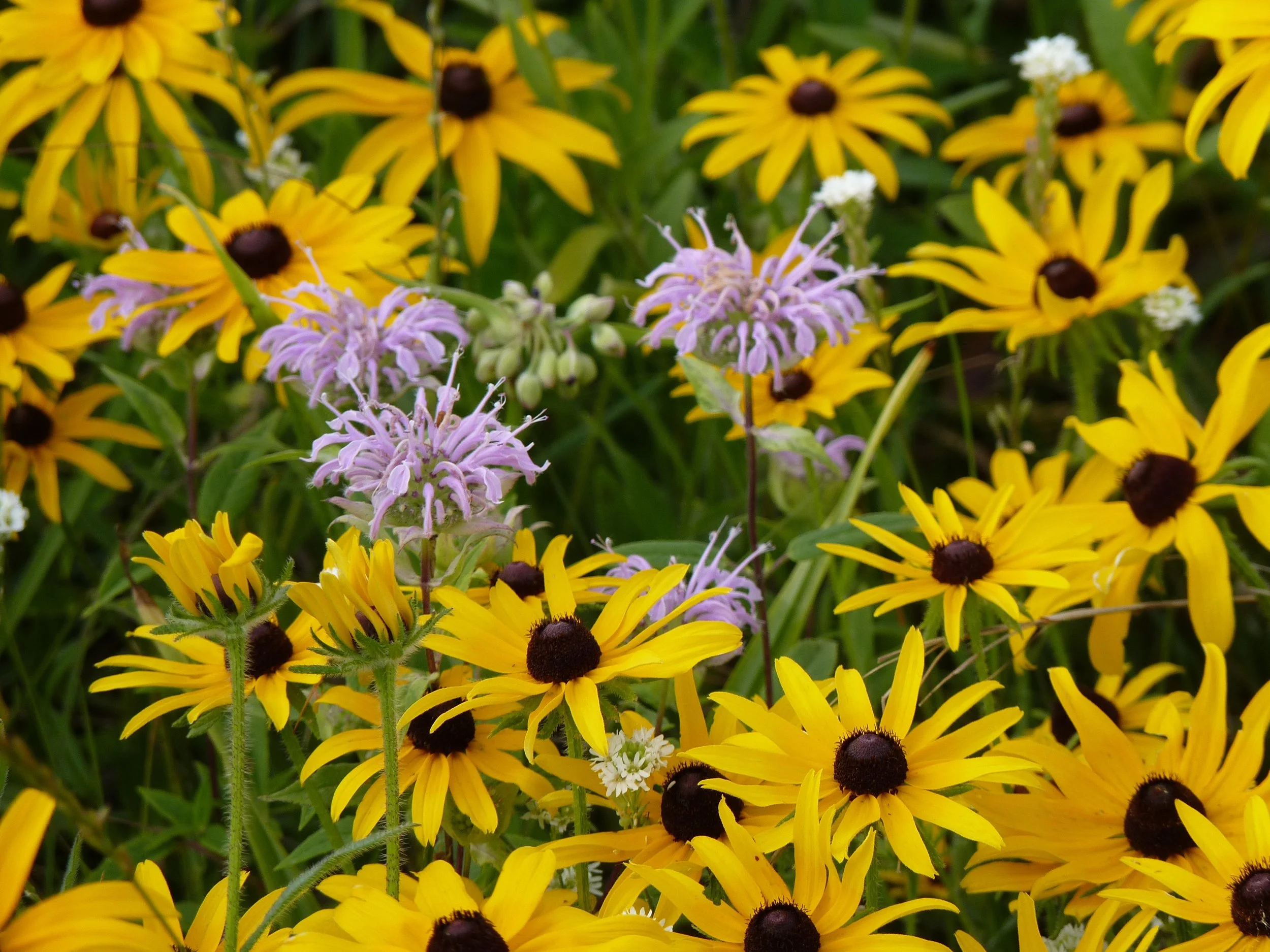
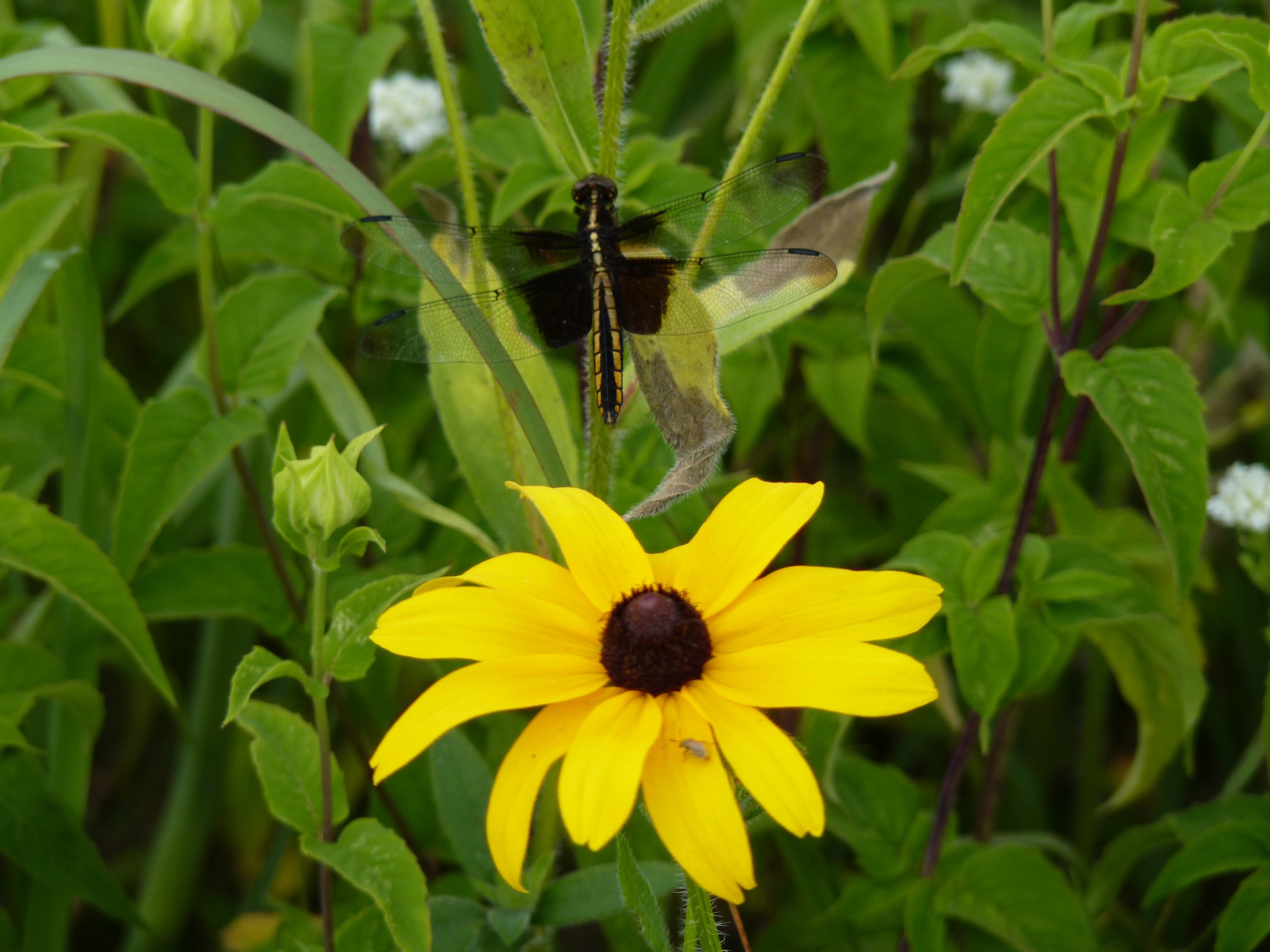
A staple of the American landscape, these iconic wildflowers feature bright daisy-like petals surrounding a deep chocolate-brown central cone. Black-Eyed Susans are extraordinarily hardy, heat-tolerant, and capable of thriving in conditions where more delicate flowers might falter. They are the perfect choice for gardeners who want high-impact color with minimal effort.
Sun Exposure Full Sun (Preferred) to Partial Shade
Water Needs Low to Moderate; very drought-tolerant once established
Soil Type Needed Adaptable; can thrive in Muck, Clay, Loam or Sandy soils.
Mature Height 2 – 3 feet
Deer Resistance Moderate
Bloom Time June – October
Bloom Color Yellow
Plant Spacing 10 – 12 inches
One of the longest bloom periods of any summer perennial, often lasting from early summer right through the first frost.
The plant is biennial that blooms and completes in life cycle in it’s seconds year. They are self-seeders, so they will appear in your garden for years to come but can succumb to longer-lived perennials in later years after planting.
Highly resistant to heat, humidity, and drought, making them ideal for "problem spots" in the yard.
Pollinator Favorite: The wide, flat blooms act as perfect landing pads for a variety of butterflies, including Monarchs, the Wavy-Lined Emerald and the Silvery Checkerspot.
Bee Support: A primary nectar source for honeybees and several species of native solitary bees.
Birds: If you delay your garden cleanup until spring, the sturdy seed heads provide essential winter forage for goldfinches and other small songbirds.
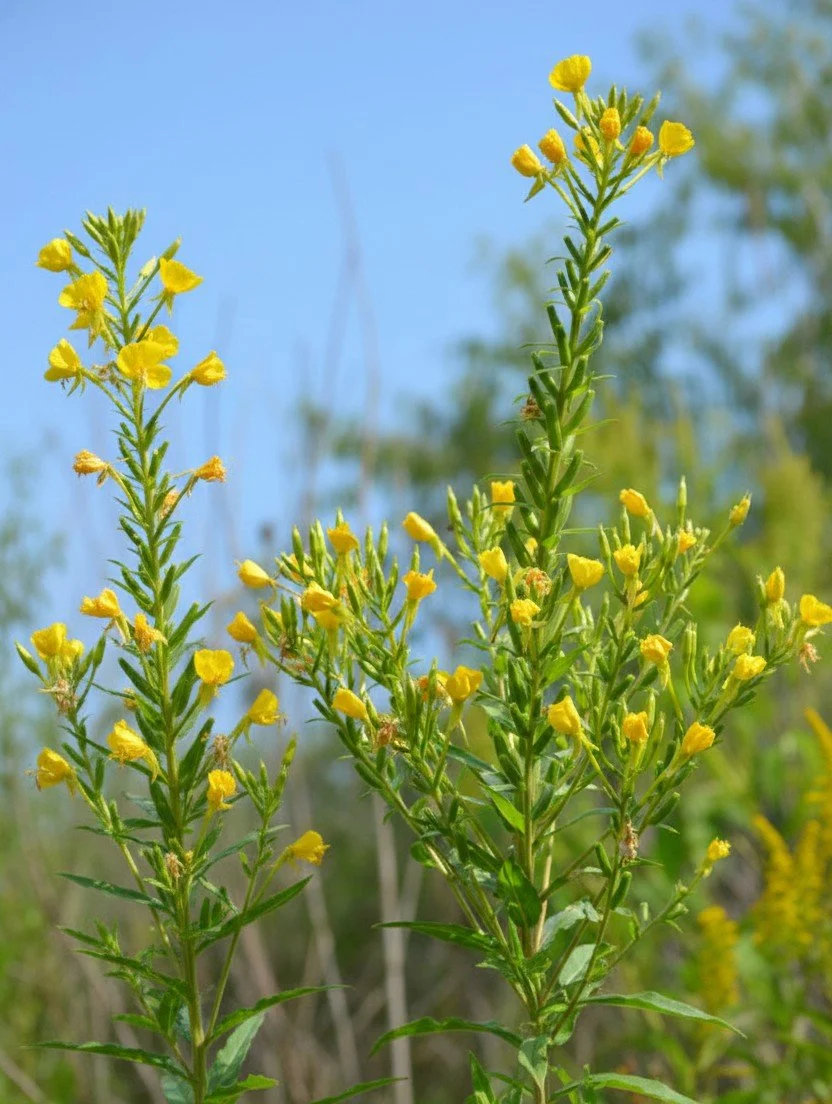
Just like the goldenrod, this plant is a "bridge" species—but while the goldenrod bridges the seasons, the Evening Primrose bridges day and night! While most flowers wake up with the sun, this native waits for the twilight. It features bowl-shaped yellow blossoms that unfurl in late afternoon and evening.
Sun Exposure Full Sun to Partial Shade
Water Needs Low to Medium; very drought-tolerant
Soil Type Adaptable; prefers Sandy, Rocky, or Lean soil
Mature Height 4 – 6 feet
Deer Resistance Low - Moderate
Bloom Time July – October
Bloom Color Yellow
Plant Spacing 1 – 2 feet
Long Bloom Time: It is one of the last natives blooming into late fall.
Hardy & Resilient: It thrives in "neglected" areas where other plants struggle. It is highly resistant to pests and can handle poor, dry soils with ease.
Polinators: Although labeled as a weed by some, it is a very important native plant with a long bloom time. It benefits many different kinds of bees, nectaring moths, butterfiles, and caterpillars.
The "Night Shift": The flowers attract sphinx moths (hawk moths), which are nocturnal.
Hummingbirds: Though they open late, the flowers stay open long enough for hummingbirds to visit them for a breakfast snack in the early morning.
Garden Note: Common Evening Primrose is a prolific self-seeder. Because it is a biennial, it relies on dropping seeds to ensure a new generation blooms every year. If you want to limit its spread, simply snip off the seed pods after the flowering season is finished!
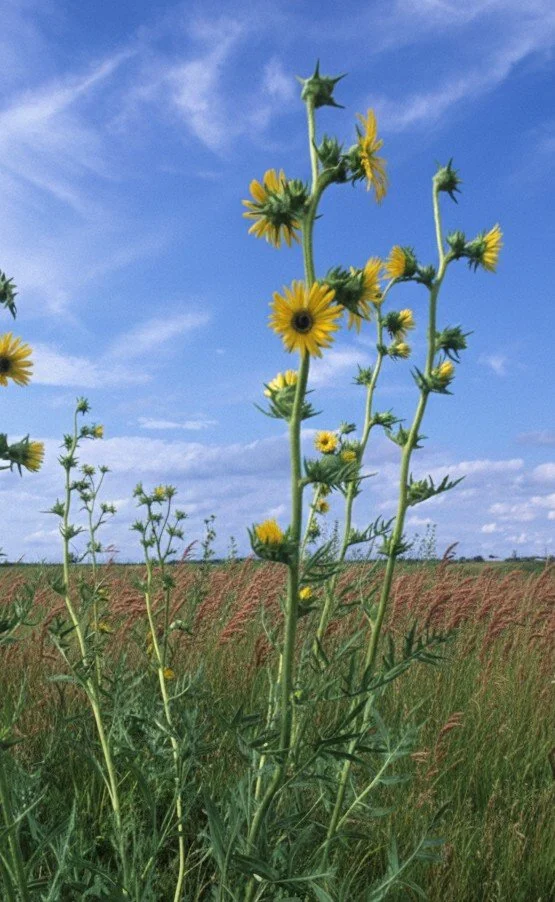
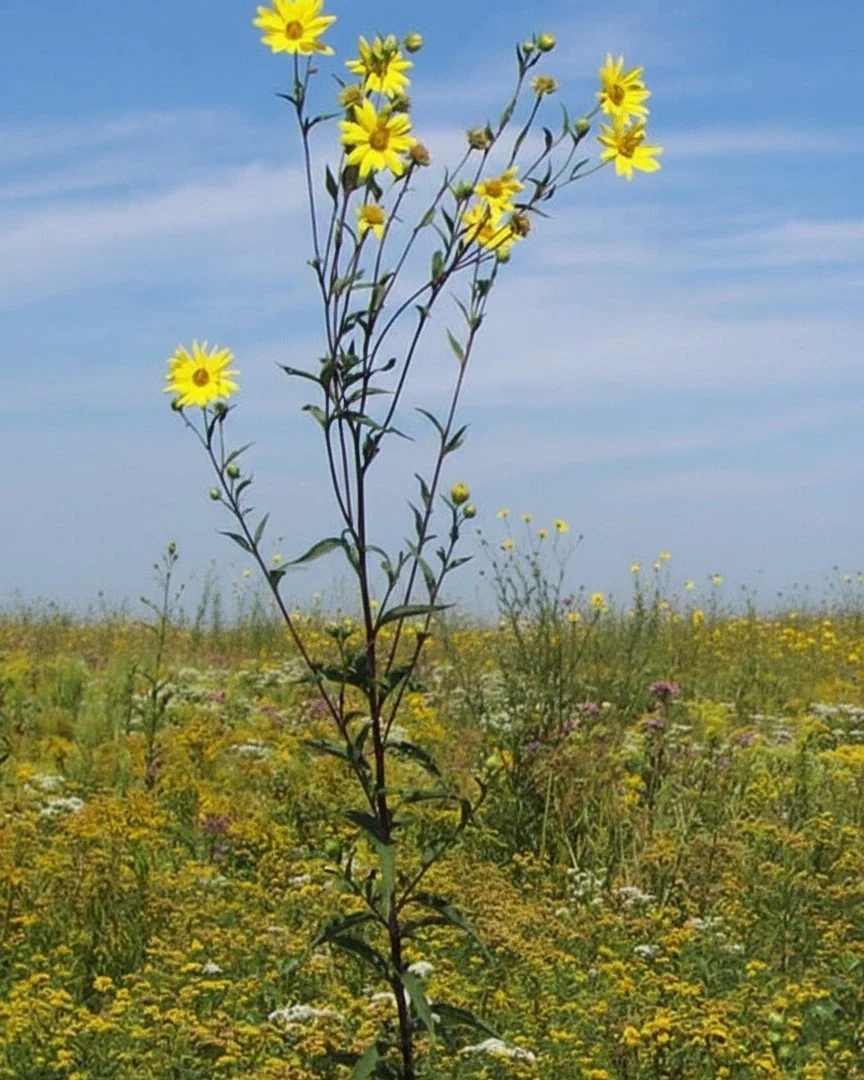
This towering native perennial is famous for its deeply lobed, sandpaper-like leaves that traditionally orient themselves North and South to avoid the intense midday sun—giving the plant its iconic name.Rising on sturdy, sap-filled stalks, its cheerful, sunflower-like yellow blooms provide a vertical element that can be seen from across the yard.
It is a slow-growing "anchor" species that invests its early years into developing a massive taproot that can reach up to 15 feet deep. This incredible root system makes it virtually bulletproof against drought and extreme heat, allowing it to remain lush and vibrant even when the rest of the garden is parched.
Sun Exposure Full Sun to Partial Shade
Water Needs Low to Medium; exceptionally drought-tolerant
Soil Type Loam, Sand
Mature Height 5 – 8 feet
Deer Resistance High
Bloom Time June – September
Bloom Color Yellow
Plant Spacing 3 – 5 feet
Height: Given rich soil, compass plants can reach upwards of 8 feet in height.
Living Compass: The large basal leaves align with the Earth’s magnetic poles to maximize water use in the leaves and increase CO2 gain.
Centuries-Long Life: This is a "legacy plant." Once established, a single Compass Plant can live for up to 100 years, becoming a permanent fixture of your home's ecosystem.
Pollinators: The resin-rich flowers are a favorite of bees, and butterflies.
Birds: Seeds are a high-energy food source for goldfinches and other songbirds throughout the fall and a favorite perching spot.
Pro Tip: Patience is a virtue with the Compass Plant! Because it spends its first few seasons focused on growing that legendary 15-foot taproot, it may only produce a small cluster of leaves at first. Don't be fooled—it is building the foundation for a lifetime of beauty. Due to this taproot, it is very difficult to move once planted, so choose its "forever home" in a sunny spot with plenty of vertical room to grow.
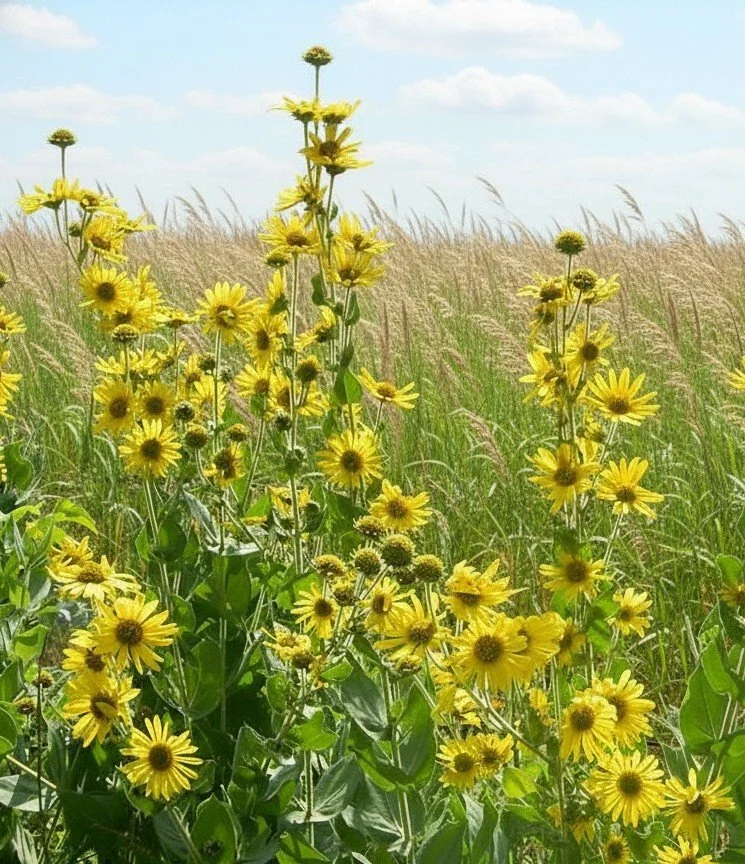
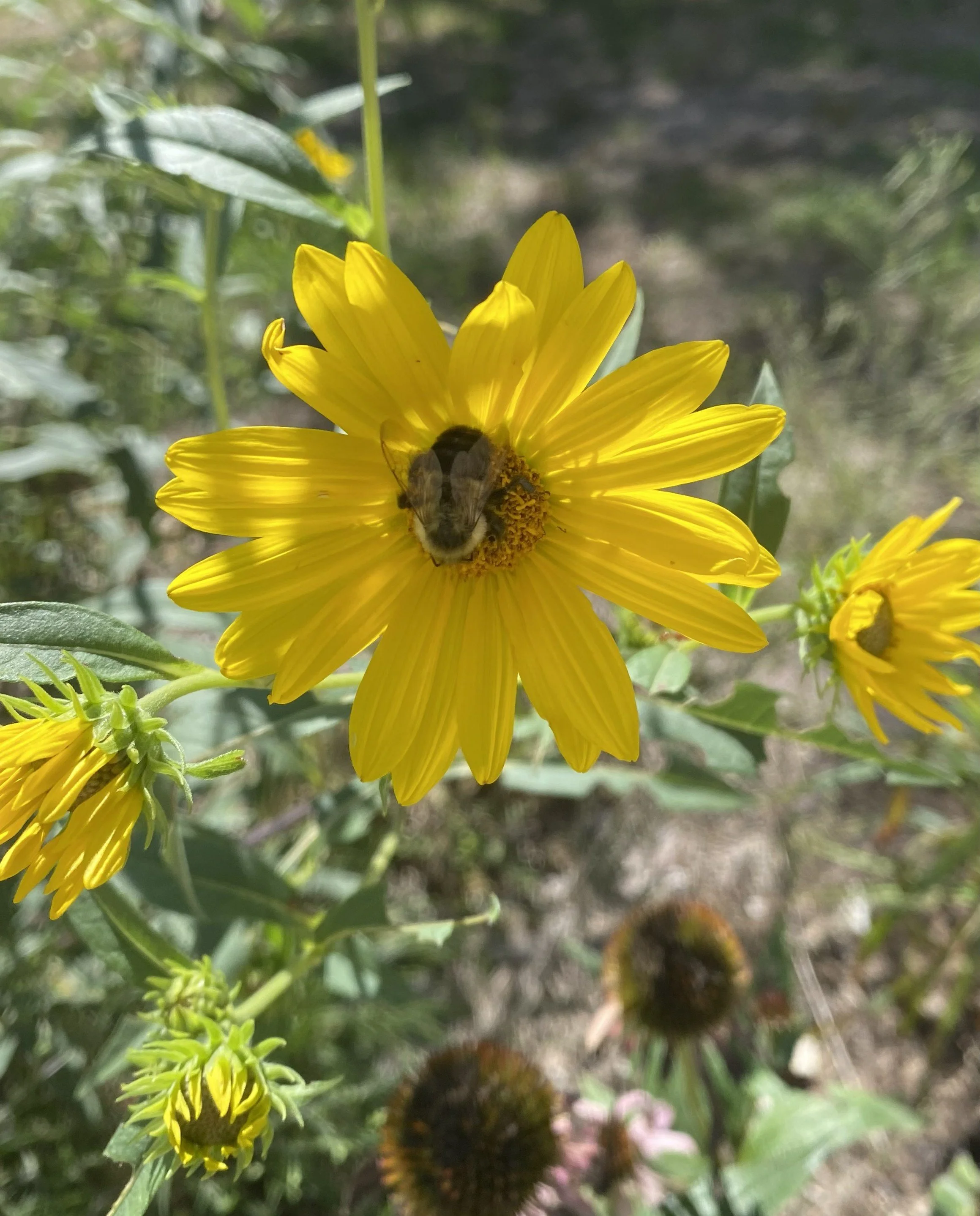
This native is named for the soft, silvery-gray "down" or fuzz that covers its stems and foliage, giving the entire plant a frosty-blue tint. When the mid-summer heat arrives, it erupts in a cheerful display of multi-flowered stalks topped with bright, 2-inch golden-yellow blooms.
What sets the Downy Sunflower apart is its incredible versatility. It is one of the few sunflowers that stays at a manageable height. It is a rugged survivor that handles the hottest, driest corners of your yard with ease, maintaining its silver-green luster even in the peak of a summer drought.
Sun Exposure Full Sun to Partial Sun
Water Needs Low to Medium; very drought-tolerant
Soil Type Poor, drier, Clay, Sand, Rocky, or Well-Drained Loam
Mature Height 4 - 5 feet
Deer Resistance Moderate - High
Bloom Time August – September
Bloom Color Yellow
Plant Spacing 2 – 3 feet
Aggressive Spreader: please consider when picking your planting location. Removal of the seed head before it is ripe is preferable if you do not want to weed seedlings.
Compact Habit: Unlike the towering 8-foot giants, Downy Sunflower stays relatively short and sturdy, rarely requiring staking or support.
Prolific Bloomer: Rather than one single flower head, each plant produces numerous branches, resulting in a dense "bouquet" of yellow flowers on every stalk.
Nectar: Its late-summer blooms are a vital resource for long-tongued bees, butterflies, and skippers during the hottest months of the year.
Bird Seed Source: In the fall, the flower heads dry into nutritious "bird feeders." Chickadees and Goldfinches will cling to the stems to feast on the oil-rich seeds.
Host Plant: It serves as a nursery for the Silvery Checkerspot butterfly and several species of moths.
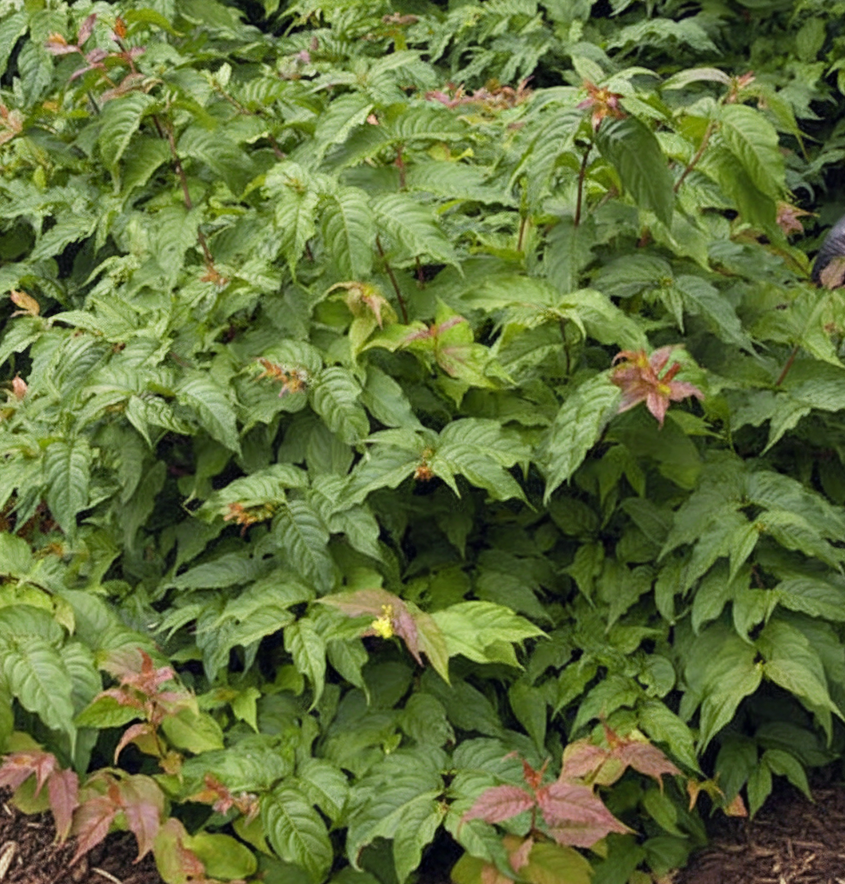
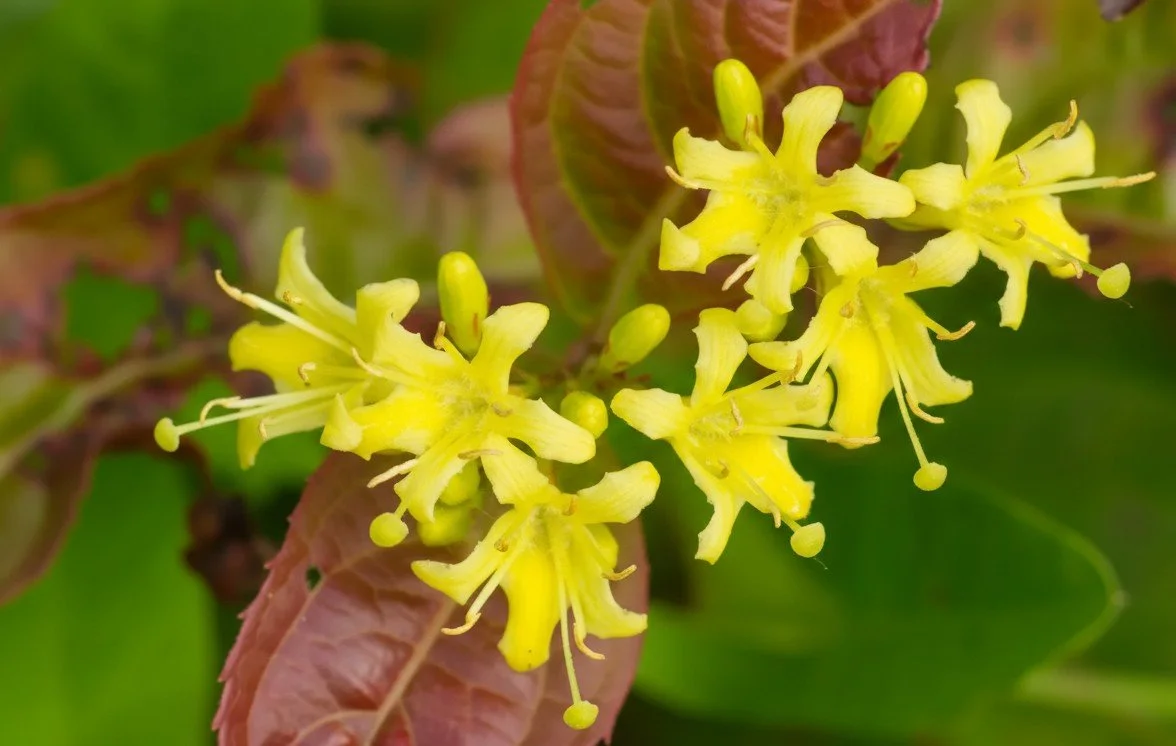
If you’re searching for a low-growing, rugged shrub that provides multi-season interest without the invasive headache of other honeysuckles, consider Dwarf Bush Honeysuckle. This is a mounding, woody perennial that is great for dry, difficult shady areas. In early summer, it produces delicate, lemon-yellow trumpet flowers that are a magnet for the tiniest of garden visitors. It starts with dark green foliage that turns yellow-orange, then into vibrant shades of red and purple in the fall.
Sun Exposure Partial Shade to Shade
Water Needs Low to Medium; highly drought-tolerant once established
Soil Type Adaptable; thrives in Dry Sand, Rocky soil, or dry Clay
Mature Height 2 – 3 feet
Deer Resistance Moderate
Bloom Time June – August
Bloom Color Yellow
Plant Spacing 2 – 3 feet
Three Seasons of Color: Bronze spring buds, yellow summer flowers ending with beautiful red autumn foliage.
Somewhat Aggressive Spreader: Spready by rhizomes and can overwhelm small landscapes. Keep this in mind when choosing your planting location
Will spread to form thickets over time, making it a good choice for shrub borders or hedgerows.
Bumblebees: The small yellow blossoms are perfectly designed for bumblebees and other long-tongued native bees to crawl inside.
Hummingbirds: Though the flowers are small, their nectar is high-energy and often visited by hummingbirds patrolling the garden.
Host Plant to the Laurel Sphinx moth and the Snowberry Clearwing.
Pro Tip: Dwarf Bush Honeysuckle is incredibly forgiving when it comes to pruning. If it ever begins to look a bit unruly or "leggy" after a few years, you can cut it back nearly to the ground in late winter or early spring. It will roar back with fresh, colorful new growth and a tighter, more compact shape. It’s one of the few shrubs that actually enjoys a "fresh start" every now and then!
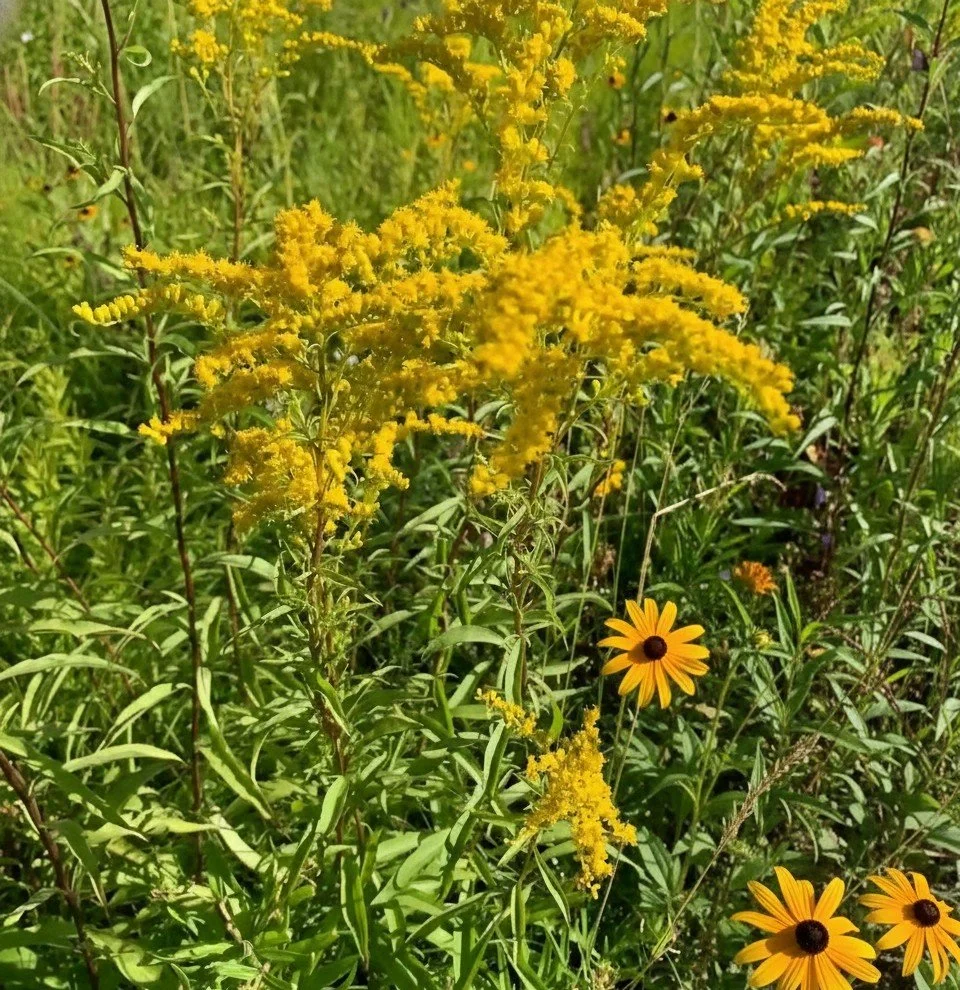
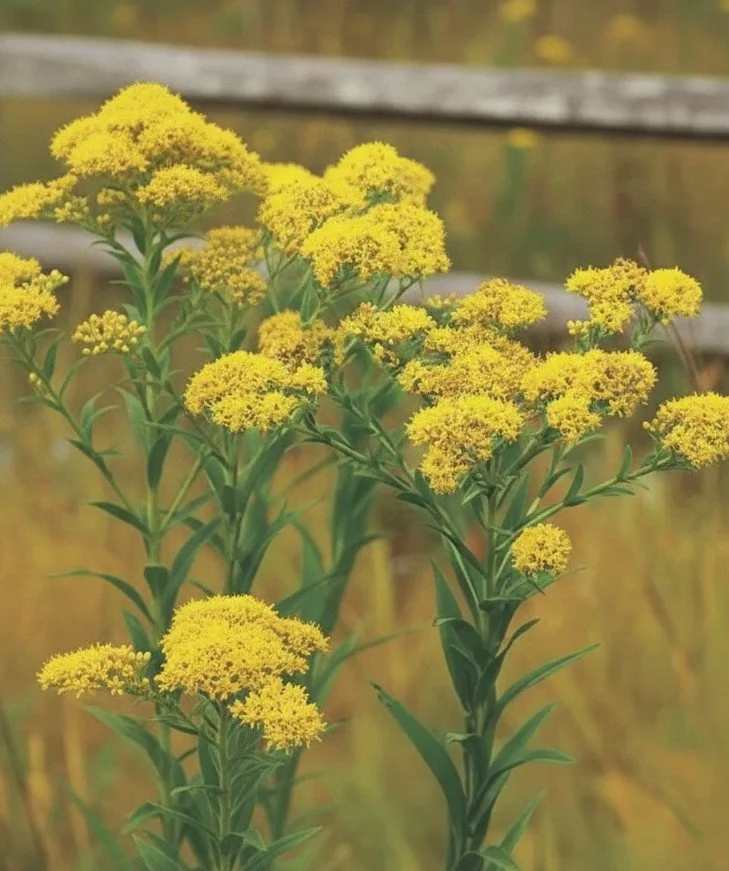
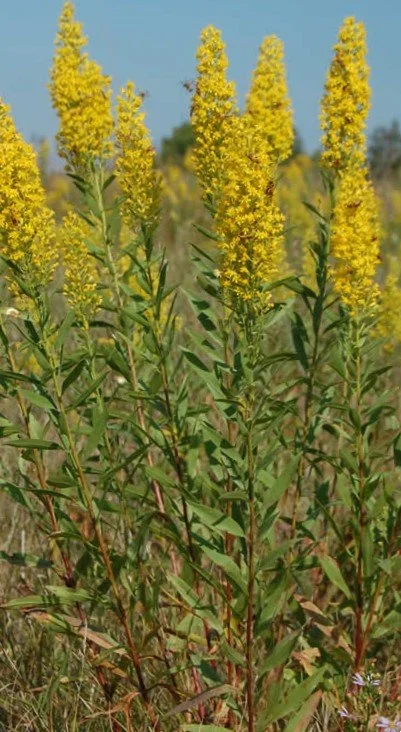
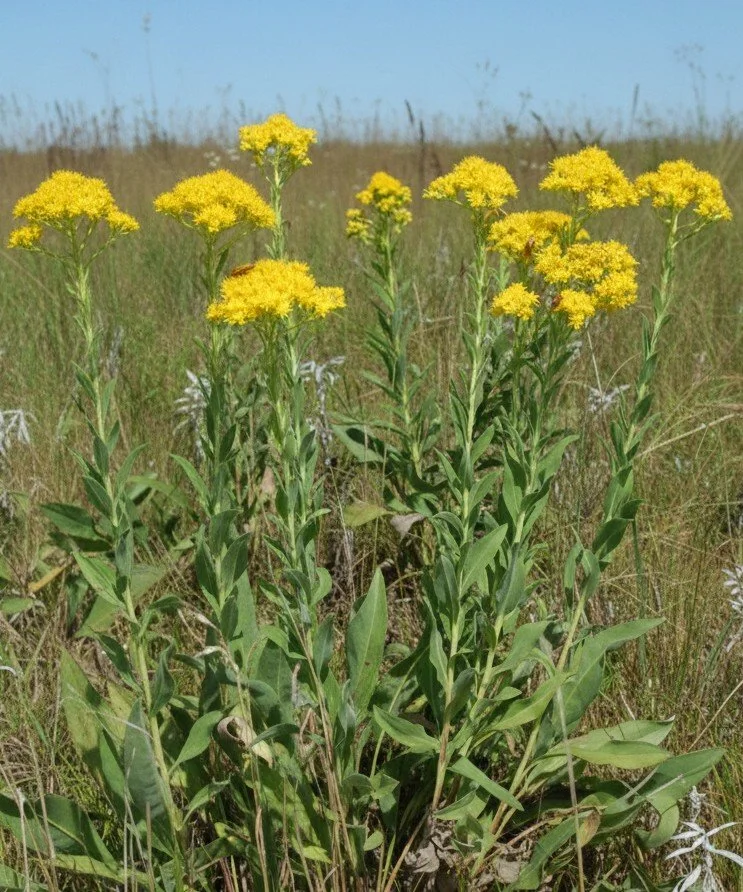
While most goldenrods wait for the cool air of fall to arrive, this eager native begins lighting up the landscape in mid-to-late summer. It features elegant, arching wands of tiny, nectar-rich yellow flowers that look like a burst of sunshine caught on a stem.
Unlike some of its taller, more aggressive relatives that can take over a space, this species stays at a moderate, manageable height and forms tidy clumps. It is the perfect choice for adding a "layered" look to your garden beds, filling the gap between your mid-summer blooms and the late-season asters.
Sun Exposure Full Sun to Partial Shade
Water Needs Low to Medium; very drought-tolerant
Soil Type Well-drained Sand, Loam, or Rocky soil
Mature Height 2 – 4 feet
Deer Resistance High
Bloom Time July – September
Bloom Color Yellow
Plant Spacing 1 – 3 feet
First to Bloom: As the name suggests, it is one of the earliest goldenrods to flower, providing a critical "bridge" of color between summer and fall.
Pollinator Powerhouse: The brilliant yellow plumes are a primary nectar source for a huge array of beneficial insects during the peak of summer heat.
Aggressing Spreader: Spreads by rhizomes. Keep this in mind when selecting your planting site, may not be suitable for small landscapes.
Thinning every few years is recommended.
Butterfly Fuel: It is a favorite stop for Monarchs, Viceroys, and hairstreaks as they begin their late-season activities.
Native Bee Support: It provides high-quality pollen for specialized native bees that rely on goldenrods to feed their young.
Songbird Food: In the winter, the dried seed heads offer a tiny but nutritious feast for chickadees and goldfinches.
*Don’t believe the myths—Goldenrod does not cause hay fever! Its pollen is heavy and sticky (designed to be carried by bees, not the wind). The real culprit for itchy eyes is usually Ragweed, which blooms at the same time but has inconspicuous green flowers. You can plant Early Goldenrod with confidence, knowing it brings beauty and health to your garden without the sneezing!
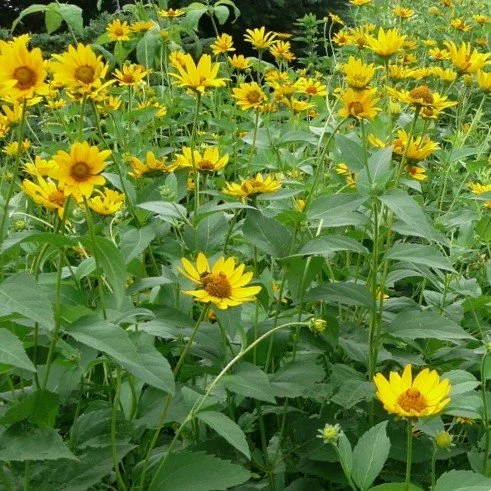
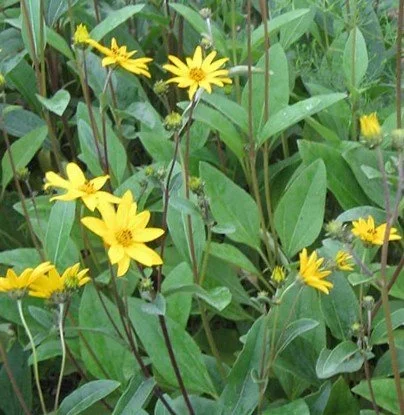
Early Sunflower (often called False Sunflower or Oxeye Sunflower) is a champion of the "pre-autumn" season. While it looks remarkably like a true sunflower, it’s actually a distinct native perennial that is far more manageable and long-lived in a garden setting.
A cheerful, multi-stemmed native that produces a profusion of daisy-like yellow flowers. It is one of the longest-blooming perennials in the summer garden, often starting its show weeks before the rest of the sunflower family.
Sun Exposure Full Sun to Partial Shade (Best in Full Sun)
Water Needs Low to Medium; drought-tolerant once established
Soil Type Adaptable; thrives in Clay, Loam, Sand, or Rocky soil
Mature Height 3 – 5 feet
Deer Resistance Moderate
Bloom Time June – September
Bloom Color Yellow
Plant Spacing 1.5 – 3 feet
Prolific Bloomer: Unlike true sunflowers that bloom once, this species is "deadhead friendly"—removing spent flowers will keep the gold coming all summer long.
Sturdy & Reliable: While it can get tall, its stems are generally stiffer than true sunflowers.However, in very rich soil, it can become "leggy," so it's actually happier in leaner, average soil.
Clump-Forming: It stays where you put it! Unlike some aggressive spreaders, this species grows in a tidy, non-invasive clump that increases in diameter over time.
Specialist Pollinator Support: It is a critical host for the Holcopasites heliopis bee—a tiny specialist pollinator that relies specifically on this plant.
Bird Buffet: If you leave the seed heads standing in the fall, they become a favorite snack for goldfinches and other small songbirds.
Pro Tip: Try planting Early sunflower with purple-blooming companions like Blazing Star or Ironweed that would contrast beautifully with all that yellow.
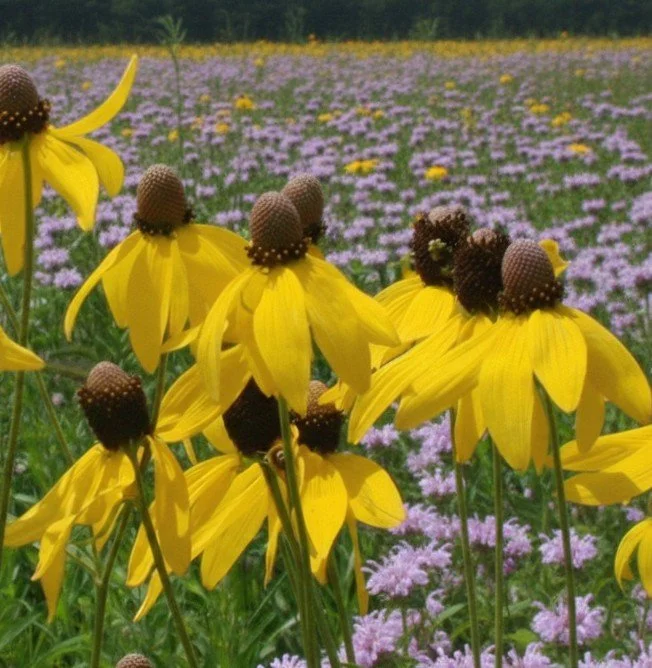
Gray-Headed Coneflower (also known as Yellow Coneflower) is famous for its distinctively drooping petals and a central gray cone that smells like anise or licorice when crushed. This prairie native is known for its tall, slender stems, rough leaves and yellow cheerful flowers. It adds a wonderful sense of motion to the garden, as the blooms sway in the slightest summer breeze. It is native to prairies and savannas and grows best in medium to medium-dry soil conditions.
Sun Exposure Full Sun to Partial Shade
Water Needs Low to Medium; very drought-tolerant once established
Soil Type Adaptable; thrives in Clay, Loam, Sand or Rocky soil
Mature Height 3 – 5 feet
Deer Resistance Moderate - High
Bloom Time July – September
Bloom Color Yellow
Plant Spacing 18 – 24 inches
Distinctive Silhouette: Features bright yellow petals that droop downward, highlighting a prominent gray central cone that turns chocolate brown as the seeds ripen.
Tough as Nails: It is incredibly resilient against heat and drought. It is a reliable "permanent resident" for the back or middle of your garden layers.
Fragrant Cones: When the seed heads are bruised or crushed, they release a pleasant scent described by some as licorice.
Pollinators: The flowers are a high-value nectar source for a diverse range of butterflies, bees and insects.
Winter Bird Feeder: Do not cut the stalks back in the fall! Goldfinches are especially fond of the seeds and will cling to the sturdy cones all winter long to feast.
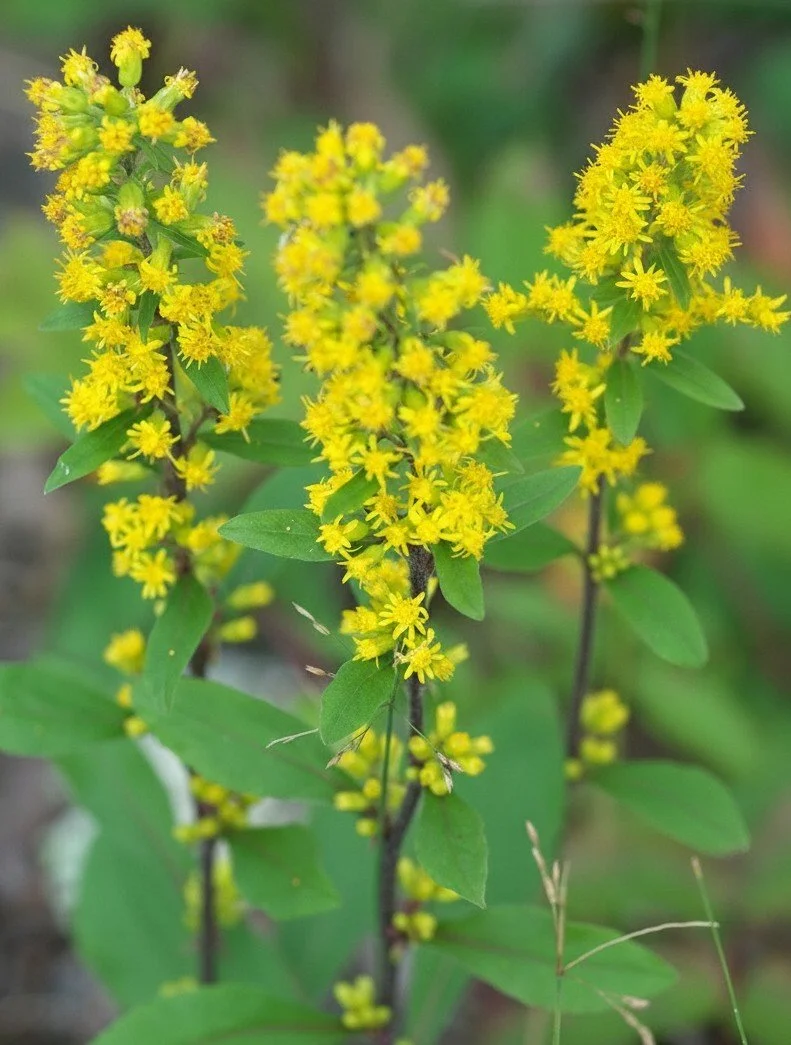
Unlike most goldenrods that branch out into arching plumes, this species grows in a distinct, upright spike, making it a fantastic structural choice for tight spaces or the middle of a layered bed. A distinctive and well-behaved goldenrod easily identified by its fuzzy, silver-haired stems and its unique upright growth habit. Rather than wide-spreading plumes, its flowers hug the stem in a dense, golden column, creating a "wand-like" appearance.
Sun Exposure Full Sun to Partial Shade
Water Needs Low to Medium; exceptionally drought-tolerant
Soil Type Well-drained Sand, Rocky, or Lean/Poor soil
Mature Height 1.5 – 3 feet
Deer Resistance High
Bloom Time August – October
Bloom Color Yellow
Plant Spacing 12 – 18 inches
Color: Its most striking feature is the dense coating of fine white hairs on the stem and leaves, giving the plant a soft, grayish-green cast even when it’s not in bloom. The yellow flowers are relatively large compared to other goldenrods, up to ¼ inch tall and face out from the branches.
Non-Aggressive Habit: Unlike its "runaway" relatives, Hairy Goldenrod is a clump-forming species. It stays in a tidy, vertical bunch, making it one of the best goldenrods for small landscapes or rock gardens.
Perfect for open dry woods, rocky outcrops, dunes.
Pollinators: The nectar-rich golden cylinders are a favorite for a variety of native bees, beneficial wasps, and butterflies.
Critical Fall Fuel: Because it blooms into October, it provides late season energy before the first hard frost.
*Don’t believe the myths—Goldenrod does not cause hay fever! Its pollen is heavy and sticky (designed to be carried by bees, not the wind). The real culprit for itchy eyes is usually Ragweed, which blooms at the same time but has inconspicuous green flowers. You can plant Hairy Goldenrod with confidence, knowing it brings beauty and health to your garden without the sneezing!
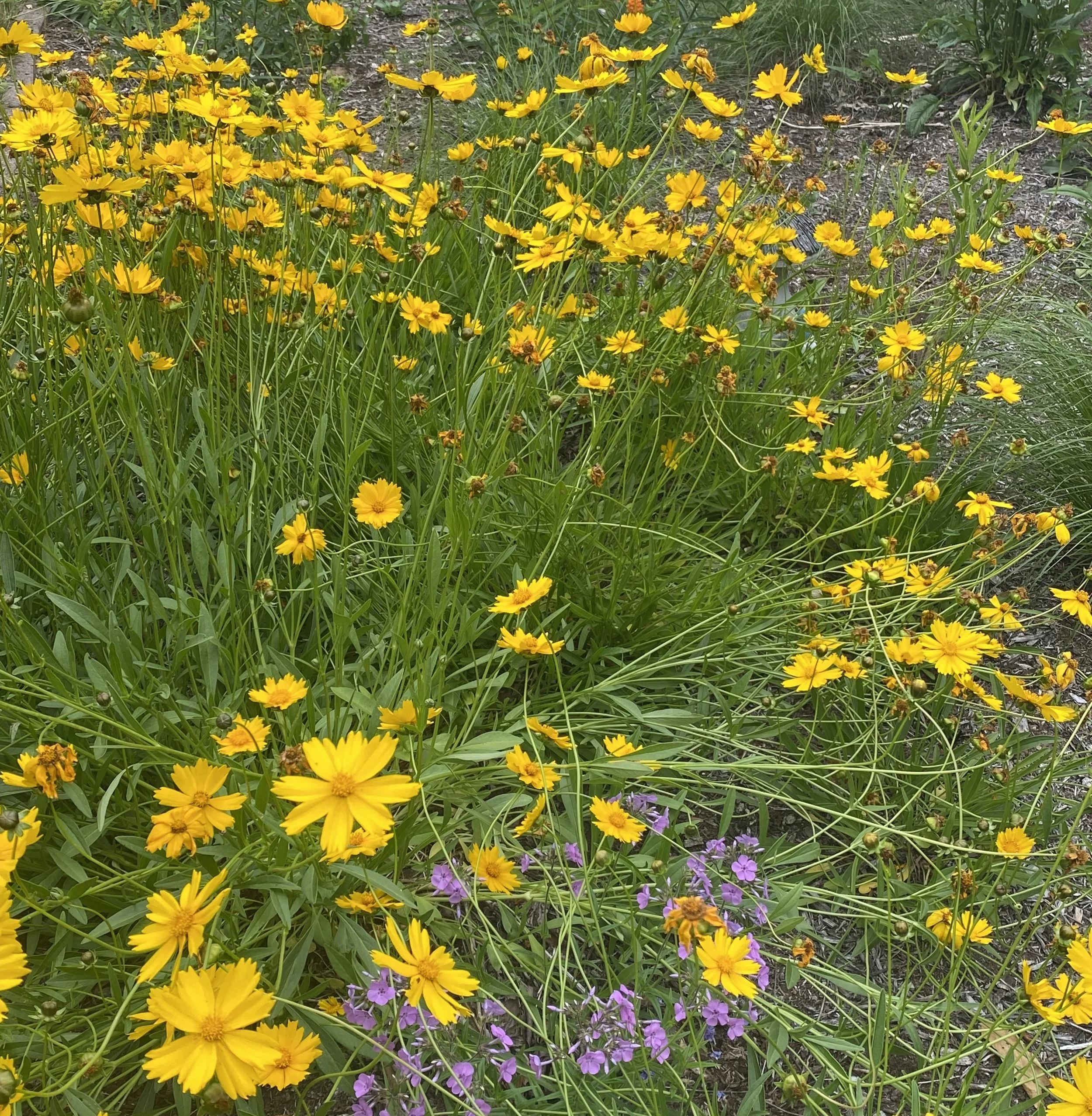
A bright, sunny perennial known for its abundance of daisy-like, yellow flowers with jagged-edged petals. It is exceptionally hardy and is often one of the first "prairie" plants to bloom, providing a long-lasting splash of color in early summer. It is one of the most popular and easiest-to-grow natives, bridging the gap between your late-spring bloomers.
Sun Exposure Full Sun
Water Needs Low; very drought-tolerant
Soil Type Well-drained Clay, Loam, Sand, Rocky, or Lean/Poor soil
Mature Height 2 feet
Deer Resistance Moderate - High
Bloom Time May – August
Bloom Color Yellow
Plant Spacing 10 – 16 inches
The "Sand Tickseed": Its nickname comes from its ability to thrive in poor, sandy, or gravelly soils where other plants might struggle. It actually prefers "lean" soil—if the soil is too rich, it may grow too quickly and flop over. Many think the seeds look like ticks.
Self-Seeding Beauty: While it is a perennial, it is also a prolific self-seeder. It will fill in gaps in your garden beds naturally, creating a lush, meadow-like appearance over time.
Promptly dead-head spent blossoms to prolong the blooming period.
Pollinators: The flat, open faces of the flowers make it easy for a wide variety of butterflies, and native bees to seen regularly. As many as 22 native bee species rely on Coreopsis plants.
Songbird Seeds: As the name "Tickseed" implies, the small, dark seeds resemble ticks. These seeds are a favorite snack for goldfinches and other small birds in the late summer
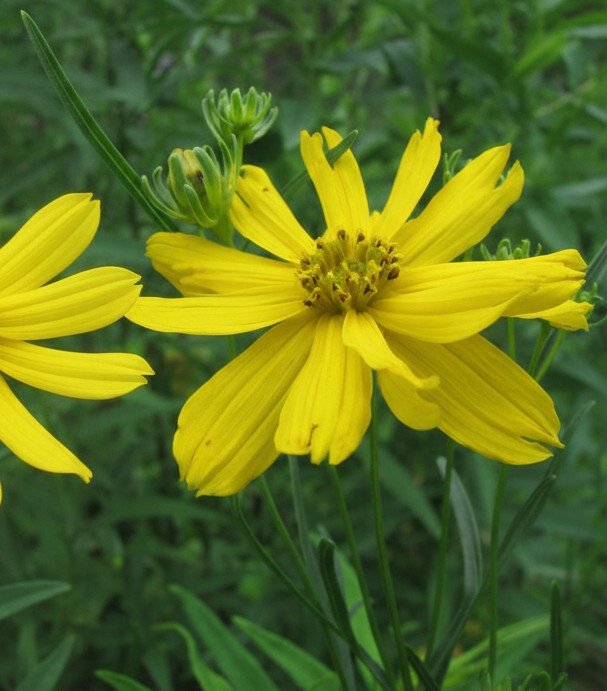
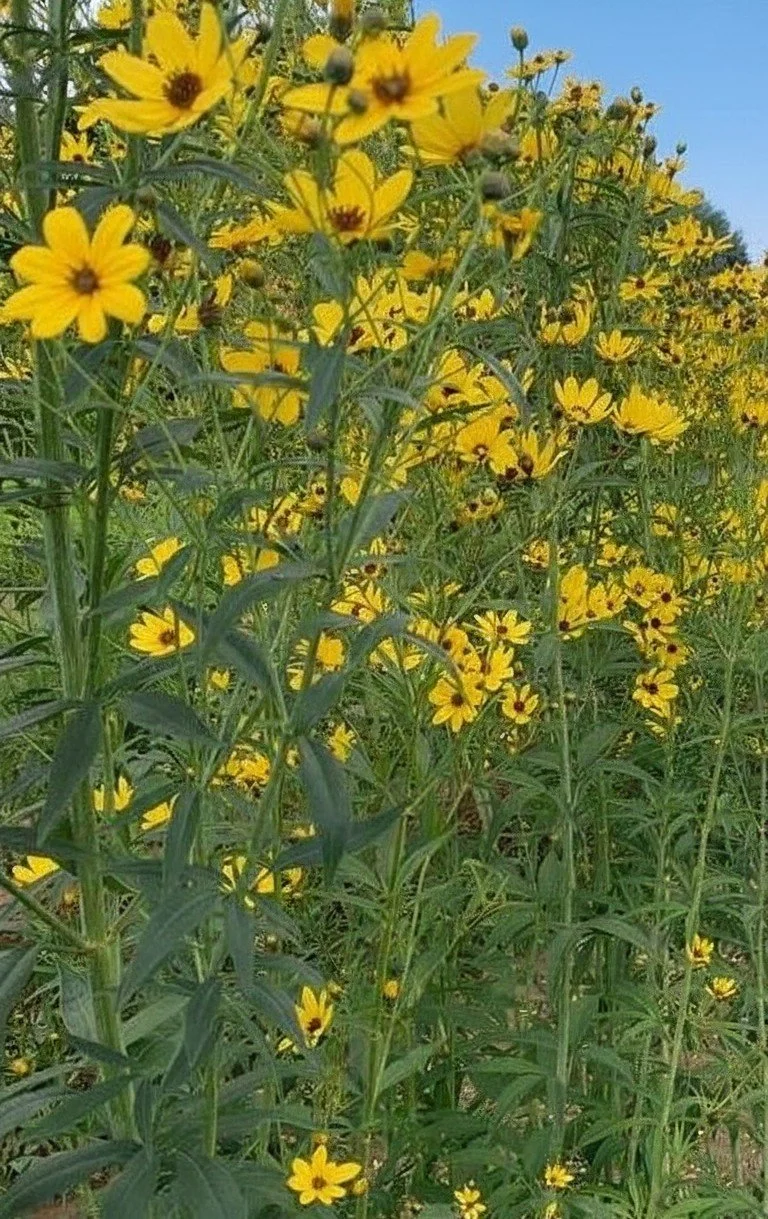
A long-lived and dependable perennial that forms tidy, upright clumps. In mid-summer it boasts bright yellow flowers for 3-4 weeks. Blooms are about 1-2 inches across and has deeply textured palmate leaves. While many other Coreopsis species can look a bit "wild" or floppy, Prairie Coreopsis is known for its stiff stems and unique, architectural foliage that stays attractive even when the plant isn't in bloom.
Sun Exposure Full Sun to Partial Shade
Water Needs Low to Medium; very drought-tolerant
Soil Type Sand, Loam, or Rocky soil (avoid overly rich or wet soils)
Mature Height 1.5 – 2 feet
Deer Resistance High
Bloom Time June – July
Bloom Color Yellow
Plant Spacing 12 – 18 inches
Unique Foliage: The leaves are deeply divided into three narrow lobes, resembling a bird's foot or a palm. This provides a distinct, "feathery" texture that contrasts beautifully with broad-leafed plants.
Upright Stems: Unlike some cousins that sprawl, this species stays strictly upright. Its stems are very sturdy, meaning it rarely needs staking and handles wind exceptionally well.
Rhizomatous Spreader: It spreads slowly via rhizomes and can potentially overwhelm small landscapes. Please be mindful when planting.
The rhizomes slowly form an underground mat that is excellent for stabilizing dry, sunny slopes and even sand dunes.
Pollinator Variety: The bright yellow, 1- 2 inch wide flowers are a magnet for various butterflies and skippers.
Bee Support: It is a high-value plant for many native bees and is considered a good species by Beekeepers.
Fall Seed Source: Like the "Tickseeds," it produces small, dark seeds that are a favorite for goldfinches and other small songbirds.
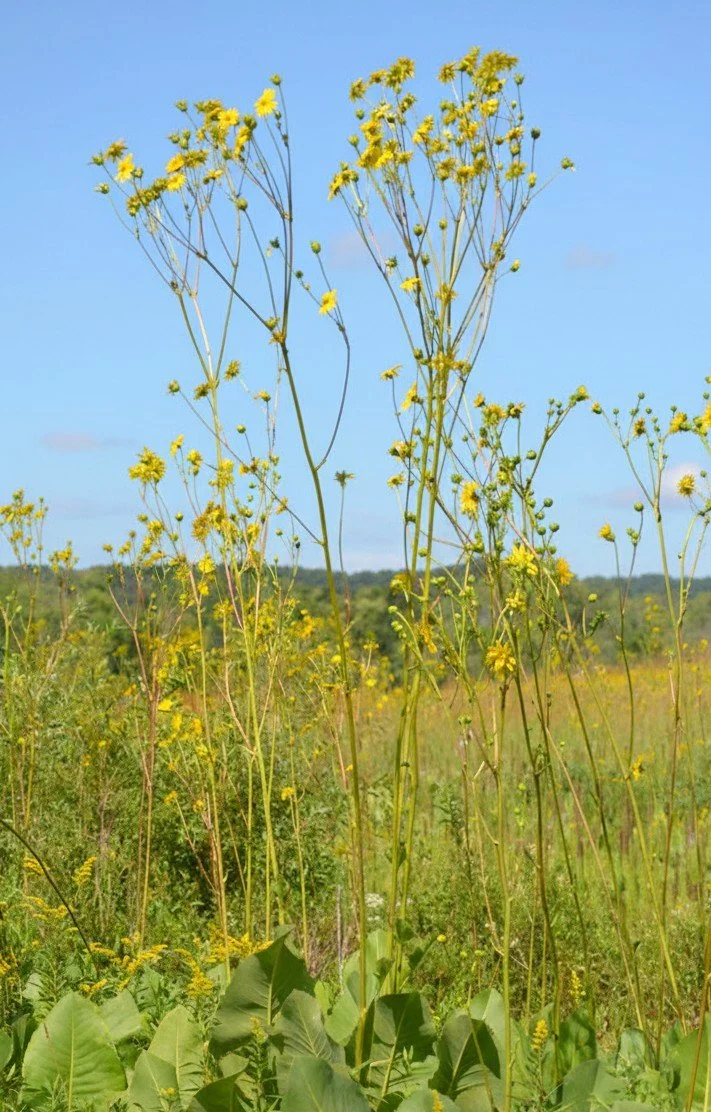
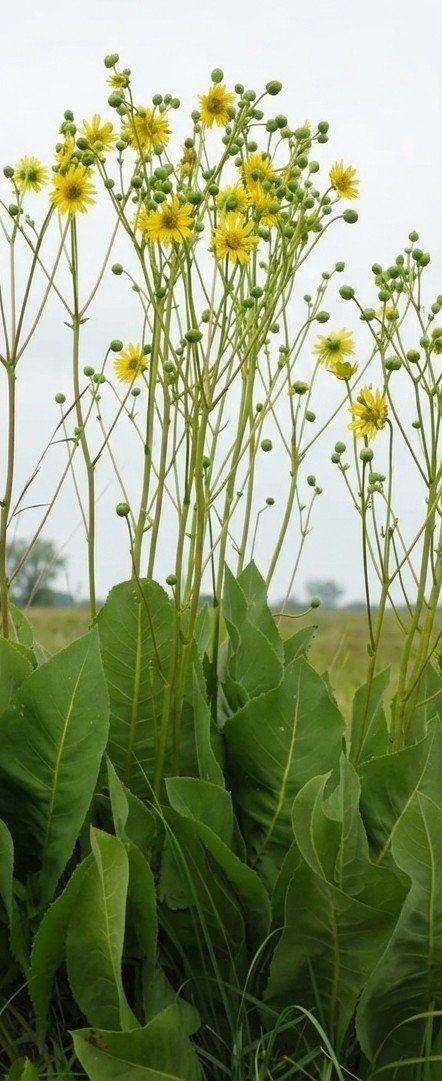
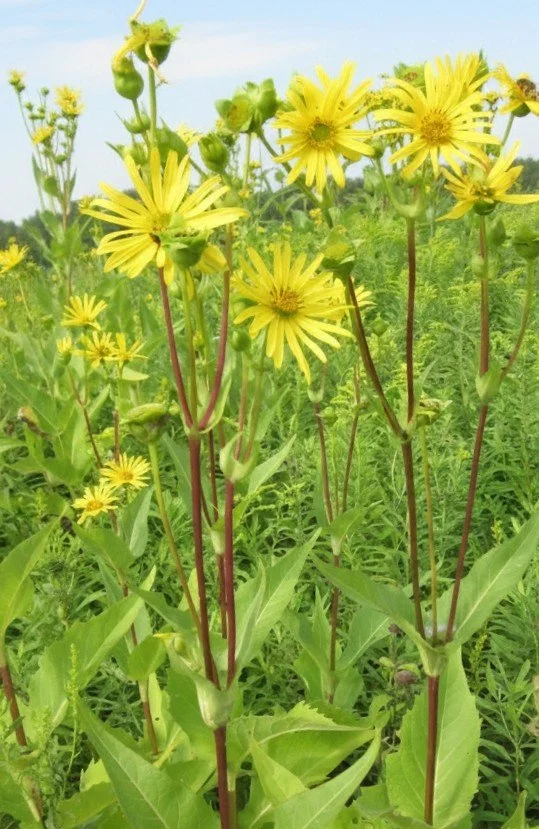
A long-lived, slow-growing giant known for having some of the largest leaves of any native plant. The foliage stays low to the ground in a dramatic clump, while the smooth, leafless flower stalks skyrocket upward, topped with bright, sunflower-like blooms.
Sun Exposure Full Sun to Partial Shade
Water Needs Medium; exceptionally drought-tolerant once established
Soil Type Clay, Loam, Sand or Rocky soil
Mature Height up to 9 feet
Deer Resistance High
Bloom Time July – September
Bloom Color Yellow
Plant Spacing 2 – 4 feet
Massive Leaves: The leaves can grow up to 18” long and 12” wide. They are stiff, leathery, and have a texture like sandpaper. Because they are held vertically to minimize sun exposure, they are incredibly efficient at surviving hot, dry summers.
Stems: Unlike its cousin, the Compass Plant, Prairie Dock has completely smooth, leafless flower stalks.
Roots: It grows a massive taproot that can reach 10–15 feet into the earth. This makes it very drought resistant, but it also means you must pick its forever home carefully, as it cannot be moved once established.
Pollinators: The yellow flowers attract large butterflies, honeybees and bumblebees.
Birds: Because the stalks are so strong and tall, they serve as excellent hunting perches and birds love the seed.
Pro Tip: Plant it at the very back of your border. The massive leaves provide a solid green "wall" at ground level, while the yellow flowers dance high above your New England Aster and Ironweed.
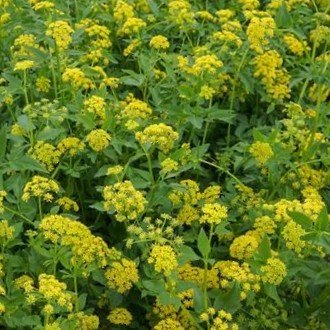
A dependable and cheerful perennial that belongs to the carrot family. It is easily recognized by its flat-topped, lace-like clusters (umbels) of tiny golden flowers. It’s a sturdy plant that brings a bright, airy feel to the garden just as the spring rains are beginning to taper off. It provides a much-needed burst of yellow in the late spring, filling the gap before your Coreopsis and Blazing Stars take the stage.
Sun Exposure Full Sun (preferred) to Partial Shade
Water Needs Low to Medium
Soil Type Adaptable; thrives in Clay, Loam, or Rocky soil
Mature Height 2 feet
Deer Resistance Moderate - High
Bloom Time April - May
Bloom Color Yellow
Plant Spacing 10 – 12 inches
Heart-Shaped Foliage: One of the easiest ways to identify Zizia aptera is by its "unlobed" heart-shaped leaves at the base of the plant.
Flowers: The flowers grow in "umbels," which look like tiny golden umbrellas. This structure provides a delicate, lacy appearance that contrasts beautifully with the heavier, broader leaves of neighboring plants.
Black Swallowtail Host: This is a host plant for the Black Swallowtail butterfly. Their caterpillars love to feed on the foliage.
Early Nectar Source: Because it blooms so early, it is a critical food source for emerging native bees and beneficial predatory insects.
Pollinator Diversity: The flat, open flower clusters make the nectar easily accessible to insects with short mouthparts, such as small flies and beetles that can't reach into deep tubular flowers.
A low-growing, spreading cactus that features flat, fleshy green pads covered in clusters of spines. In early summer, it produces large, waxy, bright yellow flowers (often with a red center) that are absolute magnets for bees. It is a master of adaptation, shriveling up and looking almost "dead" in the winter to survive the freeze, only to puff back up and produce some of the most stunning 3” bright yellow flowers by early summer.
Sun Exposure Full Sun
Water Needs Very Low; extremely drought-tolerant
Soil Type Well-drained Loam, Sand, Gravel, or Rocky/Thin soil
Mature Height 6 – 12 inches
Deer Resistance High
Bloom Time June – July
Bloom Color Yellow
Plant Spacing 6 – 8 inches
Hot & Dry: Prefers full sun and sandy, dry conditions. Good for the driest parts of your native garden.
The "Winter Shrivel": Don't be alarmed if your cactus looks wrinkled and flat in January! It pushes water out of its cells to prevent them from bursting in the cold. It "rehydrates" and stands back up as soon as the ground thaws.
Edible Fruits: After the flowers fade, the plant produces beautiful bright reddish-purple fruits. While they are edible, they are also covered in tiny, hair-like prickles (glochids), so they require careful handling.
Spines & Glochids: It has two types of defenses: the large, obvious needles and the tiny, barbed "fuzz" (glochids) that are actually harder to remove from your skin. A good, thick pair of gloves is a needed for anyone handling this plant.
Pollinators: The wide, bowl-shaped flowers are filled with nectar and pollen. A large variety of bees, butterflies and beetles are highly attracted to this flower
No results match your search. Try removing a few filters.