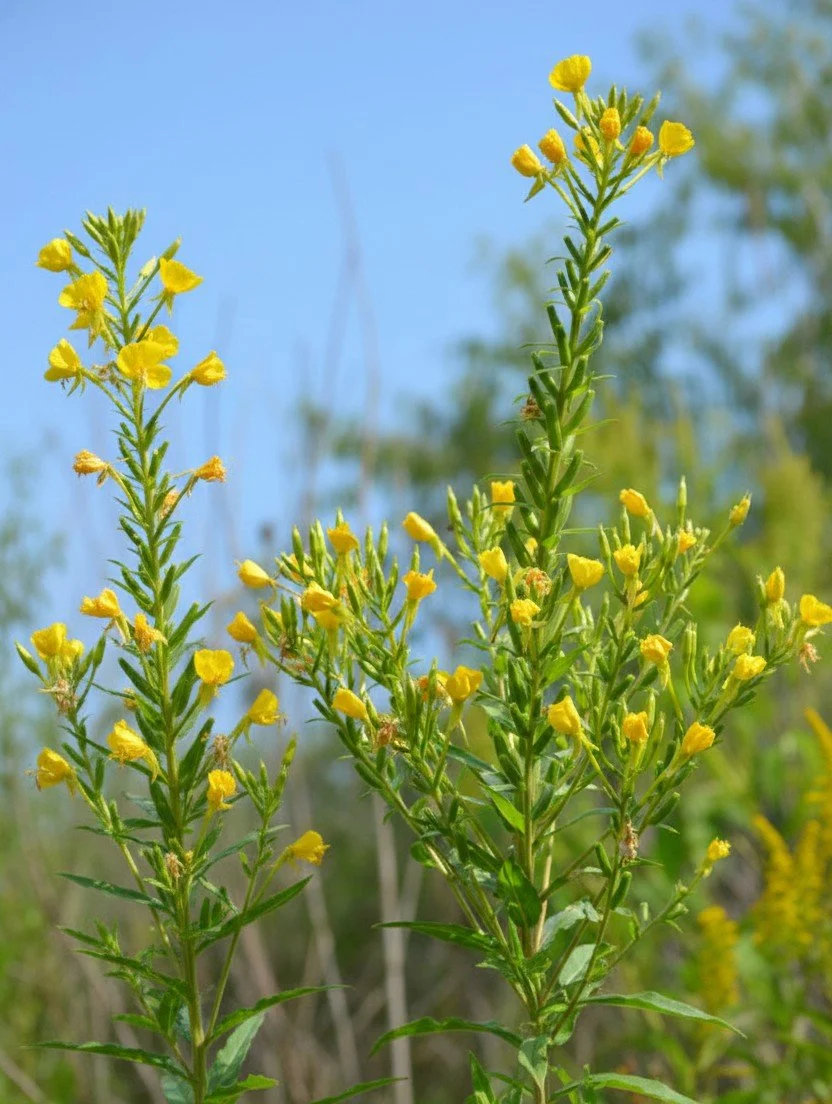
Just like the goldenrod, this plant is a "bridge" species—but while the goldenrod bridges the seasons, the Evening Primrose bridges day and night! While most flowers wake up with the sun, this native waits for the twilight. It features bowl-shaped yellow blossoms that unfurl in late afternoon and evening.
Sun Exposure Full Sun to Partial Shade
Water Needs Low to Medium; very drought-tolerant
Soil Type Adaptable; prefers Sandy, Rocky, or Lean soil
Mature Height 4 – 6 feet
Deer Resistance Low - Moderate
Bloom Time July – October
Bloom Color Yellow
Plant Spacing 1 – 2 feet
Long Bloom Time: It is one of the last natives blooming into late fall.
Hardy & Resilient: It thrives in "neglected" areas where other plants struggle. It is highly resistant to pests and can handle poor, dry soils with ease.
Polinators: Although labeled as a weed by some, it is a very important native plant with a long bloom time. It benefits many different kinds of bees, nectaring moths, butterfiles, and caterpillars.
The "Night Shift": The flowers attract sphinx moths (hawk moths), which are nocturnal.
Hummingbirds: Though they open late, the flowers stay open long enough for hummingbirds to visit them for a breakfast snack in the early morning.
Garden Note: Common Evening Primrose is a prolific self-seeder. Because it is a biennial, it relies on dropping seeds to ensure a new generation blooms every year. If you want to limit its spread, simply snip off the seed pods after the flowering season is finished!
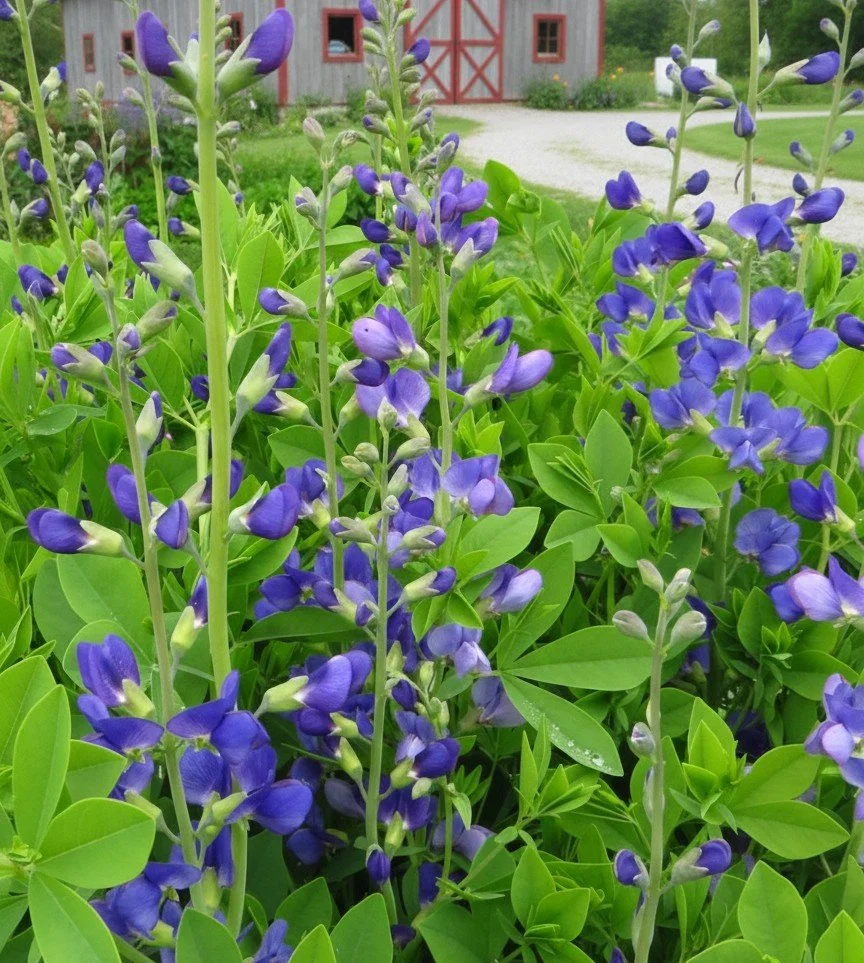
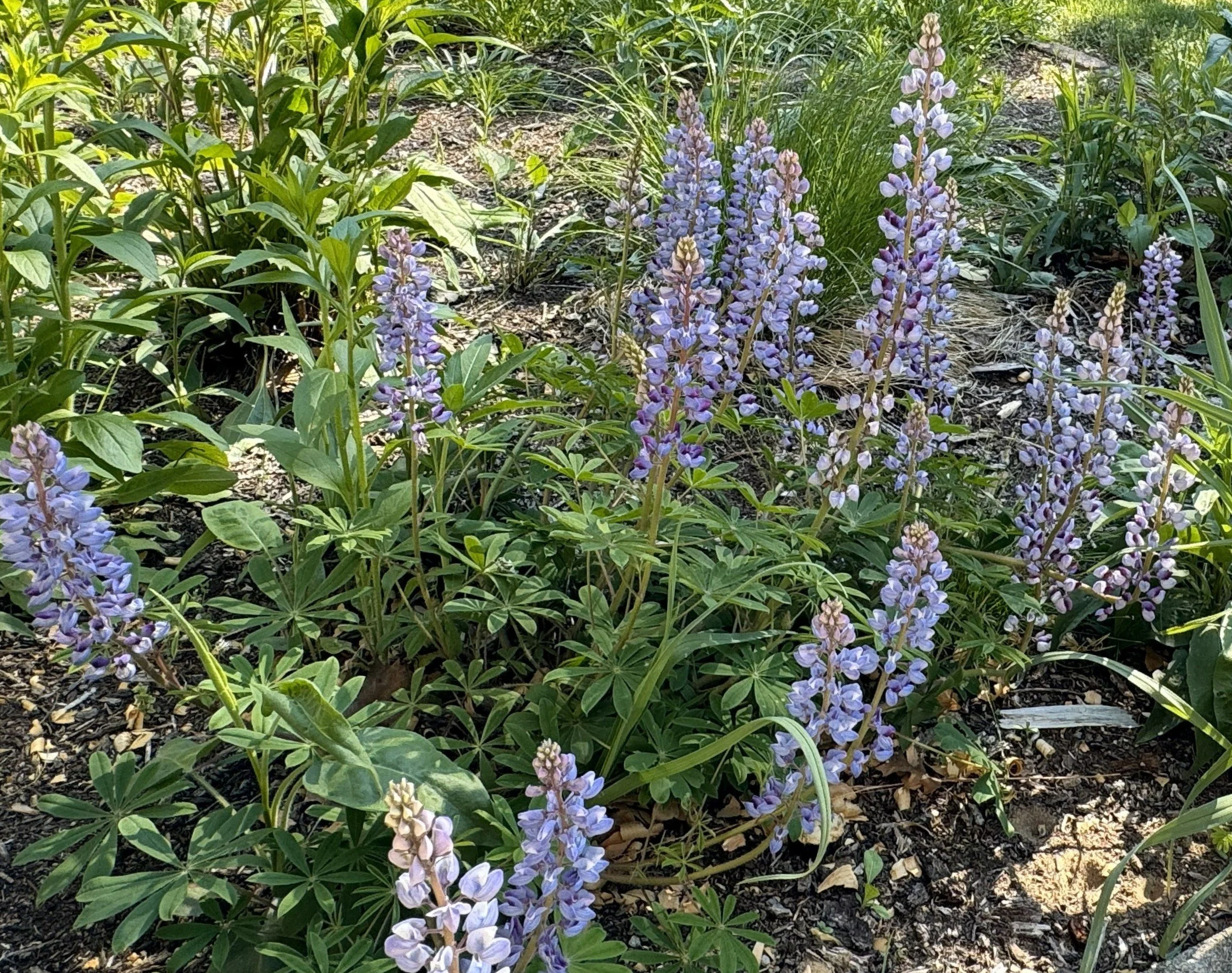
An elegant, long-lived native that looks more like a small shrub than a typical flower. In late spring, it produces tall spikes of deep indigo-blue flowers that resemble Lupine, providing a cool contrast to the yellow-heavy palette of the summer garden. It is often called the "Perennial of the Year" for good reason—it is practically indestructible and offers a shrub-like presence without the woody maintenance.
Sun Exposure Full Sun to Partial Shade (Best in Full Sun)
Water Needs Low to Medium; exceptionally drought-tolerant once established
Soil Type Adaptable; thrives in Clay, Loam, Sand, or Rocky soil
Mature Height 3 – 4 feet
Deer Resistance High
Bloom Time May – July
Bloom Color Blue
Plant Spacing 2 – 3 feet
Deep-Rooted Longevity: It features one of the deepest taproots of any native plant, making it nearly impossible to kill once established—but also very difficult to move! Pick its "forever home" carefully.
It will spend most of the first couple years developing mostly below ground
Shrub-like Structure: While it dies back to the ground in winter, it regrows into a dense, mounded shape with beautiful blue-green, clover-like foliage that stays attractive all summer long.
Because of it’s wide form, generous spacing is recommended.
Bees: The "pea-shaped" flowers are specifically designed for heavy-bodied bees, like Bumblebees, who are strong enough to push the petals open to reach the nectar.
Butterfly Host: It serves as a vital nursery for several butterfly species, including the Wild Indigo Duskywing and the Frosted Elfin.
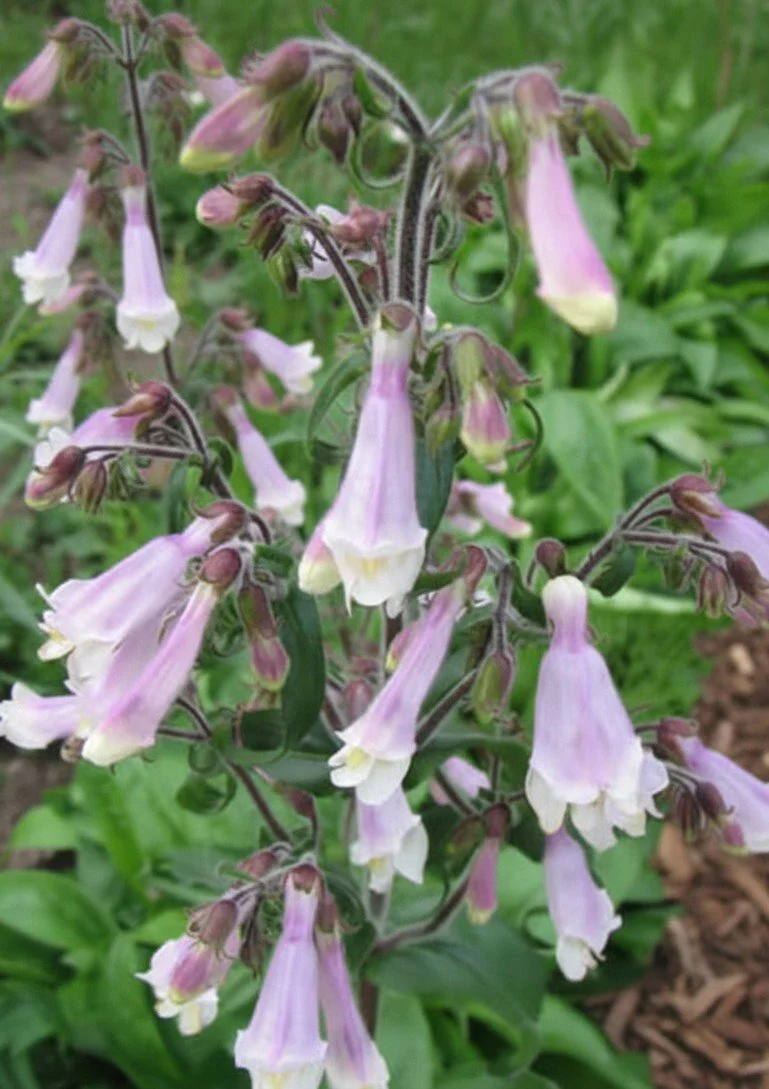
Blooming from May-June, Hairy Beardtongue attracts several types of bees, hummingbirds and butterflies. It is one of the more shade-tolerant Penstemons, making it a versatile choice for those tricky "transition" spots in your landscape. If you’re a fan of the "polite" nature of the Foxglove Beardtongue but want something a bit shorter and more textured for the front of your garden, Hairy Beardtongue is a perfect choice.
Sun Exposure Full Sun, Partial Shade, Shade
Water Needs Low to Medium; very drought-tolerant once established
Soil Type Well-drained Sand, Loam, or Rocky soil
Mature Height 18 inches
Deer Resistance Moderate - High
Bloom Time May – June
Bloom Color Lavendar, Pink
Plant Spacing 10 - 12 inches
Low-Profile: Reaching only about 1–2 feet, it is significantly shorter than its Foxglove cousin, making it an ideal "front-of-the-border" plant.
Blooms: The trumpet-shaped flowers range in color from lavenders and pink to white. The long, thin blooms have five petals with a “hairy” protruding lip.
Rock Garden Champion: Because it thrives in well-drained, rocky, or even poor soils, it is a great choice for rock gardens or edges where other plants might struggle with the heat.
Early Pollinator Resource: It blooms in late spring, providing a critical early-season nectar source for native bees and butterflies before the summer begins.
Hummingbirds: Just like its taller relatives, the tubular flowers are a magnet for Ruby-throated Hummingbirds.
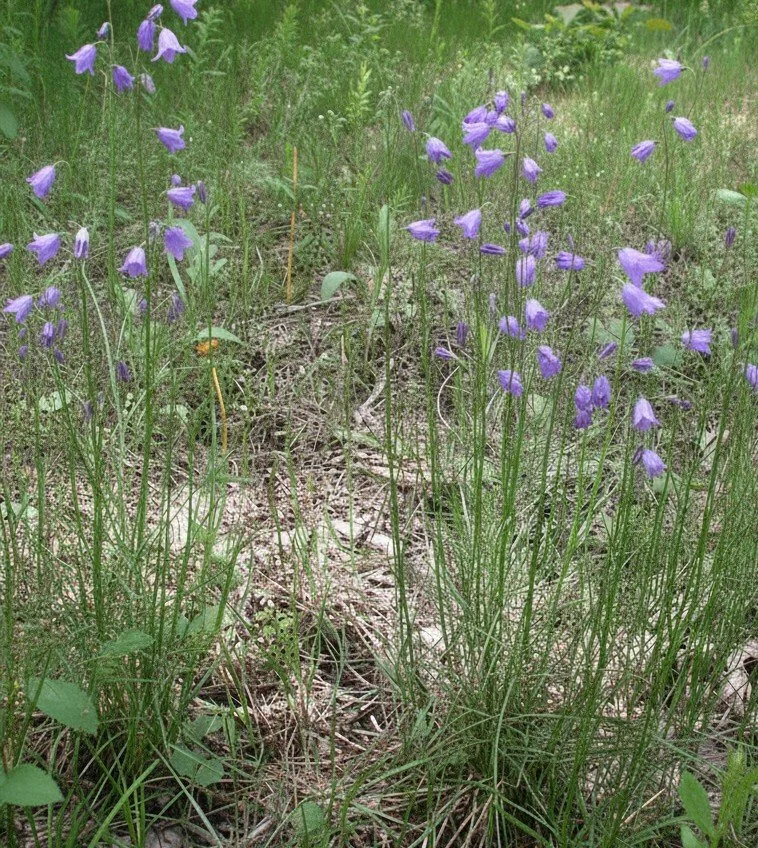
Harebell looks incredibly delicate with its wiry stems and nodding bells, but don’t let the looks fool you—this is a rugged survivor that can grow in the toughest of conditions. Known for its paper-thin, violet-blue bells that seem to float in the air, the Harebell is a versatile perennial that adds a touch of "fairytale" charm to the garden. It is famously long-blooming, often starting in early summer and continuing until the first hard frost.
Sun Exposure Full Sun to Partial Shade
Water Needs Low to Medium; very drought-tolerant once established
Soil Type Well-drained Loam, Sand, Rocky, or Gravelly soil
Mature Height 12 inches
Deer Resistance Moderate
Bloom Time June – September
Bloom Color Purple
Plant Spacing 6 – 8 inches
Unique Foliage: Its species name, rotundifolia, refers to its round basal leaves that appear in early spring. However, as the flower stalks rise, those leaves wither, leaving only very thin, grass-like foliage that makes the flowers look like they are hovering.
Resilient: Despite their "hair-like" stems, Harebells are remarkably wind-resistant and can handle harsh, exposed sites. They are the perfect choice for a rock garden or a stony edge.
Does well in dry sand, rocky crevices and gravelly soils.
Bloom Time: While many natives have a short window, the Harebell will often keep producing new bells for several months, especially if the spent blossoms are dead-headed.
Polinators: It is a favorite of small native bees..
Hummingbirds: Though small, hummingbirds are often seen investigating the blue bells during their mid-summer rounds.
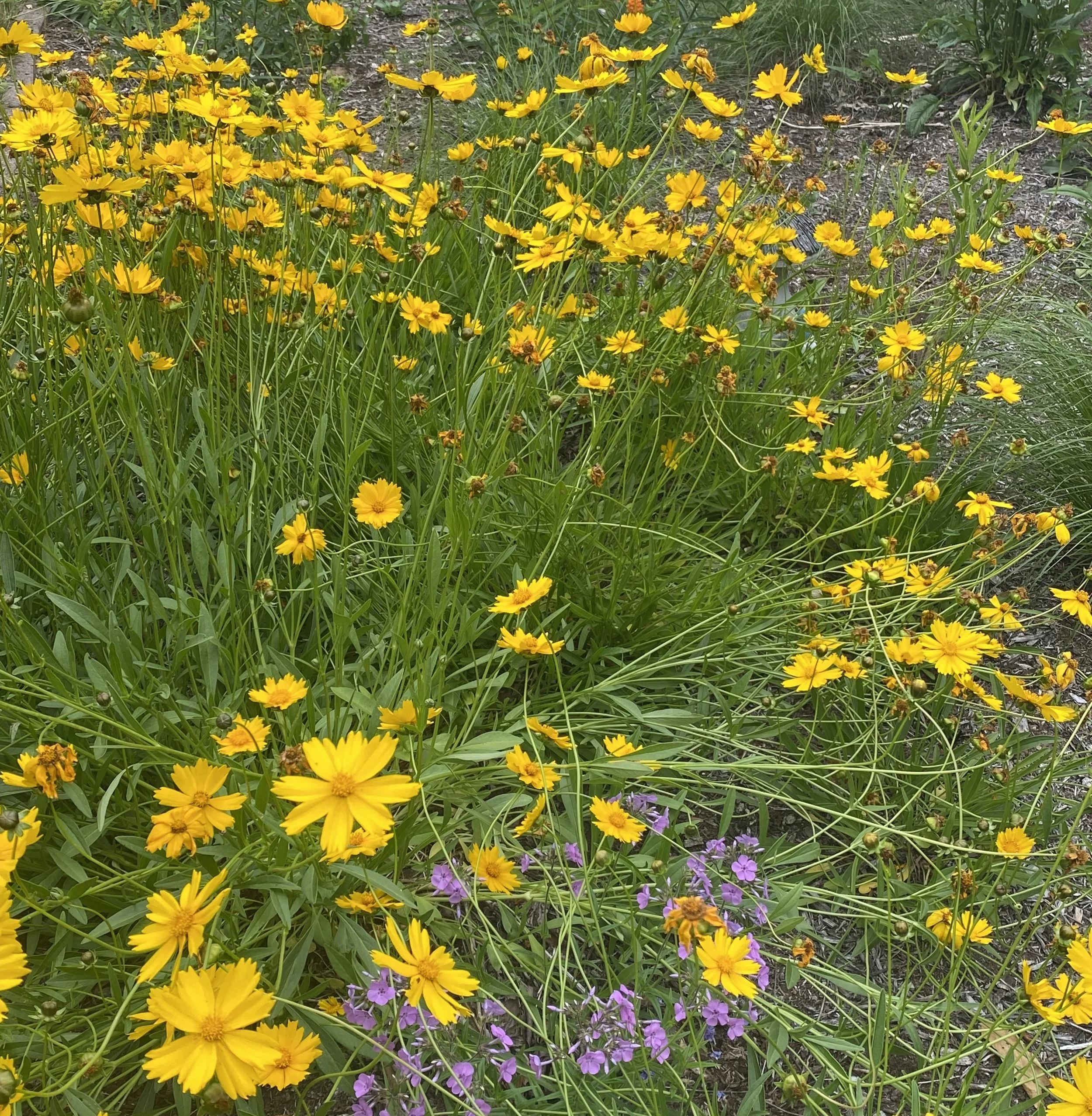
A bright, sunny perennial known for its abundance of daisy-like, yellow flowers with jagged-edged petals. It is exceptionally hardy and is often one of the first "prairie" plants to bloom, providing a long-lasting splash of color in early summer. It is one of the most popular and easiest-to-grow natives, bridging the gap between your late-spring bloomers.
Sun Exposure Full Sun
Water Needs Low; very drought-tolerant
Soil Type Well-drained Clay, Loam, Sand, Rocky, or Lean/Poor soil
Mature Height 2 feet
Deer Resistance Moderate - High
Bloom Time May – August
Bloom Color Yellow
Plant Spacing 10 – 16 inches
The "Sand Tickseed": Its nickname comes from its ability to thrive in poor, sandy, or gravelly soils where other plants might struggle. It actually prefers "lean" soil—if the soil is too rich, it may grow too quickly and flop over. Many think the seeds look like ticks.
Self-Seeding Beauty: While it is a perennial, it is also a prolific self-seeder. It will fill in gaps in your garden beds naturally, creating a lush, meadow-like appearance over time.
Promptly dead-head spent blossoms to prolong the blooming period.
Pollinators: The flat, open faces of the flowers make it easy for a wide variety of butterflies, and native bees to seen regularly. As many as 22 native bee species rely on Coreopsis plants.
Songbird Seeds: As the name "Tickseed" implies, the small, dark seeds resemble ticks. These seeds are a favorite snack for goldfinches and other small birds in the late summer
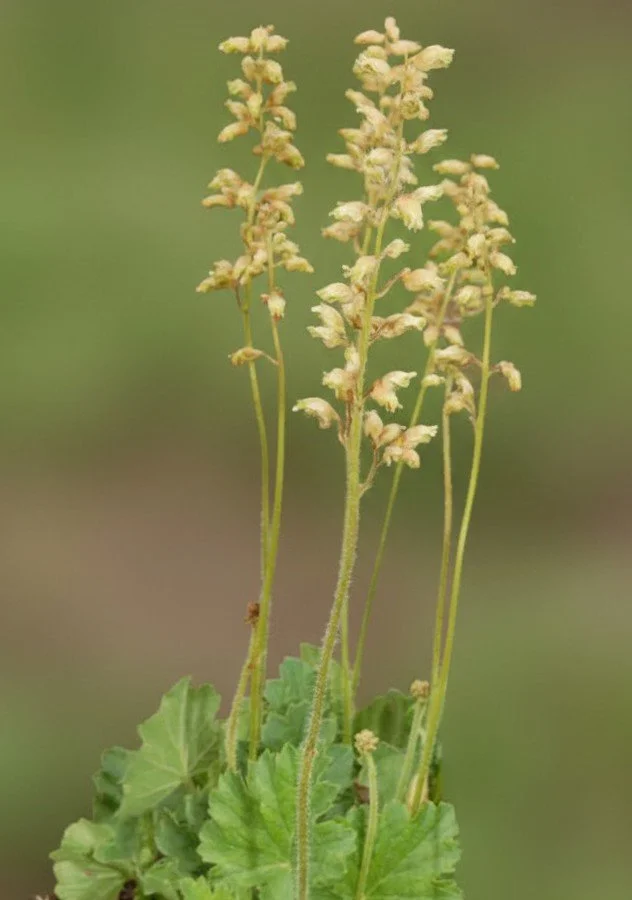
A mound-forming perennial prized for its decorative, curley-edged foliage with quite hairy undersides. In late spring, it sends up slender, leafless wands, often reaching 2-3 feet tall, topped with tiny, bell-shaped flowers that are a subtle blend of green, cream, and reddish-brown. The exserted stamens stick out like orange tongues from under the upper petal’s lip.
Sun Exposure Full Sun to Partial Shade
Water Needs Low to Medium
Soil Type Well-drained Loam or Sand or Gravely soil
Mature Height 1 – 2 feet (Foliage stays low; flower spikes reach higher)
Deer Resistance High
Bloom Time May – July
Bloom Color Pale Green or Cream
Plant Spacing 8 – 12 inches
Soil Moisture: It is tolerant of a wide range of soil moisture, but prefers areas with sand, gravel or other materials that allow moisture to easily drain from the planting site.
Roots: The roots are relatively shallow and may benefit from having winter mulch applied..
Early Pollinators: The tiny, bell-shaped flowers are specifically shaped for small native bees and flies that emerge in the late spring.
Hummingbirds and Butterflies: A variety of butterflies and hummingbirds are attracted to the bell-shaped blossoms.
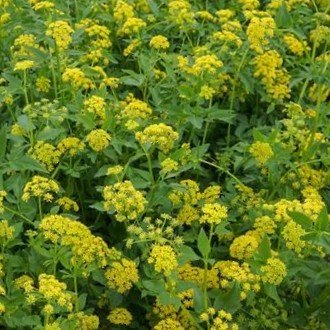
A dependable and cheerful perennial that belongs to the carrot family. It is easily recognized by its flat-topped, lace-like clusters (umbels) of tiny golden flowers. It’s a sturdy plant that brings a bright, airy feel to the garden just as the spring rains are beginning to taper off. It provides a much-needed burst of yellow in the late spring, filling the gap before your Coreopsis and Blazing Stars take the stage.
Sun Exposure Full Sun (preferred) to Partial Shade
Water Needs Low to Medium
Soil Type Adaptable; thrives in Clay, Loam, or Rocky soil
Mature Height 2 feet
Deer Resistance Moderate - High
Bloom Time April - May
Bloom Color Yellow
Plant Spacing 10 – 12 inches
Heart-Shaped Foliage: One of the easiest ways to identify Zizia aptera is by its "unlobed" heart-shaped leaves at the base of the plant.
Flowers: The flowers grow in "umbels," which look like tiny golden umbrellas. This structure provides a delicate, lacy appearance that contrasts beautifully with the heavier, broader leaves of neighboring plants.
Black Swallowtail Host: This is a host plant for the Black Swallowtail butterfly. Their caterpillars love to feed on the foliage.
Early Nectar Source: Because it blooms so early, it is a critical food source for emerging native bees and beneficial predatory insects.
Pollinator Diversity: The flat, open flower clusters make the nectar easily accessible to insects with short mouthparts, such as small flies and beetles that can't reach into deep tubular flowers.
A low-growing, spreading cactus that features flat, fleshy green pads covered in clusters of spines. In early summer, it produces large, waxy, bright yellow flowers (often with a red center) that are absolute magnets for bees. It is a master of adaptation, shriveling up and looking almost "dead" in the winter to survive the freeze, only to puff back up and produce some of the most stunning 3” bright yellow flowers by early summer.
Sun Exposure Full Sun
Water Needs Very Low; extremely drought-tolerant
Soil Type Well-drained Loam, Sand, Gravel, or Rocky/Thin soil
Mature Height 6 – 12 inches
Deer Resistance High
Bloom Time June – July
Bloom Color Yellow
Plant Spacing 6 – 8 inches
Hot & Dry: Prefers full sun and sandy, dry conditions. Good for the driest parts of your native garden.
The "Winter Shrivel": Don't be alarmed if your cactus looks wrinkled and flat in January! It pushes water out of its cells to prevent them from bursting in the cold. It "rehydrates" and stands back up as soon as the ground thaws.
Edible Fruits: After the flowers fade, the plant produces beautiful bright reddish-purple fruits. While they are edible, they are also covered in tiny, hair-like prickles (glochids), so they require careful handling.
Spines & Glochids: It has two types of defenses: the large, obvious needles and the tiny, barbed "fuzz" (glochids) that are actually harder to remove from your skin. A good, thick pair of gloves is a needed for anyone handling this plant.
Pollinators: The wide, bowl-shaped flowers are filled with nectar and pollen. A large variety of bees, butterflies and beetles are highly attracted to this flower
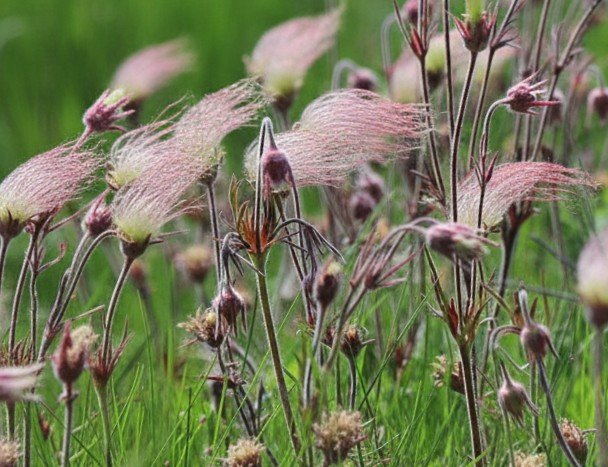
A distinctive and hardy ground-covering perennial. It’s a low-growing charmer that transforms after it blooms, turning from nodding pink bells into feathery, smoky pink seed heads.
Sun Exposure Full Sun to Partial Shade
Water Needs Low; prefers well-drained conditions
Soil Type Well-drained Loam, Sand, Rocky, or Gravelly soil
Mature Height 8 inches
Deer Resistance High
Bloom Time April – June
Bloom Color Pink/Red
Plant Spacing 6 – 8 inches
Nodding Bells: Before the "smoke" appears, each stem holds three small, reddish-pink bells that hang downward.
The "Smoke" Effect: After the nodding pink flowers are pollinated, the styles elongate into 2-inch long, feathery pink plumes. In a mass planting, these look like a low-lying pink cloud or "smoke" hovering over the ground.
Fern-like Foliage: The leaves are deeply serrated, soft, and resemble tiny fern fronds.
Slow Spreading: Prairie Smoke will slowly spread by rhizome in well-drained soils to form a ground cover and work well in in dry rock gardens.
Early Season Nectar: It is one of the earliest sources of food for a variety of bees and other pollinators.
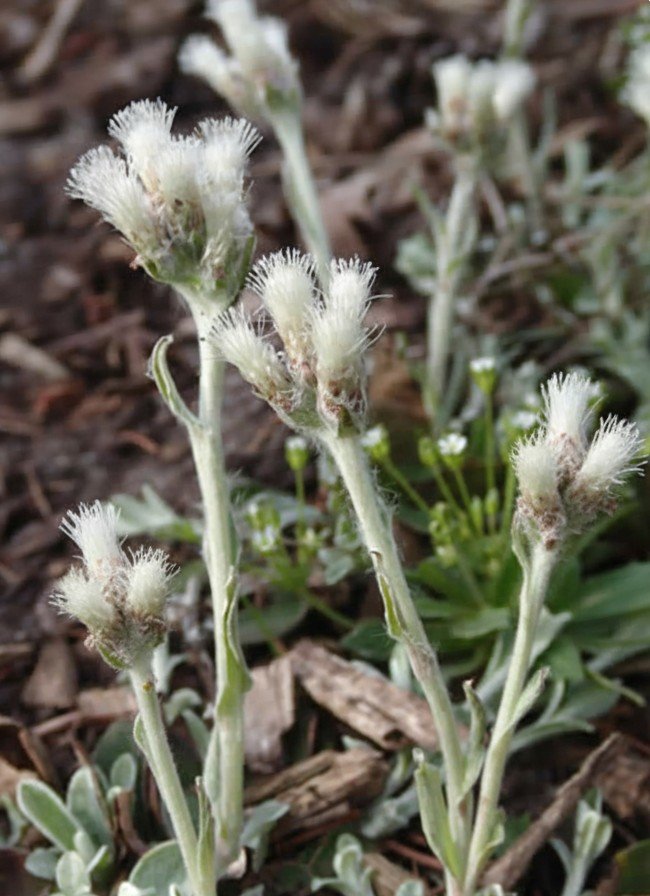
A member of the Aster family, Pussytoes is named for its soft, fuzzy flower heads that resemble a kitten’s paw. This plant is a rugged specialist for the difficult, dry spots in a landscape where other plants might struggle to take hold, such as in a rock garden. This plant is usually grown for it’s velvety leaves, not it’s white flower.
Sun Exposure Full Sun to Partial Shade
Water Needs Low; highly drought-tolerant
Soil Type Needed Well-drained Sand, Gravel, Rocky, or Lean/Poor soil
Mature Height 1–4 inches (foliage); up to 12 inches (flowers)
Deer Resistance High (parts of the plant are poisonous to deer and rabbits)
Bloom Time April – June
Bloom Color White
Plant Spacing 6 – 12 inches
Ground Cover: This plant spreads via stolons (above-ground runners) to create a tight, weed-suppressing carpet. It is an excellent native alternative to non-native groundcovers.
Silver Foliage: The leaves grow at ground level and are covered in tiny white hairs, giving the plant a soft, silvery-gray appearance.
Early Season "Paws": In mid-spring, fuzzy white-to-pinkish flower clusters rise above the foliage on slender stalks. Their unique texture is one of the earliest signs of life in a native rock garden.
Drought tolerant: Pussytoes thrives in "poor" soil. In fact, if the soil is too rich or heavily fertilized, the plant may become leggy or lose its tight, mat-forming habit. It loves the neglected corners of the yard.
Host Plant: Pussytoes is a critical host plant for the American Lady butterfly (Vanessa virginiensis).
No results match your search. Try removing a few filters.