
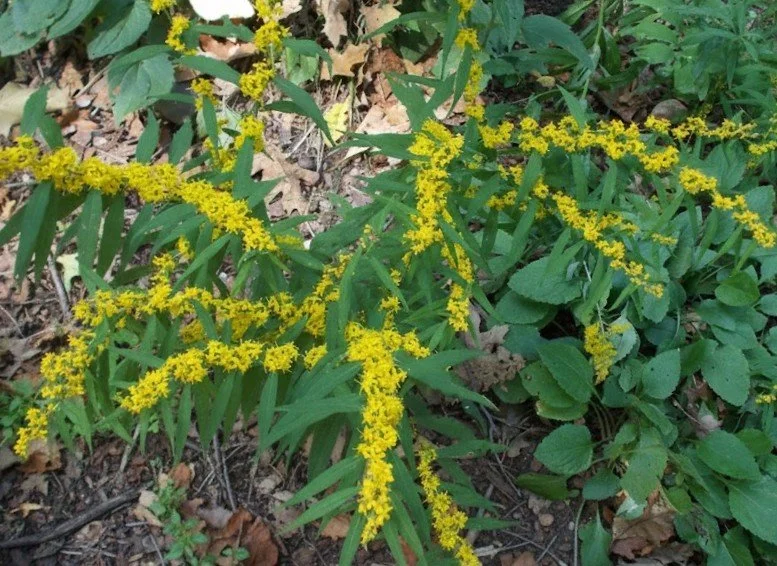
Unlike the sun-loving goldenrods of open fields, Blue-stemmed Goldenrod (also known as Wreath Goldenrod) is adapted for the forest floor. It is easily identified by its distinctive, arching stems that take on a unique dark, somewhat bluish tone. Rather than a large plume at the tip, this species produces dainty clusters of bright yellow flowers tucked into the leaf axils along the length of the stem. This gives the plant a graceful, wand-like appearance that brightens up the deep shade of a woodland garden in the late fall.
Sun Exposure Part Shade to Full Shade
Water Needs Medium; well-drained
Soil Type Loam, Sand
Mature Height 2 to 3 feet
Deer Resistance High
Bloom Time August – October
Bloom Color Yellow
Plant Spacing 2 to 3 feet
Non-Aggressive: Unlike some of its cousins, Blue-stemmed Goldenrod is well-behaved and clump-forming, making it safe for smaller garden beds.
Distinctive Color: The smooth, wiry stems provide a beautiful dark contrast to the vivid yellow flowers.
Fall Brightness: It provides a necessary pop of "golden hour" color to shady corners when most other shade plants have finished blooming.
Critical Pollinator Resource: Provides essential nectar and pollen for late-season bees and migrating Monarch butterflies.
Specialist Bees: Supports several species of specialist bees that rely solely on goldenrods for their survival.
*Goldenrods are often blamed for the cause of hayfever, but this is not the case. Their pollen is large and sticky and cannot become airborne to make it into your sinuses. The large, sticky pollen is great for adhering to the bodies of visiting insects and are a vitally important to be included in landscapes.
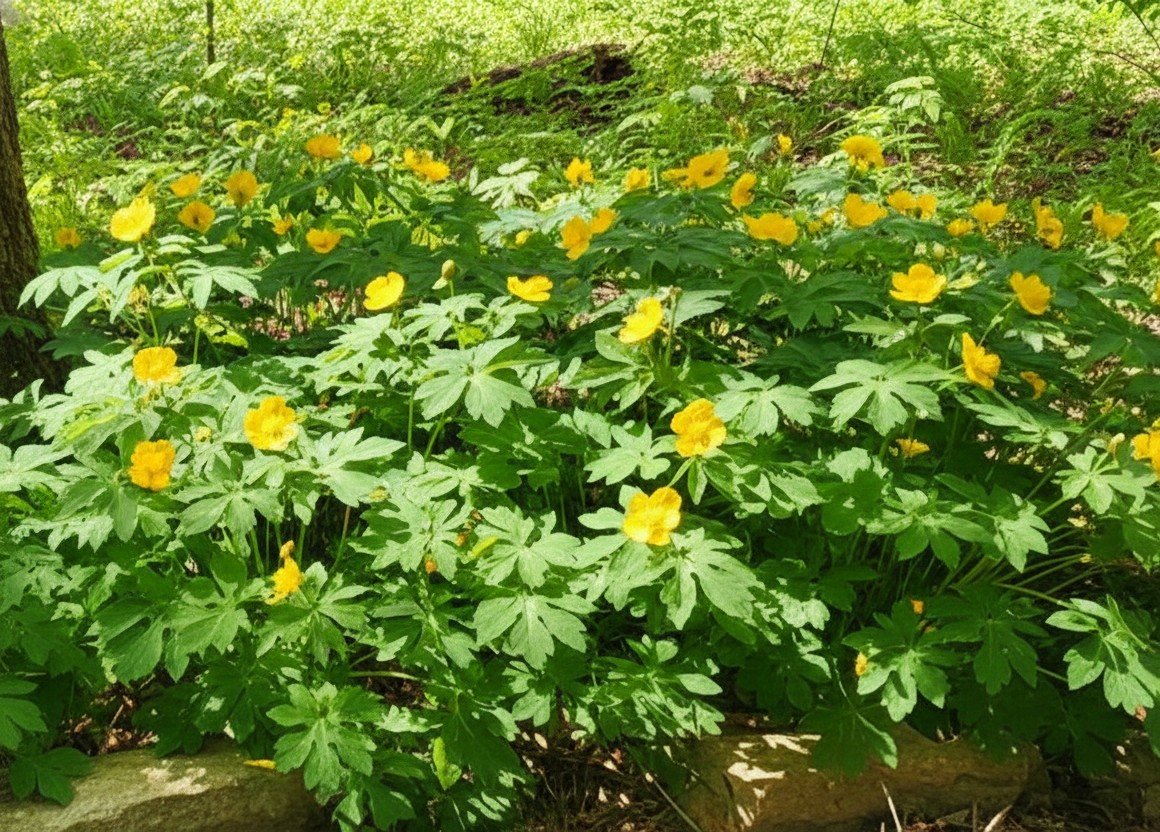
Often called the Celandine Poppy, the Wood Poppy is a beacon of brilliant color for the spring woodland garden. This native perennial is famous for its large, four-petaled flowers in a stunning shade of buttercup-yellow. A standout feature of this plant is its ornamental seed pods—puffy, nodding, and covered in soft hairs, they look like tiny hanging lanterns. It is an exceptionally easy-to-grow native that thrives in those tricky shaded spots where other plants might struggle, creating a cheerful, sun-drenched look even in the deepest shadows.
Sun Exposure Part Shade to Full Shade
Water Needs Medium to High; likes consistent moisture
Soil Type Rich, moist Loam
Mature Height 1 foot
Deer Resistance Moderate
Bloom Time April – May
Bloom Color Yellow
Plant Spacing 10 to 12 inches
Black Walnut Tolerant
Luminous Spring Blooms: Produces 2-inch wide, golden-yellow flowers that stand out against the dark greens of a shade garden.
Textured Groundcover: The bold, fern-like leaves create a mounding habit that fills in beautifully under the canopy of trees.
Self-Naturalizing: It is a prolific seeder in ideal conditions, making it perfect for gardeners who want to establish a sweeping "carpet" of gold over time.
Pollinator Support: The pollen-rich flowers are a magnet for native bees, including bumblebees and early-emerging mining bees.
Ant Partnership: Like Wild Ginger, Wood Poppy seeds have a fatty "treat" (elaiosome) that encourages ants to carry and plant them throughout your garden.
Mammal Food Source: While the foliage is generally avoided by deer and rabbits, the seeds are a valued snack for woodland mice and chipmunks.
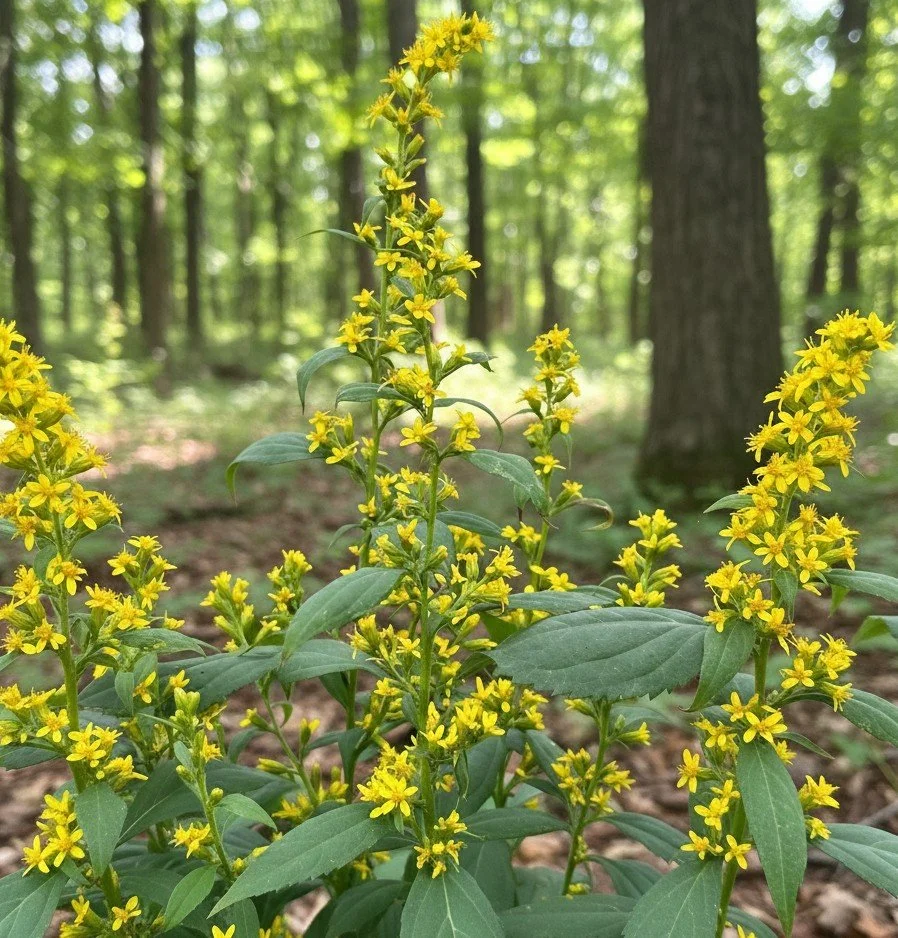
Unlike many of its sun-loving relatives, this native perennial thrives in the cool, dappled light of the forest floor. It earns its name from its unique, wiry stems that "zig-zag" back and forth between the leaves. Starting in late summer and continuing through autumn, the stems are adorned with delicate, bright yellow flower clusters that seem to burst from the leaf axils. The leaves themselves are broad, ovate, and sharply toothed, providing a coarse texture that contrasts beautifully with finer ferns or sedges.
Sun Exposure Part Shade to Full Shade
Water Needs Medium; prefers consistent moisture but tolerates dry spells
Soil Type Average, well-drained Loam or Clay-loam
Mature Height 2 to 3 feet
Deer Resistance High
Bloom Time August – October
Bloom Color Yellow
Plant Spacing 1 to 2 feet
Black Walnut Tolerant
Shade-Loving Brilliance: One of the few goldenrods that will bloom in shade, making it essential for brightening dark corners.
Pollinator Powerhouse: A critical late-season nectar source that helps bees and butterflies stock up for winter.
Potentially Aggressive spreader: May not be suited for small landscapes because of spreading. Keep this in mind when picking a planting location.
Butterfly Favorite: Highly attractive to migrating Monarchs and resident hairstreak butterflies.
Bird Food: The seeds are often consumed by goldfinches and other small songbirds during the winter months.
Host Plant: Supports several species of specialized moths including the Wavy-Lined emerald and Green Leuconycta.
*Goldenrods are often blamed for the cause of hayfever, but this is not the case. Their pollen is large and sticky and cannot become airborne to make it into your sinuses. The large, sticky pollen is great for adhering to the bodies of visiting insects and are a vitally important to be included in landscapes.
No results match your search. Try removing a few filters.