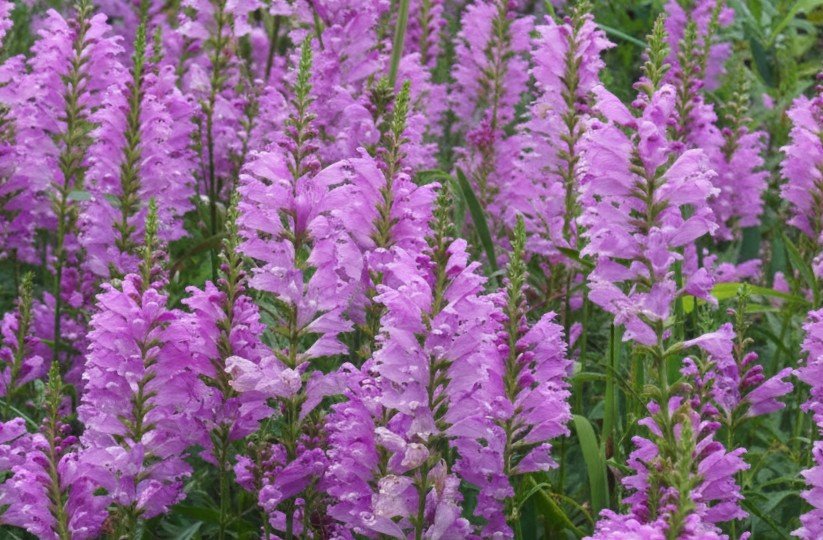
A member of the mint family, this plant is famous for its "obedient" flowers—if you bend a flower to the left or right, it will stay there (at least temporarily). It produces striking, snapdragon-like spikes of pink to lavender flowers that bloom from the bottom up.
Sun Exposure Full Sun to Partial Shade
Water Needs Medium; prefers consistent moisture but can handle dry spells
Soil Type Adaptable; thrives in Clay, Loam, or Sand
Mature Height 3 – 4 feet
Deer Resistance Moderate
Bloom Time August – September
Bloom Color Pink
Plant Spacing 1 – 2 feet
Vertical Accent: The square stems are incredibly sturdy and topped with 10-inch long spikes of flowers.
Vigorous Spreader: This plant spreads via rhizomes. In rich, moist soil, it can be quite assertive. It is perfect for filling a large area quickly but may require thinning every few years to keep it in its "assigned" layer. Please be mindful when choosing your planting site.
Hummingbirds: The tubular shape of the flowers are perfectly evolved for the beak of a Ruby-throated Hummingbird. They are one of the primary visitors to this plant in late summer.
Bumblebee Favorite: Large bees love to "crawl" inside the blossoms to reach the nectar, often emerging covered in white pollen.
Late-Season Support: Because it blooms into fall, it provides one of the last high-energy meals for pollinators preparing for winter or migration.
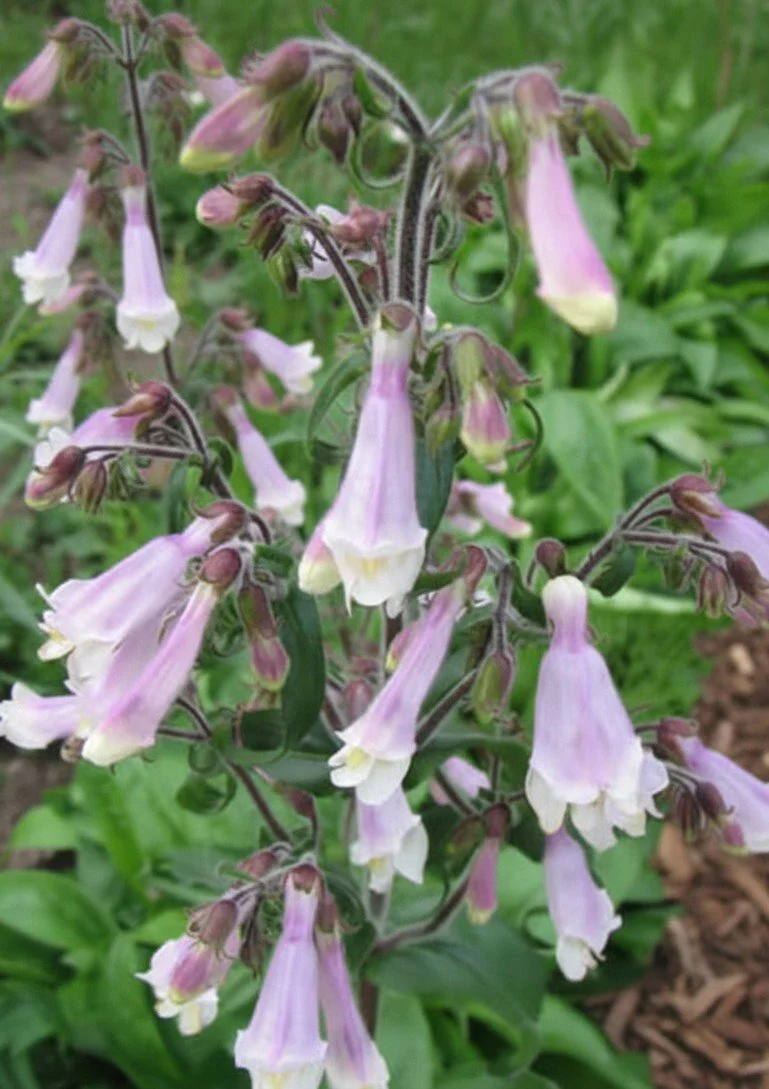
Blooming from May-June, Hairy Beardtongue attracts several types of bees, hummingbirds and butterflies. It is one of the more shade-tolerant Penstemons, making it a versatile choice for those tricky "transition" spots in your landscape. If you’re a fan of the "polite" nature of the Foxglove Beardtongue but want something a bit shorter and more textured for the front of your garden, Hairy Beardtongue is a perfect choice.
Sun Exposure Full Sun, Partial Shade, Shade
Water Needs Low to Medium; very drought-tolerant once established
Soil Type Well-drained Sand, Loam, or Rocky soil
Mature Height 18 inches
Deer Resistance Moderate - High
Bloom Time May – June
Bloom Color Lavendar, Pink
Plant Spacing 10 - 12 inches
Low-Profile: Reaching only about 1–2 feet, it is significantly shorter than its Foxglove cousin, making it an ideal "front-of-the-border" plant.
Blooms: The trumpet-shaped flowers range in color from lavenders and pink to white. The long, thin blooms have five petals with a “hairy” protruding lip.
Rock Garden Champion: Because it thrives in well-drained, rocky, or even poor soils, it is a great choice for rock gardens or edges where other plants might struggle with the heat.
Early Pollinator Resource: It blooms in late spring, providing a critical early-season nectar source for native bees and butterflies before the summer begins.
Hummingbirds: Just like its taller relatives, the tubular flowers are a magnet for Ruby-throated Hummingbirds.
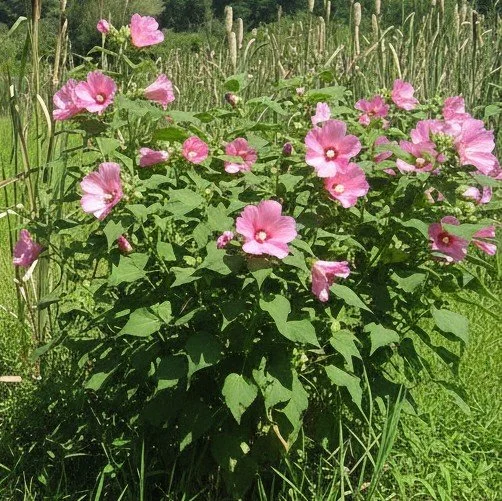
This spectacular native perennial provides a bold, tropical aesthetic with its massive, platter-like blooms. Blossoms reach 6”-10” across with beautiful dark pink centers. While it looks like it belongs in Hawaii, it is a hardy native that adds incredible beauty and height to the mid-to-late summer landscape.
Sun Exposure Full Sun to Partial Shade (Full Sun for best blooms)
Water Needs Medium to High; loves wet "feet" but is surprisingly adaptable
Soil Type Muck, Clay, Loam
Mature Height 4 – 6 feet
Deer Resistance Moderate
Bloom Time July – September
Bloom Color Pink or White
Plant Spacing 2 – 3 feet
Dinner-Plate Blooms: The flowers can range from 6 to 10 inches across. They are typically white or soft pink, usually with a striking dark pink center.
Late Emergence: Don’t be alarmed if you don't see it in early spring! It is one of the last perennials to wake up, often not poking through the soil until June. Once it starts, however, it grows with incredible speed.
Shrub-like Stature: Though it dies back to the ground every winter, it regrows into a massive, multi-stemmed "shrub" by mid-summer. It provides a perfect structural anchor for the back of a large garden bed.
Good for a wetland edge or rain garden
Hummingbirds: The deep, nectar-rich centers and bright colors are a primary target for Ruby-throated Hummingbirds.
Specialist Bee Support: It is the host plant for the Hibiscus Bee (Ptilothrix bombiformis), a specialist pollinator that relies almost exclusively on this genus for pollen.
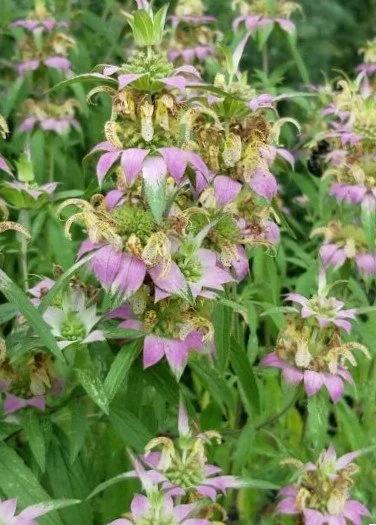
An extraordinary native perennial known for its stunning, multi-tiered flower spikes. Each "floor" of the spike features a ring of creamy, purple-spotted blossoms sitting atop showy, leaf-like bracts that blush a beautiful shade of lavender or pink. It’s usually found in sand prairies, hill prairies and oak savannas.
Sun Exposure Full Sun to Partial Shade
Water Needs Low; highly drought-tolerant
Soil Type Well-drained Sand, Loam, or Rocky soil
Mature Height 1 – 2 feet
Deer Resistance High
Bloom Time July – September
Bloom Color Lavendar, Pink
Plant Spacing 8 – 12 inches
Blooms: The flowers grow in distinct "tiers" or whorls around the stem. Even after the color of the bracts fades, the dried structures remain upright and add a geometric interest to the garden.
Aromatic Foliage: The leaves contain high levels of thymol (the same antiseptic oil found in Thyme and Oregano). When you brush against the plant, it releases a spicy, pleasant fragrance. This scent also deters animal browsing.
Sandy Soil Specialist: While it can grow in loam, it absolutely thrives in sandy or gravelly spots where other plants might wilt from the heat.
Biennial plant that self-seeds but is not aggressive.
Pollinators: The high nectar content attracts a constant parade of honeybees, bumblebees, and many butterflies including the Karner Blue butterfly.
It is a primary nectar source for the Great Black Wasp and other beneficial predatory wasps that are gentle to humans but great for natural pest control in the garden.
Host Plant: It is a host plant for the specialized Hermit Sphinx Moth and the Raspberry Pyrausta butterfly.
Pro Tip: Plant with Wild Lupine for optimal Karner Blue support.
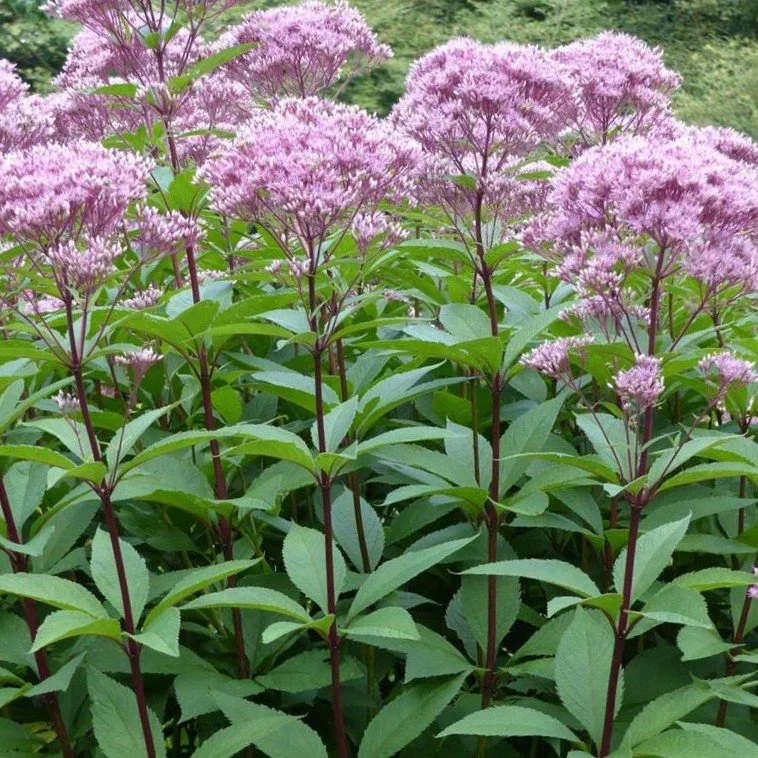
Also known as Spotted Joe Pye Weed, Eutrochium maculatum is loved by dozens of species of butterflies. It grows up to 6’ and it is famous for its massive flower heads that look like soft, dusty-pink clouds floating at the top of the garden. It provides a massive amount of nectar just as the summer heat reaches its peak, acting as a social hub for every butterfly in the neighborhood.
Sun Exposure Full Sun to Partial Shade
Water Needs Medium to High; prefers consistent moisture
Soil Type Adaptable; thrives in rich Muck, Clay, or Loam
Mature Height 5 – 6 feet
Deer Resistance High
Bloom Time July – September
Bloom Color Pink
Plant Spacing 3 – 4 feet
Stems: Its name comes from the distinct purple spots or mottling found along its thick, sturdy stems. These stems are strong enough to hold up the massive flower heads without any staking and are almost the same color as the dusty rose-colored flowers.
Somewhat aggressive spreader. Please keep this in mind when picking your planting site. Use with caution in small landscape situations.
Moisture lover: Unlike other Joe Pye Weeds, this one requires the most moisture. It is perfect for planting in damp settings such as along pond edges, streambanks and drainage areas.
Butterflies: Because the flower heads are flat and wide, they provide a perfect "landing pad" for dozens of butterfly species.
Native Bee Favorite: It is an incredibly high-value nectar source for bumblebees and many species of native bees.
Birds: Several species of birds benefit from eating the seeds and many birds feed of insects that are drawn to the plant.
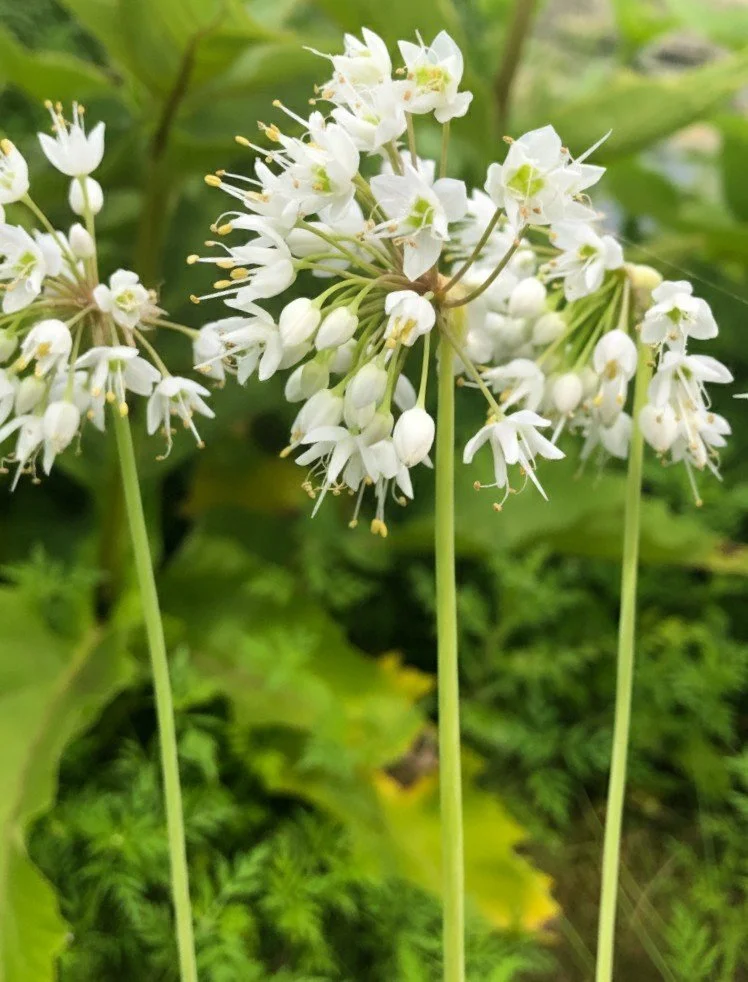
A graceful and hardy perennial that adds a soft, rounded texture to the garden. Unlike garden-variety onions, this native species is grown for its ornamental beauty and its ability to thrive in a wide range of moist soil conditions. It is easily recognized by its unique flower orientation; the clusters of soft white/pink to light lavender flowers to dangle downward “nodding” toward the ground.
Sun Exposure Full Sun to Partial Shade
Water Needs Medium
Soil Type Will do well in moist to medium Muck, Clay, Loam
Mature Height 1 – 2 feet
Deer Resistance High
Bloom Time July – August
Bloom Color White and Pink to Lavendar
Plant Spacing 4 – 8 inches
The "Nodding" Habit: The flower stalk has a distinctive bend at the top, causing the globe-shaped cluster of bell-like flowers to face the ground. This may help protect the nectar from rain and provides a unique silhouette.
Ornamental Foliage: It features narrow, grass-like leaves that remain tidy and green throughout the spring and summer, and the individual flower stems are often a burgundy color.
Non-Aggressive: While it can self-seed in ideal conditions, it grows from small bulbs and remains in a polite, upright clump that won't crowd out its neighbors.
Bees: The downward-facing flowers are a favorite for bumblebees and honeybees, who are strong enough to hang from the blossoms to collect nectar and pollen.
Pro Tip: Plant in mass for a more stunning display or mixed in with sedges or prairie grass.
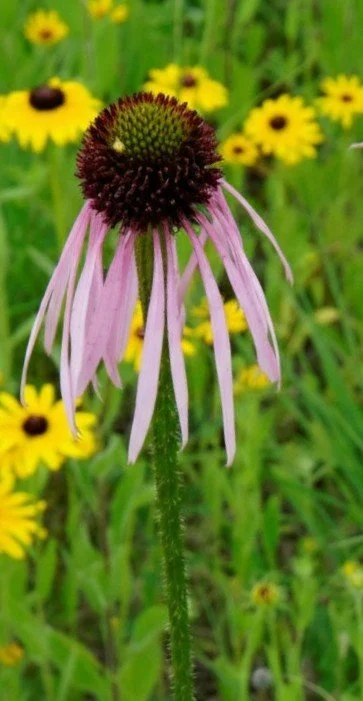
A classic prairie native, this species is prized for its early bloom time and its daisy-like flowers. Its pale pink-to-lavender petals hang gracefully around a tall, copper-colored central cone. Pale Purple Coneflower should be planted in well-drained soil and prefers full sunlight.
Sun Exposure Full Sun (preferred) to Partial Shade
Water Needs Low; highly drought-tolerant once established
Soil Type Well-drained Sand, Loam, or Rocky/Gravelly soil
Mature Height 2 – 3 feet
Deer Resistance High
Bloom Time June – July
Bloom Color Pink, Lavendar
Plant Spacing 10 – 18 inches
Blooms: Unlike the horizontal petals of the Purple Coneflower (E. purpurea), the petals of the Pale Purple Coneflower are very thin and droop dramatically downward, giving the flower a unique, elegant silhouette.
Deep Taproot: It possesses an incredibly deep taproot making it one of the most drought-resistant perennials for a sunny garden, but it should not be moved once established.
Early Starter: This species typically blooms 2–3 weeks earlier than other coneflowers, making it the perfect "bridge" between spring flowers and the heat of mid-summer.
Pollinators: It blooms in early summer when only a few other plants are in bloom, providing a massive amount of nectar for hummingbirds and butterflies. The leaves provide food for the Ottoe-skipper larva.
Goldfinch Favorite: In late summer and fall, the cones turn dark and fill with oil-rich seeds. You will often see Goldfinches perched directly on the cones, plucking out the seeds.
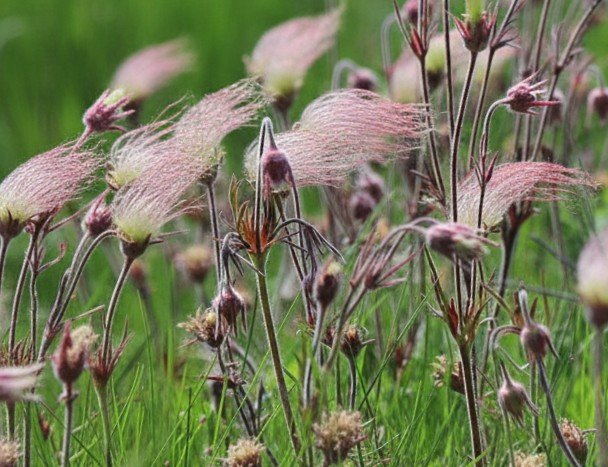
A distinctive and hardy ground-covering perennial. It’s a low-growing charmer that transforms after it blooms, turning from nodding pink bells into feathery, smoky pink seed heads.
Sun Exposure Full Sun to Partial Shade
Water Needs Low; prefers well-drained conditions
Soil Type Well-drained Loam, Sand, Rocky, or Gravelly soil
Mature Height 8 inches
Deer Resistance High
Bloom Time April – June
Bloom Color Pink/Red
Plant Spacing 6 – 8 inches
Nodding Bells: Before the "smoke" appears, each stem holds three small, reddish-pink bells that hang downward.
The "Smoke" Effect: After the nodding pink flowers are pollinated, the styles elongate into 2-inch long, feathery pink plumes. In a mass planting, these look like a low-lying pink cloud or "smoke" hovering over the ground.
Fern-like Foliage: The leaves are deeply serrated, soft, and resemble tiny fern fronds.
Slow Spreading: Prairie Smoke will slowly spread by rhizome in well-drained soils to form a ground cover and work well in in dry rock gardens.
Early Season Nectar: It is one of the earliest sources of food for a variety of bees and other pollinators.
No results match your search. Try removing a few filters.