
 Image 1 of 1
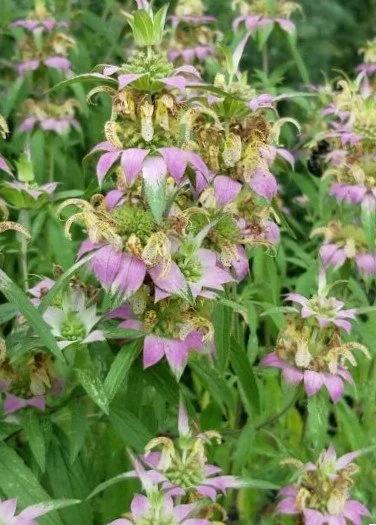
An extraordinary native perennial known for its stunning, multi-tiered flower spikes. Each "floor" of the spike features a ring of creamy, purple-spotted blossoms sitting atop showy, leaf-like bracts that blush a beautiful shade of lavender or pink. It’s usually found in sand prairies, hill prairies and oak savannas.
Sun Exposure Full Sun to Partial Shade
Water Needs Low; highly drought-tolerant
Soil Type Well-drained Sand, Loam, or Rocky soil
Mature Height 1 – 2 feet
Deer Resistance High
Bloom Time July – September
Bloom Color Lavendar, Pink
Plant Spacing 8 – 12 inches
Blooms: The flowers grow in distinct "tiers" or whorls around the stem. Even after the color of the bracts fades, the dried structures remain upright and add a geometric interest to the garden.
Aromatic Foliage: The leaves contain high levels of thymol (the same antiseptic oil found in Thyme and Oregano). When you brush against the plant, it releases a spicy, pleasant fragrance. This scent also deters animal browsing.
Sandy Soil Specialist: While it can grow in loam, it absolutely thrives in sandy or gravelly spots where other plants might wilt from the heat.
Biennial plant that self-seeds but is not aggressive.
Pollinators: The high nectar content attracts a constant parade of honeybees, bumblebees, and many butterflies including the Karner Blue butterfly.
It is a primary nectar source for the Great Black Wasp and other beneficial predatory wasps that are gentle to humans but great for natural pest control in the garden.
Host Plant: It is a host plant for the specialized Hermit Sphinx Moth and the Raspberry Pyrausta butterfly.
Pro Tip: Plant with Wild Lupine for optimal Karner Blue support.
An extraordinary native perennial known for its stunning, multi-tiered flower spikes. Each "floor" of the spike features a ring of creamy, purple-spotted blossoms sitting atop showy, leaf-like bracts that blush a beautiful shade of lavender or pink. It’s usually found in sand prairies, hill prairies and oak savannas.
Sun Exposure Full Sun to Partial Shade
Water Needs Low; highly drought-tolerant
Soil Type Well-drained Sand, Loam, or Rocky soil
Mature Height 1 – 2 feet
Deer Resistance High
Bloom Time July – September
Bloom Color Lavendar, Pink
Plant Spacing 8 – 12 inches
Blooms: The flowers grow in distinct "tiers" or whorls around the stem. Even after the color of the bracts fades, the dried structures remain upright and add a geometric interest to the garden.
Aromatic Foliage: The leaves contain high levels of thymol (the same antiseptic oil found in Thyme and Oregano). When you brush against the plant, it releases a spicy, pleasant fragrance. This scent also deters animal browsing.
Sandy Soil Specialist: While it can grow in loam, it absolutely thrives in sandy or gravelly spots where other plants might wilt from the heat.
Biennial plant that self-seeds but is not aggressive.
Pollinators: The high nectar content attracts a constant parade of honeybees, bumblebees, and many butterflies including the Karner Blue butterfly.
It is a primary nectar source for the Great Black Wasp and other beneficial predatory wasps that are gentle to humans but great for natural pest control in the garden.
Host Plant: It is a host plant for the specialized Hermit Sphinx Moth and the Raspberry Pyrausta butterfly.
Pro Tip: Plant with Wild Lupine for optimal Karner Blue support.