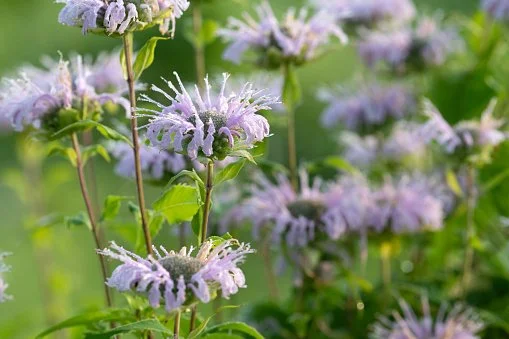
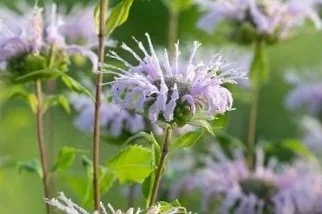
Bergamot (commonly known as Bee Balm or Monarda) is known for its distinct, "shredded" crown-like blooms and aromatic foliage. This hardy perennial is a member of the mint family and does well in all but the wettest of soils. It’s fragrant flowers are a popular nectar source for butterflies, bees and hummingbirds.
Sun Exposure Full Sun to Partial Shade
Water Needs Moderate; prefers consistent moisture but is drought-tolerant once established.
Soil Type Tolerates Muck, Clay, Loam and Sand, and poor soils.
Mature Height 4 - 5 feet
Deer Resistance High
Bloom Time July – September
Bloom Color Lavendar
Plant Spacing 2 - 3 feet
The leaves release a minty or oregano-like scent when crushed.
Its unique flower shape has tube-like blossom structures.
Naturally resistant to many pests, making it an easy-care choice of plants.
Bergamot is one of the few plants that consistently draws hummingbirds, butterflies, and native bees simultaneously.
Serves as a host plant for several species of the Hermit Sphinx and the Raspberry Pyrausta moths.
Fun Fact: For generations, Bergamot was valued by Indigenous communities and early settlers as a healing plant, commonly brewed as a tea or used in simple remedies.
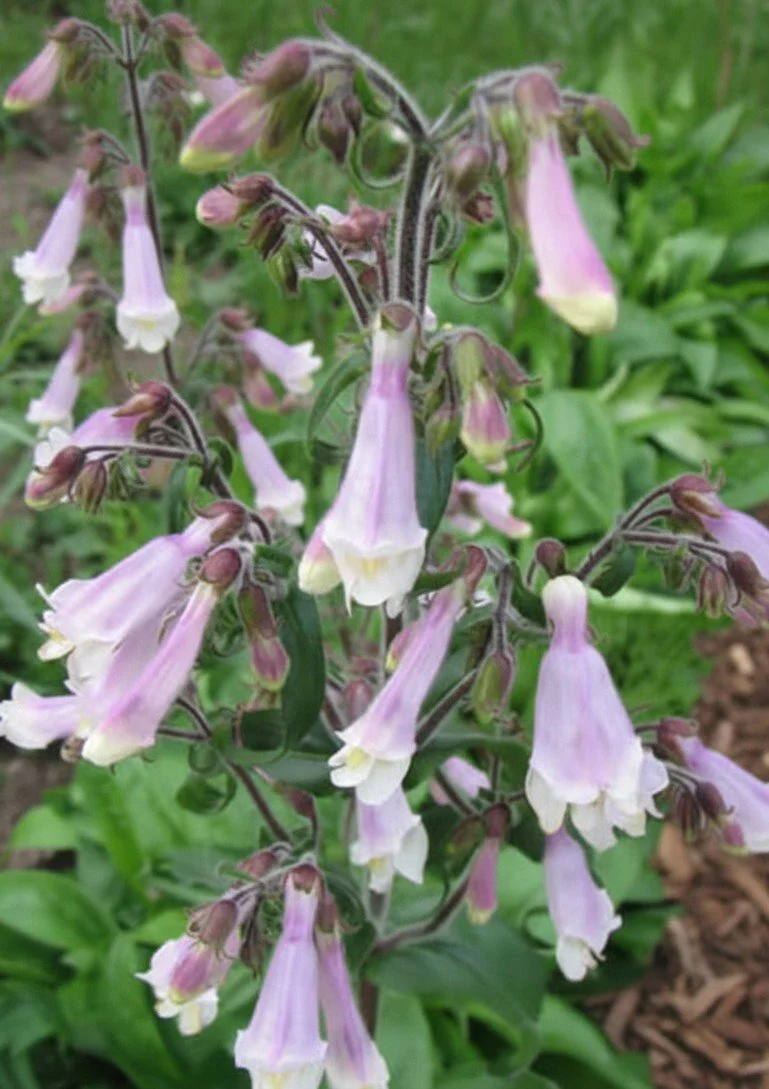
Blooming from May-June, Hairy Beardtongue attracts several types of bees, hummingbirds and butterflies. It is one of the more shade-tolerant Penstemons, making it a versatile choice for those tricky "transition" spots in your landscape. If you’re a fan of the "polite" nature of the Foxglove Beardtongue but want something a bit shorter and more textured for the front of your garden, Hairy Beardtongue is a perfect choice.
Sun Exposure Full Sun, Partial Shade, Shade
Water Needs Low to Medium; very drought-tolerant once established
Soil Type Well-drained Sand, Loam, or Rocky soil
Mature Height 18 inches
Deer Resistance Moderate - High
Bloom Time May – June
Bloom Color Lavendar, Pink
Plant Spacing 10 - 12 inches
Low-Profile: Reaching only about 1–2 feet, it is significantly shorter than its Foxglove cousin, making it an ideal "front-of-the-border" plant.
Blooms: The trumpet-shaped flowers range in color from lavenders and pink to white. The long, thin blooms have five petals with a “hairy” protruding lip.
Rock Garden Champion: Because it thrives in well-drained, rocky, or even poor soils, it is a great choice for rock gardens or edges where other plants might struggle with the heat.
Early Pollinator Resource: It blooms in late spring, providing a critical early-season nectar source for native bees and butterflies before the summer begins.
Hummingbirds: Just like its taller relatives, the tubular flowers are a magnet for Ruby-throated Hummingbirds.
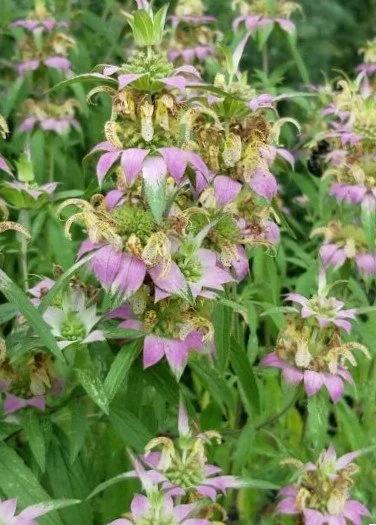
An extraordinary native perennial known for its stunning, multi-tiered flower spikes. Each "floor" of the spike features a ring of creamy, purple-spotted blossoms sitting atop showy, leaf-like bracts that blush a beautiful shade of lavender or pink. It’s usually found in sand prairies, hill prairies and oak savannas.
Sun Exposure Full Sun to Partial Shade
Water Needs Low; highly drought-tolerant
Soil Type Well-drained Sand, Loam, or Rocky soil
Mature Height 1 – 2 feet
Deer Resistance High
Bloom Time July – September
Bloom Color Lavendar, Pink
Plant Spacing 8 – 12 inches
Blooms: The flowers grow in distinct "tiers" or whorls around the stem. Even after the color of the bracts fades, the dried structures remain upright and add a geometric interest to the garden.
Aromatic Foliage: The leaves contain high levels of thymol (the same antiseptic oil found in Thyme and Oregano). When you brush against the plant, it releases a spicy, pleasant fragrance. This scent also deters animal browsing.
Sandy Soil Specialist: While it can grow in loam, it absolutely thrives in sandy or gravelly spots where other plants might wilt from the heat.
Biennial plant that self-seeds but is not aggressive.
Pollinators: The high nectar content attracts a constant parade of honeybees, bumblebees, and many butterflies including the Karner Blue butterfly.
It is a primary nectar source for the Great Black Wasp and other beneficial predatory wasps that are gentle to humans but great for natural pest control in the garden.
Host Plant: It is a host plant for the specialized Hermit Sphinx Moth and the Raspberry Pyrausta butterfly.
Pro Tip: Plant with Wild Lupine for optimal Karner Blue support.
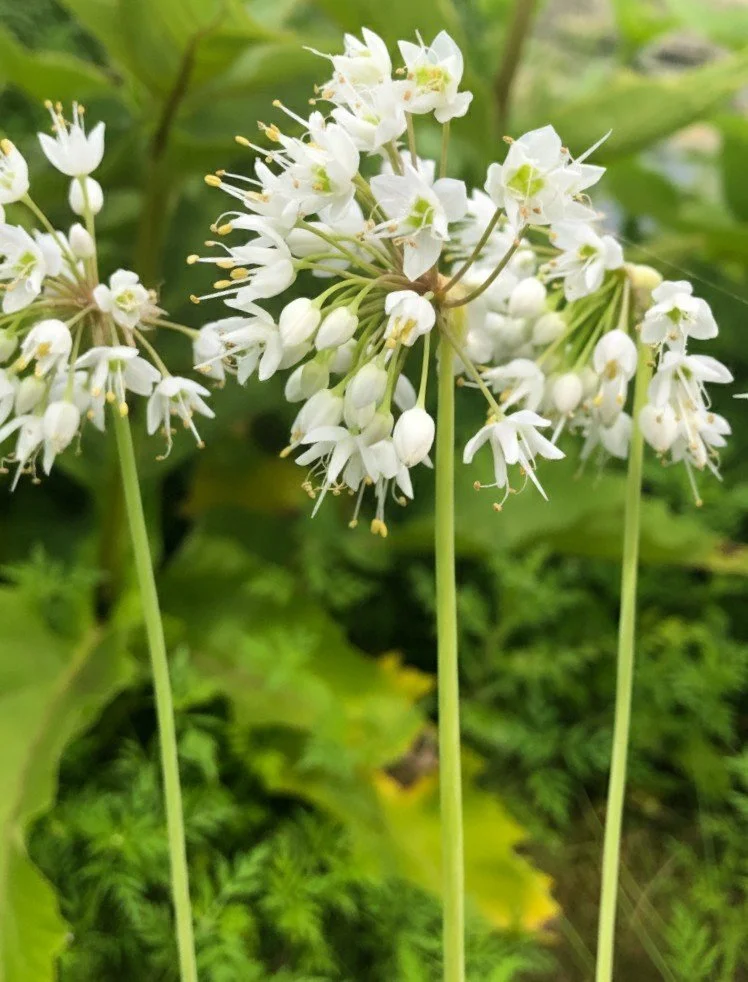
A graceful and hardy perennial that adds a soft, rounded texture to the garden. Unlike garden-variety onions, this native species is grown for its ornamental beauty and its ability to thrive in a wide range of moist soil conditions. It is easily recognized by its unique flower orientation; the clusters of soft white/pink to light lavender flowers to dangle downward “nodding” toward the ground.
Sun Exposure Full Sun to Partial Shade
Water Needs Medium
Soil Type Will do well in moist to medium Muck, Clay, Loam
Mature Height 1 – 2 feet
Deer Resistance High
Bloom Time July – August
Bloom Color White and Pink to Lavendar
Plant Spacing 4 – 8 inches
The "Nodding" Habit: The flower stalk has a distinctive bend at the top, causing the globe-shaped cluster of bell-like flowers to face the ground. This may help protect the nectar from rain and provides a unique silhouette.
Ornamental Foliage: It features narrow, grass-like leaves that remain tidy and green throughout the spring and summer, and the individual flower stems are often a burgundy color.
Non-Aggressive: While it can self-seed in ideal conditions, it grows from small bulbs and remains in a polite, upright clump that won't crowd out its neighbors.
Bees: The downward-facing flowers are a favorite for bumblebees and honeybees, who are strong enough to hang from the blossoms to collect nectar and pollen.
Pro Tip: Plant in mass for a more stunning display or mixed in with sedges or prairie grass.
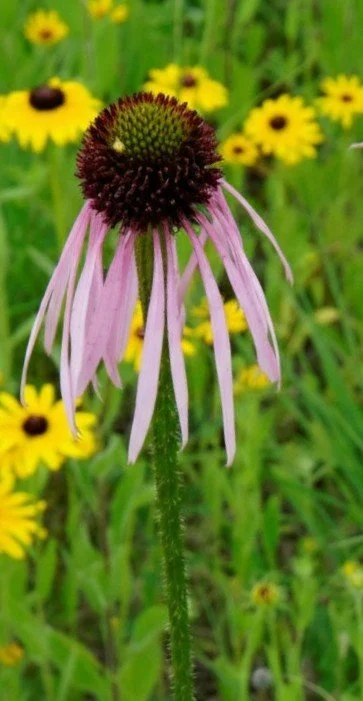
A classic prairie native, this species is prized for its early bloom time and its daisy-like flowers. Its pale pink-to-lavender petals hang gracefully around a tall, copper-colored central cone. Pale Purple Coneflower should be planted in well-drained soil and prefers full sunlight.
Sun Exposure Full Sun (preferred) to Partial Shade
Water Needs Low; highly drought-tolerant once established
Soil Type Well-drained Sand, Loam, or Rocky/Gravelly soil
Mature Height 2 – 3 feet
Deer Resistance High
Bloom Time June – July
Bloom Color Pink, Lavendar
Plant Spacing 10 – 18 inches
Blooms: Unlike the horizontal petals of the Purple Coneflower (E. purpurea), the petals of the Pale Purple Coneflower are very thin and droop dramatically downward, giving the flower a unique, elegant silhouette.
Deep Taproot: It possesses an incredibly deep taproot making it one of the most drought-resistant perennials for a sunny garden, but it should not be moved once established.
Early Starter: This species typically blooms 2–3 weeks earlier than other coneflowers, making it the perfect "bridge" between spring flowers and the heat of mid-summer.
Pollinators: It blooms in early summer when only a few other plants are in bloom, providing a massive amount of nectar for hummingbirds and butterflies. The leaves provide food for the Ottoe-skipper larva.
Goldfinch Favorite: In late summer and fall, the cones turn dark and fill with oil-rich seeds. You will often see Goldfinches perched directly on the cones, plucking out the seeds.
No results match your search. Try removing a few filters.