
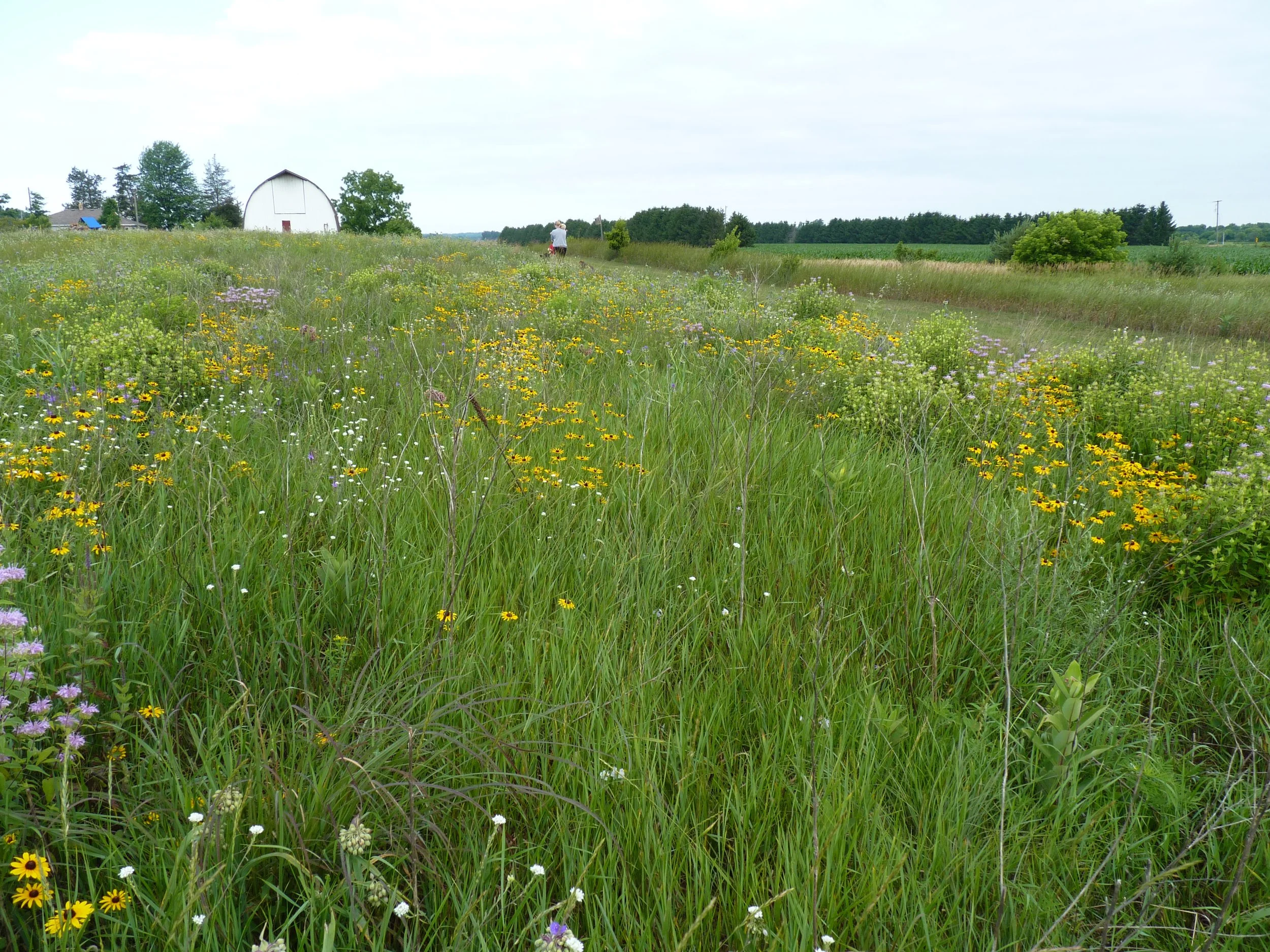
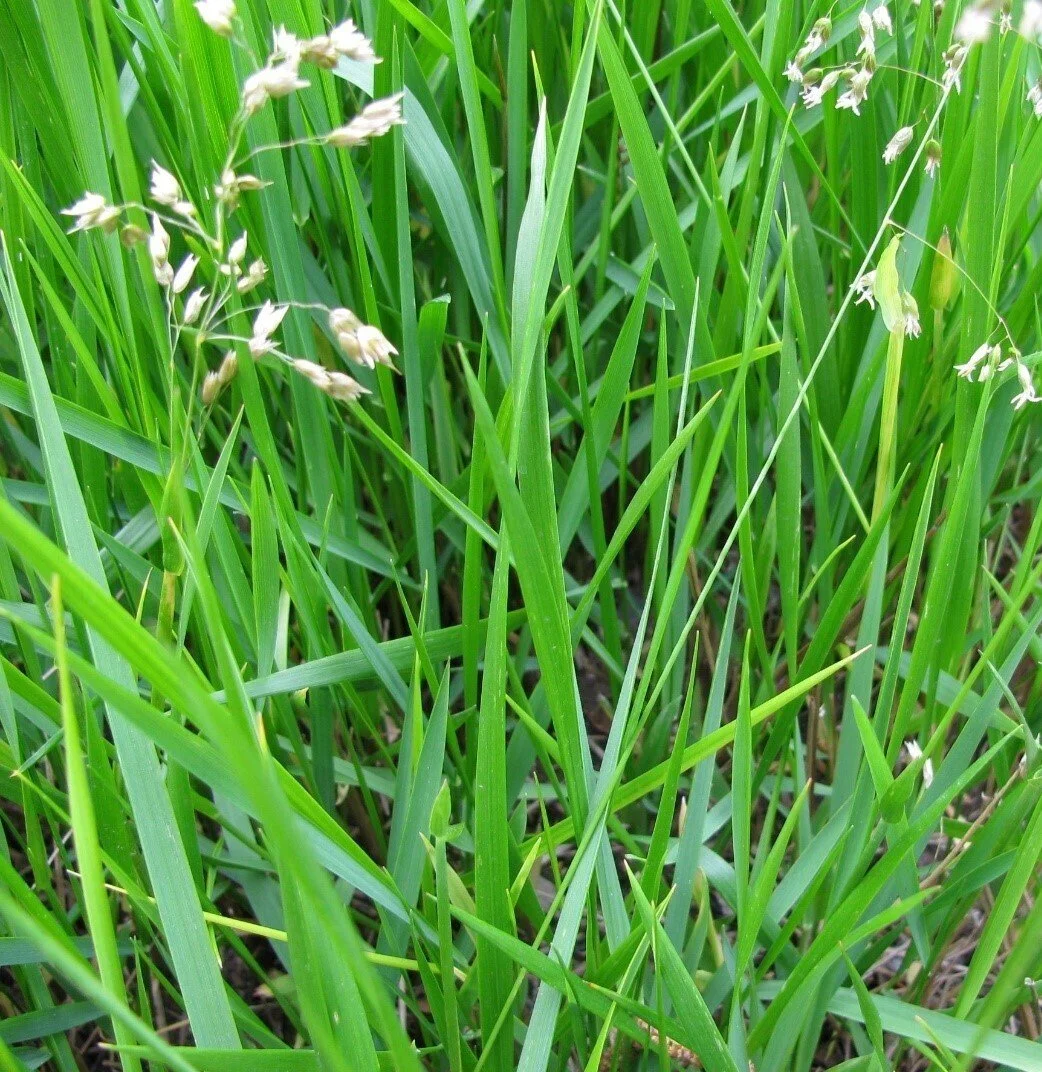
A plant steeped in history and cherished for its scent, Sweet Grass is one of the most beloved native grasses in North America. Its name comes from the sweet, vanilla-like fragrance produced by the coumarin in its leaves, which becomes especially potent when the grass is dried or crushed. Many North American indigenous cultures burn Sweet Grass in ceremonies to invite the presence of good spirits.
Sun Exposure Full Sun to Partial Shade
Water Needs High; prefers consistently moist to wet soil.
Soil Type rich Muck, moist Clay, Loam or Sandy soils; thrives near water sources.
Mature Height 1 – 2 feet
Deer Resistance High
Bloom Time May – July
Plant Spacing 1 – 2 feet (Spreads to fill gaps).
Signature Scent: Unlike most grasses, Sweet Grass produces a sweet aroma when rubbing the leaves.
Wet Ground Solution: It is a perfect choice for the edges of ponds, low-lying areas of the yard, or rain gardens.
Aggressive spreader: Can be difficult to eliminate if it spreads to unwanted areas. Spreads by rhizomes. Pick a planting site with this in mind.
Early Season Growth: As a cool-season grass, it provides early green-up and cover for wildlife emerging in the spring.
Habitat: While wind-pollinated, the dense mats provide essential shelter for ground-nesting beneficial insects.
Pro Tip: To harvest for scent, wait until the blades are long and vibrant in mid-summer. Cut the grass, let it wilt slightly, and then braid it while it is still flexible. As it dries, the braid will hold its sweet, vanilla-like fragrance for months!
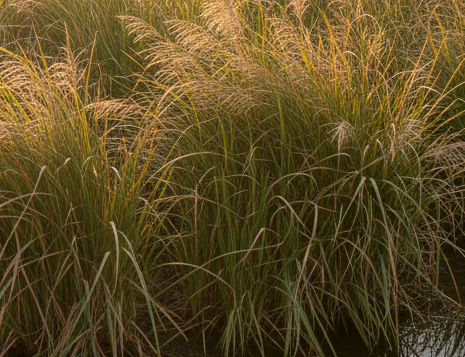
This is a high-performance plant for "tough" areas. Its vigorous, spreading root system makes it an unmatched choice for controlling erosion on steep banks or stabilizing soil along shorelines and drainage ditches. It is also a good choice for combatting invasive Reed Canary Grass by a water’s edge. This native grass is known for its long, arching blades that gracefully weep toward the ground, shimmering with a distinct golden hue in the autumn.
Sun Exposure Full Sun (preferred) - Partial Shade
Water Needs Moderate to High; thrives in wet to moist conditions.
Soil Type Adaptable; prefers muck, clay, wet loam or sand.
Mature Height 6 – 8 feet
Deer Resistance High
Bloom Time July – September
Plant Spacing 2 – 3 feet (Allow plenty of room to spread).
Natural Erosion Control: Its deep, rhizomatous roots are excellent for stabilizing shifting soil or eroding banks around ponds or streambanks in full sun.
Habitat: wet prairies, prairie swales, marshes and swaps.
Color: The foliage transitions from green to bright gold as the temperatures drop
Crucial Cover and nesting habitat: The dense, tall thickets provide essential nesting sites and thermal cover for marsh birds, waterfowl, and small mammals.
Insect and moths: insects and the larvae of several moths are specialist feeders of Cord Grass. Species include the Four-lined Borer Moth, Torticid Moth and Many-Lined Cordgrass moth.
Food source: Seed heads and rootstocks are eaten by Black Ducks, Mallards, Canada Geese and Muskrats.
Pro Tip: Prairie Cord Grass is a vigorous spreader. While it is perfect for large areas or restoration projects, it may be too assertive for a small, tidy perennial border. For best results, plant it in areas where it has plenty of room to roam or where its root system can be utilized for soil stabilization.
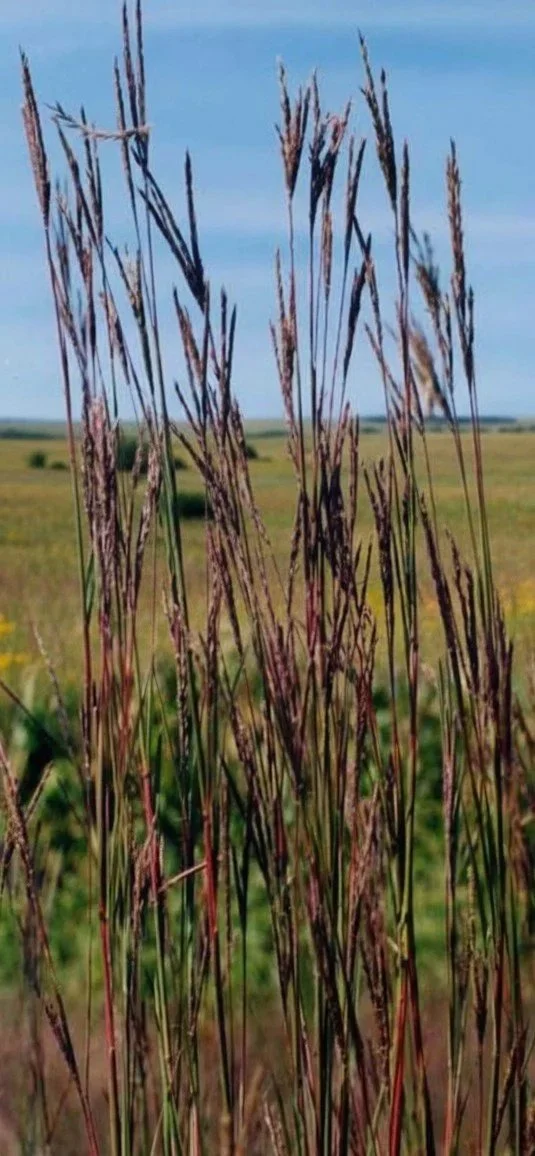
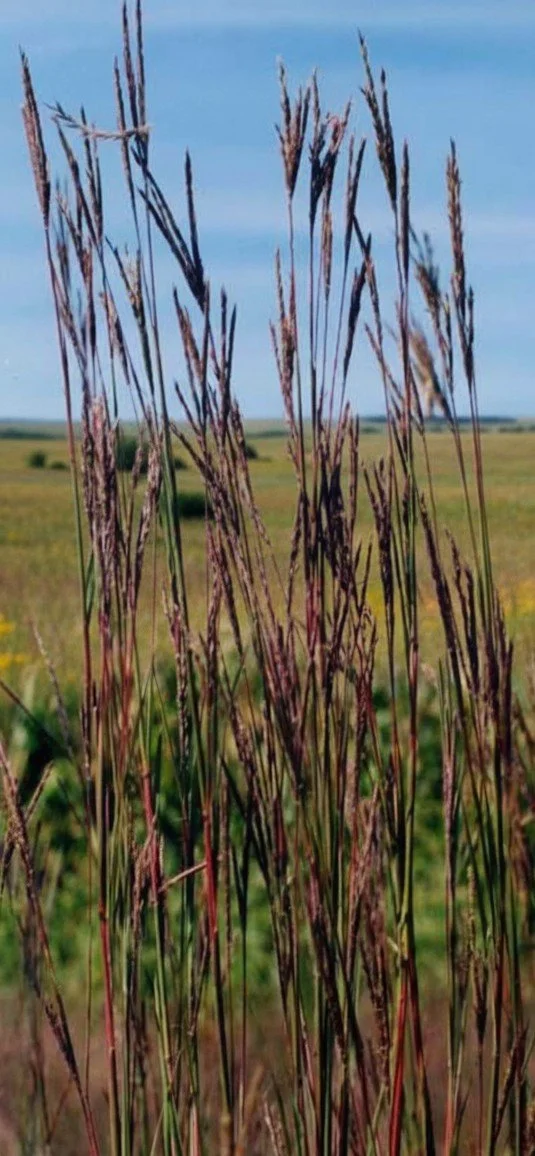
If you want to add height, and a sense of history to your landscape, look no further than Big Bluestem. Often called the "King of Native Grasses," this iconic plant was once the dominant species of the tallgrass prairie.
Sun Exposure Full Sun to Part Shade
Water Needs Low to Medium (Drought Tolerant after established)
Soil Type Adaptable; can do well in Muck, Clay, Loam or Sand
Mature Height 5 to 8 feet
Deer Resistance High
Bloom Time June – September
Plant Spacing 2 – 3 feet
"Turkey Foot" Seed Heads: In late summer, the grass produces distinct three-pronged flower spikes that resemble a turkey's foot. These spikes emerge in shades of purplish-red, adding a unique texture to your planting.
Color: The stems often have a blue-green hue in the spring and summer. As autumn arrives, the plant shifts into shades of copper, reddish-bronze or purple tones.
Deep-Rooted: With roots that can reach up to 10 feet deep, Big Bluestem is incredibly drought-tolerant and plays a massive role in soil health.
Privacy & Screening: Reaching heights of 7 feet, it serves as a fantastic, eco-friendly living fence or a backdrop for shorter flowering perennials.
Pollinator Support: It serves as a critical larval host plant for several butterfly species, including the Delaware Skipper, Dusted Skipper, Arogos Skipper and Cobweb Skipper.
Songbirds: In the fall and winter, the protein-rich seeds provide a feast for songbirds like Juncos, Sparrows, and Finches. The sturdy, tall stems also offer excellent nesting material and winter cover.
Essential Shelter: The dense, upright clumps provide a safe "nursery" and overwintering habitat for beneficial insects (like ladybugs and native bees) and small mammals during the coldest months.
Pro Tip: Because Big Bluestem is a tall "warm-season" grass, it does most of its growing in the heat of mid-summer. Plant it at the back of your garden beds so it can rise up behind your early-blooming wildflowers as they begin to fade. Big Bluestem can be an aggressive spreader, so it is not recommended for small spaces.
No results match your search. Try removing a few filters.