
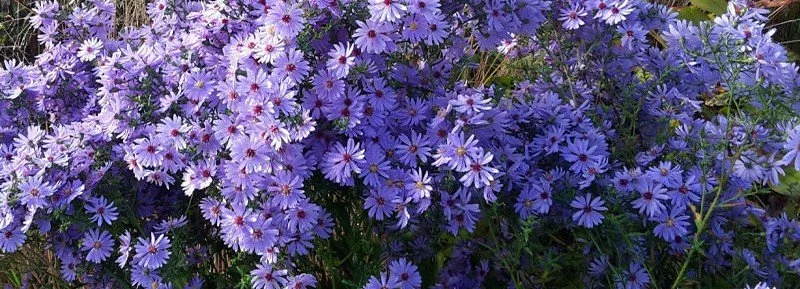
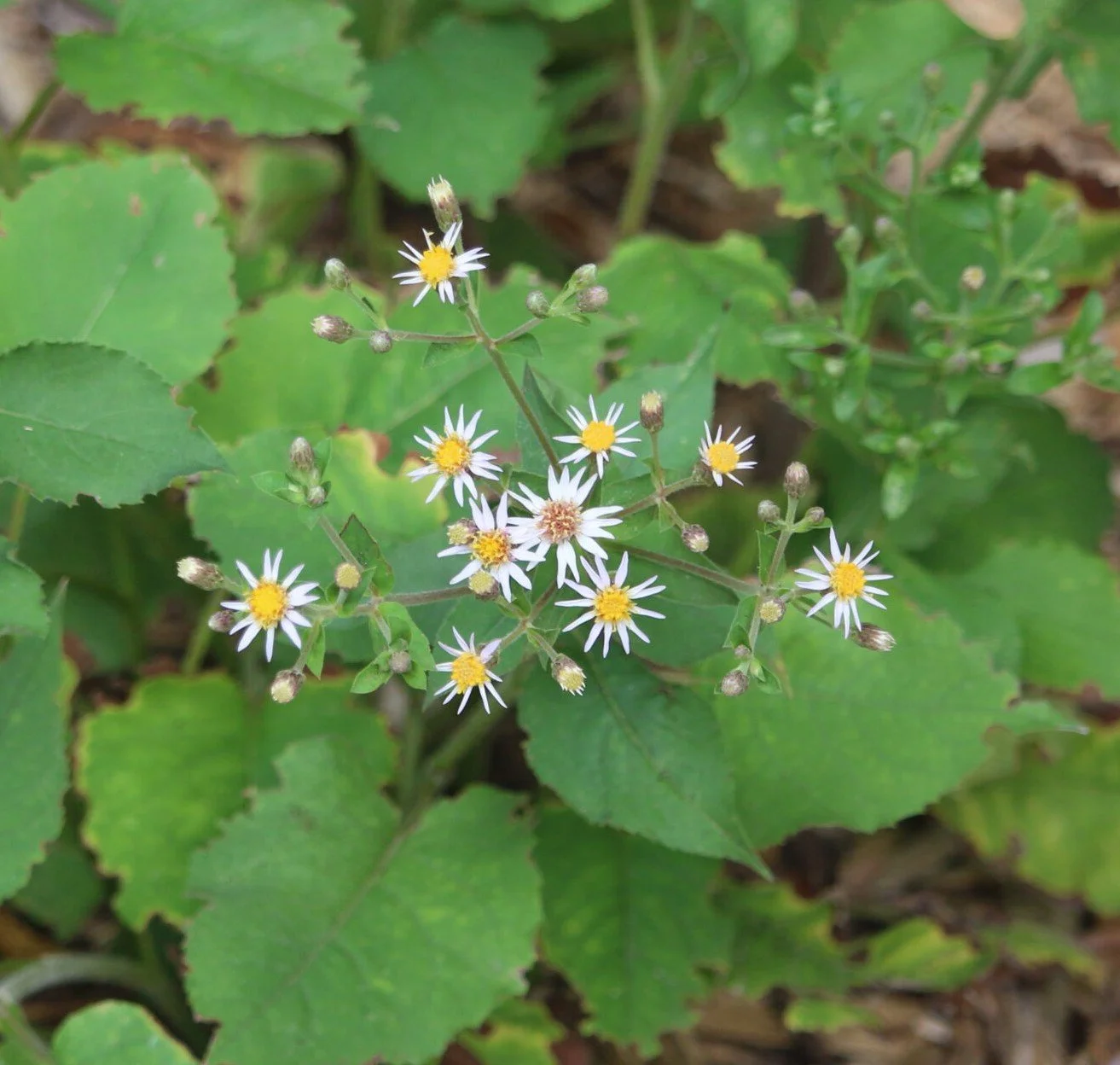
If you are looking for the perfect groundcover for a shady spot, Big-Leaved Aster is an exceptional choice. Named for its oversized, heart-shaped basal leaves that can grow up to 6 inches wide, this native perennial creates a lush, low-growing carpet of green that effectively suppresses weeds. In late summer and early autumn, it sends up sturdy stems topped with delicate, star-like flowers that range from white to pale violet-blue. This plant is a powerhouse for the woodland garden, thriving in the dappled light and dry shade where many other plants struggle.
Sun Exposure Part Shade to Full Shade
Water Needs Moderate; once established, it is notably drought-tolerant
Soil Type Will grow in Muck, Clay, Loam or Sand
Mature Height 1 to 2 feet (when in bloom)
Deer Resistance Moderate
Bloom Time August – October
Bloom Color White
Plant Spacing 2 to 3 feet
Foliage: The large, "big-leaved" base provides excellent texture and ground coverage even before the flowers appear.
Late Season Color: Offers beautiful, cooling lavender or white blooms just as the rest of the summer garden begins to fade.
Potentially Aggressive Groundcover: Spreads via rhizomes to form a dense, maintenance-free colony over time. Could overwhelm small landscapes so keep in mind when picking your planting site.
Pollinator Support: Provides a vital late-season food source for native bees, honeybees, and butterflies.
Host Plant: Serves as a larval host for the Pearl Crescent butterfly and several species of moths.
Seeds for Birds: The dried flower heads provide small seeds that are enjoyed by goldfinches and other songbirds in the fall.
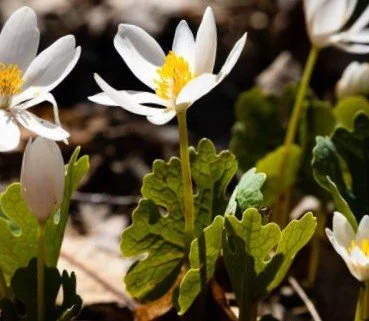
This native North American perennial is famous for its "wraparound" leaves and brilliant white blossoms that emerge while most of the garden is still waking up. It gets its name from the bright reddish-orange sap found in its roots, which was historically used as a natural dye.
Bloodroot emerges after the snow melts and before the deciduous trees leaf out. The flower bud emerges wrapped tightly in a single, deeply lobed, light green leaf. Once the flower blooms, the leaf unfurls to provide a lush, uniquely shaped groundcover that remains beautiful well into the summer before going dormant.
Sun Exposure Part Shade to Full Shade
Water Needs Medium; keep soil moist but well-drained
Soil Type Rich to neutral loam, woodland soil
Mature Height 6 to 12 inches
Deer Resistance High
Bloom Time April, May
Bloom Color White
Plant Spacing 6 to 10 inches
Pollinator Friendly: One of the earliest food sources for native bees and pollinators. Ants are attracted to a sweet part on the seed and are instrumental in distributing this spring ephemeral around the woods
Naturalizing: Over time, Bloodroot will slowly spread via rhizomes to create a stunning colony under deciduous trees.
Low Maintenance: Once established in the right shade environment, it requires very little intervention.
Unique Foliage: Even after the petals drop, the large, scalloped leaves offer a unique texture that contrasts beautifully with ferns and other woodland plants.
Note: Use caution when handling the roots, as the red sap can stain skin and clothing.
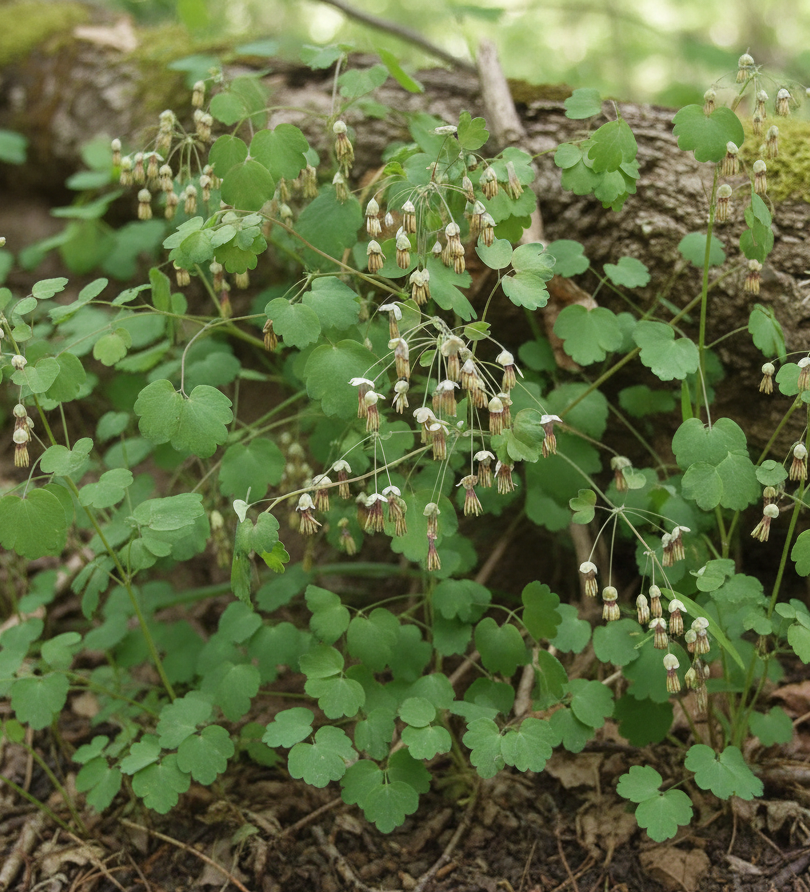
Known for its delicate, fern-like foliage that resembles a Maidenhair Fern or Columbine, this native perennial adds a soft, airy texture to any shaded garden. It is one of the first plants to emerge in the spring. The dioecious plant grows either male, or female or female flowers on separate plants. The male plants produce dangling, tassel-like yellow stamens that look like tiny chandeliers. The female plants tend to maintain a more upright appearance and are greenish-white flowers with pale purple pistils. This understated beauty is perfect for gardeners who appreciate intricate details and fine foliage.
Sun Exposure Part Shade to Full Shade
Water Needs Medium; prefers consistent moisture
Soil Type Rich, moist, well-drained Loam or Sandy soils
Mature Height 1 to 2 feet
Deer Resistance High
Bloom Time April – May
Bloom color White
Plant Spacing 10 - 12 inches
Lacy Foliage: The blue-green, compound leaves remain attractive throughout the growing season, providing a beautiful contrast to broader-leaved plants like Wild Ginger.
Wind Pollinated: Because it relies on the wind rather than insects for pollination, its flowers have a unique, hanging structure designed to catch the spring breeze. It is best to plant several plants near each other since seed production is dependent on the wind.
Non-Aggressive: A polite clump-forming plant that fits perfectly into a rock garden or as an accent along a woodland path.
Host Plant: Serves as a food source for several specialized moth species, including the Pink-Tinted Beauty.
Black Walnut Tolerant
No results match your search. Try removing a few filters.