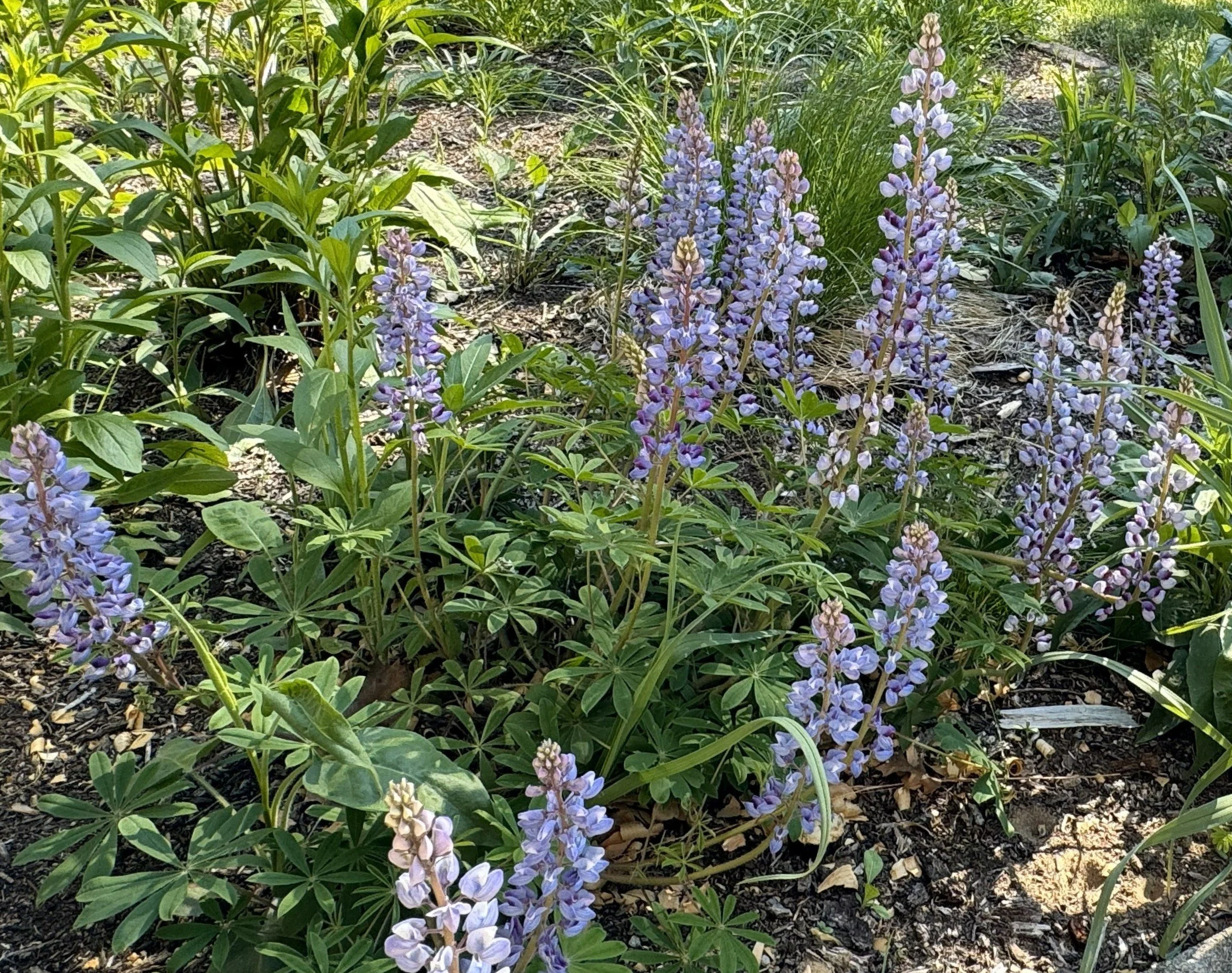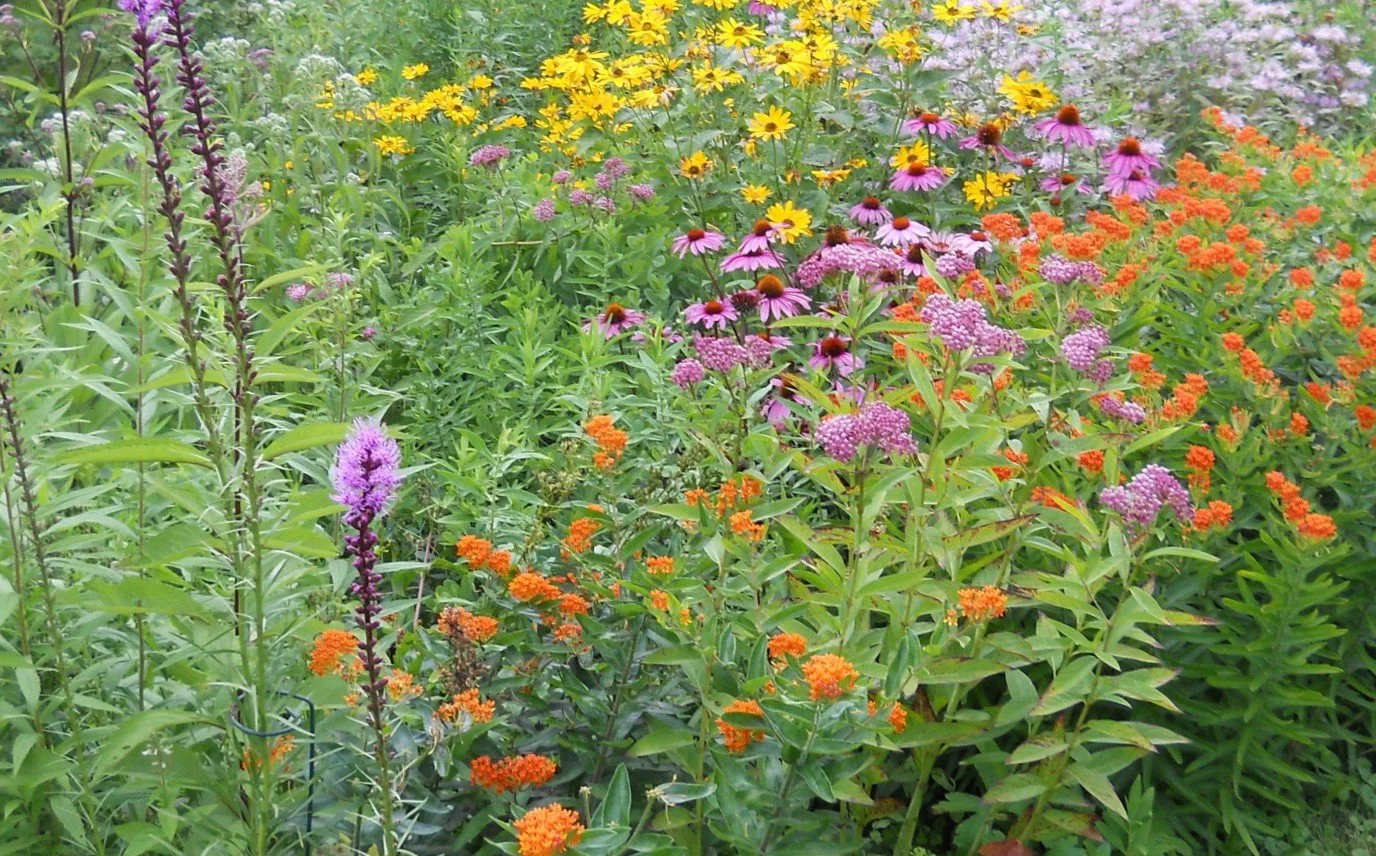
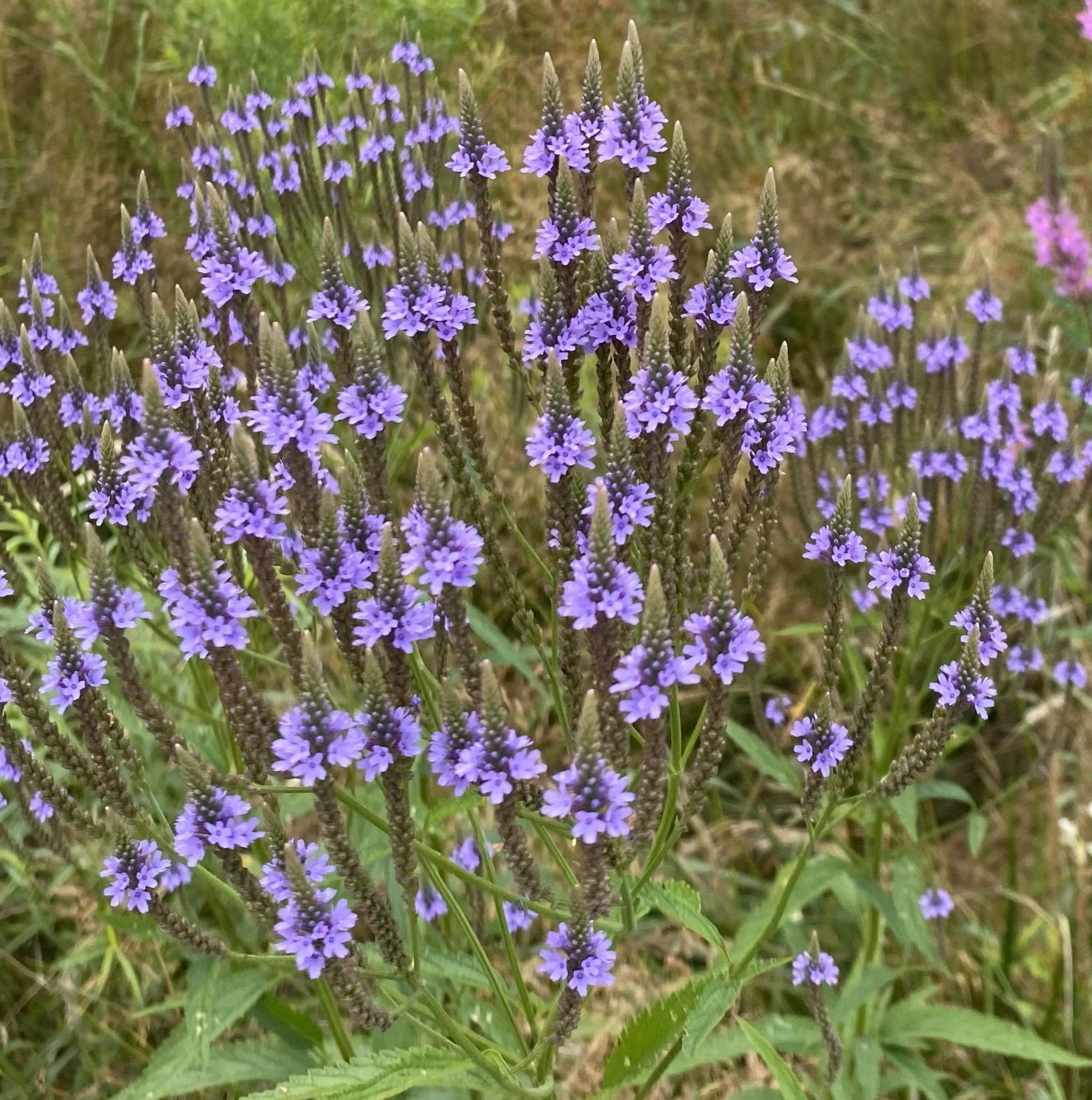
This native perennial is easily recognized by its unique branching flower spikes that resemble a multi-armed candelabra. Tiny, vibrant violet-blue flowers bloom in succession from the bottom up in the July heat. Unlike many garden perennials that shy away from "wet feet," Verbena hastata thrives in moist-to-wet soils, making it an invaluable choice for rain gardens, pond edges, or that low-lying corner of the yard where other plants struggle.
Sun Exposure Full Sun to Partial Shade
Water Needs Moderate to High; standing water is not tolerated, but it prefers consistently moist soil.
Soil Type Moist to wet; Can tolerate Muck, Clay, Loam or Sand.
Mature Height 4 - 6 feet
Deer Resistance Moderate to High
Bloom Time July – September
Bloom Color Blue
Plant Spacing 18 – 24 inches
Vertical Interest: Its tall, slender habit adds height without adding bulk, allowing it to weave beautifully between other plants.
Naturalizes Easily: A biennial plant that is a wonderful self-seeder. It also will slowly spread through rhizomes allowing it to fill in gaps over time, but it will not compete well with more aggressive vegetation.
Color: The violet-blue flower spikes can bloom for up to 2 months.
Butterfly Magnet: A vital nectar source for a wide array of butterflies, including Swallowtails, Fritillaries, and Skippers.
Native Bee Support: Blue vervain attracts a variety of different native bees.
Songbird Food: In the fall, the slender spikes produce tiny seeds that are a favorite for finches, and sparrows.
Pro Tip: Because Blue Vervain grows quite tall and narrow, plant it in clusters of three or more. This creates a stunning "haze" of purple-blue color that is much more impactful than a single specimen, and it provides extra support for the stems in windy areas.
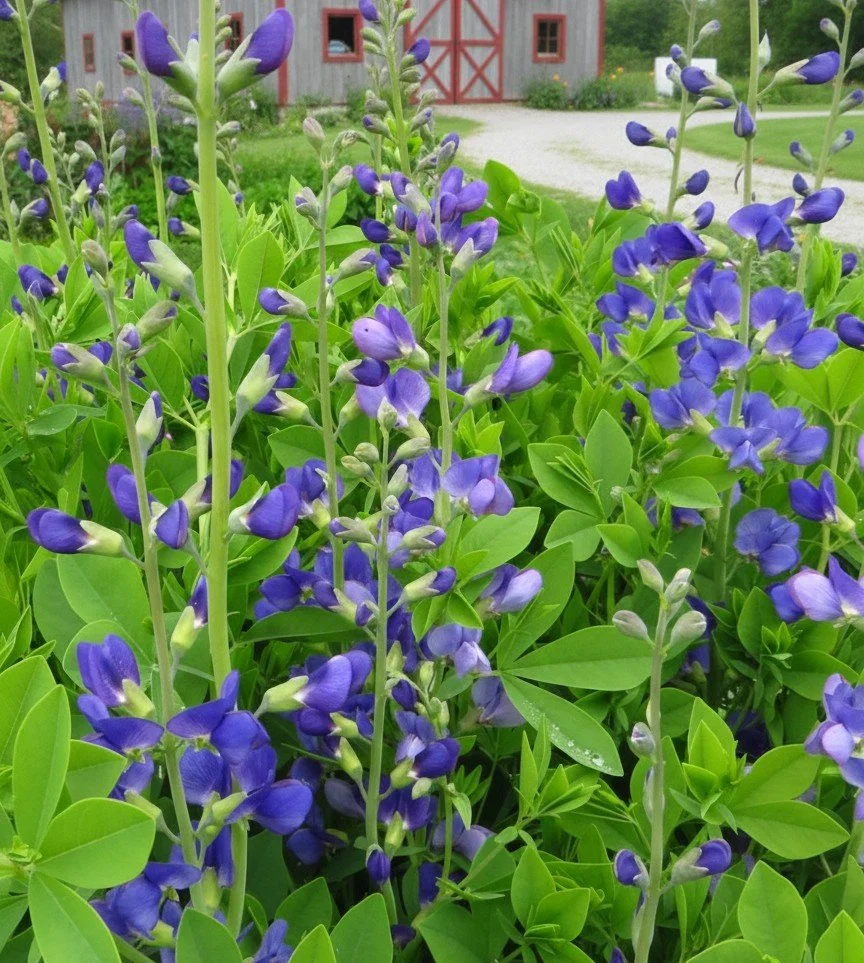
An elegant, long-lived native that looks more like a small shrub than a typical flower. In late spring, it produces tall spikes of deep indigo-blue flowers that resemble Lupine, providing a cool contrast to the yellow-heavy palette of the summer garden. It is often called the "Perennial of the Year" for good reason—it is practically indestructible and offers a shrub-like presence without the woody maintenance.
Sun Exposure Full Sun to Partial Shade (Best in Full Sun)
Water Needs Low to Medium; exceptionally drought-tolerant once established
Soil Type Adaptable; thrives in Clay, Loam, Sand, or Rocky soil
Mature Height 3 – 4 feet
Deer Resistance High
Bloom Time May – July
Bloom Color Blue
Plant Spacing 2 – 3 feet
Deep-Rooted Longevity: It features one of the deepest taproots of any native plant, making it nearly impossible to kill once established—but also very difficult to move! Pick its "forever home" carefully.
It will spend most of the first couple years developing mostly below ground
Shrub-like Structure: While it dies back to the ground in winter, it regrows into a dense, mounded shape with beautiful blue-green, clover-like foliage that stays attractive all summer long.
Because of it’s wide form, generous spacing is recommended.
Bees: The "pea-shaped" flowers are specifically designed for heavy-bodied bees, like Bumblebees, who are strong enough to push the petals open to reach the nectar.
Butterfly Host: It serves as a vital nursery for several butterfly species, including the Wild Indigo Duskywing and the Frosted Elfin.
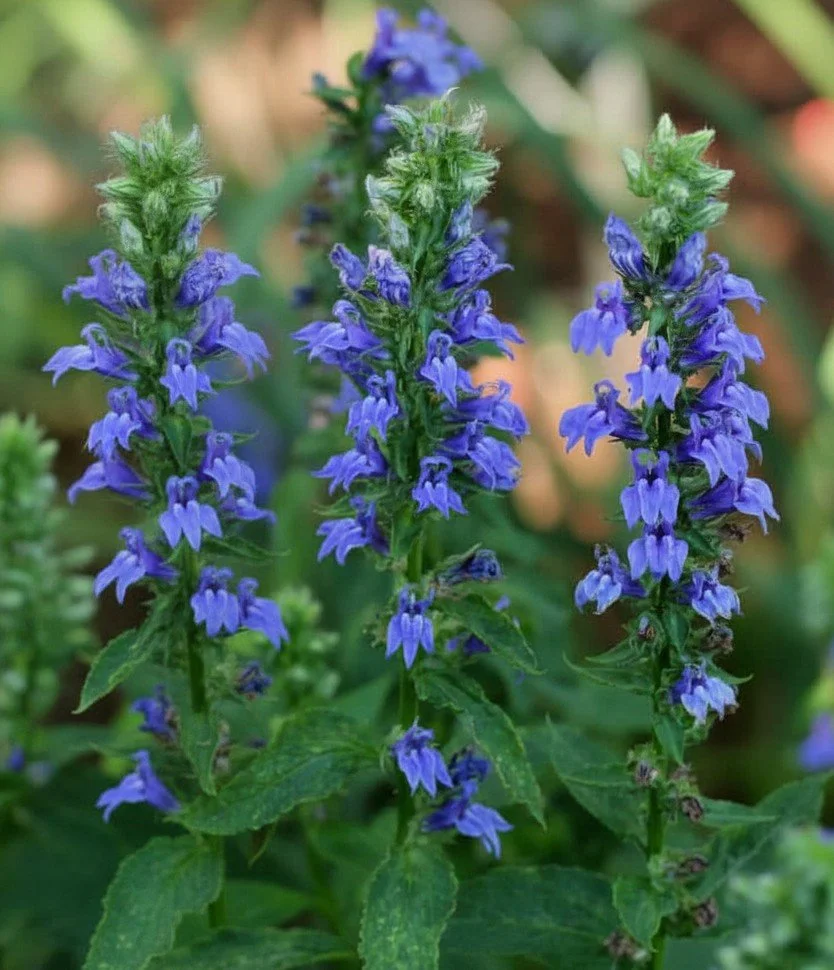
While many plants are masters of the dry, sunny prairie, Great Blue Lobelia is the perfect choice for the slightly cooler or damper spots in your landscape. A stunning, clump-forming native known for its densely packed spikes of tubular, bright blue flowers. It is a fantastic "structural" plant that brings a pop of rare color to the garden just as the mid-summer heat begins to peak. It prefers medium to wet soils, especially with a little shade.
Sun Exposure Full Sun to Partial Shade (Prefers some afternoon shade)
Water Needs Medium to High; prefers consistently moist soil
Soil Type Adaptable; thrives in Muck, Clay, or Loam
Mature Height 2 – 3 feet
Deer Resistance Moderate - High
Bloom Time July – October
Bloom Color Blue
Plant Spacing 12 – 18 inches
Color: The flowers are arranged in a crowded spike that bloom in true blue color from the bottom up.
Well-Behaved Growth: It is a clump-forming perennial that stays tidy and upright. While it may self-seed in moist conditions, it does not have aggressive rhizomes.
Versatile Placement: Can be found in wet prairies, pond and creek edges, soggy meadows, marshland borders and other moist areas.
Deer Resistant: It produces a compound called “lobeline” which deters herbivores.
Pollinators: The deep blue flower spikes attract many different bees and butterflies. You’ll often see bumblebees prying the petals apart to disappear entirely inside the bloom for nectar.
Hummingbirds: While they usually prefer red flowers (like its cousin, the Cardinal Flower), hummingbirds will frequently visit Great Blue Lobelia for its high nectar content.
Late-Season Support: Its long bloom period provides a reliable food source for pollinators during the transition into autumn.
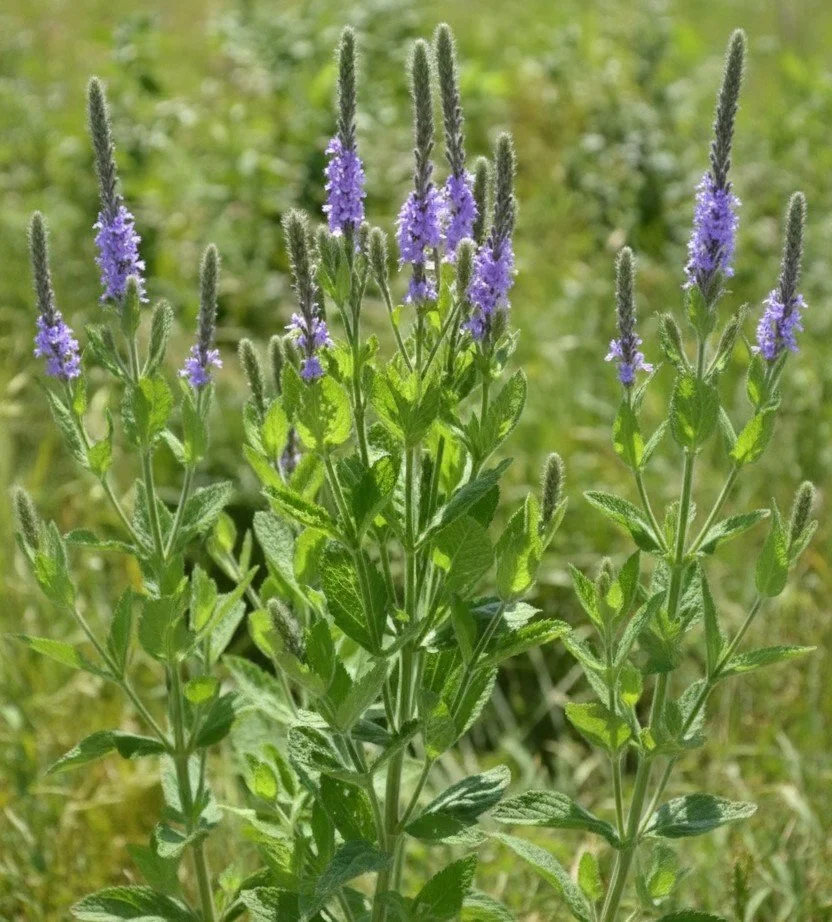
A standout for its narrow, upright spires of lavender-purple flowers that bloom from the bottom up, Hoary Vervain adds a formal "candelabra" look to the landscape. It is remarkably drought-tolerant and maintains its silver-green foliage even during the most punishing summer heat.
Sun Exposure Full Sun to Partial Shade
Water Needs Low; very drought-tolerant
Soil Type Well-drained Sand, Loam, or Rocky/Gravelly soil
Mature Height 2 feet
Deer Resistance High
Bloom Time June – September
Bloom Color Purple, Blue
Plant Spacing 10 – 12 inches
Blooms: The flowers are arranged on long, slender spikes that bloom from the bottom to the top. This results in a very long flowering season as the rings of purple slowly "climb" the stem.
Silvery Texture: The leaves are thick, serrated, and covered in soft white hairs, which protect the plant from water loss and give the foliage a unique frosted look.
Non-Aggressive: While it can self-seed in open soil, it grows in a neat, strictly vertical clump, making it a "polite" neighbor that won't flop over or crowd out other plants.
Butterflies: It is a high-priority nectar source for many butterflies, including the Common Buckeye, Silver-spotted Skipper, and various Hairstreaks.
Specialist Bee Support: It is a vital plant for the Verbena Bee (Calliopsis nebraskensis), which specializes in collecting pollen from this specific genus.
Host Plant: It serves as the larval host for the Common Buckeye butterfly.
No results match your search. Try removing a few filters.