
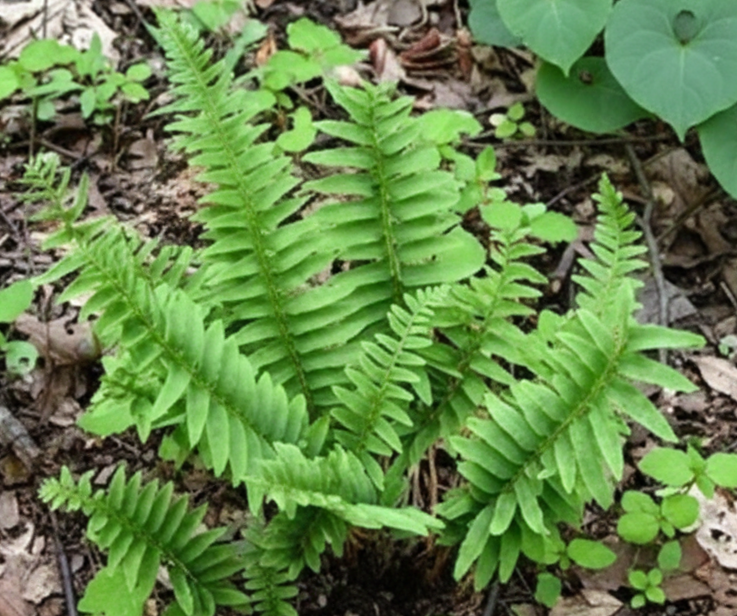
The Christmas Fern is one of the most reliable and beloved evergreen ferns of the North American woodland. It earned its name because its glossy, deep-green fronds stay vibrant and fresh even through the winter. This fern grows in a fountain-like clump 1-2 feet wide, but will not creep. It is a slow-growing but incredibly sturdy plant that provides a lush, consistent backdrop for colorful spring ephemerals like Bloodroot or Wild Ginger.
Sun Exposure Part Shade to Full Shade
Water Needs Medium; drought-tolerant once established
Soil Type Well-drained, moist Loam or Sand
Mature Height 1 to 2 feet
Deer Resistance High
Bloom Time Non-flowering (Produces spores in late summer)
Plant Spacing 1.5 to 2 feet
Evergreen Interest: Unlike many ferns that die back at the first frost, the Christmas Fern remains green all winter, providing much-needed color in a dormant landscape.
Easy Identification: Look for the "stocking" shape at the base of each pinna (leaflet)—a small lobe that looks like a tiny Christmas stocking or Santa’s boot.
Low Maintenance: Highly adaptable - It is one of the few ferns that can tolerate slightly drier soil conditions once its root system is mature.
Black Walnut Resistant
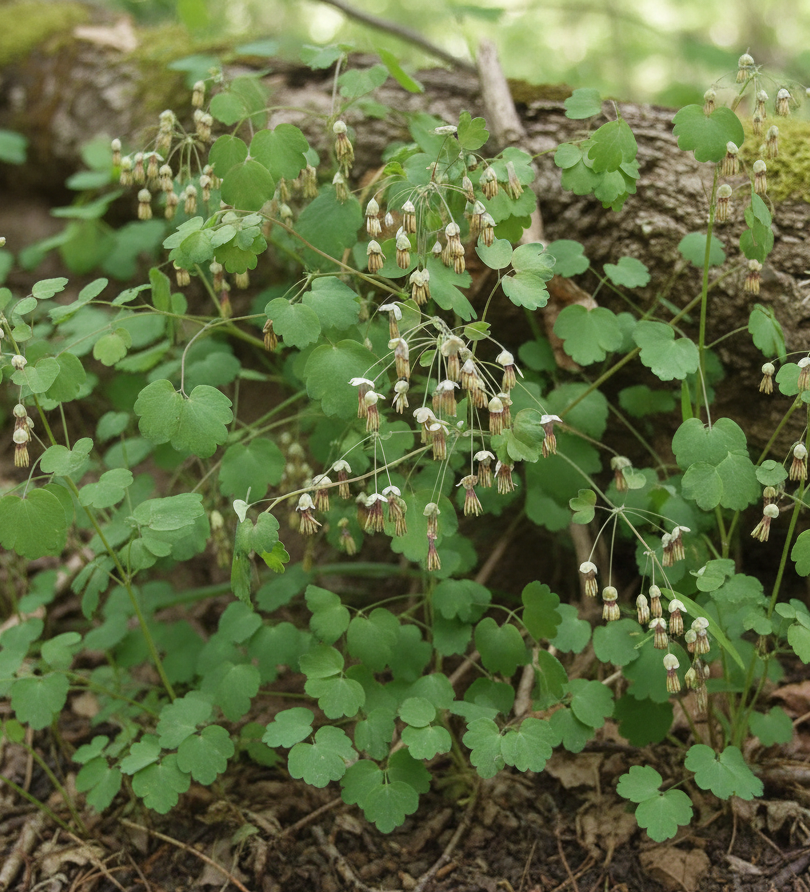
Known for its delicate, fern-like foliage that resembles a Maidenhair Fern or Columbine, this native perennial adds a soft, airy texture to any shaded garden. It is one of the first plants to emerge in the spring. The dioecious plant grows either male, or female or female flowers on separate plants. The male plants produce dangling, tassel-like yellow stamens that look like tiny chandeliers. The female plants tend to maintain a more upright appearance and are greenish-white flowers with pale purple pistils. This understated beauty is perfect for gardeners who appreciate intricate details and fine foliage.
Sun Exposure Part Shade to Full Shade
Water Needs Medium; prefers consistent moisture
Soil Type Rich, moist, well-drained Loam or Sandy soils
Mature Height 1 to 2 feet
Deer Resistance High
Bloom Time April – May
Bloom color White
Plant Spacing 10 - 12 inches
Lacy Foliage: The blue-green, compound leaves remain attractive throughout the growing season, providing a beautiful contrast to broader-leaved plants like Wild Ginger.
Wind Pollinated: Because it relies on the wind rather than insects for pollination, its flowers have a unique, hanging structure designed to catch the spring breeze. It is best to plant several plants near each other since seed production is dependent on the wind.
Non-Aggressive: A polite clump-forming plant that fits perfectly into a rock garden or as an accent along a woodland path.
Host Plant: Serves as a food source for several specialized moth species, including the Pink-Tinted Beauty.
Black Walnut Tolerant
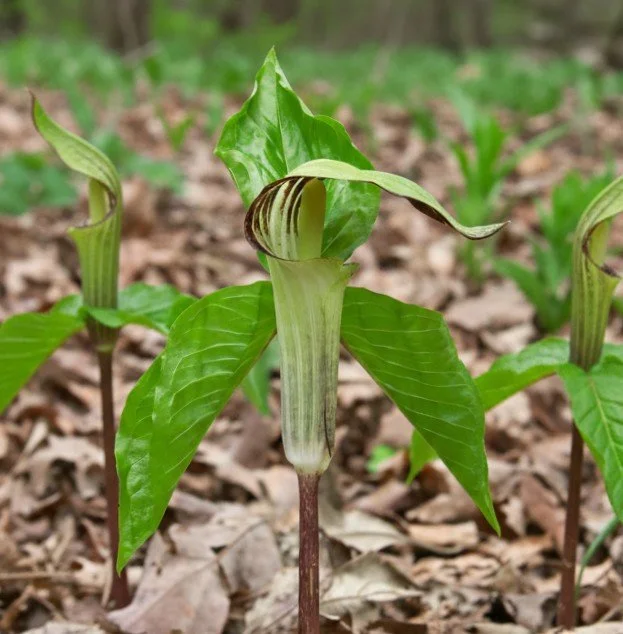
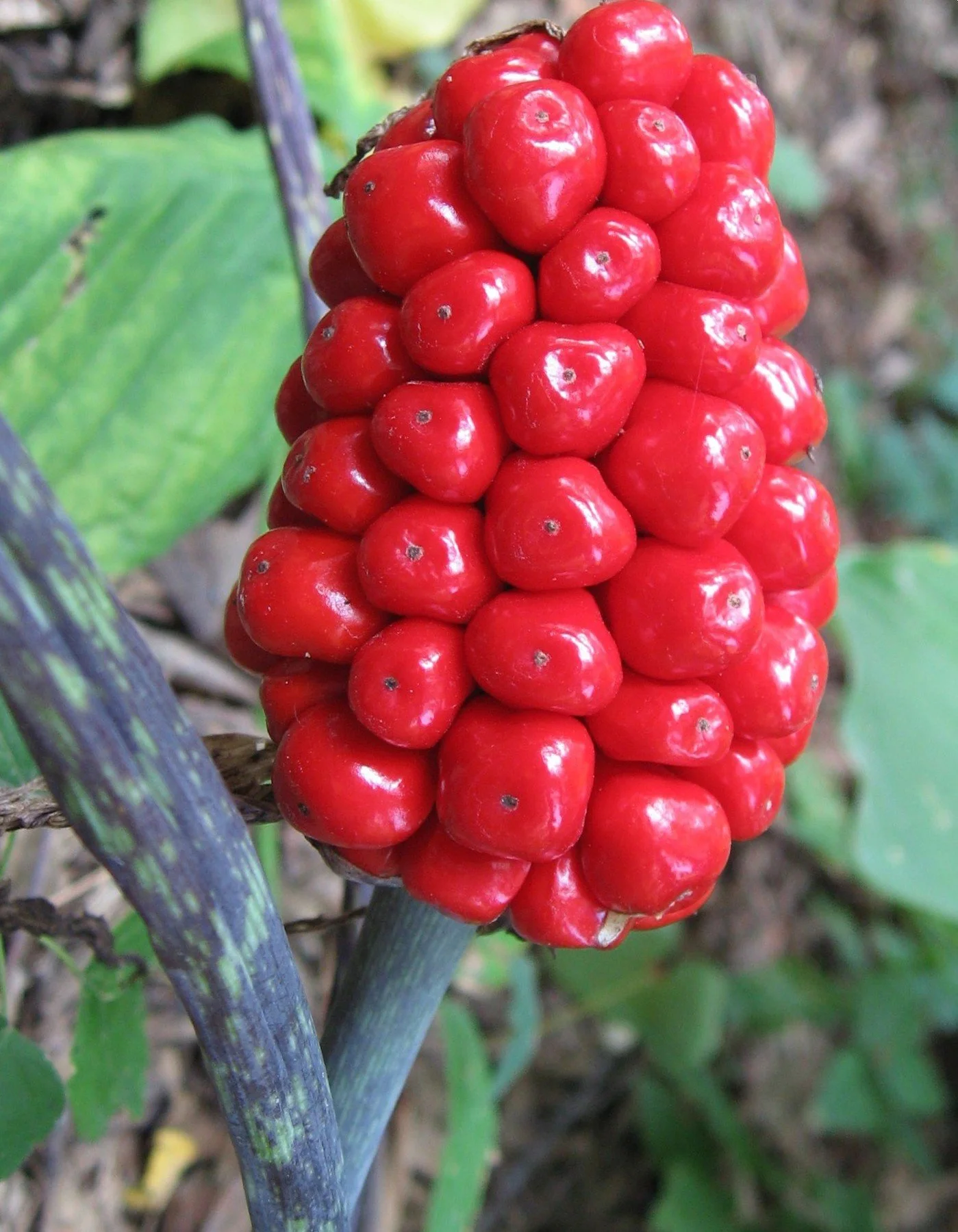
Jack-in-the-Pulpit is one of the most recognizable plants of the North American spring woodland. It is famous for its unusual, chalice-like flower structure called a "spathe," which curves over a central spike known as the "spadix" (or "Jack"). This hooded flower often features striking vertical stripes in shades of green, maroon, or deep purple.
Beyond its spring bloom, this plant remains a standout. Its large, three-parted leaves remain throughout the summer, and by autumn, the flower transforms into a stunning cluster of bright, shiny red berries that pop against the forest floor.
Sun Exposure Part Shade to Full Shade
Water Needs Medium to High; prefers consistently moist soil
Soil Type Rich, Muck, Clay, Loam or Sand, seasonally wet locations
Mature Height 1 to 2 feet
Deer Resistance High
Bloom Time April – June
Plant Spacing 10 - 18 inches
Appearance: The hooded "pulpit" offers a unique, architectural look that contrasts beautifully with soft ferns and mosses.
Fascinating Biology: A single plant can change its biological sex from year to year based on the nutrients stored in its underground corm.
Fall Color: The shiny green berries that form in mid-summer turns a brilliant, waxy red, providing a second season of high visual interest.
Black Walnut Tolerant
Specialized Pollination: Attracts small gnats and flies that are lured into the spathe to facilitate pollination.
Fruit for Birds: The bright red berry clusters are a food source for several woodland birds, including Wild Turkeys and Wood Thrushes.
Natural Indicator: Its presence often signals a healthy, undisturbed woodland ecosystem with rich, high-quality soil.
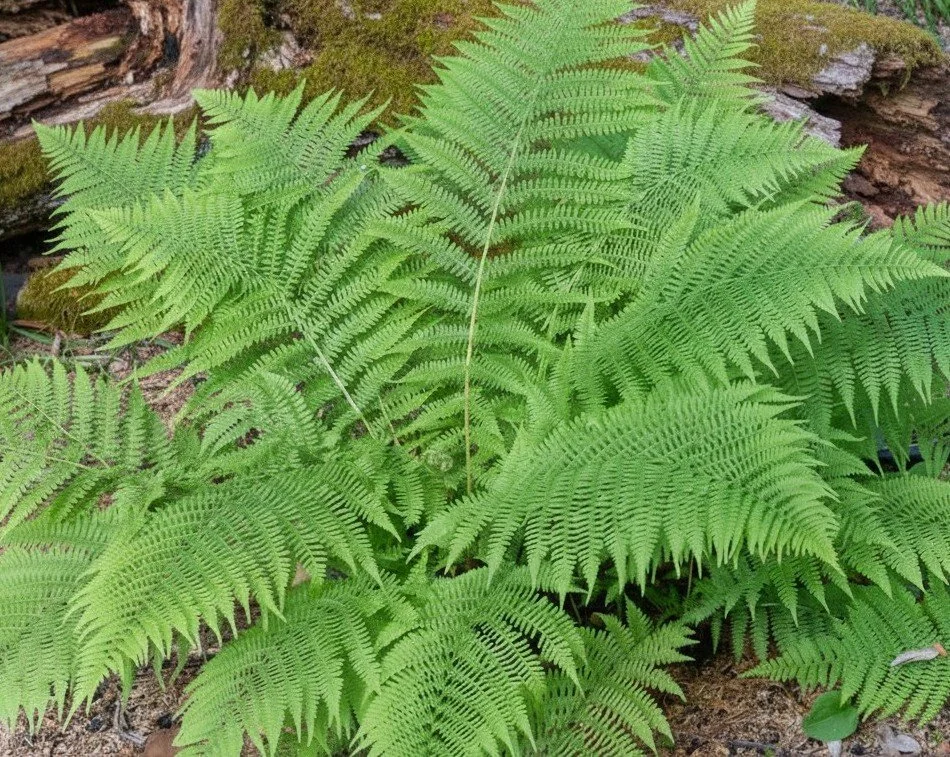
True to its name, the Lady Fern is celebrated for its soft, lacy, and exceptionally graceful appearance and is highly prized by gardeners for its versatility. It is slightly more tolerant of sun and varying soil moisture than many other fern species, making it an excellent choice for those new to woodland gardening or for filling in large, shaded areas with lush, feathery foliage.
Sun Exposure Part Shade to Full Shade (Can tolerate more sun if kept moist)
Water Needs Medium to High; prefers consistent moisture
Soil Type Rich, moist Loam
Mature Height 1 to 3 feet
Deer Resistance High
Bloom Time Non-flowering (Produces spores on the underside of fronds)
Plant Spacing 6 to 12 inches
Black Walnut Tolerant
Feathery Texture: The highly dissected pinnae (leaflets) give this fern a soft, airy look that provides a beautiful contrast to broader-leaved plants like Wild Ginger or Jack-in-the-Pulpit.
Naturalizer: Lady Ferns spread slowly via rhizomes, eventually forming large, luxurious colonies that act as a stunning backdrop for spring wildflowers.
Hardy & Adaptable: Once established, it is remarkably resilient and can handle a wider range of light and soil conditions than more sensitive fern varieties.
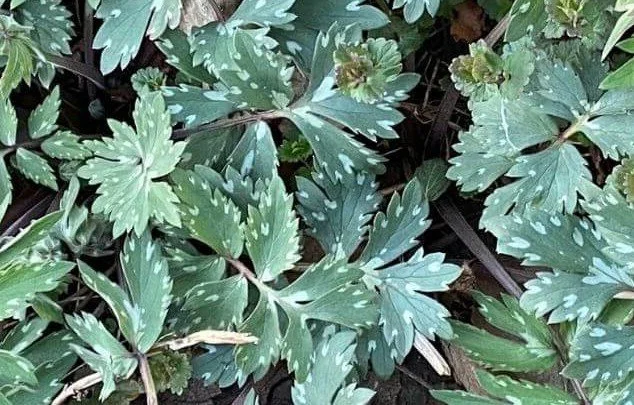
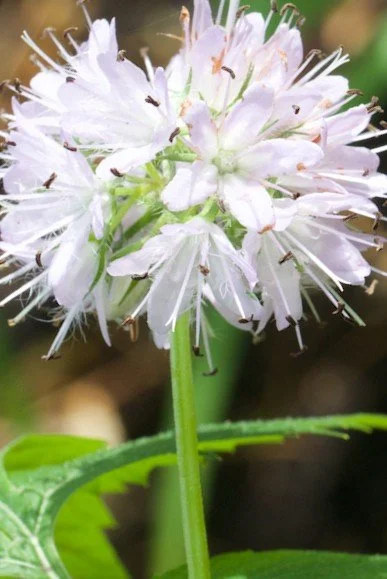
Known for its beautiful "water-spotted" foliage and unique, shimmering blooms, its name comes from the distinctive silvery-white markings on its young leaves, which look as though water has splashed across them and left a permanent stain. These markings usually fade as the summer heat sets in, leaving behind a lush, deep green backdrop. In late spring, the plant sends up clusters of delicate, bell-shaped flowers that range from white to pale lavender. The flowers feature long, protruding stamens that give them a whimsical, "fuzzy" appearance. This plant is a rapid grower that excels at filling in gaps between larger shrubs or trees, creating a dense and healthy woodland floor.
Sun Exposure Part Shade to Full Shade
Water Needs Medium to High; prefers moist soil
Soil Type Rich, moist Loam
Mature Height 1 to 2 feet
Deer Resistance Moderate
Bloom Time May – June
Bloom Color Shades of lavender to white
Plant Spacing 10 to 12 inches
Decorative Foliage: The deeply lobed leaves provide excellent texture even when the plant is not in bloom.
Efficient Groundcover: Virginia Waterleaf spreads via rhizomes and self-seeding, making it perfect for naturalizing large areas where you want to suppress weeds.
Hardy & Resilient: It thrives in the dappled sunlight of a forest edge and is quite competitive, holding its own against more aggressive garden plants.
Can be aggressive spreader: keep this in mind when picking your planting site.
Pollinator Powerhouse: The nectar-rich flowers are a major draw for native bees, including bumblebees and masonry bees, as well as beneficial syrphid flies.
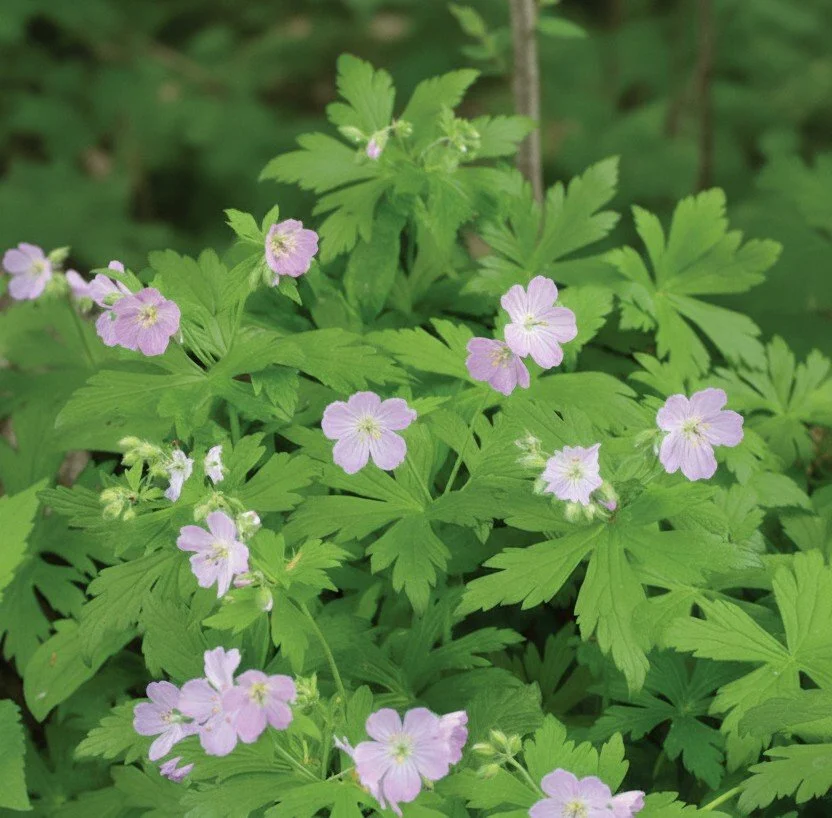
This native perennial is highly prized for its loose clusters of five-petaled, rose-pink to lavender-purple flowers that are very attractive to pollinators. Each bloom is etched with delicate fine lines that act as "nectar guides" for visiting pollinators. Unlike its cultivated cousins, the Wild Geranium is perfectly suited for the dappled light of a forest edge or a shaded garden bed, but it will do just as well in the sun!
Sun Exposure Full Sun, Part Shade, Shade
Water Needs Medium; prefers consistent moisture but is quite adaptable
Soil Type Rich, moist, well-drained Clay, Loam or Sand
Mature Height 1 to 2 feet
Deer Resistance High
Bloom Time April – July
Bloom Color Lavendar
Plant Spacing 10 to 12 inches
Black Walnut Tolerant
Self-Seeding Beauty: One of the most charming features is its seed pods, which resemble a crane’s bill. When ripe, they "spring" open to launch seeds several feet away, allowing the plant to naturalize beautifully without being aggressive.
Textured Foliage: The large, hand-shaped leaves provide an excellent mid-height filler that covers the ground effectively, helping to suppress weeds.
Versatility: While it loves the shade, it can handle more sun if the soil is kept sufficiently moist.
Nectar Source: A vital early-season food source for many native bees, including mining bees, mason bees, and bumblebees.
Butterfly Support: Frequently visited by several species of butterflies and skippers for its accessible nectar.
Host Plant: Serves as a host for the larvae of various moths including the White-Marked Tussock moth.
No results match your search. Try removing a few filters.