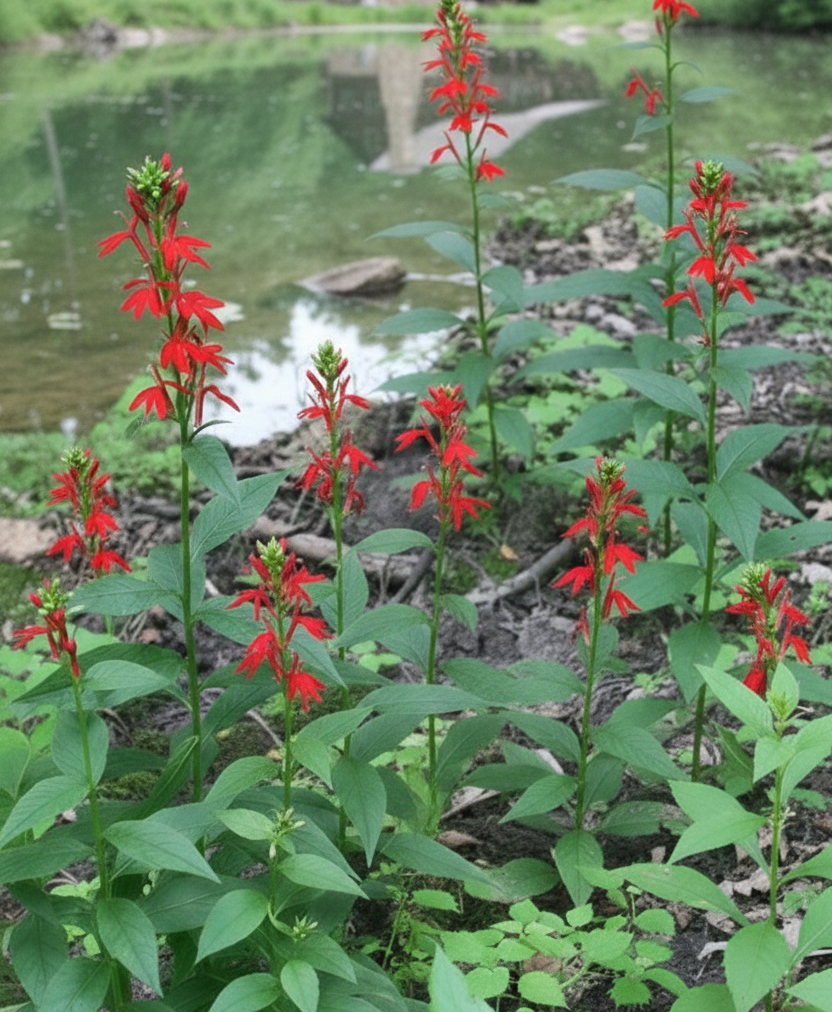
This breathtaking native perennial is famous for its towering spikes of vivid red blooms that stand out like a beacon in the landscape. While many flowers rely on bees, the Cardinal Flower has evolved specifically for the hummingbird; its tubular blossoms are perfectly shaped for their long bills. What makes this plant truly special is its ability to brighten the damp, challenging "wet feet" spots of your yard. Thriving in areas where other plants might succumb to root rot, Cardinal Flower is perfect for rain gardens, pond edges, or low-lying swales.
Sun Exposure Full Sun to Partial Shade
Water Needs Medium to High; prefers consistently moist soil
Soil Type Rich Loam, Clay, or Muck
Mature Height 2 – 4 feet
Deer Resistance Moderate - High
Bloom Time July – September
Bloom Color Red
Plant Spacing 6 - 16 inches
Color: The blooms possess a unique "velvety" texture and are a shade of scarlet red. It is often considered the most vibrant in the North American flora.
Wetland Specialist: Unlike most garden favorites, this plant thrives in heavy clay and saturated soils, making it a problem-solver for drainage areas.
Primary Hummingbird Source: The Ruby-throated Hummingbird is the main pollinator of this species. Watching them hover around the crimson spikes is a quintessential summer experience.
Butterfly Favorite: Large butterflies, such as the Pipevine Swallowtail and various Fritillaries, are frequently drawn to the nectar-rich tubular flowers.
Pro Tip Cardinal Flower is a "short-lived" perennial that maintains its presence by self-seeding and forming small "offsets" or new rosettes at the base. To ensure it returns year after year, avoid covering the base of the plant with heavy wood mulch in the fall. The young green rosettes need a little bit of light and air to survive the winter and prepare for their spectacular summer rise!
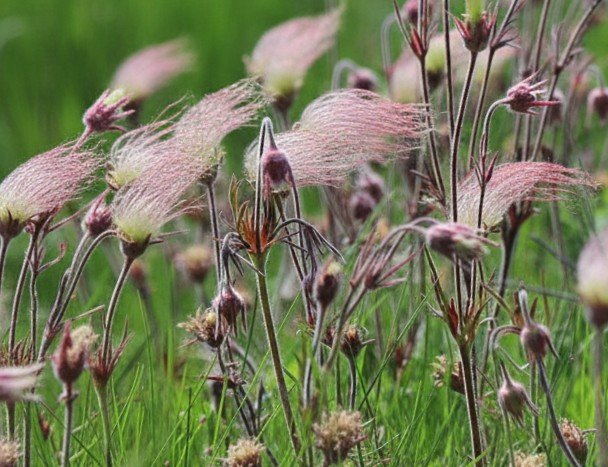
A distinctive and hardy ground-covering perennial. It’s a low-growing charmer that transforms after it blooms, turning from nodding pink bells into feathery, smoky pink seed heads.
Sun Exposure Full Sun to Partial Shade
Water Needs Low; prefers well-drained conditions
Soil Type Well-drained Loam, Sand, Rocky, or Gravelly soil
Mature Height 8 inches
Deer Resistance High
Bloom Time April – June
Bloom Color Pink/Red
Plant Spacing 6 – 8 inches
Nodding Bells: Before the "smoke" appears, each stem holds three small, reddish-pink bells that hang downward.
The "Smoke" Effect: After the nodding pink flowers are pollinated, the styles elongate into 2-inch long, feathery pink plumes. In a mass planting, these look like a low-lying pink cloud or "smoke" hovering over the ground.
Fern-like Foliage: The leaves are deeply serrated, soft, and resemble tiny fern fronds.
Slow Spreading: Prairie Smoke will slowly spread by rhizome in well-drained soils to form a ground cover and work well in in dry rock gardens.
Early Season Nectar: It is one of the earliest sources of food for a variety of bees and other pollinators.
No results match your search. Try removing a few filters.