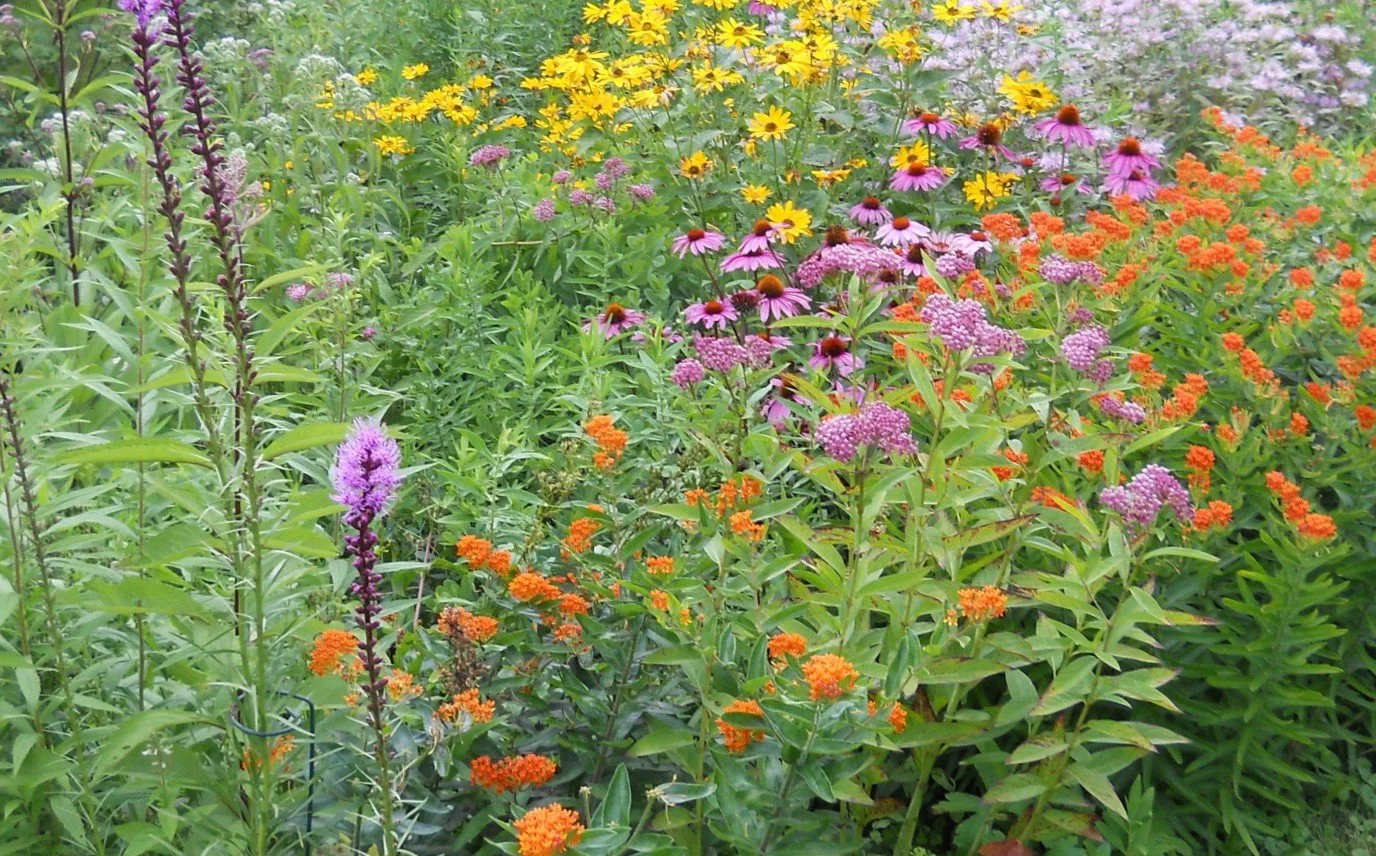
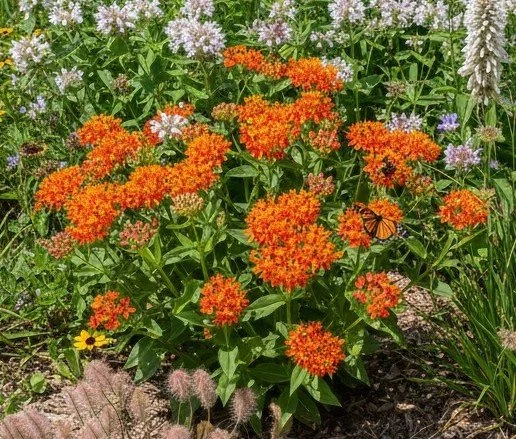
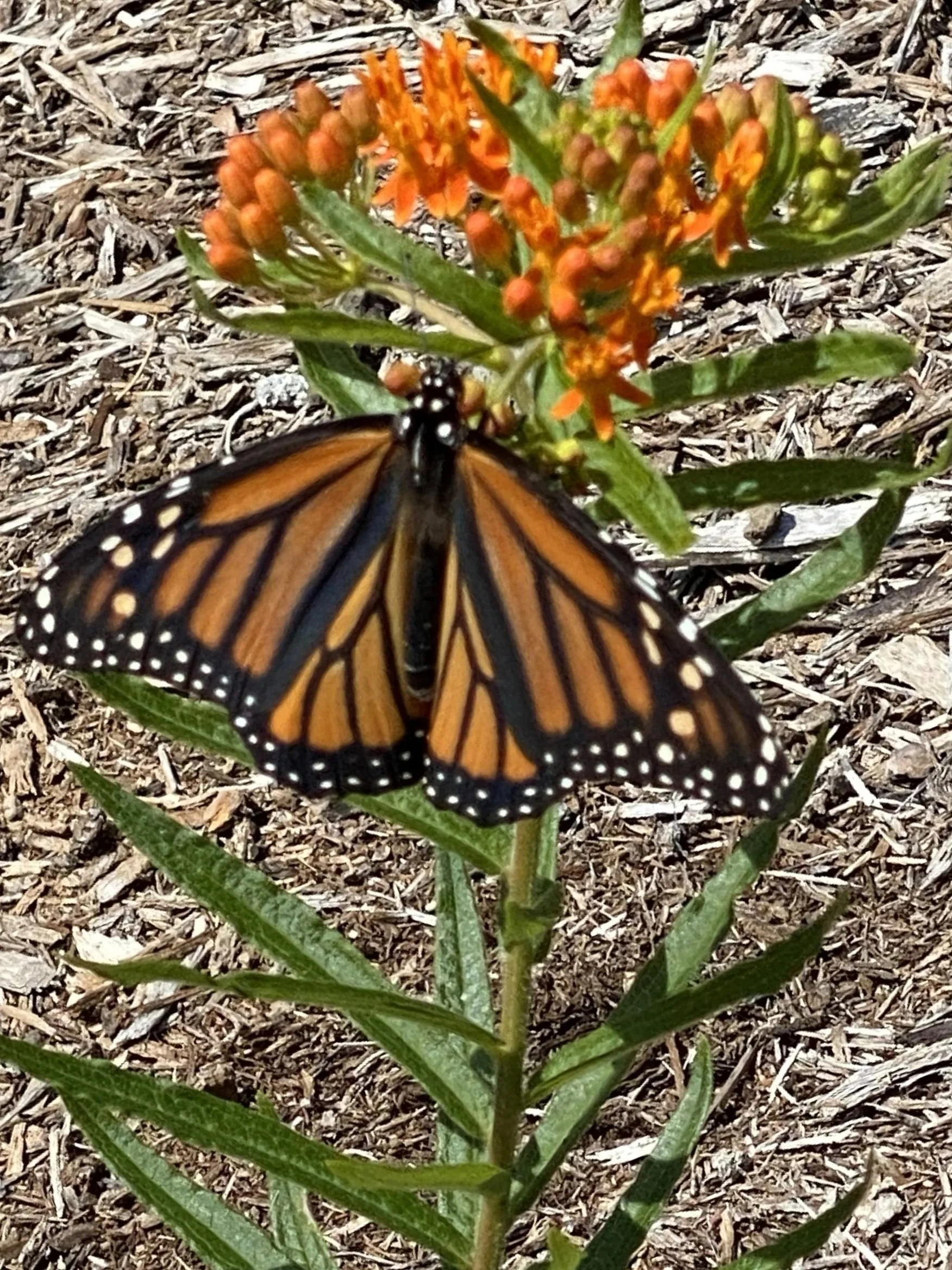
This award-winning native perennial is famous for its flat-topped clusters of brilliant, neon-orange flowers that practically glow in the garden. Unlike other milkweeds, Butterfly Weed is compact and well-behaved, making it a perfect fit for both formal flower beds and wilder meadow designs.
One of its best features for the home gardener is its extreme durability. Because it develops a deep, sturdy taproot, it is incredibly drought-tolerant once established and thrives in the kind of poor, sandy soil where other plants might struggle. It is a true "plant it and forget it" beauty that rewards you with weeks of intense color from mid-to-late summer.
Sun Exposure Full Sun
Water Needs Low to Medium; very drought-tolerant
Soil Type Well-drained Sand or Loam soil
Mature Height 1.5 - 2 feet
Deer Resistance High
Bloom Time June – August
Bloom Color Orange
Plant Spacing 1 to 3 feet
Vivid Blooms: The intense orange hue is rare in the native plant world and provides a high-contrast focal point.
Low Maintenance: Highly resistant to pests and diseases; it actually prefers "neglect" over heavy fertilizing or overwatering.
Late Emerger: Don't worry if you don't see it in early spring! It is one of the last perennials to wake up, usually waiting until the soil is truly warm.
Monarch Host Plant: As a member of the milkweed family, it is an essential host plant where Monarch butterflies lay their eggs and their caterpillars feed.
Pollinator Magnet: Its nectar is highly accessible, attracting a massive variety of butterflies, native bees, and even hummingbirds.
Pro Tip: Because of its long taproot, Butterfly Weed does not like to be moved once it is planted. Choose its "forever home" carefully! To get the best blooms, plant it in your sunniest, driest spot and avoid heavy mulching right against the crown, as it loves to stay dry and warm.
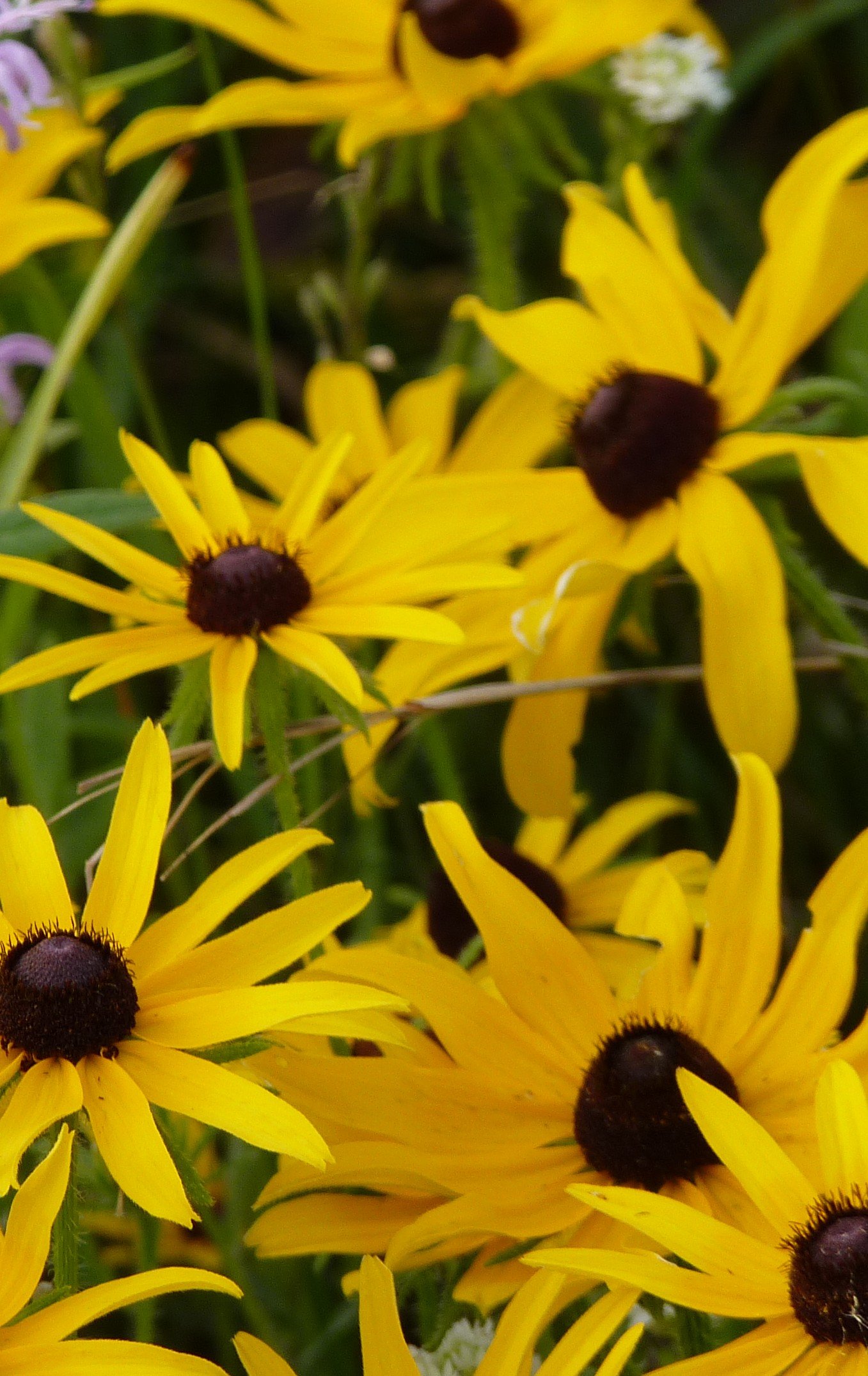
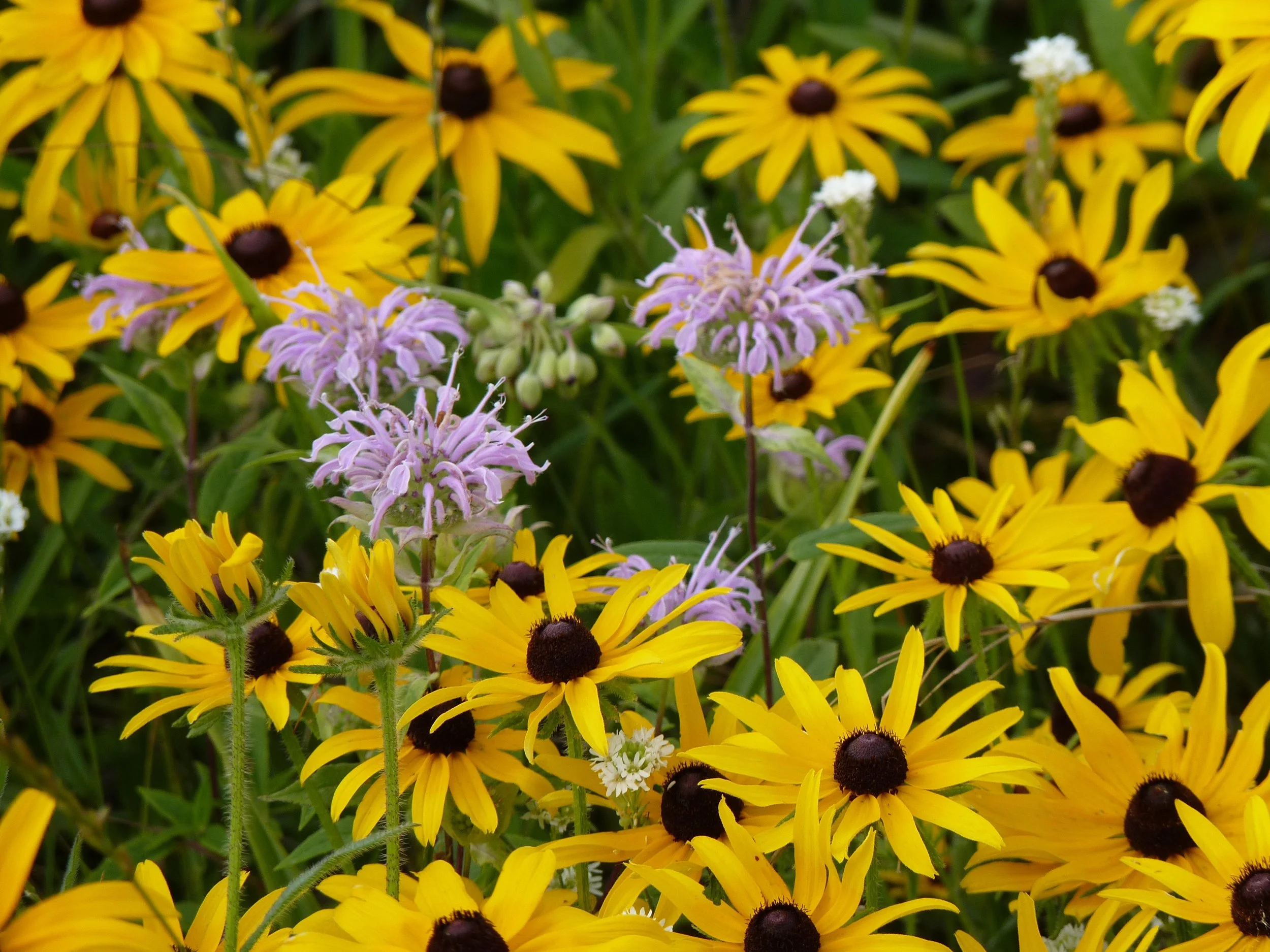
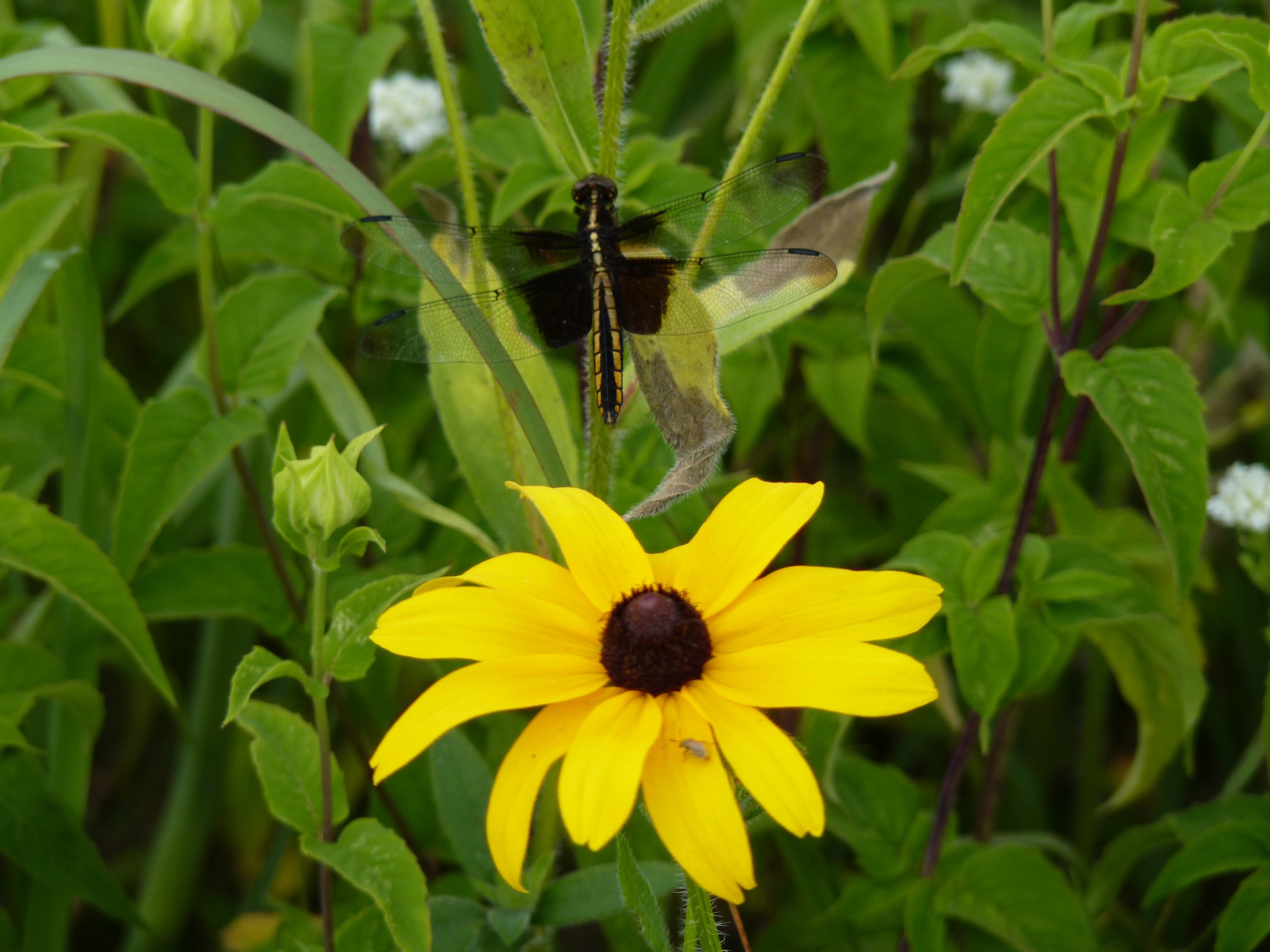
A staple of the American landscape, these iconic wildflowers feature bright daisy-like petals surrounding a deep chocolate-brown central cone. Black-Eyed Susans are extraordinarily hardy, heat-tolerant, and capable of thriving in conditions where more delicate flowers might falter. They are the perfect choice for gardeners who want high-impact color with minimal effort.
Sun Exposure Full Sun (Preferred) to Partial Shade
Water Needs Low to Moderate; very drought-tolerant once established
Soil Type Needed Adaptable; can thrive in Muck, Clay, Loam or Sandy soils.
Mature Height 2 – 3 feet
Deer Resistance Moderate
Bloom Time June – October
Bloom Color Yellow
Plant Spacing 10 – 12 inches
One of the longest bloom periods of any summer perennial, often lasting from early summer right through the first frost.
The plant is biennial that blooms and completes in life cycle in it’s seconds year. They are self-seeders, so they will appear in your garden for years to come but can succumb to longer-lived perennials in later years after planting.
Highly resistant to heat, humidity, and drought, making them ideal for "problem spots" in the yard.
Pollinator Favorite: The wide, flat blooms act as perfect landing pads for a variety of butterflies, including Monarchs, the Wavy-Lined Emerald and the Silvery Checkerspot.
Bee Support: A primary nectar source for honeybees and several species of native solitary bees.
Birds: If you delay your garden cleanup until spring, the sturdy seed heads provide essential winter forage for goldfinches and other small songbirds.
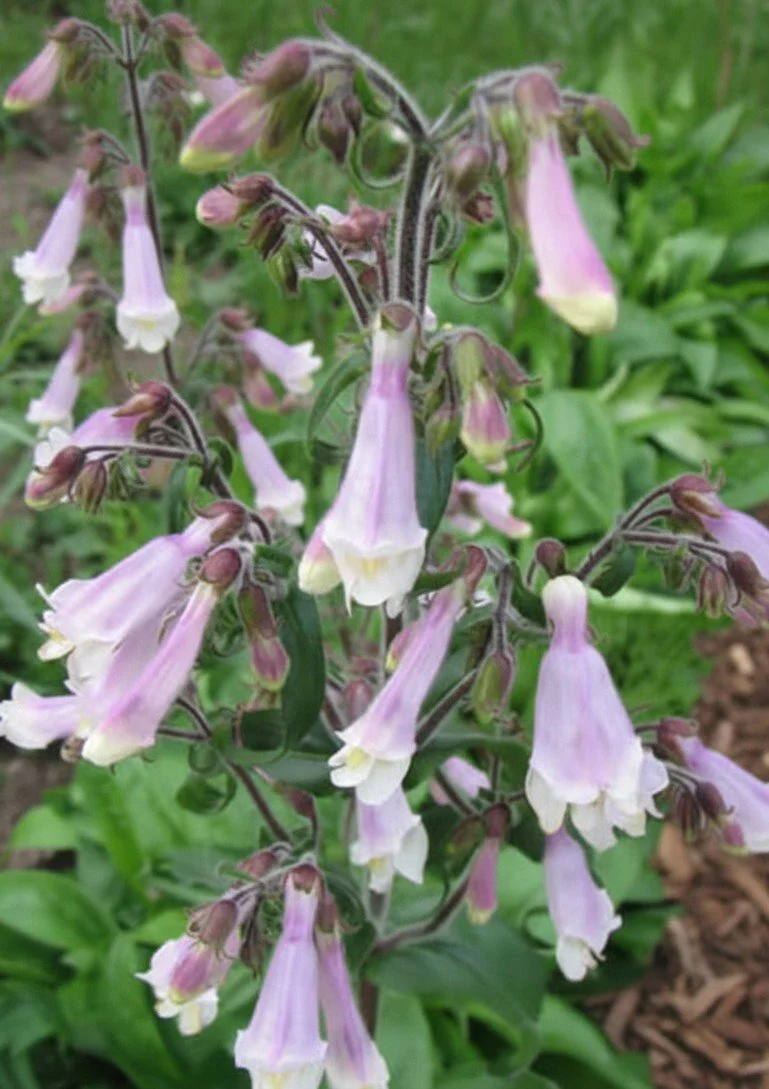
Blooming from May-June, Hairy Beardtongue attracts several types of bees, hummingbirds and butterflies. It is one of the more shade-tolerant Penstemons, making it a versatile choice for those tricky "transition" spots in your landscape. If you’re a fan of the "polite" nature of the Foxglove Beardtongue but want something a bit shorter and more textured for the front of your garden, Hairy Beardtongue is a perfect choice.
Sun Exposure Full Sun, Partial Shade, Shade
Water Needs Low to Medium; very drought-tolerant once established
Soil Type Well-drained Sand, Loam, or Rocky soil
Mature Height 18 inches
Deer Resistance Moderate - High
Bloom Time May – June
Bloom Color Lavendar, Pink
Plant Spacing 10 - 12 inches
Low-Profile: Reaching only about 1–2 feet, it is significantly shorter than its Foxglove cousin, making it an ideal "front-of-the-border" plant.
Blooms: The trumpet-shaped flowers range in color from lavenders and pink to white. The long, thin blooms have five petals with a “hairy” protruding lip.
Rock Garden Champion: Because it thrives in well-drained, rocky, or even poor soils, it is a great choice for rock gardens or edges where other plants might struggle with the heat.
Early Pollinator Resource: It blooms in late spring, providing a critical early-season nectar source for native bees and butterflies before the summer begins.
Hummingbirds: Just like its taller relatives, the tubular flowers are a magnet for Ruby-throated Hummingbirds.
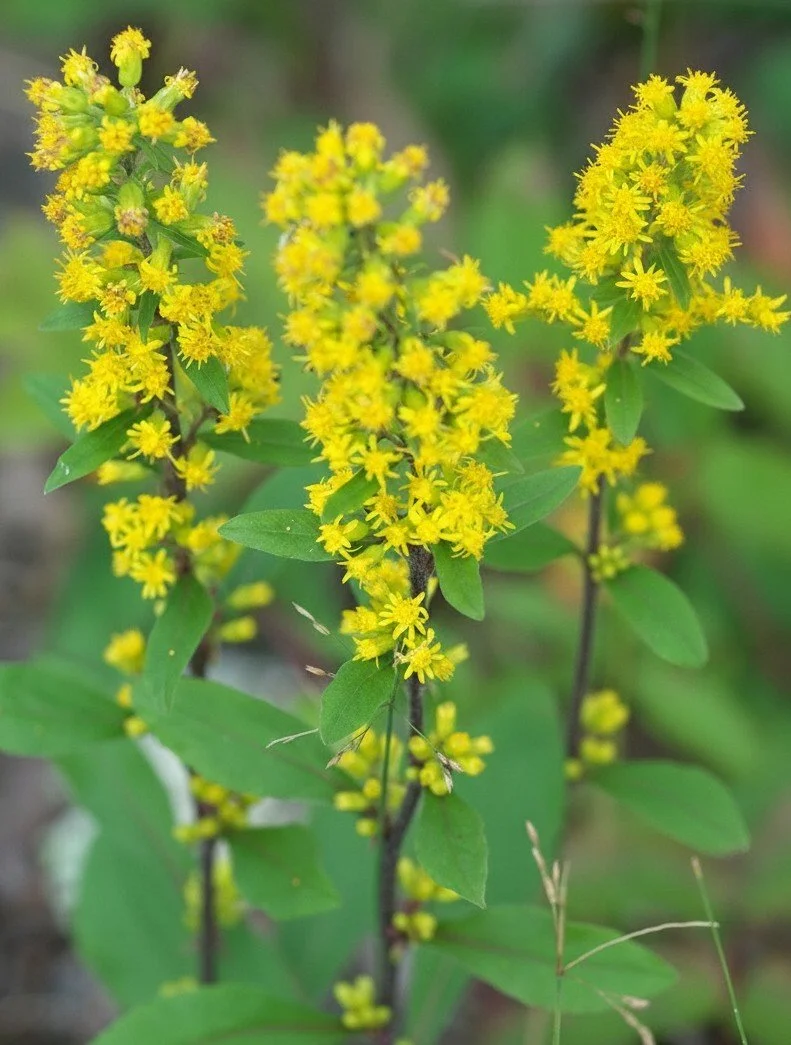
Unlike most goldenrods that branch out into arching plumes, this species grows in a distinct, upright spike, making it a fantastic structural choice for tight spaces or the middle of a layered bed. A distinctive and well-behaved goldenrod easily identified by its fuzzy, silver-haired stems and its unique upright growth habit. Rather than wide-spreading plumes, its flowers hug the stem in a dense, golden column, creating a "wand-like" appearance.
Sun Exposure Full Sun to Partial Shade
Water Needs Low to Medium; exceptionally drought-tolerant
Soil Type Well-drained Sand, Rocky, or Lean/Poor soil
Mature Height 1.5 – 3 feet
Deer Resistance High
Bloom Time August – October
Bloom Color Yellow
Plant Spacing 12 – 18 inches
Color: Its most striking feature is the dense coating of fine white hairs on the stem and leaves, giving the plant a soft, grayish-green cast even when it’s not in bloom. The yellow flowers are relatively large compared to other goldenrods, up to ¼ inch tall and face out from the branches.
Non-Aggressive Habit: Unlike its "runaway" relatives, Hairy Goldenrod is a clump-forming species. It stays in a tidy, vertical bunch, making it one of the best goldenrods for small landscapes or rock gardens.
Perfect for open dry woods, rocky outcrops, dunes.
Pollinators: The nectar-rich golden cylinders are a favorite for a variety of native bees, beneficial wasps, and butterflies.
Critical Fall Fuel: Because it blooms into October, it provides late season energy before the first hard frost.
*Don’t believe the myths—Goldenrod does not cause hay fever! Its pollen is heavy and sticky (designed to be carried by bees, not the wind). The real culprit for itchy eyes is usually Ragweed, which blooms at the same time but has inconspicuous green flowers. You can plant Hairy Goldenrod with confidence, knowing it brings beauty and health to your garden without the sneezing!
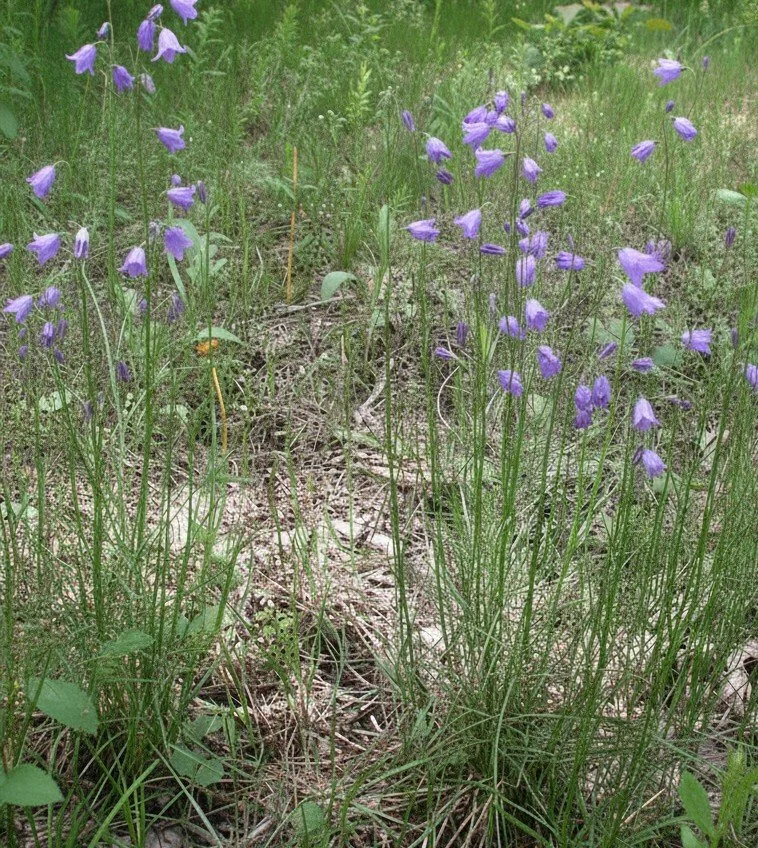
Harebell looks incredibly delicate with its wiry stems and nodding bells, but don’t let the looks fool you—this is a rugged survivor that can grow in the toughest of conditions. Known for its paper-thin, violet-blue bells that seem to float in the air, the Harebell is a versatile perennial that adds a touch of "fairytale" charm to the garden. It is famously long-blooming, often starting in early summer and continuing until the first hard frost.
Sun Exposure Full Sun to Partial Shade
Water Needs Low to Medium; very drought-tolerant once established
Soil Type Well-drained Loam, Sand, Rocky, or Gravelly soil
Mature Height 12 inches
Deer Resistance Moderate
Bloom Time June – September
Bloom Color Purple
Plant Spacing 6 – 8 inches
Unique Foliage: Its species name, rotundifolia, refers to its round basal leaves that appear in early spring. However, as the flower stalks rise, those leaves wither, leaving only very thin, grass-like foliage that makes the flowers look like they are hovering.
Resilient: Despite their "hair-like" stems, Harebells are remarkably wind-resistant and can handle harsh, exposed sites. They are the perfect choice for a rock garden or a stony edge.
Does well in dry sand, rocky crevices and gravelly soils.
Bloom Time: While many natives have a short window, the Harebell will often keep producing new bells for several months, especially if the spent blossoms are dead-headed.
Polinators: It is a favorite of small native bees..
Hummingbirds: Though small, hummingbirds are often seen investigating the blue bells during their mid-summer rounds.
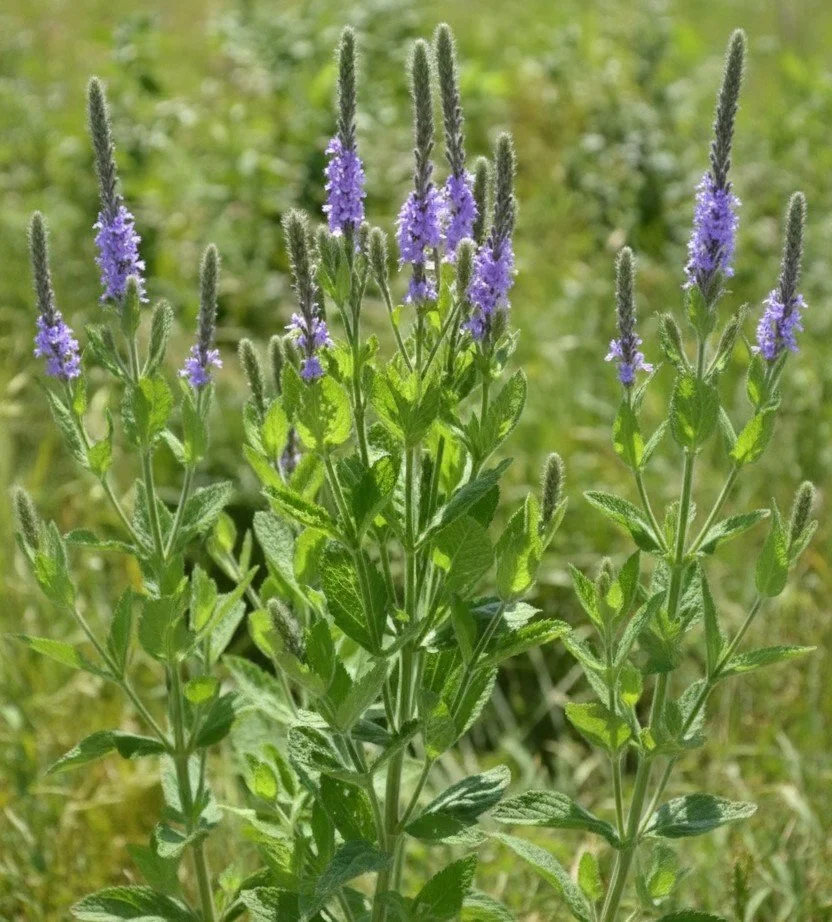
A standout for its narrow, upright spires of lavender-purple flowers that bloom from the bottom up, Hoary Vervain adds a formal "candelabra" look to the landscape. It is remarkably drought-tolerant and maintains its silver-green foliage even during the most punishing summer heat.
Sun Exposure Full Sun to Partial Shade
Water Needs Low; very drought-tolerant
Soil Type Well-drained Sand, Loam, or Rocky/Gravelly soil
Mature Height 2 feet
Deer Resistance High
Bloom Time June – September
Bloom Color Purple, Blue
Plant Spacing 10 – 12 inches
Blooms: The flowers are arranged on long, slender spikes that bloom from the bottom to the top. This results in a very long flowering season as the rings of purple slowly "climb" the stem.
Silvery Texture: The leaves are thick, serrated, and covered in soft white hairs, which protect the plant from water loss and give the foliage a unique frosted look.
Non-Aggressive: While it can self-seed in open soil, it grows in a neat, strictly vertical clump, making it a "polite" neighbor that won't flop over or crowd out other plants.
Butterflies: It is a high-priority nectar source for many butterflies, including the Common Buckeye, Silver-spotted Skipper, and various Hairstreaks.
Specialist Bee Support: It is a vital plant for the Verbena Bee (Calliopsis nebraskensis), which specializes in collecting pollen from this specific genus.
Host Plant: It serves as the larval host for the Common Buckeye butterfly.
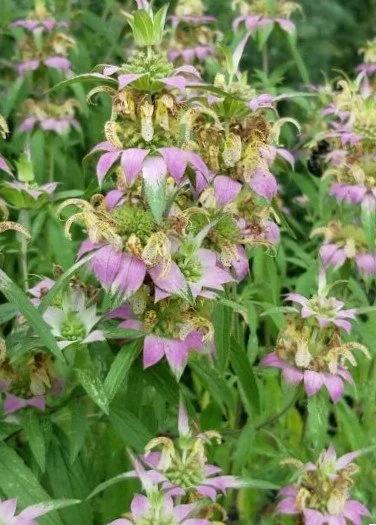
An extraordinary native perennial known for its stunning, multi-tiered flower spikes. Each "floor" of the spike features a ring of creamy, purple-spotted blossoms sitting atop showy, leaf-like bracts that blush a beautiful shade of lavender or pink. It’s usually found in sand prairies, hill prairies and oak savannas.
Sun Exposure Full Sun to Partial Shade
Water Needs Low; highly drought-tolerant
Soil Type Well-drained Sand, Loam, or Rocky soil
Mature Height 1 – 2 feet
Deer Resistance High
Bloom Time July – September
Bloom Color Lavendar, Pink
Plant Spacing 8 – 12 inches
Blooms: The flowers grow in distinct "tiers" or whorls around the stem. Even after the color of the bracts fades, the dried structures remain upright and add a geometric interest to the garden.
Aromatic Foliage: The leaves contain high levels of thymol (the same antiseptic oil found in Thyme and Oregano). When you brush against the plant, it releases a spicy, pleasant fragrance. This scent also deters animal browsing.
Sandy Soil Specialist: While it can grow in loam, it absolutely thrives in sandy or gravelly spots where other plants might wilt from the heat.
Biennial plant that self-seeds but is not aggressive.
Pollinators: The high nectar content attracts a constant parade of honeybees, bumblebees, and many butterflies including the Karner Blue butterfly.
It is a primary nectar source for the Great Black Wasp and other beneficial predatory wasps that are gentle to humans but great for natural pest control in the garden.
Host Plant: It is a host plant for the specialized Hermit Sphinx Moth and the Raspberry Pyrausta butterfly.
Pro Tip: Plant with Wild Lupine for optimal Karner Blue support.
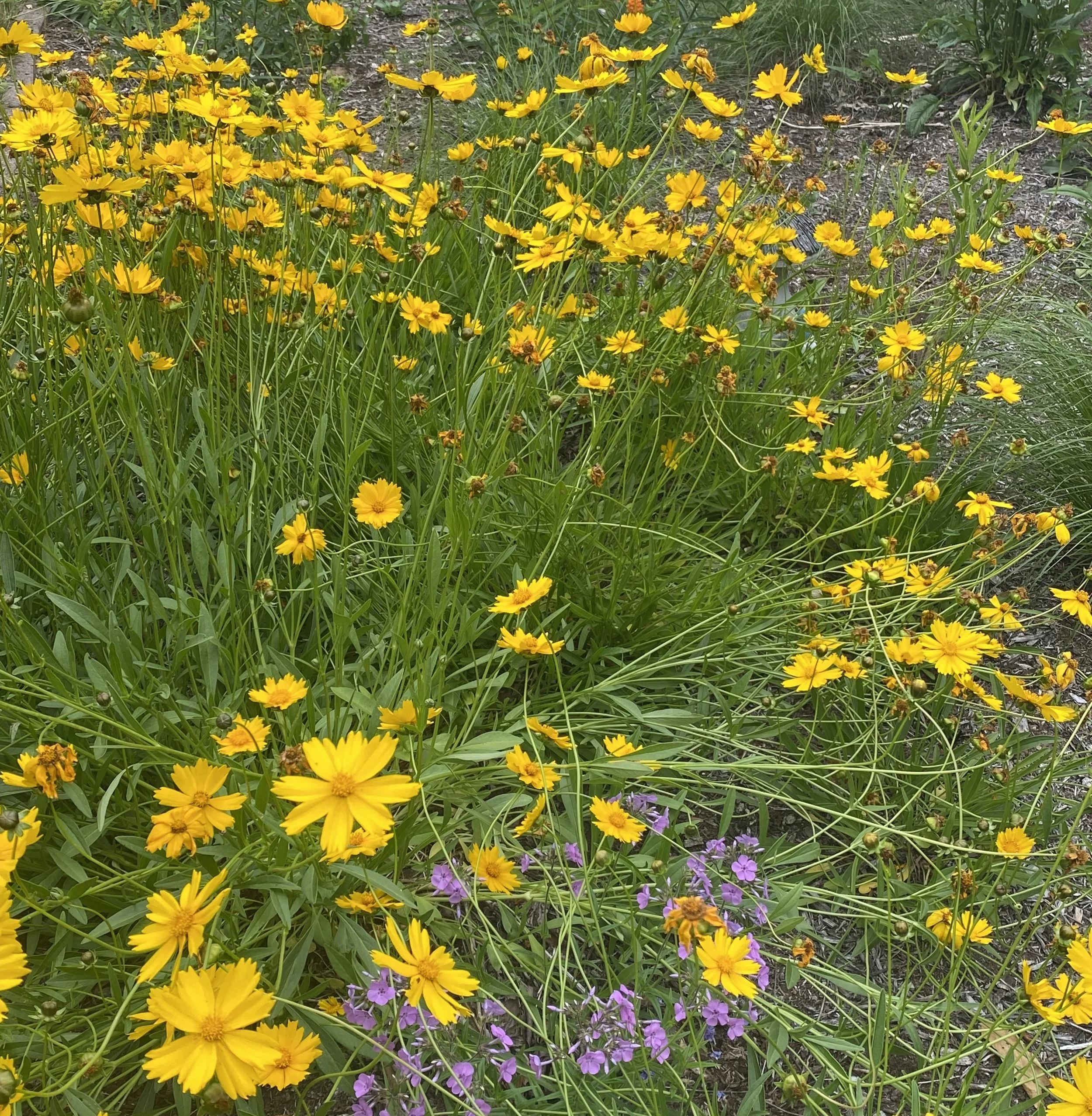
A bright, sunny perennial known for its abundance of daisy-like, yellow flowers with jagged-edged petals. It is exceptionally hardy and is often one of the first "prairie" plants to bloom, providing a long-lasting splash of color in early summer. It is one of the most popular and easiest-to-grow natives, bridging the gap between your late-spring bloomers.
Sun Exposure Full Sun
Water Needs Low; very drought-tolerant
Soil Type Well-drained Clay, Loam, Sand, Rocky, or Lean/Poor soil
Mature Height 2 feet
Deer Resistance Moderate - High
Bloom Time May – August
Bloom Color Yellow
Plant Spacing 10 – 16 inches
The "Sand Tickseed": Its nickname comes from its ability to thrive in poor, sandy, or gravelly soils where other plants might struggle. It actually prefers "lean" soil—if the soil is too rich, it may grow too quickly and flop over. Many think the seeds look like ticks.
Self-Seeding Beauty: While it is a perennial, it is also a prolific self-seeder. It will fill in gaps in your garden beds naturally, creating a lush, meadow-like appearance over time.
Promptly dead-head spent blossoms to prolong the blooming period.
Pollinators: The flat, open faces of the flowers make it easy for a wide variety of butterflies, and native bees to seen regularly. As many as 22 native bee species rely on Coreopsis plants.
Songbird Seeds: As the name "Tickseed" implies, the small, dark seeds resemble ticks. These seeds are a favorite snack for goldfinches and other small birds in the late summer
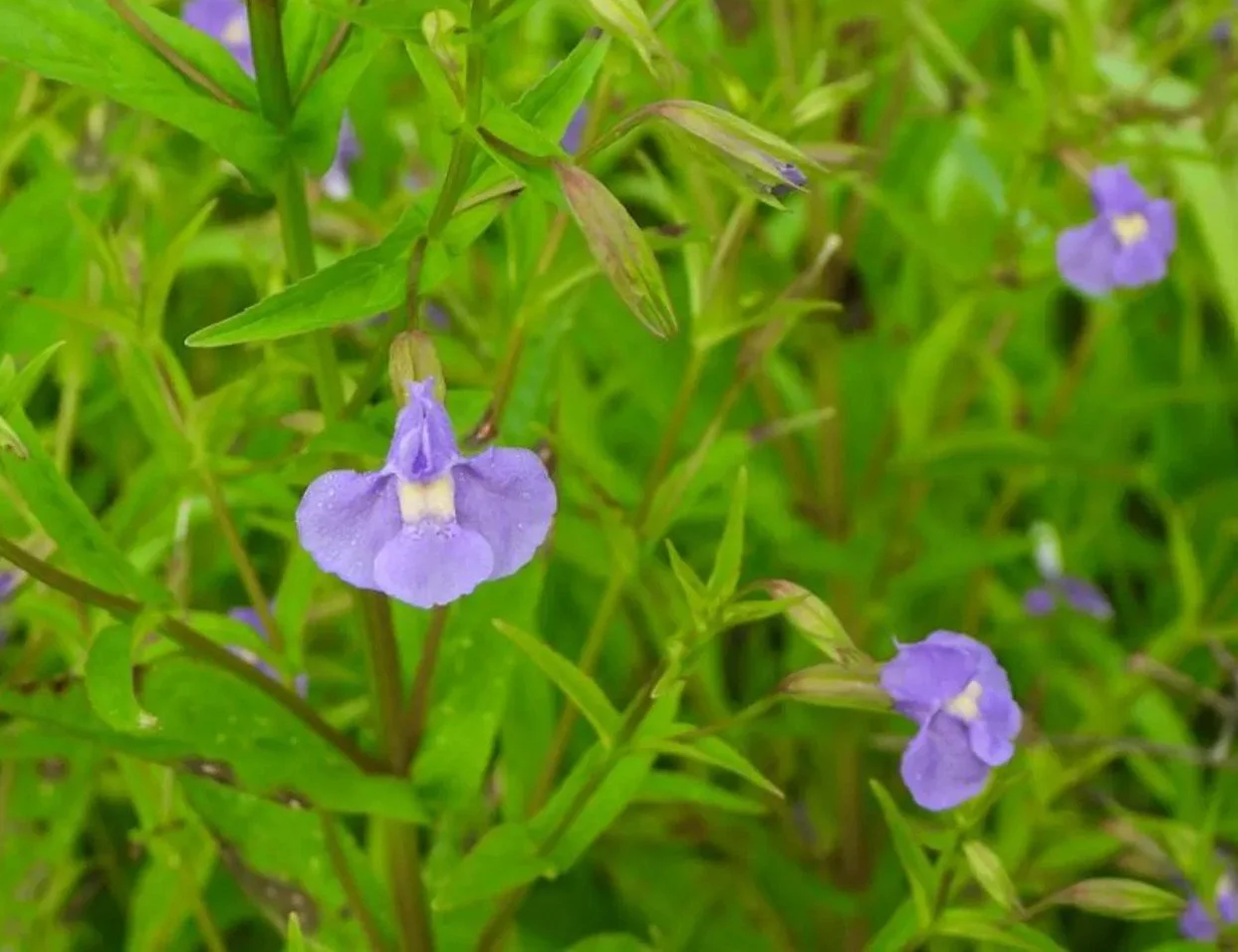
Monkey Flower (Mimulus ringens) is the charming specialist of the "wet feet" zones. It gets its name because the individual blossoms are said to resemble the face of a monkey. A delightful, upright perennial known for its snapdragon-like, purple-blue flowers. It is the perfect choice for the edges of a garden where water tends to collect, or for adding a splash of cool color to a rain garden or pond edge.
Sun Exposure Full Sun to Partial Shade
Water Needs High; prefers consistently wet or mucky soil
Soil Type Muck, Clay, Loam
Mature Height 2 feet
Deer Resistance Moderate - High
Bloom Time June – September
Bloom Color Purple
Plant Spacing 1 - 2 feet
Blooms: While it may not have a massive burst of flowers all at once, it produces blooms continuously for several months, ensuring there is always a pop of purple-blue in the wet spots of your yard.
Clasping Foliage: The dark green, lance-shaped leaves "clasp" the stem directly without a stalk, giving the plant a very clean, structured look even when it isn't in flower.
Moisture: Requires consistently moist soils and will spread slowly into a bushy plant.
Bumblebees: The flowers are specifically designed for bumblebees, who are strong enough to force their way into the partially closed throat of the flower to reach the nectar.
Butterflies: Swallowtails, skippers and other midsize butterflies will frequent this plant.
Hummingbird Stop: Because of the tubular shape of the flowers, it is a frequent destination for Ruby-throated Hummingbirds.
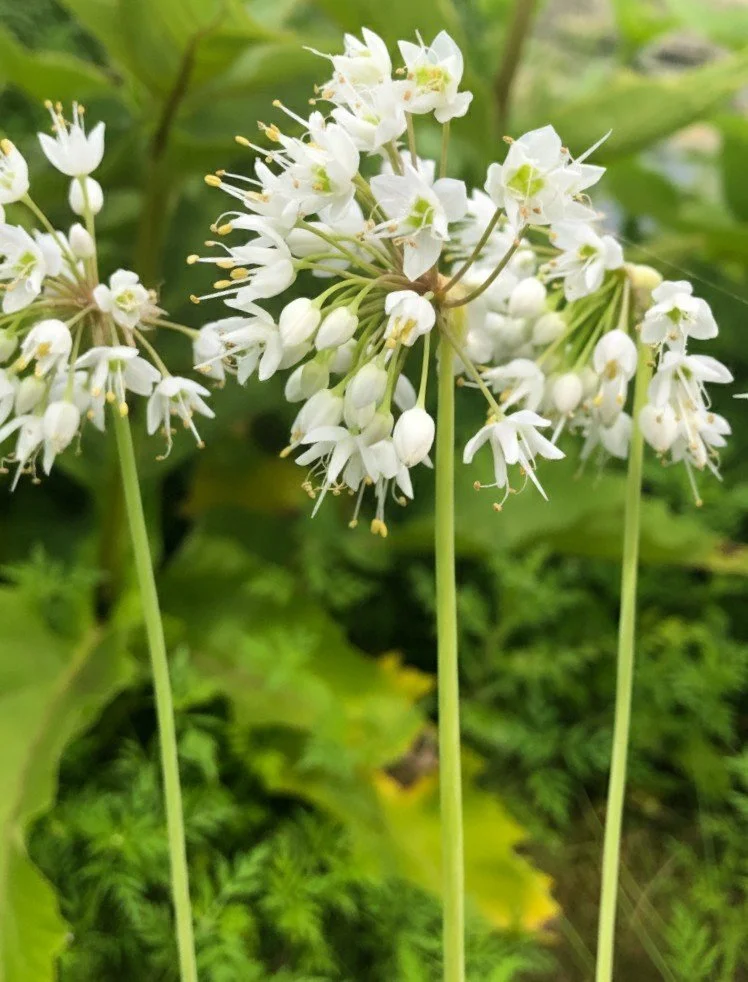
A graceful and hardy perennial that adds a soft, rounded texture to the garden. Unlike garden-variety onions, this native species is grown for its ornamental beauty and its ability to thrive in a wide range of moist soil conditions. It is easily recognized by its unique flower orientation; the clusters of soft white/pink to light lavender flowers to dangle downward “nodding” toward the ground.
Sun Exposure Full Sun to Partial Shade
Water Needs Medium
Soil Type Will do well in moist to medium Muck, Clay, Loam
Mature Height 1 – 2 feet
Deer Resistance High
Bloom Time July – August
Bloom Color White and Pink to Lavendar
Plant Spacing 4 – 8 inches
The "Nodding" Habit: The flower stalk has a distinctive bend at the top, causing the globe-shaped cluster of bell-like flowers to face the ground. This may help protect the nectar from rain and provides a unique silhouette.
Ornamental Foliage: It features narrow, grass-like leaves that remain tidy and green throughout the spring and summer, and the individual flower stems are often a burgundy color.
Non-Aggressive: While it can self-seed in ideal conditions, it grows from small bulbs and remains in a polite, upright clump that won't crowd out its neighbors.
Bees: The downward-facing flowers are a favorite for bumblebees and honeybees, who are strong enough to hang from the blossoms to collect nectar and pollen.
Pro Tip: Plant in mass for a more stunning display or mixed in with sedges or prairie grass.
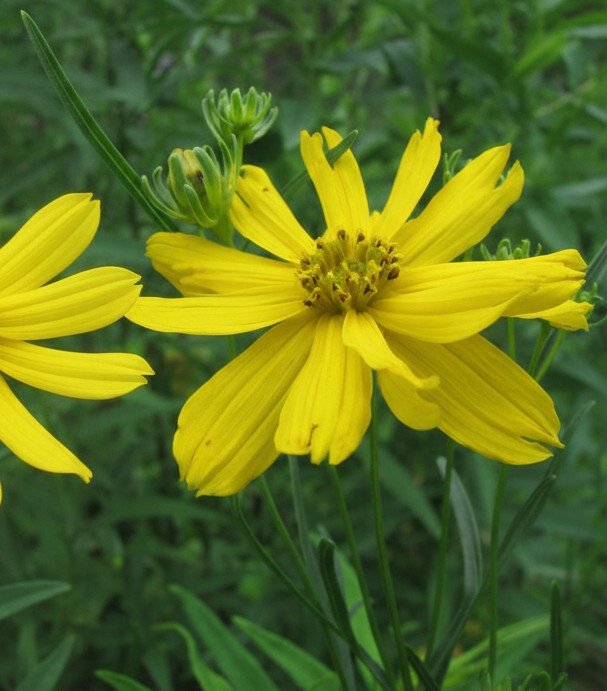
A long-lived and dependable perennial that forms tidy, upright clumps. In mid-summer it boasts bright yellow flowers for 3-4 weeks. Blooms are about 1-2 inches across and has deeply textured palmate leaves. While many other Coreopsis species can look a bit "wild" or floppy, Prairie Coreopsis is known for its stiff stems and unique, architectural foliage that stays attractive even when the plant isn't in bloom.
Sun Exposure Full Sun to Partial Shade
Water Needs Low to Medium; very drought-tolerant
Soil Type Sand, Loam, or Rocky soil (avoid overly rich or wet soils)
Mature Height 1.5 – 2 feet
Deer Resistance High
Bloom Time June – July
Bloom Color Yellow
Plant Spacing 12 – 18 inches
Unique Foliage: The leaves are deeply divided into three narrow lobes, resembling a bird's foot or a palm. This provides a distinct, "feathery" texture that contrasts beautifully with broad-leafed plants.
Upright Stems: Unlike some cousins that sprawl, this species stays strictly upright. Its stems are very sturdy, meaning it rarely needs staking and handles wind exceptionally well.
Rhizomatous Spreader: It spreads slowly via rhizomes and can potentially overwhelm small landscapes. Please be mindful when planting.
The rhizomes slowly form an underground mat that is excellent for stabilizing dry, sunny slopes and even sand dunes.
Pollinator Variety: The bright yellow, 1- 2 inch wide flowers are a magnet for various butterflies and skippers.
Bee Support: It is a high-value plant for many native bees and is considered a good species by Beekeepers.
Fall Seed Source: Like the "Tickseeds," it produces small, dark seeds that are a favorite for goldfinches and other small songbirds.
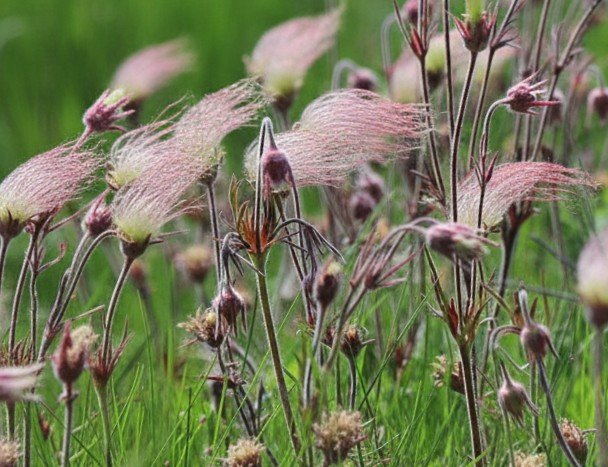
A distinctive and hardy ground-covering perennial. It’s a low-growing charmer that transforms after it blooms, turning from nodding pink bells into feathery, smoky pink seed heads.
Sun Exposure Full Sun to Partial Shade
Water Needs Low; prefers well-drained conditions
Soil Type Well-drained Loam, Sand, Rocky, or Gravelly soil
Mature Height 8 inches
Deer Resistance High
Bloom Time April – June
Bloom Color Pink/Red
Plant Spacing 6 – 8 inches
Nodding Bells: Before the "smoke" appears, each stem holds three small, reddish-pink bells that hang downward.
The "Smoke" Effect: After the nodding pink flowers are pollinated, the styles elongate into 2-inch long, feathery pink plumes. In a mass planting, these look like a low-lying pink cloud or "smoke" hovering over the ground.
Fern-like Foliage: The leaves are deeply serrated, soft, and resemble tiny fern fronds.
Slow Spreading: Prairie Smoke will slowly spread by rhizome in well-drained soils to form a ground cover and work well in in dry rock gardens.
Early Season Nectar: It is one of the earliest sources of food for a variety of bees and other pollinators.
A low-growing, spreading cactus that features flat, fleshy green pads covered in clusters of spines. In early summer, it produces large, waxy, bright yellow flowers (often with a red center) that are absolute magnets for bees. It is a master of adaptation, shriveling up and looking almost "dead" in the winter to survive the freeze, only to puff back up and produce some of the most stunning 3” bright yellow flowers by early summer.
Sun Exposure Full Sun
Water Needs Very Low; extremely drought-tolerant
Soil Type Well-drained Loam, Sand, Gravel, or Rocky/Thin soil
Mature Height 6 – 12 inches
Deer Resistance High
Bloom Time June – July
Bloom Color Yellow
Plant Spacing 6 – 8 inches
Hot & Dry: Prefers full sun and sandy, dry conditions. Good for the driest parts of your native garden.
The "Winter Shrivel": Don't be alarmed if your cactus looks wrinkled and flat in January! It pushes water out of its cells to prevent them from bursting in the cold. It "rehydrates" and stands back up as soon as the ground thaws.
Edible Fruits: After the flowers fade, the plant produces beautiful bright reddish-purple fruits. While they are edible, they are also covered in tiny, hair-like prickles (glochids), so they require careful handling.
Spines & Glochids: It has two types of defenses: the large, obvious needles and the tiny, barbed "fuzz" (glochids) that are actually harder to remove from your skin. A good, thick pair of gloves is a needed for anyone handling this plant.
Pollinators: The wide, bowl-shaped flowers are filled with nectar and pollen. A large variety of bees, butterflies and beetles are highly attracted to this flower
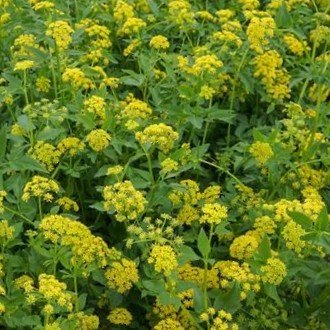
A dependable and cheerful perennial that belongs to the carrot family. It is easily recognized by its flat-topped, lace-like clusters (umbels) of tiny golden flowers. It’s a sturdy plant that brings a bright, airy feel to the garden just as the spring rains are beginning to taper off. It provides a much-needed burst of yellow in the late spring, filling the gap before your Coreopsis and Blazing Stars take the stage.
Sun Exposure Full Sun (preferred) to Partial Shade
Water Needs Low to Medium
Soil Type Adaptable; thrives in Clay, Loam, or Rocky soil
Mature Height 2 feet
Deer Resistance Moderate - High
Bloom Time April - May
Bloom Color Yellow
Plant Spacing 10 – 12 inches
Heart-Shaped Foliage: One of the easiest ways to identify Zizia aptera is by its "unlobed" heart-shaped leaves at the base of the plant.
Flowers: The flowers grow in "umbels," which look like tiny golden umbrellas. This structure provides a delicate, lacy appearance that contrasts beautifully with the heavier, broader leaves of neighboring plants.
Black Swallowtail Host: This is a host plant for the Black Swallowtail butterfly. Their caterpillars love to feed on the foliage.
Early Nectar Source: Because it blooms so early, it is a critical food source for emerging native bees and beneficial predatory insects.
Pollinator Diversity: The flat, open flower clusters make the nectar easily accessible to insects with short mouthparts, such as small flies and beetles that can't reach into deep tubular flowers.
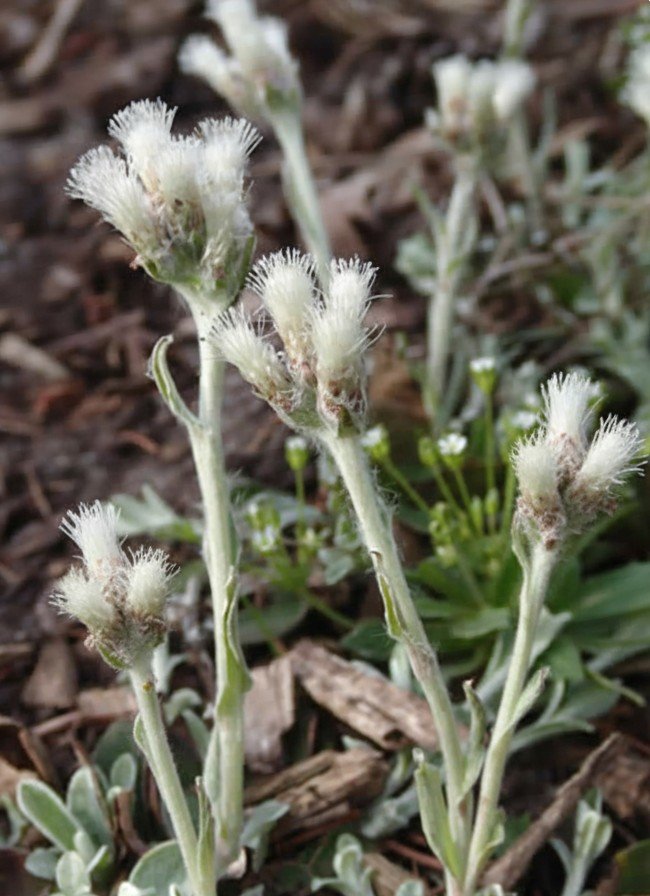
A member of the Aster family, Pussytoes is named for its soft, fuzzy flower heads that resemble a kitten’s paw. This plant is a rugged specialist for the difficult, dry spots in a landscape where other plants might struggle to take hold, such as in a rock garden. This plant is usually grown for it’s velvety leaves, not it’s white flower.
Sun Exposure Full Sun to Partial Shade
Water Needs Low; highly drought-tolerant
Soil Type Needed Well-drained Sand, Gravel, Rocky, or Lean/Poor soil
Mature Height 1–4 inches (foliage); up to 12 inches (flowers)
Deer Resistance High (parts of the plant are poisonous to deer and rabbits)
Bloom Time April – June
Bloom Color White
Plant Spacing 6 – 12 inches
Ground Cover: This plant spreads via stolons (above-ground runners) to create a tight, weed-suppressing carpet. It is an excellent native alternative to non-native groundcovers.
Silver Foliage: The leaves grow at ground level and are covered in tiny white hairs, giving the plant a soft, silvery-gray appearance.
Early Season "Paws": In mid-spring, fuzzy white-to-pinkish flower clusters rise above the foliage on slender stalks. Their unique texture is one of the earliest signs of life in a native rock garden.
Drought tolerant: Pussytoes thrives in "poor" soil. In fact, if the soil is too rich or heavily fertilized, the plant may become leggy or lose its tight, mat-forming habit. It loves the neglected corners of the yard.
Host Plant: Pussytoes is a critical host plant for the American Lady butterfly (Vanessa virginiensis).
No results match your search. Try removing a few filters.