
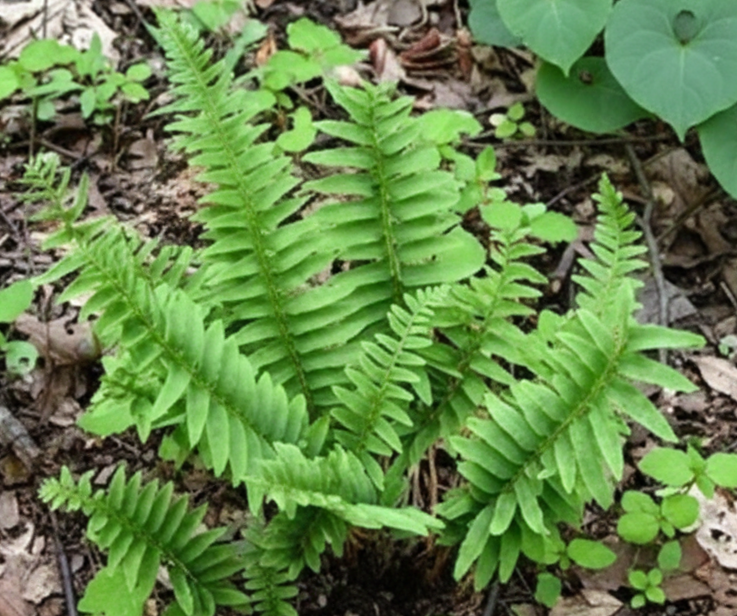
The Christmas Fern is one of the most reliable and beloved evergreen ferns of the North American woodland. It earned its name because its glossy, deep-green fronds stay vibrant and fresh even through the winter. This fern grows in a fountain-like clump 1-2 feet wide, but will not creep. It is a slow-growing but incredibly sturdy plant that provides a lush, consistent backdrop for colorful spring ephemerals like Bloodroot or Wild Ginger.
Sun Exposure Part Shade to Full Shade
Water Needs Medium; drought-tolerant once established
Soil Type Well-drained, moist Loam or Sand
Mature Height 1 to 2 feet
Deer Resistance High
Bloom Time Non-flowering (Produces spores in late summer)
Plant Spacing 1.5 to 2 feet
Evergreen Interest: Unlike many ferns that die back at the first frost, the Christmas Fern remains green all winter, providing much-needed color in a dormant landscape.
Easy Identification: Look for the "stocking" shape at the base of each pinna (leaflet)—a small lobe that looks like a tiny Christmas stocking or Santa’s boot.
Low Maintenance: Highly adaptable - It is one of the few ferns that can tolerate slightly drier soil conditions once its root system is mature.
Black Walnut Resistant
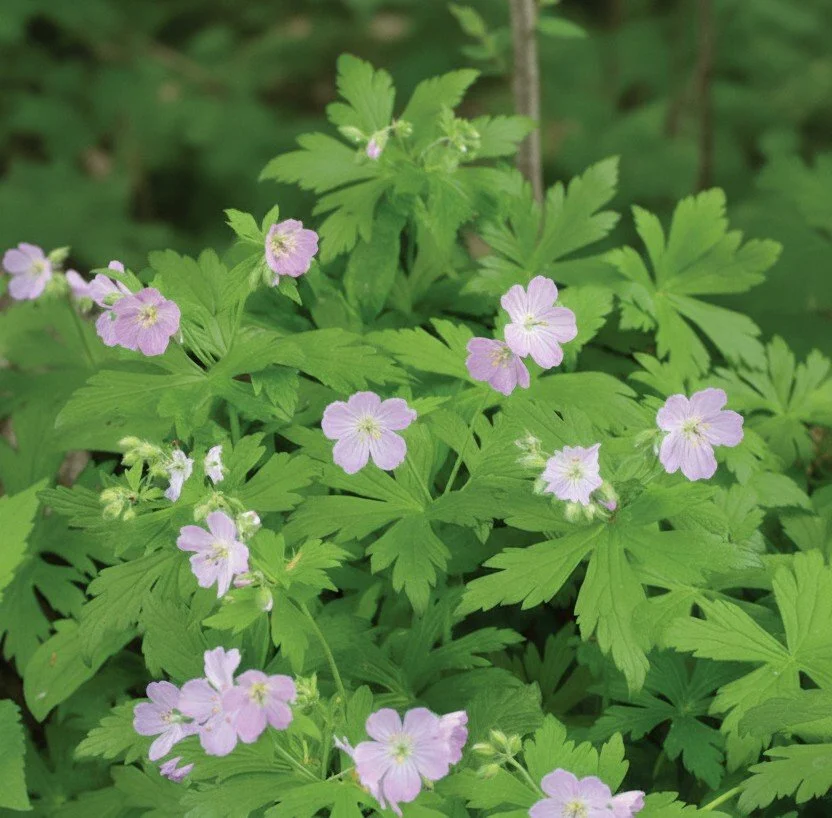
This native perennial is highly prized for its loose clusters of five-petaled, rose-pink to lavender-purple flowers that are very attractive to pollinators. Each bloom is etched with delicate fine lines that act as "nectar guides" for visiting pollinators. Unlike its cultivated cousins, the Wild Geranium is perfectly suited for the dappled light of a forest edge or a shaded garden bed, but it will do just as well in the sun!
Sun Exposure Full Sun, Part Shade, Shade
Water Needs Medium; prefers consistent moisture but is quite adaptable
Soil Type Rich, moist, well-drained Clay, Loam or Sand
Mature Height 1 to 2 feet
Deer Resistance High
Bloom Time April – July
Bloom Color Lavendar
Plant Spacing 10 to 12 inches
Black Walnut Tolerant
Self-Seeding Beauty: One of the most charming features is its seed pods, which resemble a crane’s bill. When ripe, they "spring" open to launch seeds several feet away, allowing the plant to naturalize beautifully without being aggressive.
Textured Foliage: The large, hand-shaped leaves provide an excellent mid-height filler that covers the ground effectively, helping to suppress weeds.
Versatility: While it loves the shade, it can handle more sun if the soil is kept sufficiently moist.
Nectar Source: A vital early-season food source for many native bees, including mining bees, mason bees, and bumblebees.
Butterfly Support: Frequently visited by several species of butterflies and skippers for its accessible nectar.
Host Plant: Serves as a host for the larvae of various moths including the White-Marked Tussock moth.
No results match your search. Try removing a few filters.