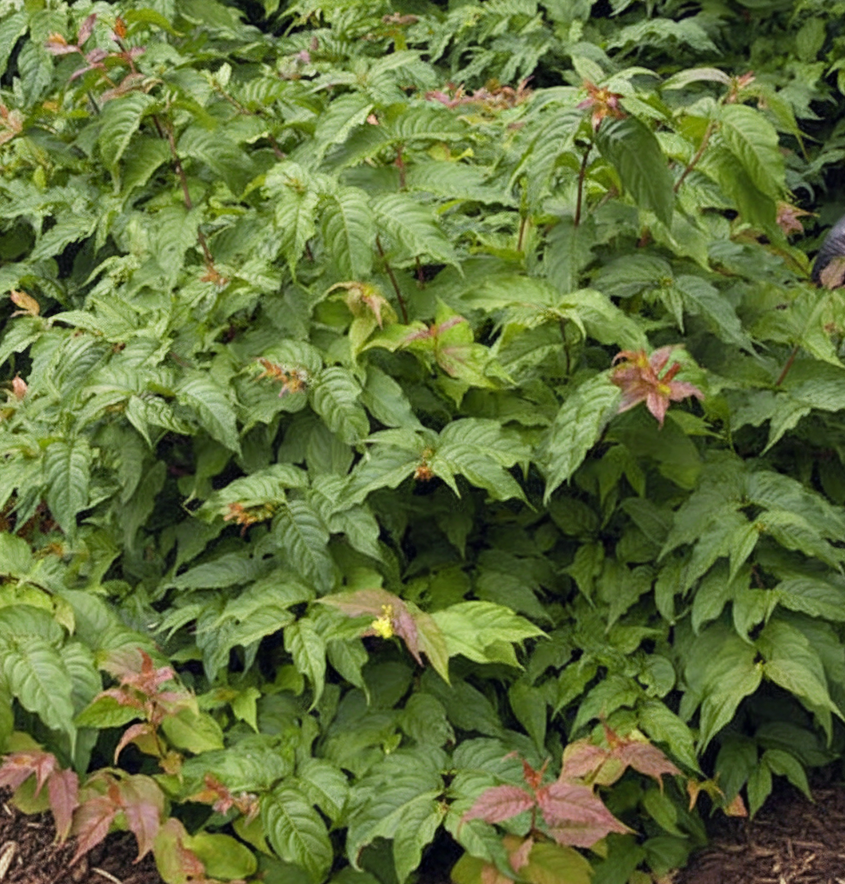
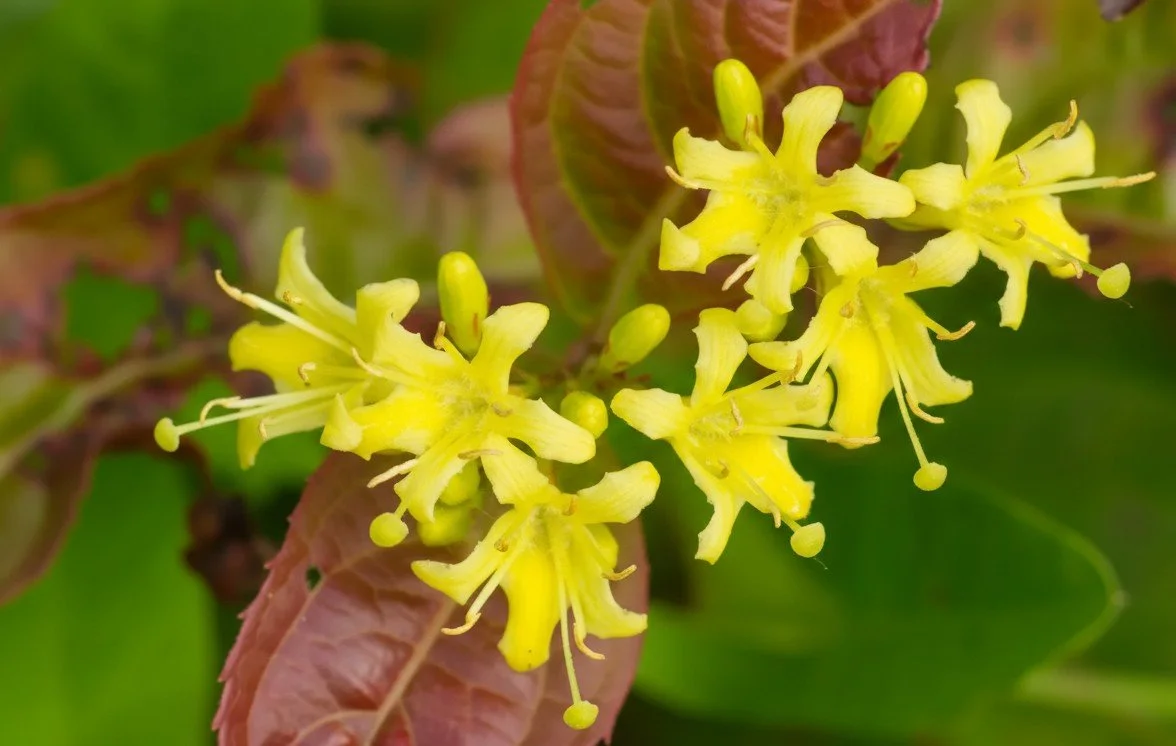
If you’re searching for a low-growing, rugged shrub that provides multi-season interest without the invasive headache of other honeysuckles, consider Dwarf Bush Honeysuckle. This is a mounding, woody perennial that is great for dry, difficult shady areas. In early summer, it produces delicate, lemon-yellow trumpet flowers that are a magnet for the tiniest of garden visitors. It starts with dark green foliage that turns yellow-orange, then into vibrant shades of red and purple in the fall.
Sun Exposure Partial Shade to Shade
Water Needs Low to Medium; highly drought-tolerant once established
Soil Type Adaptable; thrives in Dry Sand, Rocky soil, or dry Clay
Mature Height 2 – 3 feet
Deer Resistance Moderate
Bloom Time June – August
Bloom Color Yellow
Plant Spacing 2 – 3 feet
Three Seasons of Color: Bronze spring buds, yellow summer flowers ending with beautiful red autumn foliage.
Somewhat Aggressive Spreader: Spready by rhizomes and can overwhelm small landscapes. Keep this in mind when choosing your planting location
Will spread to form thickets over time, making it a good choice for shrub borders or hedgerows.
Bumblebees: The small yellow blossoms are perfectly designed for bumblebees and other long-tongued native bees to crawl inside.
Hummingbirds: Though the flowers are small, their nectar is high-energy and often visited by hummingbirds patrolling the garden.
Host Plant to the Laurel Sphinx moth and the Snowberry Clearwing.
Pro Tip: Dwarf Bush Honeysuckle is incredibly forgiving when it comes to pruning. If it ever begins to look a bit unruly or "leggy" after a few years, you can cut it back nearly to the ground in late winter or early spring. It will roar back with fresh, colorful new growth and a tighter, more compact shape. It’s one of the few shrubs that actually enjoys a "fresh start" every now and then!
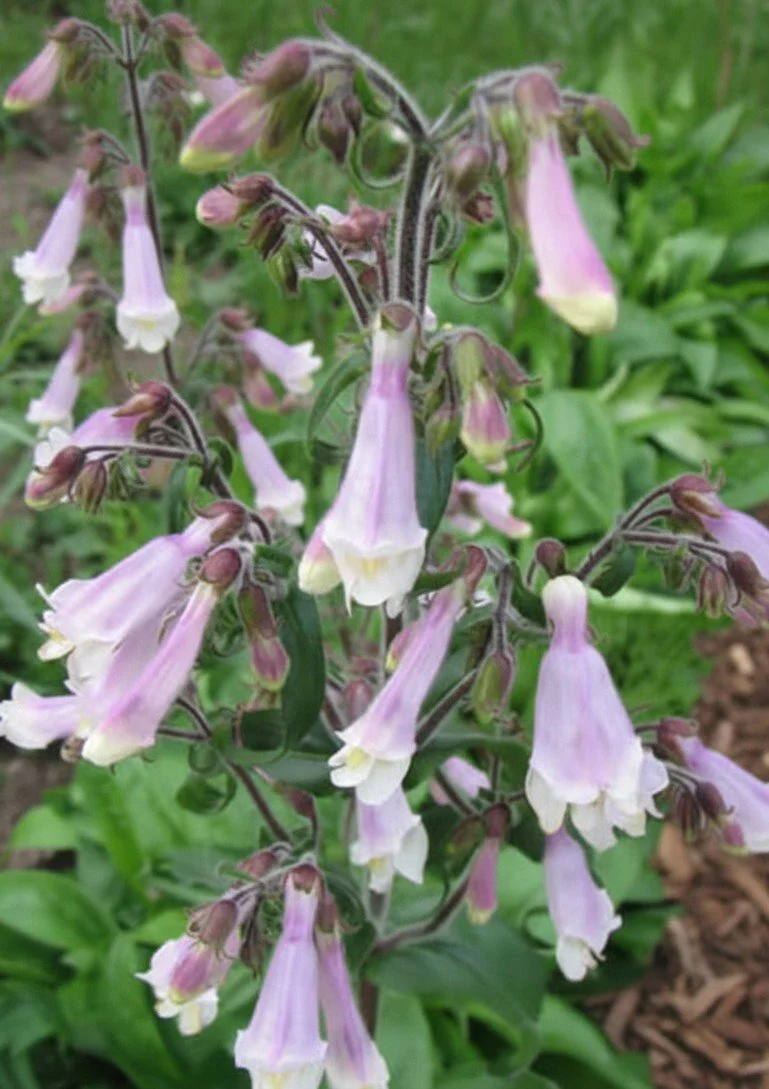
Blooming from May-June, Hairy Beardtongue attracts several types of bees, hummingbirds and butterflies. It is one of the more shade-tolerant Penstemons, making it a versatile choice for those tricky "transition" spots in your landscape. If you’re a fan of the "polite" nature of the Foxglove Beardtongue but want something a bit shorter and more textured for the front of your garden, Hairy Beardtongue is a perfect choice.
Sun Exposure Full Sun, Partial Shade, Shade
Water Needs Low to Medium; very drought-tolerant once established
Soil Type Well-drained Sand, Loam, or Rocky soil
Mature Height 18 inches
Deer Resistance Moderate - High
Bloom Time May – June
Bloom Color Lavendar, Pink
Plant Spacing 10 - 12 inches
Low-Profile: Reaching only about 1–2 feet, it is significantly shorter than its Foxglove cousin, making it an ideal "front-of-the-border" plant.
Blooms: The trumpet-shaped flowers range in color from lavenders and pink to white. The long, thin blooms have five petals with a “hairy” protruding lip.
Rock Garden Champion: Because it thrives in well-drained, rocky, or even poor soils, it is a great choice for rock gardens or edges where other plants might struggle with the heat.
Early Pollinator Resource: It blooms in late spring, providing a critical early-season nectar source for native bees and butterflies before the summer begins.
Hummingbirds: Just like its taller relatives, the tubular flowers are a magnet for Ruby-throated Hummingbirds.
No results match your search. Try removing a few filters.