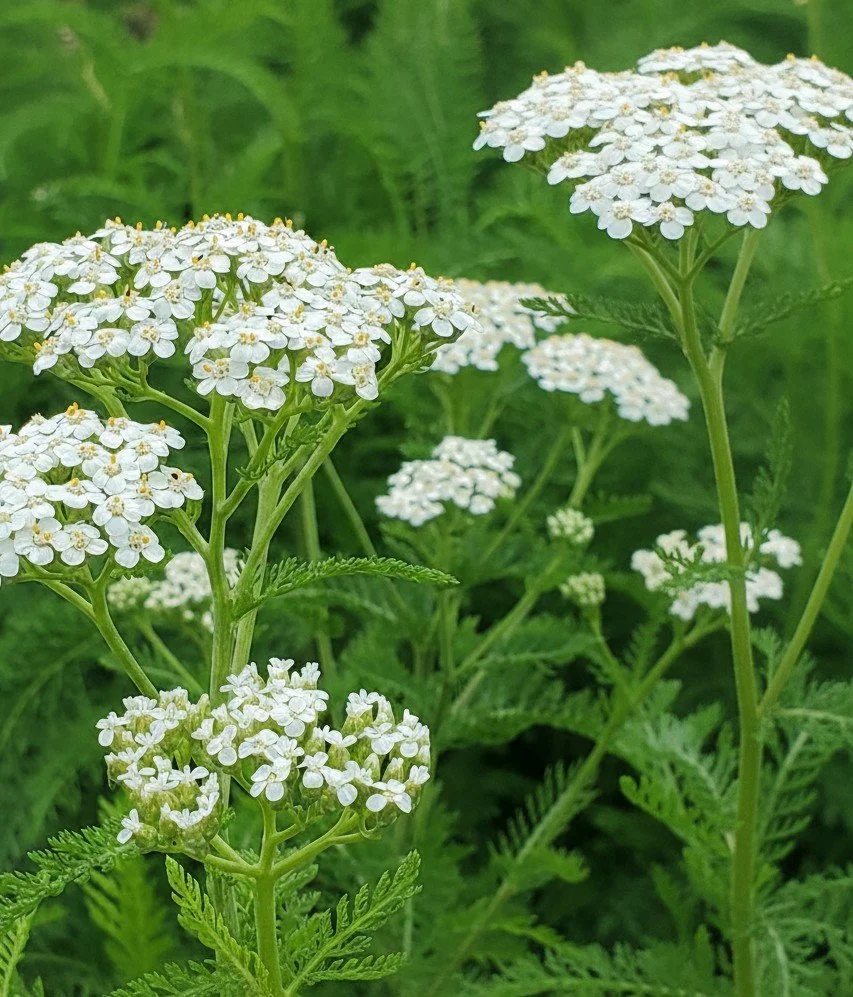
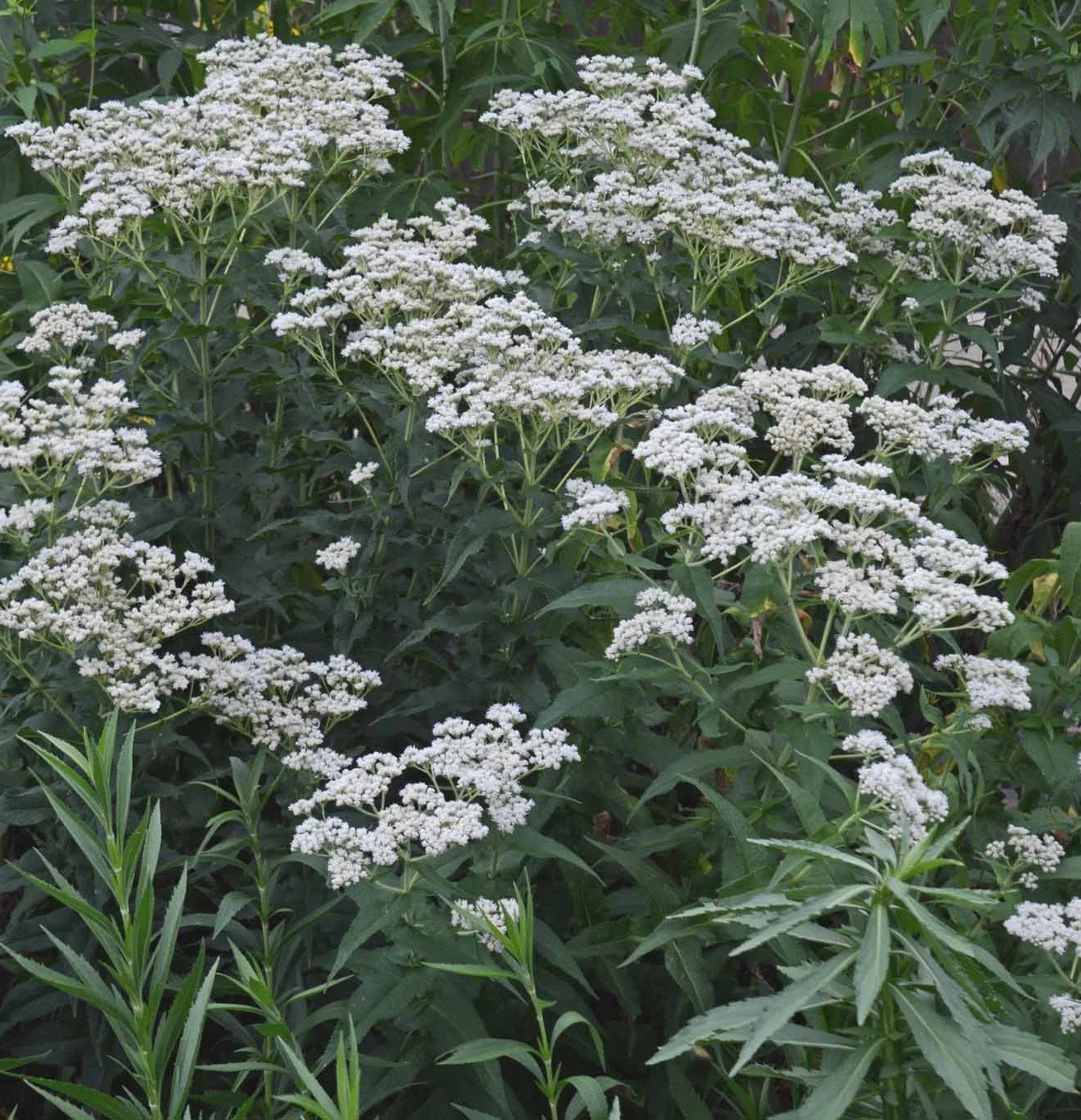
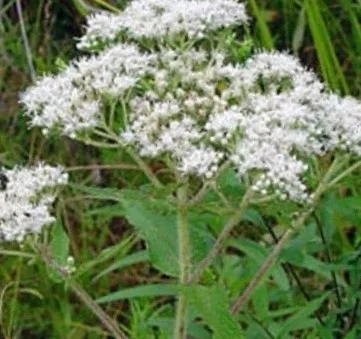
A true standout in the wetland or meadow garden. This hardy native perennial is instantly recognizable by its unique foliage. In late summer, the plant is topped with large, fuzzy clusters of fragrant, creamy-white blossoms. These flat-topped flower heads create a soft, cloud-like effect in the landscape, providing a nice contrast to the purples and golds of late-season asters and goldenrods.
Sun Exposure Full Sun to Partial Shade
Water Needs Moderate to High; prefers consistently moist to wet soil.
Soil Type Needed Thrives in moist Muck, Clay, or Loam; tolerates "wet feet."
Mature Height 3 – 5 feet
Deer Resistance High
Bloom Time July – September
Bloom Color White
Plant Spacing 1 – 2 feet
Unique Architecture: The "perfoliate" leaves provide a structural look that adds instant character to your garden beds. The pairs of textured, lance-shaped leaves are fused at the base, making it look as though the sturdy stem is growing right through the center of a single long leaf.
Wet Spot Solution: It is an excellent choice for rain gardens or areas with poor drainage where other perennials might struggle with root rot.
Late Summer Glow: While other plants are winding down, Boneset hits its peak, keeping your garden looking lush and full of life well into September.
Pollinator Super-Plant: Boneset is legendary for the sheer volume of insects it supports. It is a favorite of honeybees, native sweat bees, and beneficial wasps.
Nectar Source: A vital late-season fuel stop for migrating Monarchs and other varieties of butterflies and moths.
Late Season seed source: Goldfinches, chickadees, sparrows and juncos will feed on the fall seed heads.
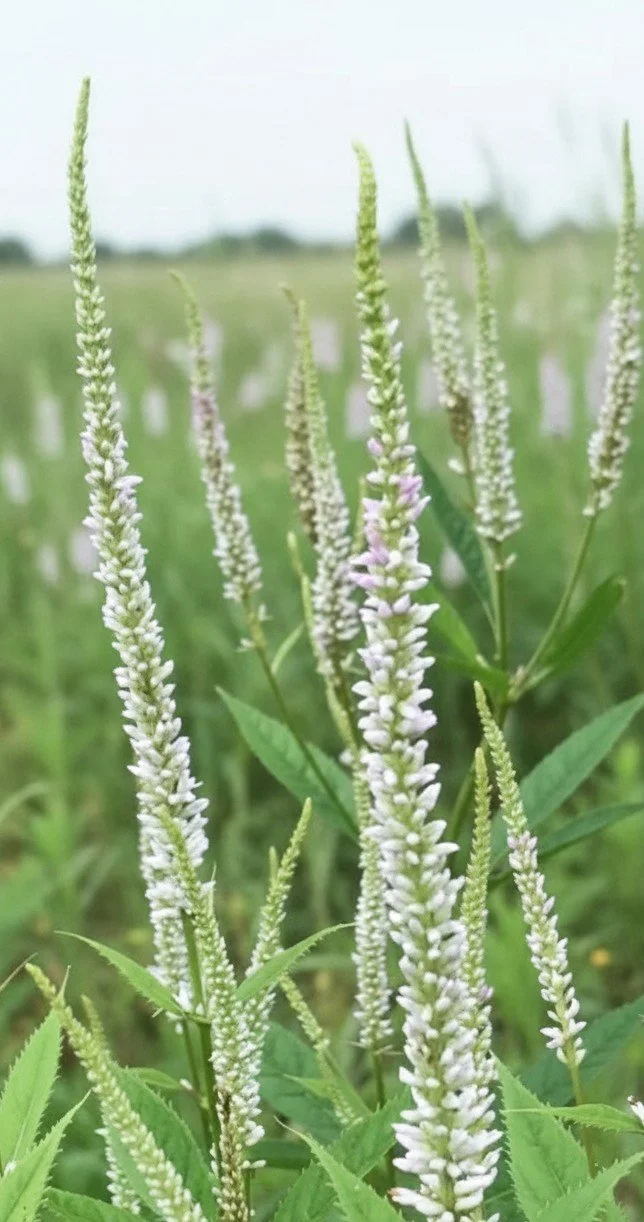
This stately native perennial is beloved for its unique, candelabra-like flower spikes that bloom in a soft white to pale lavender. Unlike the shaggy look of some prairie plants, Culver’s Root has deep green leaves arranged in tidy, horizontal "whirls" around the stem, providing beautiful texture even before the flowers appear. This plant is the perfect "bridge" for your garden, thriving in that sweet spot between moist and well-drained soils.
Sun Exposure Full Sun to Partial Shade
Water Needs Medium; likes moist, well drained soil
Soil Type Needed Muck, Loam, Clay, or Moist Sand
Mature Height 4 – 6 feet
Deer Resistance High
Bloom Time June – August
Bloom Color White
Plant Spacing 2 – 3 feet
Candelabra Blooms: Each main flower spike is surrounded by smaller secondary spikes, extending the bloom time and creating a multi-tiered "candelabra" effect.
Formal Structure: The unique "whorled" leaf pattern (growing in circles around the stem) gives the plant a clean, geometric look that fits beautifully in modern or formal landscapes.
Non-Aggressive: It is a well-behaved clump-former, meaning it stays exactly where you plant it and won't try to take over the rest of your garden.
Bees & Butterflies: It is a vital nectar source for butterflies and a variety of bees.
Pro Tip: Culver’s Root is a true "sun-seeker." While it can handle partial shade, its stems are sturdiest and its flower spikes are most upright when it receives at least 6 hours of direct sunlight. If you are planting it in a more shaded spot, consider placing it near a fence or sturdier neighbors like Joe Pye Weed for a little extra support. To encourage the best display, keep the soil mulch-covered to retain the moisture this "cool-season" beauty loves!
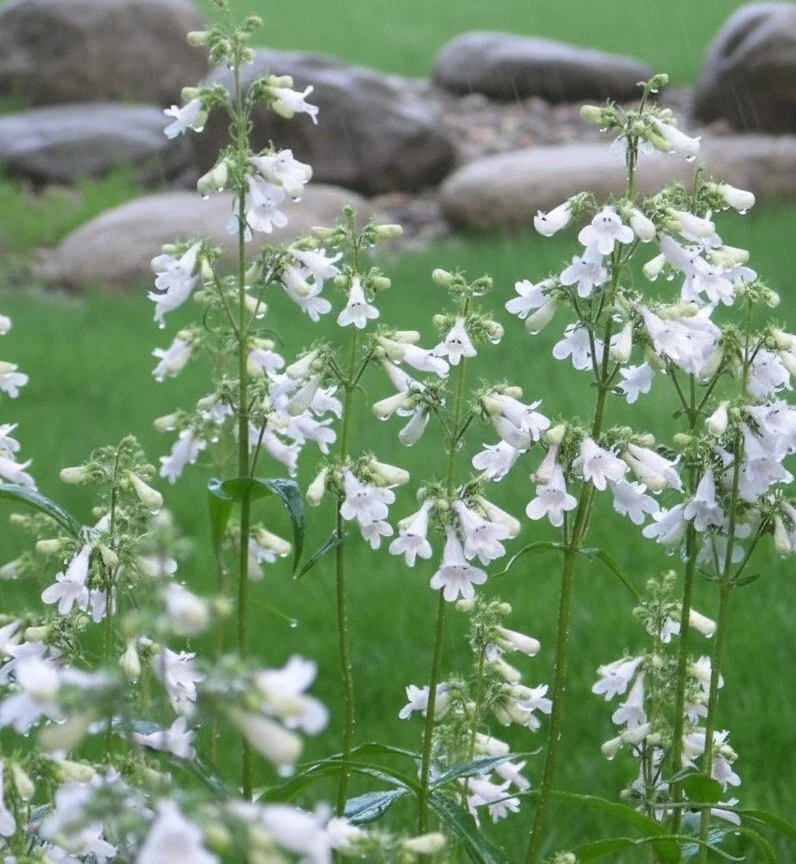
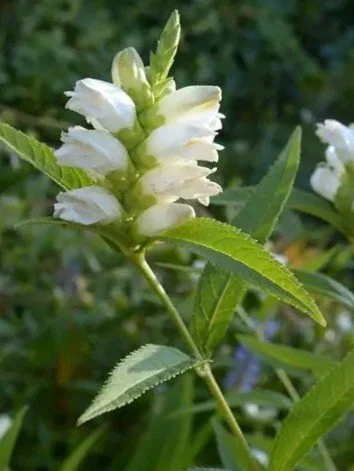
Foxglove Beardtongue is one of the most versatile and "polite" natives you can add to a garden. A standout among native perennials, this plant features smooth, upright stems topped with clusters of white, trumpet-shaped flowers. It gets its name from its resemblance to the classic Foxglove, but unlike its namesake, it is much hardier and easier to grow.
Sun Exposure Full Sun to Partial Shade
Water Needs Low to Medium; very adaptable
Soil Type Adaptable; Clay, Loam, Sand, or Rocky soil
Mature Height 3 – 4 feet
Deer Resistance Moderate - High
Bloom Time June – July
Bloom Color White
Plant Spacing 12 – 18 inches
Adaptable: It is very adaptable to light conditions and does well in areas such as clearings within forests, savannas and woods’ edges.
Tidy Habits: Foxglove Beardtongue is a well-behaved, clump-forming perennial that won't try to take over the yard.
Beardtongues: If you look closely inside a flower, you’ll see a tiny, hairy sterile stamen that looks like a "fuzzy tongue"—this is designed to help guide bees into the flower.
Hummingbirds: The white, tubular flowers are a primary early-season nectar source for Ruby-throated Hummingbirds.
Support for Specialist Bees: It provides vital pollen for several species of native bees that emerge just as the spring bulbs are finishing.
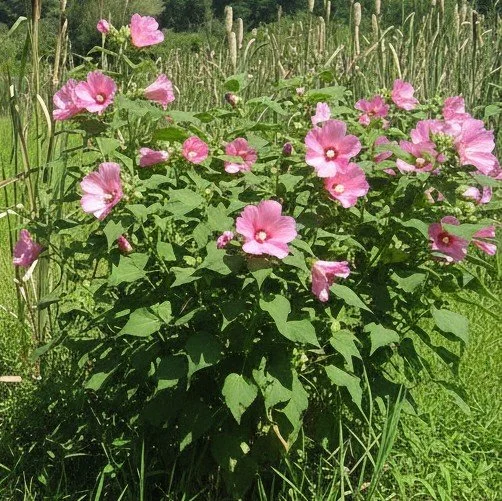
This spectacular native perennial provides a bold, tropical aesthetic with its massive, platter-like blooms. Blossoms reach 6”-10” across with beautiful dark pink centers. While it looks like it belongs in Hawaii, it is a hardy native that adds incredible beauty and height to the mid-to-late summer landscape.
Sun Exposure Full Sun to Partial Shade (Full Sun for best blooms)
Water Needs Medium to High; loves wet "feet" but is surprisingly adaptable
Soil Type Muck, Clay, Loam
Mature Height 4 – 6 feet
Deer Resistance Moderate
Bloom Time July – September
Bloom Color Pink or White
Plant Spacing 2 – 3 feet
Dinner-Plate Blooms: The flowers can range from 6 to 10 inches across. They are typically white or soft pink, usually with a striking dark pink center.
Late Emergence: Don’t be alarmed if you don't see it in early spring! It is one of the last perennials to wake up, often not poking through the soil until June. Once it starts, however, it grows with incredible speed.
Shrub-like Stature: Though it dies back to the ground every winter, it regrows into a massive, multi-stemmed "shrub" by mid-summer. It provides a perfect structural anchor for the back of a large garden bed.
Good for a wetland edge or rain garden
Hummingbirds: The deep, nectar-rich centers and bright colors are a primary target for Ruby-throated Hummingbirds.
Specialist Bee Support: It is the host plant for the Hibiscus Bee (Ptilothrix bombiformis), a specialist pollinator that relies almost exclusively on this genus for pollen.
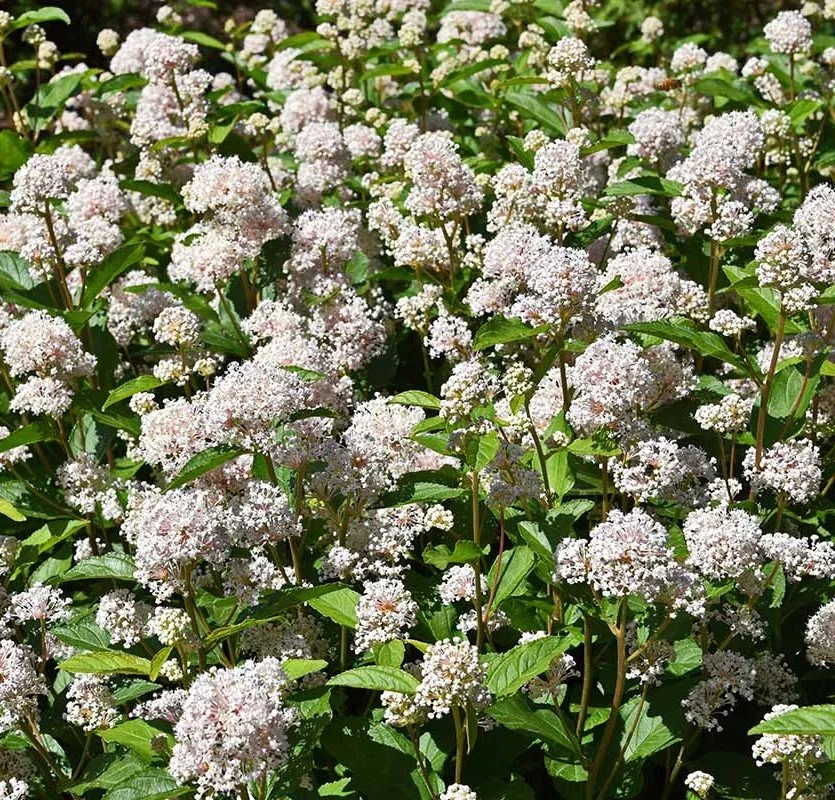
If you’re looking for a plant that bridges the gap between a flowering shrub and a perennial, New Jersey Tea (Ceanothus americanus) is a fascinating choice. It’s a compact shrub with a deep history—its leaves were actually used as a caffeine-free tea substitute during the American Revolution! A sturdy, low-growing deciduous shrub that produces clusters of tiny, fragrant white flowers on long stalks. It is one of the few shrubs that stays small enough to fit perfectly in a perennial border, offering a unique texture and a massive draw for pollinators.
Sun Exposure Full Sun to Partial Shade
Water Needs Low to Medium; exceptionally drought-tolerant once established
Soil Type Well-drained Sand, Loam, or Rocky/Gravelly soil
Mature Height 2 – 3 feet
Deer Resistance Moderate (deer and rabbits will browse this plant, especially when young)
Bloom Time June – August
Bloom Color White
Plant Spacing 2 – 3 feet
Deep Taproot: New Jersey Tea grows a massive, woody red root system that can go very deep. This makes it incredibly drought-proof but also means it hates being transplanted once it’s in the ground.
Nitrogen Fixer: It has a symbiotic relationship with soil bacteria that allows it to "fix" nitrogen, improving the soil quality for all the plants around it.
Blooms: The white flowers appear in dense, cylindrical clusters that look like pom poms from a distance, adding a soft, airy texture to the mid-summer garden.
Foliage: glossy leaves and a mounding shape that keeps it’s rich, green color throughout the growing season but loses it’s leaves in the winter.
If desired, pruning should be done in late winter or early spring before new growth starts. It typically takes about 3 years to reach maturity. Mature shrubs can be cut to the ground in the spring to encourage more rapid growth.
Pollinators: It is legendary for the sheer variety of insects it attracts, including bees, specialized wasps, butterflies and hummingbirds.
Host Plant: It is a critical larval host for the Mottled Duskywing butterfly and the Spring Azure butterfly.
Seed Source: Ripe seeds are eaten by wild turkeys and quail, and other large birds.
Pro Tip: Plant with Butterfly Weed, Coreopsis, Spiderwort or Prairie Dropseed.
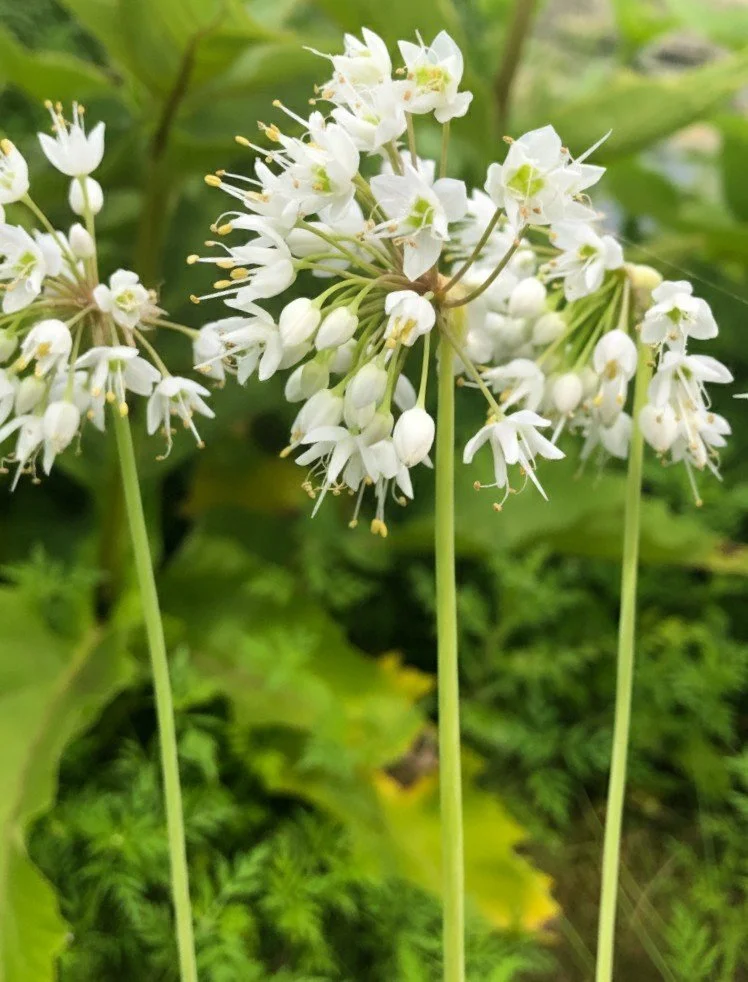
A graceful and hardy perennial that adds a soft, rounded texture to the garden. Unlike garden-variety onions, this native species is grown for its ornamental beauty and its ability to thrive in a wide range of moist soil conditions. It is easily recognized by its unique flower orientation; the clusters of soft white/pink to light lavender flowers to dangle downward “nodding” toward the ground.
Sun Exposure Full Sun to Partial Shade
Water Needs Medium
Soil Type Will do well in moist to medium Muck, Clay, Loam
Mature Height 1 – 2 feet
Deer Resistance High
Bloom Time July – August
Bloom Color White and Pink to Lavendar
Plant Spacing 4 – 8 inches
The "Nodding" Habit: The flower stalk has a distinctive bend at the top, causing the globe-shaped cluster of bell-like flowers to face the ground. This may help protect the nectar from rain and provides a unique silhouette.
Ornamental Foliage: It features narrow, grass-like leaves that remain tidy and green throughout the spring and summer, and the individual flower stems are often a burgundy color.
Non-Aggressive: While it can self-seed in ideal conditions, it grows from small bulbs and remains in a polite, upright clump that won't crowd out its neighbors.
Bees: The downward-facing flowers are a favorite for bumblebees and honeybees, who are strong enough to hang from the blossoms to collect nectar and pollen.
Pro Tip: Plant in mass for a more stunning display or mixed in with sedges or prairie grass.
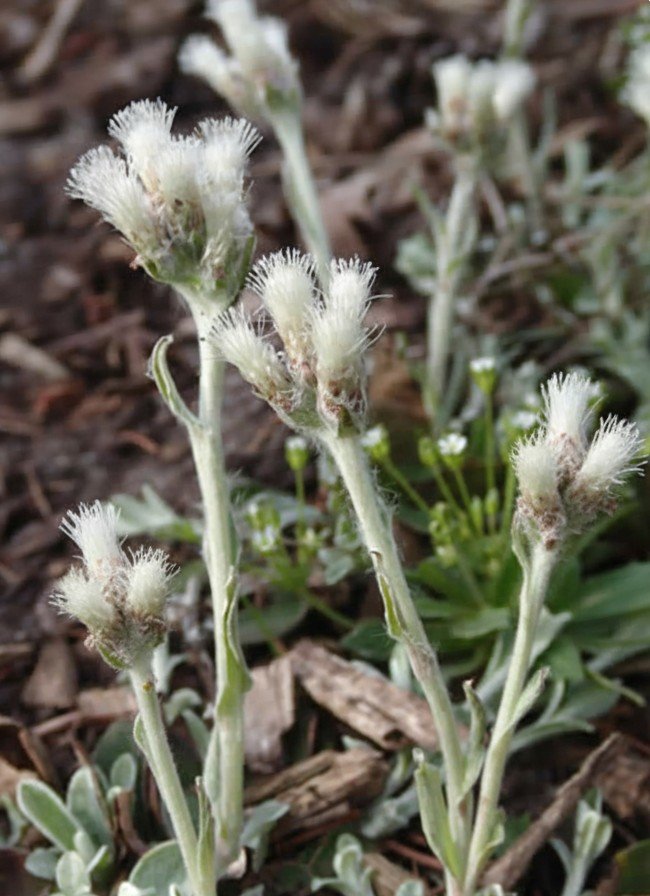
A member of the Aster family, Pussytoes is named for its soft, fuzzy flower heads that resemble a kitten’s paw. This plant is a rugged specialist for the difficult, dry spots in a landscape where other plants might struggle to take hold, such as in a rock garden. This plant is usually grown for it’s velvety leaves, not it’s white flower.
Sun Exposure Full Sun to Partial Shade
Water Needs Low; highly drought-tolerant
Soil Type Needed Well-drained Sand, Gravel, Rocky, or Lean/Poor soil
Mature Height 1–4 inches (foliage); up to 12 inches (flowers)
Deer Resistance High (parts of the plant are poisonous to deer and rabbits)
Bloom Time April – June
Bloom Color White
Plant Spacing 6 – 12 inches
Ground Cover: This plant spreads via stolons (above-ground runners) to create a tight, weed-suppressing carpet. It is an excellent native alternative to non-native groundcovers.
Silver Foliage: The leaves grow at ground level and are covered in tiny white hairs, giving the plant a soft, silvery-gray appearance.
Early Season "Paws": In mid-spring, fuzzy white-to-pinkish flower clusters rise above the foliage on slender stalks. Their unique texture is one of the earliest signs of life in a native rock garden.
Drought tolerant: Pussytoes thrives in "poor" soil. In fact, if the soil is too rich or heavily fertilized, the plant may become leggy or lose its tight, mat-forming habit. It loves the neglected corners of the yard.
Host Plant: Pussytoes is a critical host plant for the American Lady butterfly (Vanessa virginiensis).
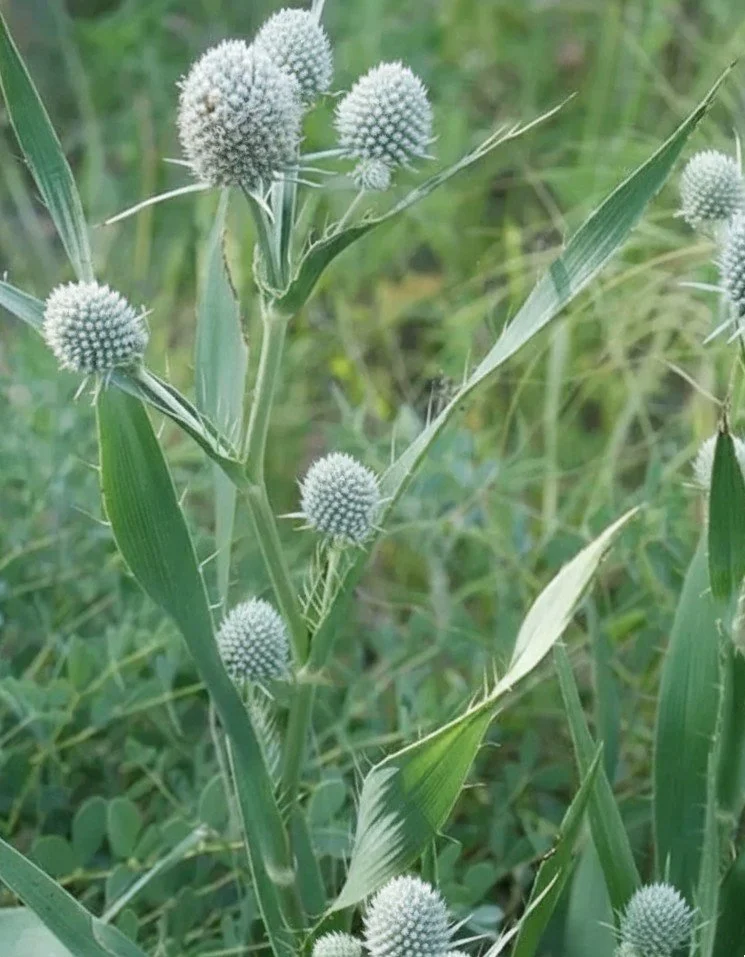
Rattlesnake Master is one of the most architectural and otherworldly plants in the tallgrass prairie. With its stiff, sword-like leaves and bristly, globe-shaped flower heads, it looks more like a desert yucca than a member of the carrot family. It adds a unique "silver-blue" cool tone to the garden.
Sun Exposure Full Sun
Water Needs Low to Moderate
Soil Type Clay, Loam, of Sand
Mature Height 4 feet
Deer Resistance High
Bloom Time July – September
Bloom Color White
Plant Spacing 18 – 24 inches
Yucca-Like Foliage: The long, bluish-green leaves feature small soft teeth along the edges, mimicking the look of a desert yucca.
Spherical Blooms: Unlike typical flat-topped flowers, Rattlesnake Master produces bristly white flower heads. These "prickly" globes start off green, turn white with a hint of blue, and eventually dry to a tan in the fall.
Pollinators: Small native bees, moths and flies will nectar on Rattlesnake Master.
No results match your search. Try removing a few filters.