
 Image 1 of 1
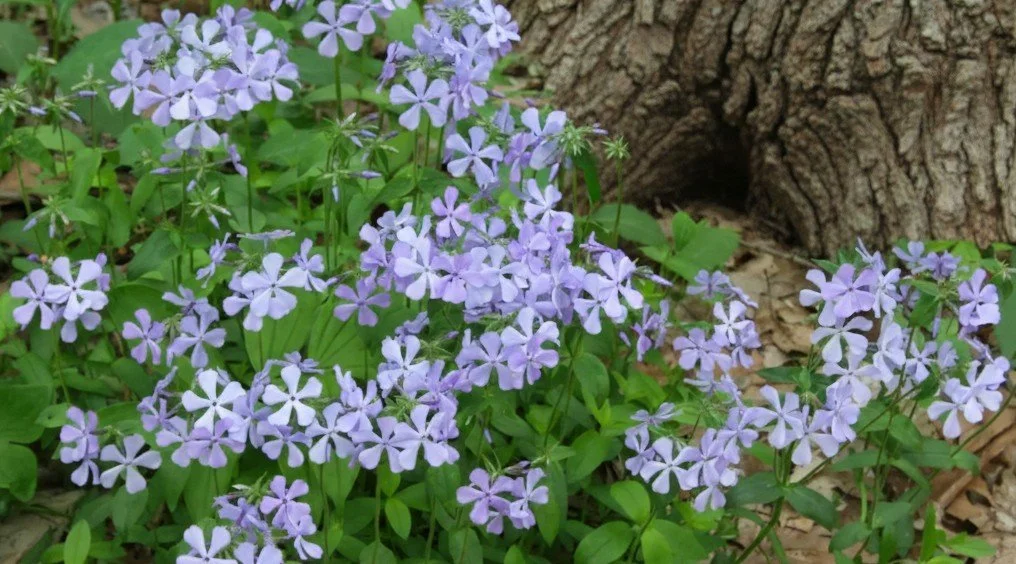
Unlike the tall garden phlox of midsummer, this native variety stays low to the ground, forming drifts of sky-blue to pale lavender blossoms. The plant features semi-evergreen foliage that stays close to the earth, sending up slender flowering stems. It is the perfect choice for naturalizing under deciduous trees, where it creates a "blue mist" effect that bridges the gap between early spring bulbs and summer greenery. It is also known as Woodland Phlox.
Sun Exposure: part shade to full shade
Water Needs: medium; prefers consistent moisture
Soil Type: rich, moist, well-drained clay, loam or woodland soil
Mature Height: 10 to 15 inches
Deer Resistance: low to moderate
Bloom Time: April, May, June
Bloom Color: blue
Plant Spacing: 10 to 12 inches
Black Walnut Tolerant
Blooms: The flowers range from pale lavender or violet to blue. The flowers sit atop sticky stems and have a slight sweet fragrance.
Versatile Groundcover: While it is a clumping perennial, it will slowly spread via creeping stems that root at the nodes, making it an excellent filler for woodland gaps.
Early Season Structure: The foliage remains attractive throughout the summer after the blooms have finished, providing a lush green base for other plants.
How to Identify: Phlox have 5 petals and the leaves on Phlox have opposite leaves. There is an invasive look-alike, Dame’s Rocket, that has 4 petals and alternate leaves.
Pollinators: The long-tubed flowers are a critical early-season nectar source for long-tongued insects, especially to hummingbirds, Clearwing Moths and butterflies.
Unlike the tall garden phlox of midsummer, this native variety stays low to the ground, forming drifts of sky-blue to pale lavender blossoms. The plant features semi-evergreen foliage that stays close to the earth, sending up slender flowering stems. It is the perfect choice for naturalizing under deciduous trees, where it creates a "blue mist" effect that bridges the gap between early spring bulbs and summer greenery. It is also known as Woodland Phlox.
Sun Exposure: part shade to full shade
Water Needs: medium; prefers consistent moisture
Soil Type: rich, moist, well-drained clay, loam or woodland soil
Mature Height: 10 to 15 inches
Deer Resistance: low to moderate
Bloom Time: April, May, June
Bloom Color: blue
Plant Spacing: 10 to 12 inches
Black Walnut Tolerant
Blooms: The flowers range from pale lavender or violet to blue. The flowers sit atop sticky stems and have a slight sweet fragrance.
Versatile Groundcover: While it is a clumping perennial, it will slowly spread via creeping stems that root at the nodes, making it an excellent filler for woodland gaps.
Early Season Structure: The foliage remains attractive throughout the summer after the blooms have finished, providing a lush green base for other plants.
How to Identify: Phlox have 5 petals and the leaves on Phlox have opposite leaves. There is an invasive look-alike, Dame’s Rocket, that has 4 petals and alternate leaves.
Pollinators: The long-tubed flowers are a critical early-season nectar source for long-tongued insects, especially to hummingbirds, Clearwing Moths and butterflies.