
 Image 1 of 1
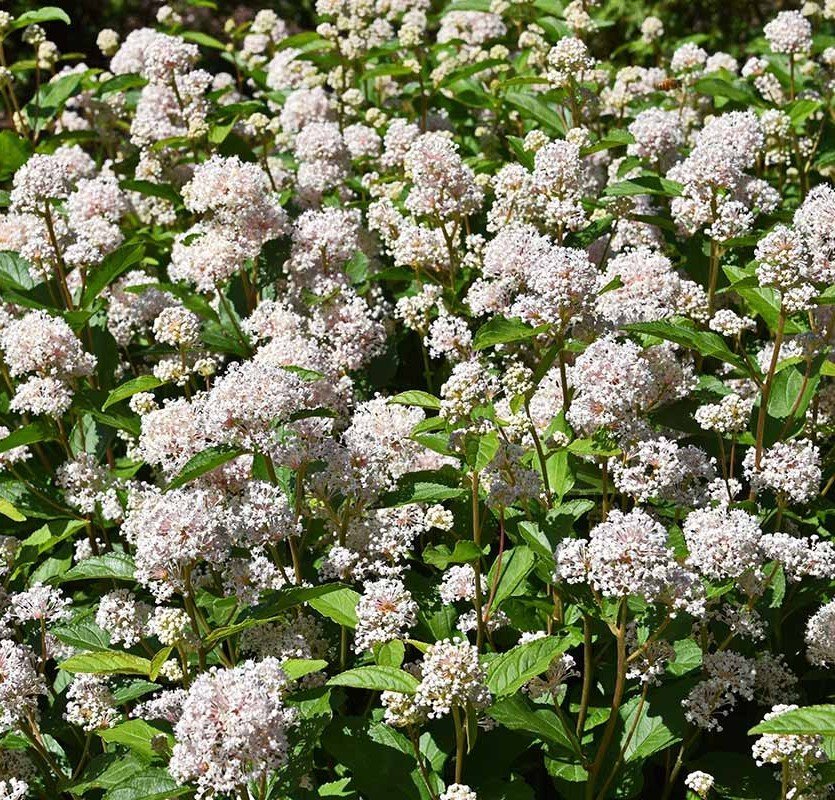
If you’re looking for a plant that bridges the gap between a flowering shrub and a perennial, New Jersey Tea (Ceanothus americanus) is a fascinating choice. It’s a compact shrub with a deep history—its leaves were actually used as a caffeine-free tea substitute during the American Revolution! A sturdy, low-growing deciduous shrub that produces clusters of tiny, fragrant white flowers on long stalks. It is one of the few shrubs that stays small enough to fit perfectly in a perennial border, offering a unique texture and a massive draw for pollinators.
Sun Exposure: full sun to partial shade
Water Needs: low to medium; exceptionally drought-tolerant once established
Soil Type: well-drained sand, loam, or rocky/gravelly soil
Mature Height: 2 – 3 feet
Deer Resistance: moderate (deer and rabbits will browse this plant, especially when young)
Bloom Time: June – August
Bloom Color: white
Plant Spacing: 2 – 3 feet
Deep Taproot: New Jersey Tea grows a massive, woody red root system that can go very deep. This makes it incredibly drought-proof but also means it hates being transplanted once it’s in the ground.
Nitrogen Fixer: It has a symbiotic relationship with soil bacteria that allows it to "fix" nitrogen, improving the soil quality for all the plants around it.
Blooms: The white flowers appear in dense, cylindrical clusters that look like pom poms from a distance, adding a soft, airy texture to the mid-summer garden.
Foliage: glossy leaves and a mounding shape that keeps it’s rich, green color throughout the growing season but loses it’s leaves in the winter.
If desired, pruning should be done in late winter or early spring before new growth starts. It typically takes about 3 years to reach maturity. Mature shrubs can be cut to the ground in the spring to encourage more rapid growth.
Pollinators: It is legendary for the sheer variety of insects it attracts, including bees, specialized wasps, butterflies and hummingbirds.
Host Plant: It is a critical larval host for the Mottled Duskywing butterfly and the Spring Azure butterfly.
Seed Source: Ripe seeds are eaten by wild turkeys and quail, and other large birds.
Pro Tip: Plant with Butterfly Weed, Coreopsis, Spiderwort or Prairie Dropseed.
If you’re looking for a plant that bridges the gap between a flowering shrub and a perennial, New Jersey Tea (Ceanothus americanus) is a fascinating choice. It’s a compact shrub with a deep history—its leaves were actually used as a caffeine-free tea substitute during the American Revolution! A sturdy, low-growing deciduous shrub that produces clusters of tiny, fragrant white flowers on long stalks. It is one of the few shrubs that stays small enough to fit perfectly in a perennial border, offering a unique texture and a massive draw for pollinators.
Sun Exposure: full sun to partial shade
Water Needs: low to medium; exceptionally drought-tolerant once established
Soil Type: well-drained sand, loam, or rocky/gravelly soil
Mature Height: 2 – 3 feet
Deer Resistance: moderate (deer and rabbits will browse this plant, especially when young)
Bloom Time: June – August
Bloom Color: white
Plant Spacing: 2 – 3 feet
Deep Taproot: New Jersey Tea grows a massive, woody red root system that can go very deep. This makes it incredibly drought-proof but also means it hates being transplanted once it’s in the ground.
Nitrogen Fixer: It has a symbiotic relationship with soil bacteria that allows it to "fix" nitrogen, improving the soil quality for all the plants around it.
Blooms: The white flowers appear in dense, cylindrical clusters that look like pom poms from a distance, adding a soft, airy texture to the mid-summer garden.
Foliage: glossy leaves and a mounding shape that keeps it’s rich, green color throughout the growing season but loses it’s leaves in the winter.
If desired, pruning should be done in late winter or early spring before new growth starts. It typically takes about 3 years to reach maturity. Mature shrubs can be cut to the ground in the spring to encourage more rapid growth.
Pollinators: It is legendary for the sheer variety of insects it attracts, including bees, specialized wasps, butterflies and hummingbirds.
Host Plant: It is a critical larval host for the Mottled Duskywing butterfly and the Spring Azure butterfly.
Seed Source: Ripe seeds are eaten by wild turkeys and quail, and other large birds.
Pro Tip: Plant with Butterfly Weed, Coreopsis, Spiderwort or Prairie Dropseed.